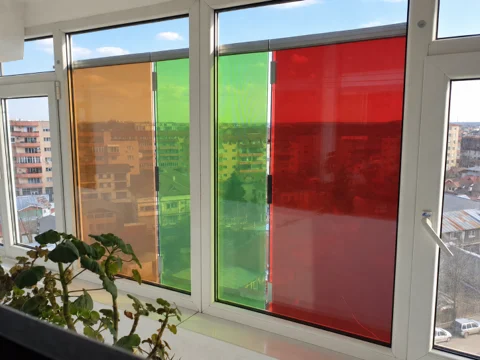
In the heart of Bucharest, an eighth-floor apartment has become an unlikely laboratory for the future of urban renewable energy. For nearly four years, a pilot project by PhotoVoltaic Windows SRL has been demonstrating that the path to residential sustainability doesn’t necessarily require massive solar farms or complex battery arrays. Instead, the solution may be hidden in plain sight: the very windows and balcony glass of our homes.
By utilizing semi-transparent photovoltaic (PV) glass—a technology that merges structural building elements with power generation—the project has successfully decoupled domestic hot-water production from the traditional electrical grid. This innovation challenges the industry-standard approach to "plug-in" balcony solar systems, offering a more integrated, high-efficiency alternative for urban dwellers.
The Core Concept: Direct Energy Conversion
At its foundation, the system is remarkably simple: it bypasses the need for costly, energy-draining inverters and electrochemical battery storage. The photovoltaic glass, installed as part of the building’s facade, generates direct current (DC) electricity that is fed straight into the heating element of a standard electric water heater.

"We found an interesting application for photovoltaic glass in apartments: heating domestic water," says Adrian Băișan, founder and managing director of PhotoVoltaic Windows SRL. The "eureka moment" occurred when a leaking water heater provided an opportunity to experiment. By connecting the heating element directly to the PV glass, the team observed immediate heat generation. The system effectively uses the water tank as a low-cost, high-capacity thermal battery. When the sun is shining, the water is heated; if solar input is insufficient, the system seamlessly transitions to the municipal AC grid, controlled by the water heater’s built-in thermostat.
A Chronology of Innovation
The journey from concept to validated pilot was a deliberate, data-driven process:
- Initial Discovery (Pre-2022): The team explored the potential of semi-transparent glass, testing various transparencies, colors, and shapes. They discovered that while higher transparency allows more natural light, lower transparency significantly increases power output—approximately 88–110 W/m².
- Early Prototype (2022): A smaller testbed used three glass elements of varying colors to supply a 4-gallon, 1.2 kW water heater. This confirmed that the direct-DC connection was not only viable but highly responsive.
- System Launch (December 2022): The current pilot system, consisting of eleven semi-transparent glass elements (nine at 30% transparency and two at 10%), was installed on a south-facing balcony.
- Systematic Measurement (October 2023 – Present): Formalized data collection began, tracking energy production, consumption, and the specific impact of the system on household utility bills and water wastage.
Technical Configuration and Performance Data
The system currently boasts a combined nominal installed power of approximately 845 Wp. The eleven panels, measuring 47.2 x 23.6 x 0.28 inches, are integrated into the balcony enclosure, preserving the architectural aesthetics of the building.

Measured Solar Contribution
Over three consecutive years of monitoring, the system has provided a significant portion of the household’s hot-water energy:
- 2023–2024: 446 kWh solar contribution (46.7% coverage).
- 2024–2025: 462 kWh solar contribution (43.7% coverage).
- 2025–2026: Approximately 360 kWh solar contribution (38.0% coverage).
The slight decline in the final year is attributed by the research team to extreme weather events in Bucharest, specifically record-breaking wet months that limited solar irradiance. Despite these variations, the system maintained a consistent and reliable performance, providing a substantial reduction in grid dependence.
The Voltage Advantage
A critical realization during the project was that "wattage is not enough." The electrical resistance of the water heater must be matched to the voltage output of the PV array. While conventional opaque solar modules often struggle when connected to a standard 3 kW, 230 V heating element, the specific configuration of the photovoltaic glass in this pilot yielded a maximum power delivery of 499 W—a significant improvement over off-the-shelf module setups.

Implications for Urban Sustainability
The benefits of this integrated approach extend well beyond electricity generation. The project highlights three primary value propositions that redefine the role of building materials.
1. Thermal Shading and Cooling Efficiency
The use of photovoltaic glass acts as an advanced shading system. By installing the PV glazing on the south-facing facade, the apartment experiences significantly less solar heat gain during the summer months. Thermal analysis suggests a 40% reduction in heat gain compared to conventional clear glass, potentially saving the household between 433 and 481 kWh of cooling energy per summer.
2. Elimination of Water Waste
Before this installation, the apartment relied on the city’s centralized hot-water network. Because the central boiler was distant, the residents had to run the tap for 5–8 minutes to get hot water. By moving the water heater to the point of use (the bathroom/kitchen) and powering it with the PV system, the household eliminated the waste of approximately 17,000 gallons of water per year. This represents an energy saving of 1,675 kWh thermal annually—energy that was previously paid for but discarded down the drain.

3. Economic and Environmental Impact
In cities like Bucharest, where district heating is heavily subsidized, reducing consumption has a dual effect: it lowers the individual’s utility bill and reduces the burden on public funds. Furthermore, the system provides a robust, low-maintenance solution that does not require an inverter, which is often the first point of failure in standard solar installations.
Official and Industry Responses
The methodology and findings have been reviewed by the Romanian Association of Energy Auditors for Buildings (AAECR). Furthermore, the core innovation—the automatic switching between DC solar and AC grid power—is the subject of a patent application filed with the Romanian State Office for Inventions and Trademarks.
Industry experts note that while plug-in balcony PV systems (as described by Germany’s UBA) offer a quick, mobile solution for renters, they often suffer from low self-consumption rates and limited storage. The PhotoVoltaic Windows SRL model bridges this gap by creating a fixed, long-term asset that maximizes self-consumption through thermal storage.

Future Outlook: A Synergistic Approach
The ultimate takeaway from the Bucharest pilot is that sustainability should not be approached as a series of isolated technologies. By combining electricity generation with thermal storage and water-use optimization, this system addresses the specific constraints of apartment living.
As the industry matures, the potential for "building-integrated photovoltaics" (BIPV) is immense. Future developments may see these systems scaled to entire residential complexes, where south-facing windows collectively feed local hot-water systems, creating a decentralized grid that reduces the reliance on carbon-heavy centralized energy.
Adrian Băișan’s vision is clear: "After almost four years of operation, our main lesson is simple: the real value comes from the synergy between photovoltaic glass and the water heater." By viewing our windows as both portals for light and conduits for power, urban residents can reclaim control over their energy footprint, one shower at a time. The transition to green cities may not require tearing down our old infrastructure, but rather upgrading our glass, one pane at a time.