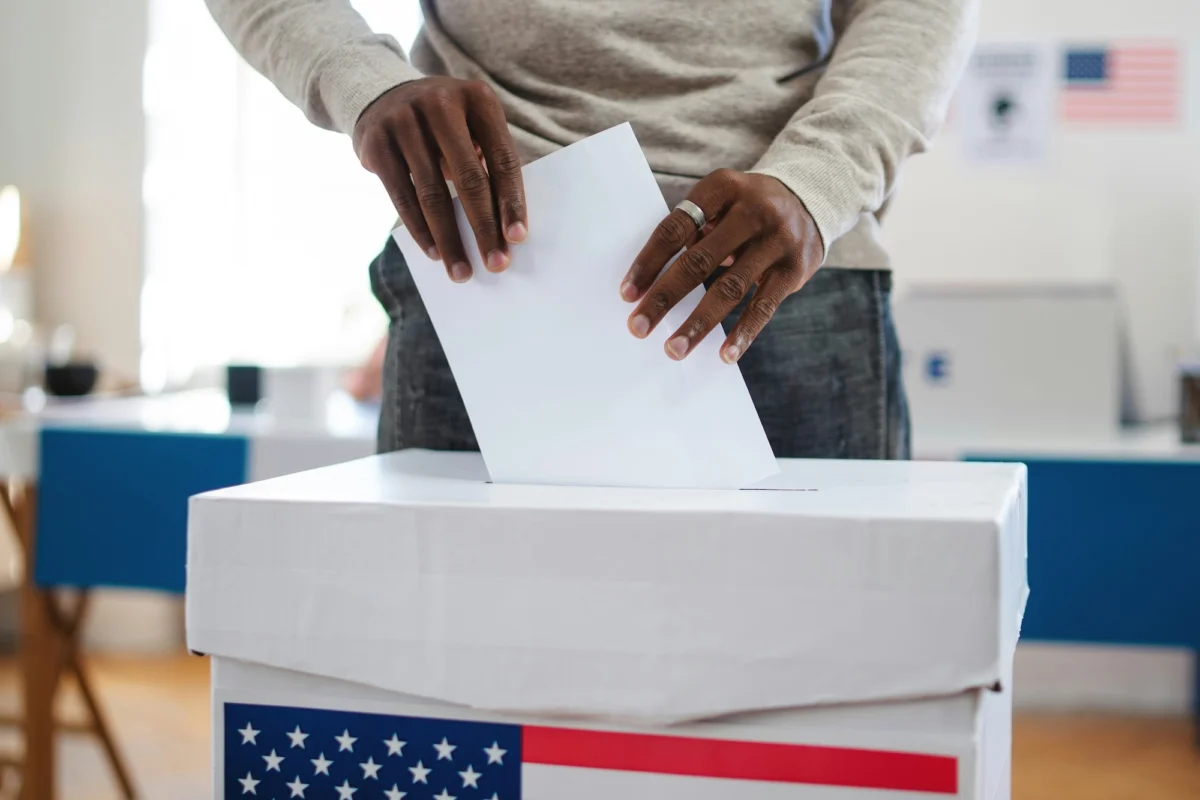
As the U.S. midterm elections approach, the landscape of voter engagement has become a high-stakes battlefield. On one side, grassroots movements are mobilizing to protect the franchise; on the other, a confluence of private surveillance tools and federal administrative pressure is raising alarm bells among election integrity advocates. At the center of this controversy is the emergence of “VoteSafe.org,” a website that masks partisan data-harvesting operations behind a veneer of neutral civic utility.
The Illusion of Neutrality: The VoteSafe.org Controversy
For the average American, verifying voter registration is a routine, non-partisan task. It is within this mundane necessity that the website VoteSafe.org has positioned itself. Presenting a clean, user-friendly interface that allows visitors to check their registration status, request absentee ballots, and sign up for election reminders, the site mimics the appearance of a government-run portal.
However, investigations—most notably by journalist Judd Legum of Popular Information—have revealed that the site is not a public service. It is a proprietary project of America PAC, the political action committee helmed by Elon Musk, currently the largest individual financial backer of Donald Trump and the Republican Party for the 2024 cycle.
The danger, experts warn, lies in the fine print. When users input their personal information into VoteSafe.org, they are not merely checking a box; they are feeding a “digital surveillance machine.” Data entered into the site is harvested and transmitted to a network of private tech firms, America PAC, and various Republican campaign entities. This data is then weaponized in “get-out-the-vote” (GOTV) operations designed to profile and target specific demographics.
America PAC’s commitment to this project is significant; reports indicate the organization spent over $180,000 in a single week on Meta platforms like Facebook and Instagram to drive traffic to the site. Following the exposure, organizations like Snopes have verified that the site’s data-sharing practices are exactly as described, marking it as a sophisticated attempt to turn civic engagement into partisan intelligence.
A Chronology of Erosion: From 2020 to the 2026 Midterms
To understand the current volatility, one must look back at the trajectory of the post-2020 political environment.
- November 2020: Despite losing the presidential election by more than 7 million votes, Donald Trump initiated a series of federal lawsuits that ultimately failed but served to institutionalize election conspiracy theories.
- January 6, 2021: These theories reached a violent crescendo when a mob, egged on by the outgoing president, stormed the U.S. Capitol in an attempt to subvert the certification of the election.
- 2021–2024: The subsequent years saw a persistent campaign of misinformation regarding "widespread voter fraud," a claim for which no credible evidence has ever been produced.
- 2025: Following his return to the White House, the administration began systematically dismantling protections for the electoral process, including the leadership of the bipartisan Election Assistance Commission.
- 2026: The administration accelerated its efforts, including the pursuit of voter rolls from over 30 states under the threat of federal prosecution, the deployment of immigration agents to polling sites, and administrative interference with the U.S. Postal Service’s handling of absentee ballots.
Supporting Data and the “Big Lie” Legacy
The administrative actions of the current executive branch are grounded in a strategy of administrative attrition. By targeting the mechanics of voting—specifically mail-in ballots and the residency status of voters—the administration has created a climate of fear and confusion.
The narrative regarding “illegal immigrants voting” has been a cornerstone of this strategy. Despite comprehensive academic and governmental studies proving that non-citizen voting is virtually non-existent in U.S. elections, the administration has utilized this myth to justify the gutting of the Voting Rights Act and the demand for state-level voter roll purges.
Watchdogs from the Brennan Center for Justice and other legal organizations have repeatedly noted that these actions are not about election integrity, but about voter disenfranchisement. The administrative burden placed on local election officials—who are now facing potential DOJ prosecution for failing to adhere to federal mandates—has created a "chilling effect" on the management of polling places.
Official Responses and Judicial Pushback
The attempt to undermine the midterms has not gone unchallenged. The judiciary, though often a site of ideological contention, has begun to push back against the more extreme executive actions.
In a recent, landmark decision, a three-judge panel of the First Circuit Court of Appeals issued an injunction blocking the U.S. Postal Service from enforcing new regulations that threatened to delay or interfere with mail-in ballots. The court noted that these rules would “likely result in the disenfranchisement of millions of voters” without providing any tangible benefit to election security.
Similarly, in Denver, civil rights groups successfully sued to block immigration officials from stationing agents near polling locations. These lawsuits rely on a bedrock principle of American law: the "troops at polls" statutes, which are designed to ensure that voters can cast their ballots without intimidation from federal authorities.
Implications: The Rise of Grassroots Resistance
The reaction to these top-down pressures has been the birth of a new, hyper-local form of civic advocacy. Organizations like "No Kings" represent a departure from the corporate-sponsored "Civic Alliance" model. While the latter often relies on partnerships with major corporations—such as BP or Meta—to encourage generic voter turnout, "No Kings" has focused on building permanent, community-based structures.
After a quiet period during the summer of 2026, the movement has re-emerged with a coalition that includes labor unions, Voto Latino, Indivisible, and Public Citizen. Their objective is no longer just "awareness," but active defense of the ballot box.
"The time for sending a message is over," said Indivisible co-founder Ezra Levin. "Now we are headed into an important point in a democracy, which is whether the people stand up and refuse to allow an authoritarian to consolidate power."
The Strategic Pivot: October 17th and Beyond
The current focus of these advocacy groups is the early voting period. By organizing "get-out-the-vote" events on Saturday, October 17, and training volunteers to document and report instances of voter intimidation, these groups are attempting to reclaim the electoral process from the shadows of private data-harvesting and executive overreach.
The implication for the average voter is clear: in an era of hyper-partisan digital surveillance and administrative sabotage, traditional sources of information are no longer inherently trustworthy. Voters are being urged to bypass third-party platforms like VoteSafe.org and instead utilize government-sanctioned, non-partisan resources like Vote.gov, which provides direct links to local election offices.
Conclusion: Trusting the Process, Not the Brand
The 2026 midterms serve as a test case for the resilience of American democratic institutions. The intersection of billionaire-funded data harvesting and federal administrative interference represents a new frontier in political warfare—one where the voter is both the target and the primary asset.
As the election draws near, the message from advocates is one of vigilance. Whether it is through the rejection of corporate-controlled registration sites or the active participation in local, grassroots organizing, the focus has shifted toward individual and community autonomy. When the peaceful transfer of power is at stake, the burden of truth, it seems, has fallen squarely onto the shoulders of the electorate. Voters are being reminded that in a democracy, the ultimate safeguard is not a website or a billionaire’s PAC, but their own informed, uncoerced, and protected vote.