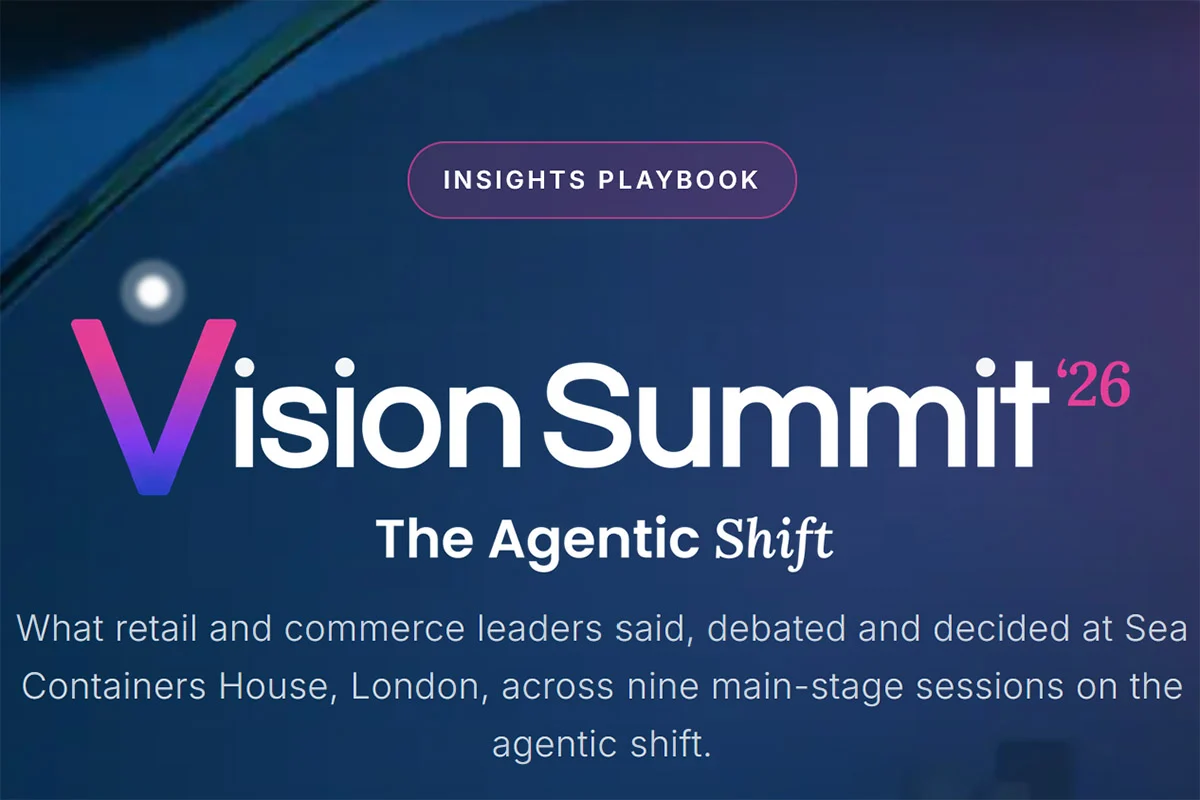
In an era where the retail landscape is shifting beneath the feet of traditional players, the Vision Summit 2026—hosted by Virtualstock and powered by Logicbroker—has emerged as a lighthouse for industry leaders. Unlike conventional trade shows that often devolve into high-pressure sales environments, the Vision Summit distinguished itself by abandoning the traditional "pitch" culture. Instead, it provided a platform for a high-level, intellectual exploration of the forces currently redefining global commerce: Artificial Intelligence (AI), sophisticated automation, and the rise of autonomous, intelligent systems.
For those who were unable to attend the event, the release of the Vision Summit 2026 Playbook serves as a critical repository of the day’s findings. It provides a roadmap for navigating the volatile, technology-driven future of retail.
The Core Philosophy: Why Vision Summit 2026 Mattered
The fundamental value proposition of the Vision Summit was its refusal to center on the organizers’ services. In an industry saturated with vendor-led content, the decision to pivot toward thematic exploration rather than sales conversion was a strategic masterstroke. Attendees were treated to a day of immersion, focusing on how the architecture of commerce is being rebuilt from the ground up.
The summit functioned as a crucible for ideas, bringing together stakeholders to debate the ethical and practical implementations of agentic AI—systems that do not merely respond to user inputs but proactively manage workflows, inventory, and consumer interactions. By removing the "sales pitch" barrier, the summit fostered a level of discourse rarely seen in trade forums, allowing for a deep dive into the operational shifts necessary to survive the coming decade.
Chronology: A Day of Strategic Transformation
The event was structured to lead attendees through a logical progression of the current retail reality, moving from high-level vision to ground-level execution.
Morning Sessions: The Macro-Landscape
The day opened with a series of keynote addresses focused on the systemic overhaul of supply chains. Industry experts examined the historical transition from manual replenishment models to the predictive, AI-driven models that now characterize modern retail. The consensus was clear: the "wait and see" approach to digital transformation is no longer a viable strategy.
Mid-Day Panels: The Human-Machine Synthesis
Following the keynote, the sessions turned toward the role of the human operator in an automated environment. This was a critical segment of the day, as many retailers fear that automation implies the wholesale removal of human intuition. The panels argued the opposite: that automation empowers the human worker to focus on high-value strategy rather than low-value administrative tasks.
Afternoon Workshops: The "Agentic" Shift
The final stage of the event focused on "Agentic AI"—a term that recurred throughout the day. This represents the next evolution of AI, where systems have the agency to make decisions based on real-time data. These sessions provided practical examples of how agents are currently being integrated into stock management, customer service, and logistics.
Supporting Data and Thematic Pillars
The Vision Summit 2026 Playbook categorizes the day’s insights into five foundational pillars. These pillars are not merely suggestions; they represent the core infrastructure requirements for the retail business of 2027 and beyond.
- The Predictive Supply Chain: Moving beyond reactive inventory management to a system that anticipates demand before it manifests.
- Autonomous Commerce Architecture: Building the technological backbone that allows for self-correcting supply chains.
- Human-in-the-Loop Optimization: Ensuring that AI systems remain governed by human strategy and ethical oversight.
- Hyper-Personalization at Scale: Utilizing intelligent systems to treat every customer as an individual without sacrificing operational efficiency.
- The Agentic Future: The shift toward systems that don’t just report data but execute decisions.
While the Playbook offers a high-level summary, it also provides deep-dive reports on all nine main-stage sessions. These reports are data-rich, incorporating the findings of industry analysts and the case studies of early adopters who have already begun deploying these systems.
Official Responses and Expert Perspectives
The feedback from those who participated in the summit suggests a collective realization of the "urgency of now." One speaker noted, "We are no longer discussing the ‘future of retail’ as a hypothetical. We are discussing the ‘current of retail’ as an absolute necessity."
The organizers, Virtualstock and Logicbroker, have emphasized that the Playbook is not meant to be a static document. Instead, it is intended to act as a diagnostic tool. By comparing their current operational maturity against the benchmarks set out in the document, retailers can identify where they are trailing behind and where they have a competitive advantage.
When asked about the lack of a formal sales pitch during the event, a representative stated: "If you give the industry the tools to understand the complexity of the landscape, the solutions become self-evident. We don’t need to sell the service if the client already understands the problem."
Implications: The "What to Do Next" Framework
The most significant portion of the Playbook—and the one that requires the most careful study—is the concluding section titled "What to do next." This is not an abstract conclusion; it is a tactical manual designed to force action.
The Agentic Journey
The Playbook outlines a clear, multi-stage "Agentic Journey." Retailers are encouraged to assess their position on this spectrum:
- Stage 1: Digitization. Moving from paper/siloed processes to digital data.
- Stage 2: Automation. Implementing rules-based software to handle routine tasks.
- Stage 3: Integration. Connecting siloed systems to create a unified data flow.
- Stage 4: Intelligence. Applying machine learning to optimize the data flow.
- Stage 5: Agency. Allowing AI systems to act autonomously within predefined parameters.
The Playbook warns that staying at Stage 1 or 2 in 2026 is an existential risk. The "What to do next" section provides actionable checklists for leaders, ensuring that they can move from theoretical understanding to technical implementation within their own organizations.
The Road to 2027
As the dust settles on the Vision Summit 2026, the industry is already looking forward. The rapid pace of AI development means that the insights contained in the current Playbook will likely be expanded upon, refined, and challenged in the coming months.
For those who have not yet downloaded the Vision Summit 2026 Playbook, it remains available on the Virtualstock website. It is recommended reading for any leader currently navigating the complex transition toward automated, agentic commerce.
Furthermore, the organizers have already solidified the date for next year’s gathering. Mark your calendars for September 16, 2027. The pace of innovation in this sector is accelerating, and as the 2026 summit proved, staying ahead of the curve is no longer just about growth—it is about endurance.
Final Thoughts for the Executive Suite
The takeaway from the Vision Summit is unmistakable: the divide between winners and losers in the next decade of commerce will be defined by the ability to leverage intelligent systems. The Playbook acts as a bridge for that divide. Whether you are a small retailer looking to scale or a global enterprise managing a complex, multi-tiered supply chain, the themes presented at Vision Summit 2026 provide the intellectual and operational foundation for the future.
The journey toward an agentic future is fraught with technical and cultural challenges, but as the summit demonstrated, it is a journey that can be successfully navigated with the right strategy and a commitment to continuous, intelligent transformation. Do not leave your organization’s future to chance; consult the Playbook, assess your readiness, and prepare for the 2027 landscape.