Introduction: A Strategic Pivot in Paris
In a significant move aimed at recalibrating Argentina’s position within the global economic landscape, the International Chamber of Commerce (ICC) hosted a series of high-level engagements during “Argentina Week” in Paris. The events, which culminated on 2 October 2026, marked a pivotal moment for bilateral cooperation, focusing on the potential of the Mercosur-EU Agreement and the imperative of institutionalizing the rule of law to attract foreign capital.
As global supply chains shift and the demand for sustainable agribusiness and infrastructure grows, the dialogue between the Argentine government and the global business community has taken on renewed urgency. By aligning the nation’s reform agenda with the global standards advocated by the ICC, Argentina is signaling a transition toward a more predictable, private-sector-led economic model.
Chronology of the Engagement
The diplomatic and commercial marathon spanned several days of intensive coordination between international stakeholders:
- 1 October: ICC Secretary General John W.H. Denton AO participated in a high-level OECD event, setting the stage for discussions on global investment milestones and the necessity of multilateral trade frameworks.
- 2 October (Morning): The ICC Global Headquarters in Paris hosted the Argentina Week delegation. This roundtable served as the centerpiece for discussions on the Mercosur-EU Agreement, bringing together a cross-section of government ministers, legal experts, and multinational corporate leaders.
- 2 October (Afternoon): Following the roundtable, a formal signing ceremony took place. The Ministry of Justice of the Republic of Argentina and the ICC signed a joint statement, formalizing their partnership to enhance public-private dialogue.
- 2 October (Evening): The conclusion of the official proceedings signaled the launch of the new technical partnership between PromArgentina and TradeRoots Americas, a strategic initiative designed to bolster Argentine SMEs.
The Mercosur-EU Framework: Opportunities and Hurdles
The centerpiece of the discussions in Paris was the Mercosur-EU Agreement. Proponents argue that the agreement represents the most significant trade opportunity for South America in decades. During the roundtable, participants analyzed the framework through the lens of several key pillars:
1. Agribusiness and Food Security
Given Argentina’s role as a global agricultural powerhouse, the discussions highlighted how the Mercosur-EU deal could streamline export processes and reduce non-tariff barriers. The focus was not merely on volume, but on the integration of sustainable agricultural practices that meet EU regulatory standards.
2. Infrastructure and Global Value Chains
Infrastructure remains the backbone of trade. The ICC and the Argentine delegation underscored the need for modernized logistics, which are essential for Argentina to integrate effectively into global value chains. By lowering trade costs, the country hopes to move from a raw material exporter to a participant in higher-value-added manufacturing and service sectors.
3. Legal Certainty and Dispute Resolution
A recurring theme throughout the sessions was the "Rule of Law." Investors noted that trade agreements are only as strong as the legal systems that enforce them. Discussions focused on the efficacy of international arbitration and the necessity of a judiciary that protects contractual integrity. For long-term capital, predictability is often prioritized over immediate tax incentives.
Official Responses and Collaborative Commitments
The joint statement issued by the ICC and the Argentine Ministry of Justice represents more than a symbolic gesture; it provides a roadmap for future policy alignment.
The Perspective of the Argentine Government
Juan Bautista Mahiques, Minister of Justice of the Republic of Argentina, emphasized that the current administration is committed to deep-seated reforms. "The Ministry of Justice recognizes the ICC as a strategic partner in deepening public-private dialogue," Mahiques noted. He acknowledged that for Argentina to become a premier destination for Foreign Direct Investment (FDI), the government must ensure that the legal environment is not only stable but transparent and accessible to international players.
The Perspective of the ICC
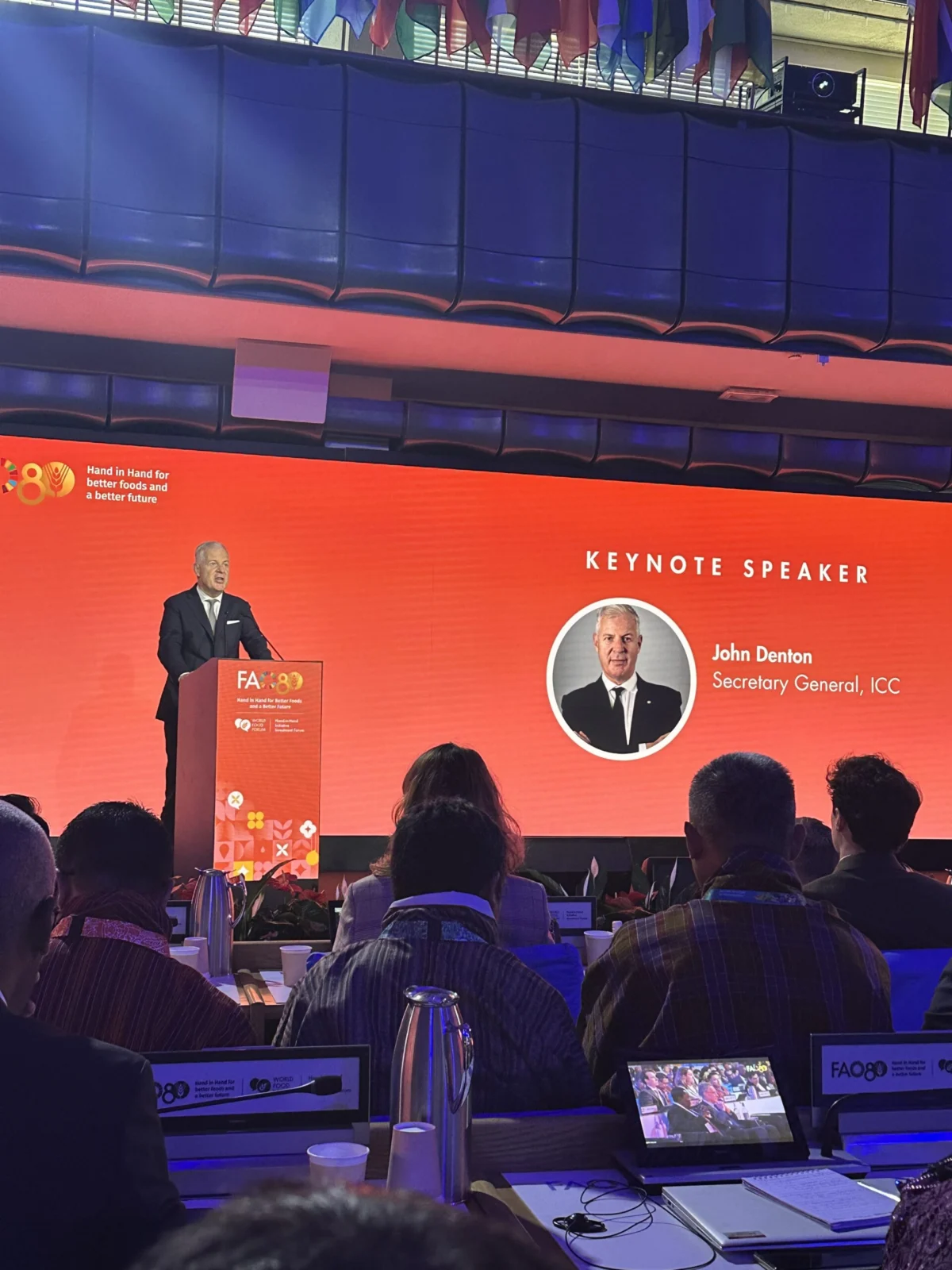
John W.H. Denton AO, Secretary General of the ICC, praised the steps taken by the Argentine government to foster private-sector-led growth. "The ICC acknowledges the commitment of the Argentine Government and welcomes the reforms undertaken to enhance private sector-led growth by strengthening the rule of law," Denton stated. He emphasized that the ICC’s role is to ensure that the voice of the global business community is integrated into the national reform agenda, effectively bridging the gap between local policy and international investor expectations.
Supporting Data: SME Internationalization
A key development during Argentina Week was the announcement that PromArgentina will join TradeRoots Americas as a Technical Partner. This partnership is designed to tackle the specific challenges faced by Argentine SMEs, which often lack the legal and logistical support to scale internationally.
- Objective: To provide SMEs with the tools to navigate complex regulatory environments in both the EU and the Americas.
- Methodology: Through the TradeRoots framework, these companies will gain access to ICC’s global network, mentorship programs, and standardized trade documentation.
- Anticipated Impact: Increased participation of Argentine firms in regional and inter-continental trade, ultimately diversifying the country’s export basket.
Implications: Building a Predictable Future
The initiatives launched in Paris carry significant implications for the future of the Argentine economy and its relationship with the European Union.
Institutional Stability as a Competitive Advantage
By explicitly involving the judiciary in these discussions, the Argentine delegation is attempting to signal to global markets that legal reforms are not merely executive mandates, but systemic changes. The inclusion of judicial representatives in the Paris roundtable is a calculated effort to demonstrate that the rule of law in Argentina is moving toward greater independence and efficiency, thereby lowering the risk profile for foreign investors.
The Role of Public-Private Dialogue
The partnership between the ICC and the Ministry of Justice serves as a model for other nations in the region. By creating a formalized channel for the private sector to weigh in on legislative developments before they are enacted, Argentina hopes to avoid the "regulatory churn" that has historically deterred long-term capital.
Navigating the Mercosur-EU Horizon
While the Mercosur-EU Agreement faces political hurdles in various capitals, the work done during Argentina Week provides a "commercial blueprint" for how the agreement could function in practice. By focusing on dispute resolution and legal certainty now, stakeholders are ensuring that when the agreement is fully implemented, the infrastructure for compliance and investment will already be in place.
Conclusion: A Long-Term Vision
The events of 2 October in Paris underscore a clear shift in Argentina’s economic strategy: a transition from isolationist policies toward an open, rule-based, and globally integrated framework. Through the collaboration with the ICC, the Argentine government has laid the groundwork for a more stable investment climate.
However, the real test lies in implementation. As the Ministry of Justice and the ICC move forward with their joint initiatives, the global business community will be watching closely to see if these commitments to legal certainty and institutional reform translate into tangible outcomes on the ground. For Argentina, the path to prosperity is clearly mapped out: it runs through Paris, through the strengthening of the rule of law, and through a renewed, proactive engagement with the global trade community.
As Secretary General Denton noted, the power of trade as a driver of development is undeniable, but it requires the bedrock of a secure and predictable environment. With the partnerships formed during Argentina Week, the nation has taken a significant step toward securing that foundation for the next decade of growth.