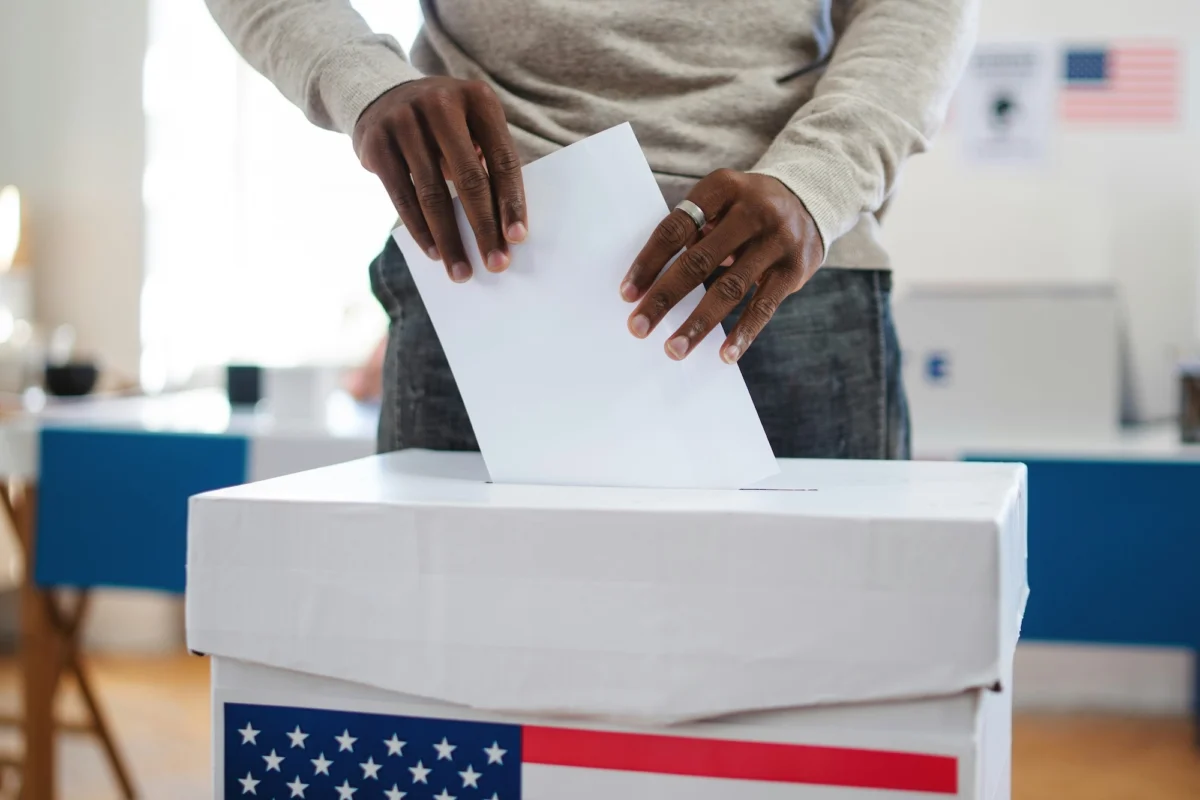
As the midterm elections approach, the sanctity of the American ballot box faces a convergence of high-tech surveillance and institutional pressure. From the emergence of misleading voter-engagement portals to federal maneuvers targeting the logistics of mail-in ballots, the electoral landscape has become a theater of intense scrutiny. For voters, the simple act of verifying their registration has transformed into a minefield of potential data exploitation and political manipulation.
The "VoteSafe" Facade: Data Harvesting Under the Guise of Neutrality
In the weeks leading up to the midterms, millions of Americans have been targeted by digital advertisements for a website calling itself "VoteSafe.org." With a user interface designed to mimic a neutral, government-sanctioned portal, the site invites users to confirm their registration, request absentee ballots, and sign up for election reminders. However, the site is not a public utility; it is a proprietary project of America PAC, the political action committee led by billionaire Elon Musk.
Musk, who has emerged as a preeminent financial backer of Donald Trump and the Republican Party for the 2024 cycle, is utilizing this platform as a mechanism for voter intelligence. Investigative reporter Judd Legum of Popular Information was among the first to expose the site’s true nature, characterizing it as a "digital surveillance machine."
The concern is not merely political affiliation, but the commodification of voter data. When users interact with VoteSafe.org, they are not simply checking a box on a government list; they are surrendering personal information that is subsequently funneled to a network of private tech firms, America PAC, and Trump-aligned entities. This data is then weaponized to power sophisticated Republican "get-out-the-vote" operations. With over $180,000 spent on Meta platforms in a single week to drive traffic to the site, the scale of this data-harvesting operation is unprecedented. Fact-checking organizations, including Snopes, have since verified that the site’s collection and sharing of sensitive user data are indeed occurring, casting a long shadow over the site’s "innocuous" branding.
Chronology of Institutional Friction
The current climate of distrust did not materialize in a vacuum. It is the culmination of a four-year campaign to erode faith in the democratic process.
- 2020–2021: Following his defeat by over 7 million votes, Donald Trump initiated a wave of federal lawsuits that ultimately failed but successfully galvanized conspiracy theories regarding election integrity. This rhetoric reached a violent crescendo on January 6, 2021, when a mob attempted to disrupt the certification of the election.
- 2022–2024: Throughout his post-presidency and subsequent return to office in 2025, Trump maintained a consistent narrative of "widespread voter fraud," despite a total lack of supporting evidence. This period was characterized by a systematic attempt to weaken the infrastructure of the peaceful transfer of power.
- Early 2025: Upon returning to the White House, the Trump administration moved to dismantle bipartisan leadership within the Election Assistance Commission (EAC), leaving a void in federal oversight.
- Mid-2026: The administration accelerated its efforts, including the gutting of the Voting Rights Act and the issuance of demands for voter rolls from over 30 states. These actions were accompanied by threats of prosecution against election officials who resisted federal mandates.
- September 2026: The tension reached a breaking point as the Department of Justice and the administration signaled a willingness to deploy federal immigration agents to polling sites—a move viewed by legal experts as an attempt to suppress turnout through intimidation.
Supporting Data: The Reality of Election Integrity
While the rhetoric surrounding "illegal voting" and "noncitizen participation" has dominated the headlines, the empirical evidence tells a different story. The Brennan Center for Justice and other independent watchdogs have consistently pointed out that the issue of noncitizens voting in federal elections is virtually non-existent.
Despite this, the administration’s focus has shifted toward the logistics of voting. By demanding access to voter rolls and ordering the U.S. Postal Service (USPS) to implement changes that complicate the delivery of mail-in ballots, the executive branch has created a tangible threat to voter participation. A three-judge panel of the First Circuit Court of Appeals recently intervened, blocking new USPS rules that were deemed to cause the "disenfranchisement of millions of voters" without providing any measurable improvement to election security.
Furthermore, the rise of "civics-washing"—the phenomenon where corporate entities align themselves with voter engagement initiatives while simultaneously funding political actors who undermine those very rights—has left voters wary. Organizations like the Civic Alliance, which counts BP, Target, and Meta among its partners, have faced criticism for their lack of transparency and potential conflicts of interest, prompting a shift toward more grassroots, independent alternatives.
Official Responses and Judicial Interventions
The judicial system has become the final line of defense against administrative overreach. The decision by the First Circuit Court of Appeals to halt USPS interference serves as a critical precedent. Similarly, legal challenges initiated by the city of Denver and various civil rights organizations have sought to prevent the presence of immigration agents at polling stations, citing the "troops at the polls" prohibition—a long-standing legal doctrine designed to prevent federal intimidation of the electorate.
While the administration continues to frame these actions as "election integrity measures," the consensus among constitutional scholars and election officials is that these steps are designed to centralize control and sow confusion. The lack of leadership at the EAC has forced states and local jurisdictions to fend for themselves, relying on resources like Vote.gov—the last remaining bastion of impartial, state-by-state information—to guide voters through the registration process.
Implications for the Midterms and Beyond
The implications of this environment are twofold: a heightened risk of voter disenfranchisement and an unprecedented surge in grassroots mobilization.
The "No Kings" organization has emerged as a primary vehicle for this resistance. Unlike the fleeting digital protests of the past, the No Kings movement has focused on building permanent, hyper-local advocacy groups. By organizing rallies, block parties, and educational fairs in every congressional district across all 50 states, the movement has successfully transitioned from consumer boycotts to a cohesive, nationwide voter-turnout machine.
After a six-month hiatus, the coalition—comprising labor unions, civil rights groups, and organizations like Voto Latino, Indivisible, and Public Citizen—is now pivoting toward a massive mobilization effort for the early voting period. Their focus is not just on turnout, but on the defense of the polling place itself. Organizers are training volunteers in de-escalation and the documentation of voter intimidation, preparing for a potential showdown on October 17.
As Ezra Levin, co-founder of Indivisible, noted, the goal is to move beyond "sending a message" toward a tangible defense of democracy. "The way to do that in a democracy is by exercising your right to vote and by exercising your right to organize to prevent any sabotage in that election," Levin told USA Today.
Conclusion: Trusting the Voter, Not the Brand
The overarching lesson for the American electorate this year is a call to radical self-reliance. When billionaire-backed PACs like America PAC operate under the guise of civic duty to harvest data, and when federal agencies are weaponized to complicate the voting process, the burden of truth falls upon the individual.
Voters are encouraged to bypass third-party platforms entirely. The safest and most accurate way to verify registration status, request a ballot, or find polling locations remains through local election officials and the federal Vote.gov portal. In an era where the peaceful transfer of power is being tested by those in the highest offices, the most potent response remains a well-informed, vigilant, and active citizenry. The upcoming midterms will not just be a test of candidates; they will be a test of the democratic infrastructure itself, and whether the American people can successfully navigate a landscape designed to keep them in the dark.