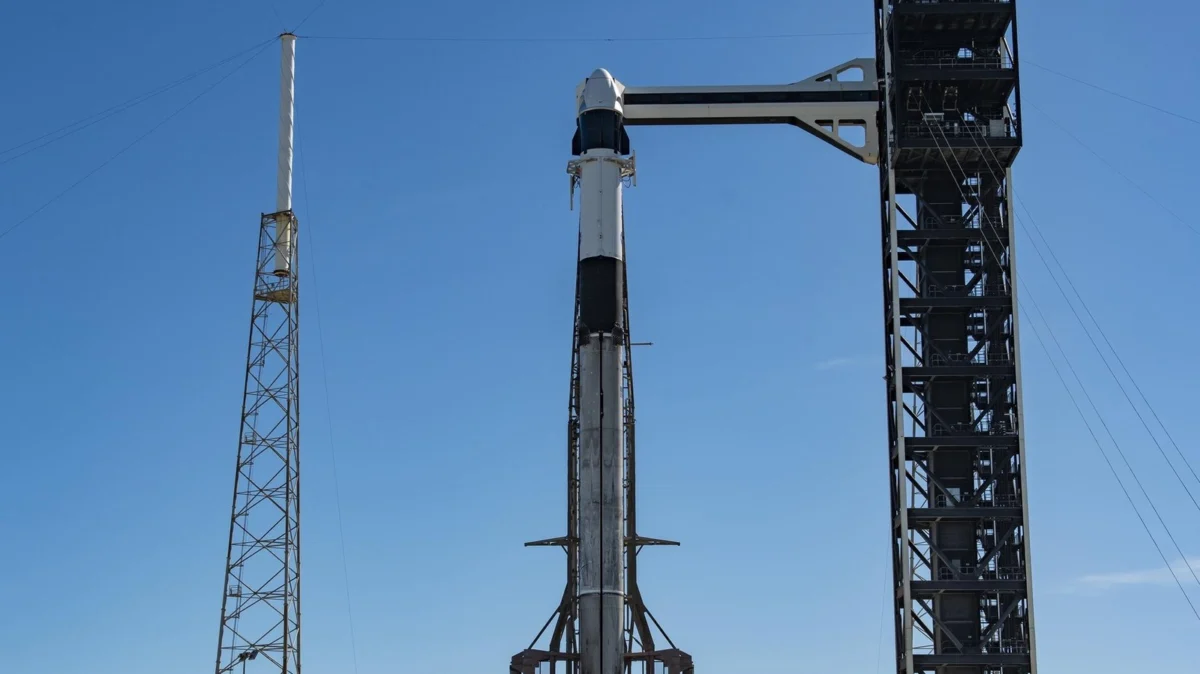
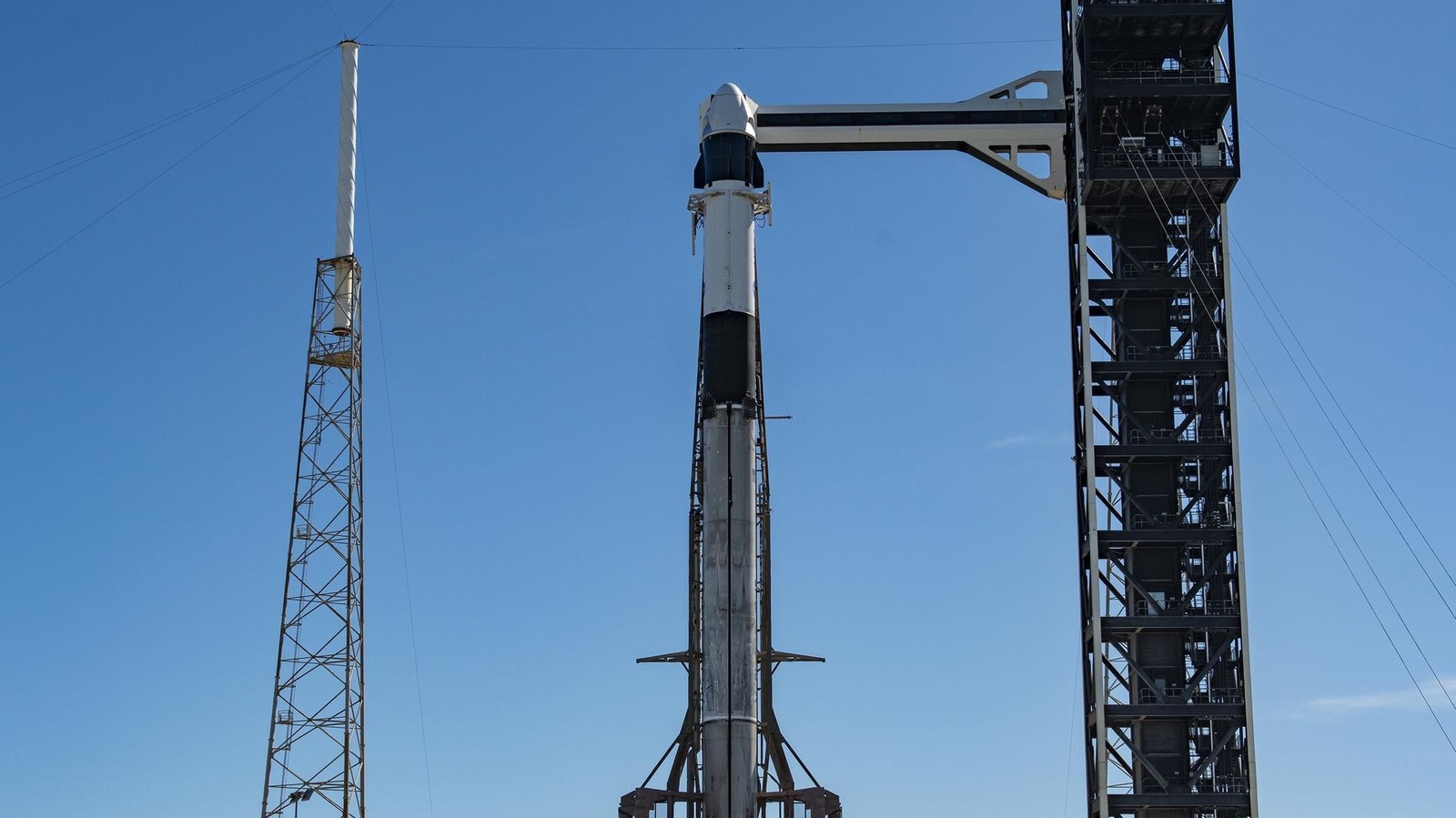
As the sun rises over the Cape Canaveral Space Force Station in Florida, the global space community turns its eyes toward the launchpad. Today, October 1, marks the official commencement of NASA’s SpaceX Crew-13 mission—a vital logistical operation that serves as both a routine crew rotation and a high-stakes demonstration of orbital efficiency. With a team comprised of seasoned experts and first-time spacefarers, this mission is poised to set a new record for orbital transit while reinforcing the collaborative international effort that keeps the International Space Station (ISS) operational.
The Mission Profile: A High-Speed Ascent to Orbit
The Crew-13 mission is scheduled for liftoff at 11:10 AM ET. The mission will utilize the venerable SpaceX Falcon 9 rocket to propel the Crew Dragon spacecraft into low-Earth orbit. This launch is not merely a taxi service; it is a meticulously choreographed sequence designed to deliver personnel and supplies to the ISS with unprecedented speed.
NASA has confirmed that if the flight proceeds according to the current trajectory, the Crew-13 mission will complete its journey from launch to docking in just seven hours and 50 minutes. This transit time represents the fastest approach by a U.S. spacecraft in the history of the space station, highlighting the evolving capabilities of commercial crew vehicles.
For those wishing to witness this historic ascent, coverage begins at 9:20 AM ET. NASA has ensured maximum accessibility for this event, with live streams available across a wide array of platforms, including the NASA YouTube channel, NASA+, X (formerly Twitter), Amazon Prime Video, Netflix, and Discovery+.
Meet the Crew: A Blend of Experience and New Horizons
The manifest for Crew-13 is a testament to the diverse expertise required to maintain a continuous human presence in space. Leading the mission is Commander Jessica Watkins, a geologist whose previous experience as a member of the SpaceX Crew-4 mission and her tenure on the Curiosity rover science team make her uniquely qualified to oversee operations. Her leadership is critical, as she brings both flight experience and deep-seated knowledge of planetary science to the ISS.
Joining Watkins is pilot Luke Delaney, a research pilot hailing from NASA’s Langley Research Center. Delaney is one of several crew members for whom this mission represents a monumental career milestone: his first trip to space.
The international nature of the mission is represented by Canadian Space Agency (CSA) astronaut Joshua Kutryk and Roscosmos cosmonaut Sergey Teteryatnikov. Both are embarking on their inaugural flights to the ISS. The inclusion of international partners underscores the enduring nature of the ISS as a sanctuary for collaborative scientific research, transcending terrestrial geopolitical tensions.
Scientific Objectives and ISS Continuity
Once docked, the primary objective for the Crew-13 team is to transition seamlessly into the ongoing scientific agenda of the ISS. The crew will be responsible for a robust slate of investigations and technology demonstrations. These experiments are not random; they are explicitly designed to gather the longitudinal data necessary to prepare humans for future exploration missions to the Moon and Mars.
This mission arrives at a critical juncture for the station. The arriving crew will relieve the members of the SpaceX Crew-12 mission, who have navigated a challenging residency. Earlier in June, the Crew-12 team made headlines when they were required to shelter in place within their capsule following the detection of an air leak on the ISS. While the situation was resolved, it served as a stark reminder of the fragile environment in which these astronauts live and work. The arrival of fresh personnel and supplies via Crew-13 will bolster the station’s operational safety and morale.
Chronology: From Launch to Long-Term Goals
The path to Crew-13 is part of a broader, multi-decade strategy for human space exploration. The following timeline provides context for the current mission:
- April 10: NASA completes the Artemis II lunar flyby, a landmark success in the agency’s effort to return humans to deep space.
- June: The ISS experiences an air leak incident, necessitating a shelter-in-place order for the Crew-12 team.
- Today (October 1): The launch of SpaceX Crew-13, aiming for a record-breaking docking time.
- 2027: The scheduled Artemis III mission, which will feature the testing of lunar landers from commercial partners Blue Origin and SpaceX.
- 2028: The revised target date for a human return to the surface of the Moon.
Implications for the Artemis Program
While the public often views the ISS as the "final frontier," for NASA, it is the primary training ground for the Moon. The delays in the Artemis program—now pushed to 2028—have added a layer of intensity to every mission involving commercial partners like SpaceX.
NASA’s strategy is clear: the agency is offloading the "routine" tasks of low-Earth orbit to the commercial sector, allowing NASA engineers and scientists to focus their resources on the deep-space infrastructure required for the Artemis program. By perfecting the rapid transit of crews and the logistics of orbital docking, SpaceX is helping NASA refine the operational protocols that will eventually be used to ferry astronauts to the Lunar Gateway and beyond.
The transition from the ISS era to the lunar era is delicate. The lessons learned by commanders like Jessica Watkins regarding long-term microgravity effects and closed-loop life support systems are the foundational building blocks for the life-support systems of future lunar habitats.
Official Responses and Strategic Outlook
In recent briefings, NASA administrators have emphasized that the Crew-13 mission is a "proof of concept" for the sustainability of commercial spaceflight. The ability to launch and dock in under eight hours significantly reduces the time astronauts spend in the cramped confines of the Crew Dragon capsule, thereby reducing fatigue and improving the efficiency of the crew handover process.
"The consistency of these missions is the bedrock of our success," said a NASA spokesperson during the pre-launch press conference. "By streamlining the logistics, we aren’t just moving people; we are moving the needle on what is possible in human spaceflight."
For Roscosmos and the CSA, the mission represents a continued commitment to the ISS treaty obligations. Despite the complexities of international relations on Earth, the cooperation required to train, launch, and sustain a crew of four from three different nations remains one of the most successful diplomatic projects in human history.
Looking Toward the Future
As the Crew-13 spacecraft ascends, it carries more than just four human beings; it carries the weight of a multi-year, multi-billion-dollar effort to reclaim the Moon. The mission will be measured not only by the success of its docking but by the ease with which it integrates into the existing ISS ecosystem.
As we look toward 2027 and the testing of lunar landers, the importance of these routine SpaceX launches becomes even clearer. We are currently witnessing a period of "orbital normalization," where the fear of the unknown is being replaced by the precision of engineering.
For the general public, the mission is an invitation to engage with the reality of space travel. In an era where digital content is consumed in seconds, the seven-hour transit of the Crew-13 mission offers a rare opportunity to observe the slow, deliberate, and awe-inspiring process of humans leaving our home planet to take up residence in the stars. Whether this mission breaks the speed record or simply provides a safe, reliable handoff, it is a definitive step toward a future where the Moon and Mars are no longer distant dreams, but reachable destinations.
The world watches as the countdown hits zero, knowing that every milestone achieved today provides the necessary confidence for the next giant leap. The legacy of Crew-13 will be written in the scientific data returned to Earth and in the proof that, when it comes to the vastness of space, efficiency is the key to our survival.