By Subho Mukherjee
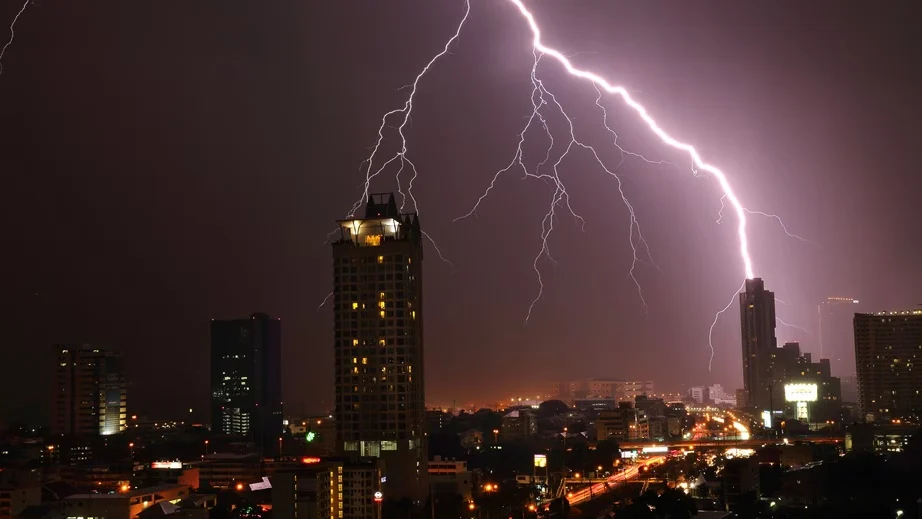
As the global climate undergoes rapid and volatile shifts, the frequency and intensity of extreme weather events—from hurricanes and catastrophic droughts to record-breaking wildfires—have moved from statistical outliers to a constant, looming threat. In this new era of climate instability, the fragility of our modern society has been laid bare. When power grids, communication networks, transportation hubs, and healthcare systems fail in tandem, the resulting impact on communities is not merely additive; it is multiplicative.
Protecting critical infrastructure is no longer a matter of mere maintenance; it is a fundamental imperative for survival. As these systems become increasingly interdependent, the failure of one creates a cascading effect that can paralyze an entire region. To secure the future of our communities, we must shift our perspective from reactive disaster response to proactive, systemic resilience.
The Cascading Crisis: Why Connectivity is the Glue
At the heart of a resilient society lies connectivity. It is the "connective tissue" that allows diverse infrastructure sectors—energy, emergency services, government, and healthcare—to communicate and operate in synchronization during a crisis. When a storm hits, the ability for a power grid to talk to a distribution network, or for a first responder to communicate with a hospital, determines the difference between a managed event and a total systemic collapse.
The "cascade effect" is the primary enemy of modern urban and rural resilience. For instance, a failure in the power grid frequently leads to the failure of wastewater treatment plants, which in turn exacerbates flooding and increases public health risks. Similarly, a telecommunications blackout during an emergency leaves citizens unable to call for help and first responders unable to coordinate effectively.
History provides sobering evidence of these vulnerabilities. During Hurricane Sandy in 2012, widespread power outages across 18 U.S. states rendered wastewater systems inoperable, compounding the flooding crisis and endangering public health. More recently, the 2024 Hurricane Helene response showcased both the danger and the solution: while traditional radio networks faltered, a secondary, resilient statewide radio network in Tennessee proved instrumental in coordinating life-saving helicopter rescues.
Chronology of Vulnerability: A Wake-Up Call
The vulnerability of our telecommunications infrastructure has been brought into sharp focus by a series of catastrophic events across the Iberian Peninsula and North America.
The Iberian Blackout (2025)
In a landmark event that shook the European telecommunications sector, a massive power grid failure across the Iberian Peninsula left over 50 million people in Spain and Portugal without electricity for up to 16 hours. The impact on connectivity was immediate and devastating: internet traffic plummeted by 90% in Portugal and 80% in Spain. As backup power systems failed due to their limited capacity, millions were left in a digital vacuum. The event sparked widespread public outcry and a critical re-evaluation of telecom preparedness.
The Storms of 2025–2026
Following the blackout, the Iberian Peninsula was battered by Storms Claudia and Kristin. These events exposed the lingering flaws in the region’s network architecture. Storm Claudia brought extensive flooding, while Storm Kristin—characterized by winds exceeding 200 km/h—toppled thousands of electricity and telecom poles. The physical destruction of infrastructure resulted in over a million people losing power, serving as a brutal reminder that traditional grid reliance is a significant point of failure.
The Canadian Wildfires (2024)
Across the Atlantic, the 2024 Canadian wildfires highlighted the dangerous connectivity gaps in rural North America. As fires severed fiber optic cables and destroyed relay towers, remote communities found themselves completely isolated, unable to receive emergency alerts or communicate with the outside world.
Supporting Data: Mapping the Risk
The scale of the challenge is quantifiable. Research conducted in partnership with the Clinton Global Initiative (CGI) analyzing disaster data from 2015 to 2025 reveals a clear trend: the burden of climate-related disruption is increasingly concentrated.
In the United States, states with significant Nokia infrastructure footprints—such as Texas (87 disasters), Missouri (61), and Oklahoma (58)—have faced a relentless cycle of extreme weather. These high-frequency, high-impact environments serve as a testing ground for network resilience. The data suggests that for telecom operators, the cost of "preparedness-by-design" is significantly lower than the long-term economic and reputational cost of repeated network outages.
Official Responses and Regulatory Shifts
The failure of private infrastructure to maintain service during crises has triggered an aggressive regulatory response. Governments are no longer leaving network resilience solely to the discretion of market forces.
- Spain’s Four-Hour Mandate: In response to the Iberian blackout, the Spanish government has mandated that telecom providers must maintain a minimum of four hours of mobile coverage during total power grid failures. This requires a fundamental shift in how providers manage backup batteries, generators, and energy-efficient hardware.
- Portugal’s Network Autonomy: Similarly, the Portuguese telecom regulator has issued new guidelines focusing on "network autonomy." These recommendations emphasize decentralized power sources and the hardening of physical infrastructure against high-wind events.
These regulations signal a global shift toward "service-level agreements" that prioritize public safety over pure profit margins. Telecoms are now facing a reality where connectivity is legally classified as an essential utility, akin to water or electricity.
Implications for the Next Generation of Networks
The implications for the telecommunications industry are profound. The mandate is clear: resilience must be embedded into the network lifecycle—from initial design and deployment to operational maintenance and rapid restoration protocols.
The AI-Driven Resilience Strategy
Artificial Intelligence (AI) has emerged as the linchpin for future-proof connectivity. By utilizing AI-driven platforms, such as the Nokia AI-RAN and MantaRay SON (Self-Organizing Networks), operators can transition from reactive troubleshooting to predictive maintenance.
- Predictive Modeling: AI models can analyze weather patterns to predict which parts of a network are most likely to fail before a storm even makes landfall.
- Automated Resource Prioritization: During a crisis, AI can dynamically reallocate bandwidth to emergency services and critical government agencies, ensuring that the most vital communications remain active even when network capacity is severely diminished.
- Digital Twins: By creating a "digital twin" of a community’s physical infrastructure, city planners and telecom operators can simulate disaster scenarios. This allows them to identify single points of failure—such as a critical tower lacking redundant power—and fix them in a virtual environment before a real-world catastrophe occurs.
Building System-Level Partnerships
Nokia’s approach to this challenge is rooted in the philosophy of "ecosystem coordination." Because no single company or government agency can secure a community on its own, Nokia is championing cross-sector partnerships. By bridging the gap between mission-critical service providers, emergency responders, and private telecom operators, we can create a unified defensive front against climate volatility.
As we look toward the future, the conversation is moving from "how do we recover?" to "how do we endure?" This will be the central theme of our engagement at the upcoming New York City Climate Week, where we will facilitate a CGI Climate Working Session on Digital Resilience. The focus will be on concrete, actionable strategies for governments and private entities to harden their digital lifelines.
Conclusion: The Path Forward
The path to a resilient society is paved with robust, intelligent, and flexible connectivity. We are moving beyond the era where connectivity was a luxury; today, it is the backbone of democratic stability and public safety. By investing in AI-driven networks, adhering to strict new regulatory standards, and fostering systemic partnerships, the telecommunications industry can transform itself from a victim of climate change into a cornerstone of climate adaptation.
The next decade will be defined by how we prepare. If we design our networks to withstand the storms of the future, we do more than protect hardware; we protect the communities, lives, and livelihoods that depend on them. The time for reactive, siloed infrastructure is over. The age of resilient, ecosystem-wide connectivity has begun.