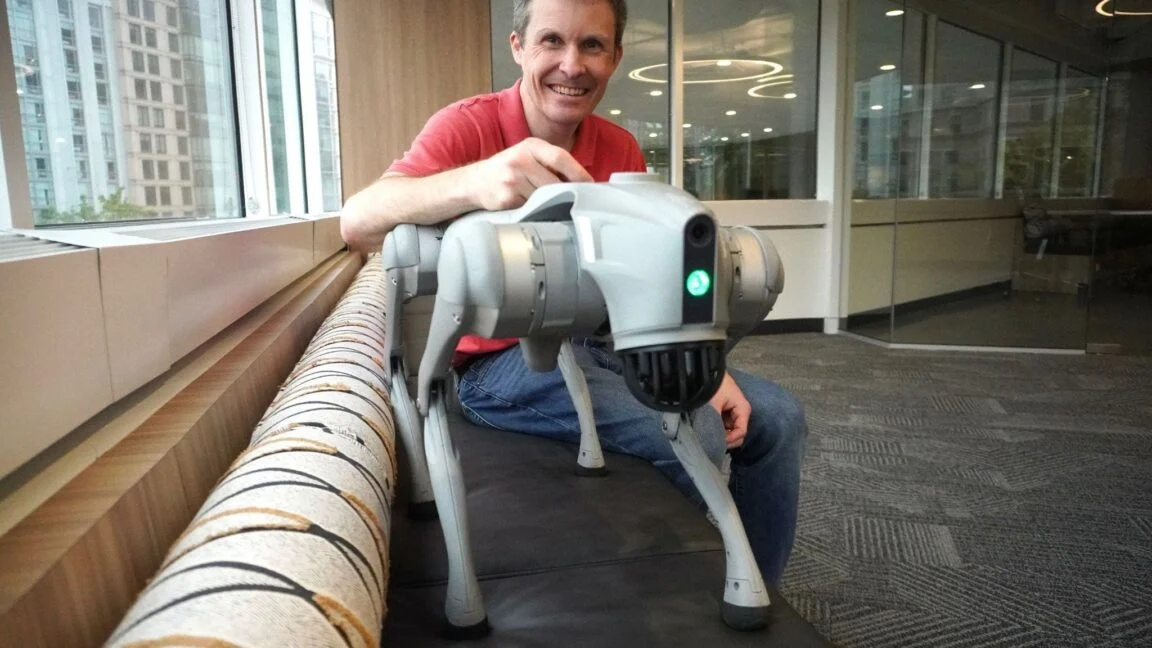
On a crisp June morning, a quiet revolution took to the streets of Washington, D.C. As I walked to my office, a quadruped robot—a mechanical companion from the Chinese robotics firm Unitree—trotted alongside me. The scene was surreal: passersby stopped in their tracks, children pointed in wonder, and neighborhood dogs reacted with a mix of primal suspicion and curiosity.
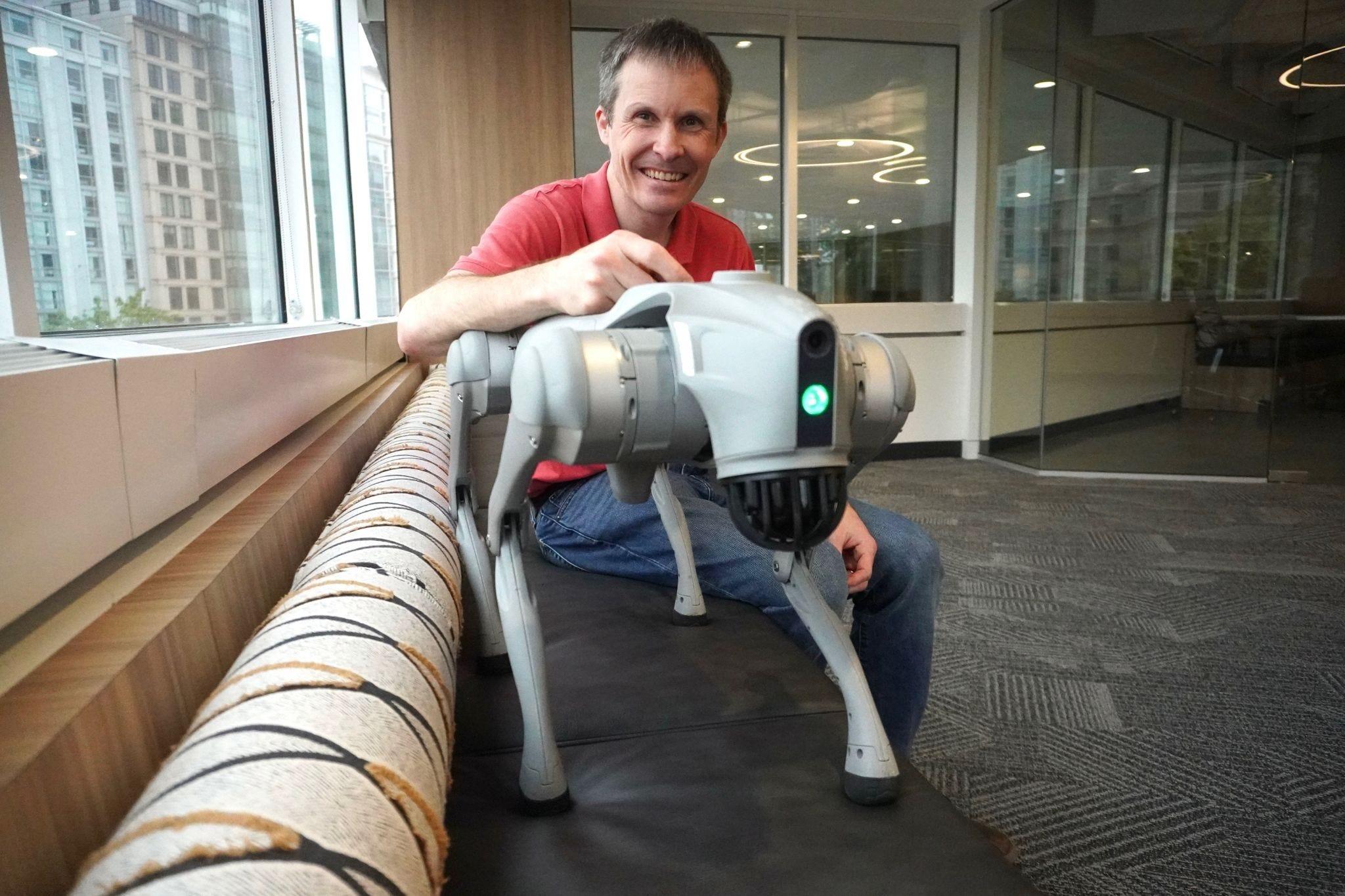
This wasn’t a Hollywood prop or a high-end research prototype reserved for elite laboratories. This was the Unitree Go2 Pro, a commercial robot that I purchased for roughly $4,000. While it is arguably the most "important" robot on the market today, it is also a testament to the fact that the most significant technological shifts are rarely defined by perfection—they are defined by the transition from expensive, inaccessible novelties to affordable, mass-market tools.
The Reality of the "Robot Dog"
For those wondering about the practical utility of a quadruped, the honest answer is: currently, not much. Unlike wheeled robots, which excel in speed and energy efficiency for delivery, or specialized drones designed for aerial surveying, my robot dog lacks manipulators. It has no arms, no hands, and no meaningful capacity to perform household chores. It is house-trained in the sense that it won’t leave a mess, but it certainly cannot fetch the paper.
However, its value proposition is not found in its current utility, but in its price point. I paid $4,017—a significant sum for a personal gadget, yet a fraction of the cost of industrial-grade predecessors like Boston Dynamics’ Spot, which starts at $75,000. By shattering the price barrier, Unitree has democratized access to advanced locomotion. History suggests that such disruption is the precursor to a paradigm shift. Just as the Xerox Star introduced the graphical user interface but companies like Apple and Microsoft made it a household reality, Unitree is positioning itself to be the catalyst for the robotics age.
A Chronology of Disruption: From XDog to Global Dominance
The story of Unitree began in 2016, founded by Wang Xingxing shortly after his master’s thesis project, the "XDog," made waves in the engineering community. Wang’s ambition was clear: to shrink and simplify the bulky, loud, and inefficient hydraulic robots of the era.
- 2016–2019: Unitree focused on research-grade units like the Laikago and AlienGo. These were expensive, specialized machines, but they established the company’s expertise in electric motor technology.
- 2021: The launch of the Go1 series changed everything. With a starting price of $2,700, Unitree began moving from ivory-tower labs to hobbyist basements and small tech firms.
- 2023–2024: The debut of the Go2 series further reduced costs and improved software integration, while the company simultaneously pivoted toward humanoids with the H1 and, later, the G1.
- August 2026: Unitree debuted on the Shanghai stock market. Despite market fluctuations, the company’s valuation soared to $34 billion, underscoring investor belief that we are witnessing the birth of a global hardware titan.
The Engineering Philosophy: Simplicity as a Strategy
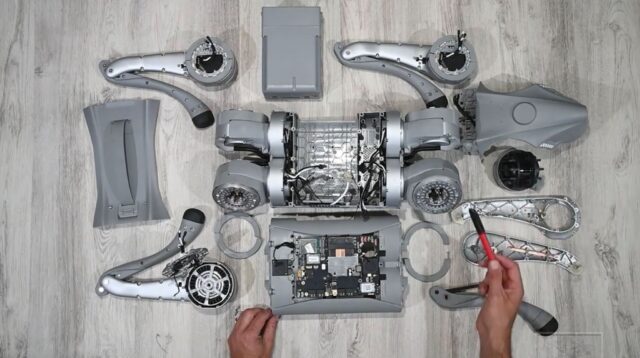
To understand how Unitree achieved these price points, one must look at the hardware. A teardown by the engineering firm Simplexity revealed a brilliant, if uncompromising, approach. Each of the robot’s four legs is powered by three identical motors. By utilizing the same motor throughout the entire chassis, Unitree slashes manufacturing complexity and part counts.
While critics, such as Jakub Bartoszek of MAB Robotics, argue that these motors are lower-quality and prone to faster wear-and-tear than Western alternatives, the design is inherently "field-serviceable." A user can swap out a limb in less than a minute.
Furthermore, Unitree’s approach to gearboxes is revolutionary. Traditional industrial robots rely on complex, high-ratio reducers to ensure extreme precision. Unitree opts for larger, more powerful motors paired with a simple 6.33-to-1 gearbox. This design choice sacrifices some industrial precision but gains agility and, crucially, massive cost savings. In an era where sophisticated AI software can make real-time, micro-adjustments to movement, the need for hyper-precise, expensive mechanical hardware is diminishing.
Financial and Market Implications
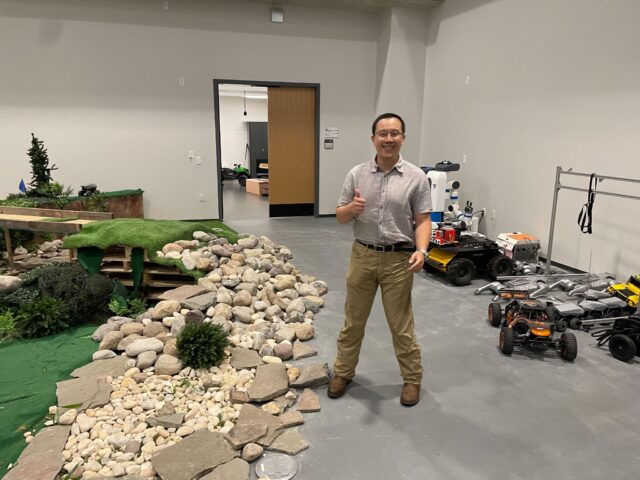
The growth of Unitree is nothing short of exponential. Filings from their 2026 IPO reveal that revenue from humanoid robots alone saw an eightfold increase between 2024 and 2025. Humanoids now account for over half of the company’s total revenue.
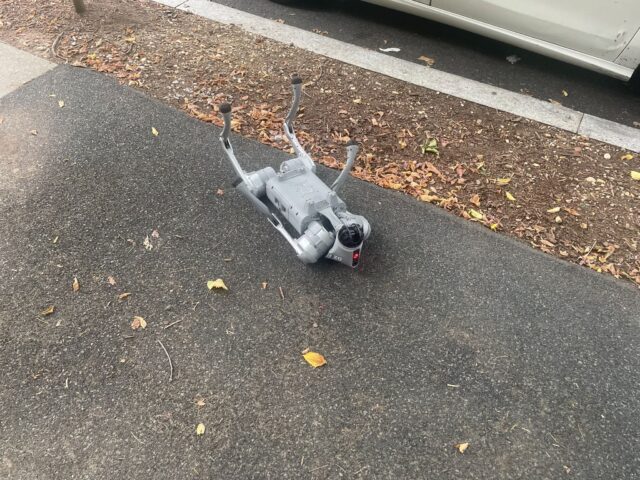
This rapid scaling creates a powerful flywheel effect: higher sales volume allows for better supply chain negotiations, which lowers production costs, which in turn fuels more sales. This is the exact playbook used by DJI to dominate the global drone market. Much like the early days of the DJI Phantom—which was buggy, lacked a camera, and had poor battery life—Unitree’s products are currently rough around the edges. My own unit collapsed on my doorstep after a hot day, a victim of its own thermal limitations and battery drain. But for a consumer-facing technology, "good enough" is the gateway to "ubiquitous."
The Geopolitical Landscape and Regulatory Hurdles
Unitree’s rapid ascent has not gone unnoticed by Western regulators. In the United States, concerns over data privacy and the potential for dual-use technology have led to legislative friction. In June 2026, a bipartisan House bill was introduced specifically naming Unitree, aiming to restrict the importation of Chinese-manufactured robots. This was followed by FCC regulations targeting foreign-made robotic hardware.
However, the global market is vast. Much like the experience with Chinese electric vehicle manufacturers like BYD, bans in the United States may simply result in a bifurcated market. While the U.S. deliberates on protectionist policies, Unitree continues to refine its manufacturing, software, and supply chain in the rest of the world.
Conclusion: A Robotics Backwater?
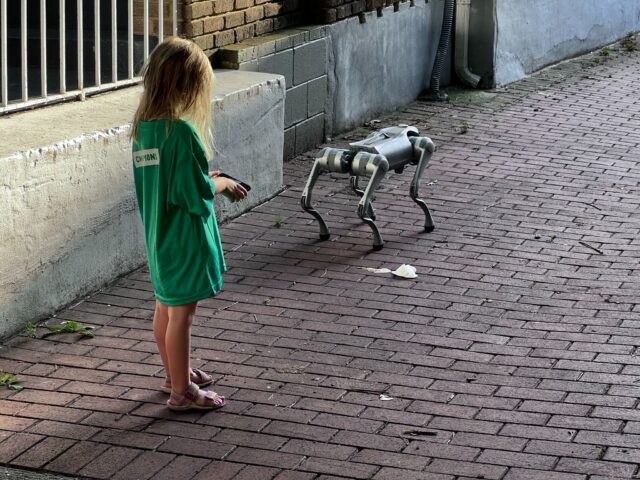
The danger for the United States is that by focusing exclusively on banning technology rather than fostering a competitive ecosystem, it risks becoming a "robotics backwater." If Unitree succeeds in its goal—making humanoid robots as common and affordable as the household appliances of the 20th century—the economic advantages will accrue to the regions where these robots are developed and deployed.
As I watched my robot dog, currently resting on its back after a long, uphill commute, I was reminded that it is a flawed machine. But it is also a sign of things to come. The era of the personal robot is no longer a matter of "if," but a matter of "when." And right now, the primary architecture of that future is being written in China. Whether or not that future remains open to the West may depend on whether we choose to build our own competitors or simply pull the plug on the competition.