Published: August 6, 2026
Reporting by: Kelly Stroh
As the global supply chain continues to undergo a period of intense restructuring, the financial mechanics of international trade—specifically the complex web of tariffs and subsequent refund mechanisms—have moved to the forefront of retail strategy. For O’Reilly Automotive, one of the nation’s largest auto parts retailers, the approach to tariff management has been defined by a nuanced, supplier-centric model that stands in contrast to the more direct, public-facing refund programs seen elsewhere in the retail sector.
During its latest earnings call, O’Reilly leadership clarified its position on tariff-related financial maneuvers, emphasizing that its sourcing structure typically shields the company from the direct administrative burden of being the "importer of record" for many goods. Instead, the company focuses on long-term cost mitigation and supplier partnerships to navigate the volatile landscape of international trade.
Main Facts: The "Importer of Record" Distinction
The core of O’Reilly’s strategy lies in its supply chain architecture. Unlike some mass-market retailers that manage the entire import process internally—thereby assuming the role of "importer of record" and the associated liability for tariff payments—O’Reilly often relies on its suppliers to manage these logistics.
By positioning suppliers as the primary importers, O’Reilly effectively offloads the direct payment of duties. This does not mean the retailer is immune to tariff costs; rather, these costs are baked into the wholesale price of goods. According to management, this model allows the company to negotiate more effectively, embedding potential tariff volatility into the cost of goods sold (COGS) rather than dealing with the administrative complexity of filing for direct tariff rebates from government agencies.
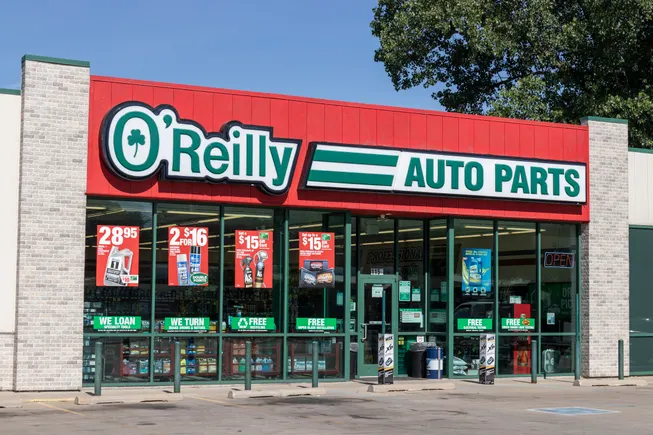
This distinction is crucial. While competitors may tout large, singular "tariff refunds" as a windfall, O’Reilly treats these financial adjustments as a component of broader cost negotiations. By leveraging their scale, they ensure that the financial burden of trade policy shifts is shared or mitigated through ongoing supplier agreements.
A Chronology of Retail Trade Adaptation
The evolution of tariff management in the retail sector has not been linear. To understand O’Reilly’s current posture, one must look at the timeline of the broader retail industry’s reaction to shifting trade policies over the last several years:
- 2018–2019 (The Tariff Onset): Retailers faced immediate shocks as trade tensions between the U.S. and major manufacturing hubs escalated. Many firms were forced to scramble, absorbing costs or passing them directly to consumers to protect margins.
- 2020–2022 (Supply Chain Resilience): The pandemic and subsequent logistical bottlenecks forced companies to prioritize supplier health and geographic diversification. O’Reilly, during this period, began heavily investing in broadening its supplier base to avoid over-reliance on single regions.
- 2023–2025 (The Push for Control): Retailers began moving toward private-label strategies to regain control over pricing and product sourcing. This allowed firms like O’Reilly to negotiate directly with factories, bypassing middlemen and gaining better visibility into the "landed cost" of their products.
- 2026 (The Refund Era): As legal and administrative channels for recouping past tariff payments matured, large companies began reporting significant cash inflows from these refunds. This has created a bifurcated market: those who held the "importer of record" title and are now collecting direct checks, and those like O’Reilly, who have integrated these savings into their wholesale cost structure.
Supporting Data: Comparative Industry Strategies
The divergence in strategy across the retail landscape is stark. As companies navigate the return of capital from duty refunds, their allocation strategies reveal their differing priorities:
- The Direct Rebate Model (e.g., Amazon, Walmart): Some of the largest players in the industry have opted for a customer-centric approach. Amazon, for example, has indicated that it would issue refunds in limited circumstances, while Walmart has signaled that these funds would be used to drive competitive pricing, effectively using the capital to win market share in an inflationary environment.
- The Capital Reinvestment Model (e.g., Ford Motor Co.): For manufacturers like Ford, which expects to recoup approximately $1.3 billion in tariff refunds, the strategy is focused on internal investment. These funds are being funneled into specific business units—such as Ford Blue and Ford Pro—to accelerate innovation and sustain manufacturing capacity.
- The Operational Buffer Model (e.g., McCormick & Co.): Ingredient manufacturers have utilized their $28 million in refunds to hedge against general supply chain pressures and rising input costs, treating the funds as a stabilizing force for their bottom line.
O’Reilly’s approach falls into a category of its own: Integrated Cost Optimization. By maintaining flexibility in whether they act as the importer of record, they remain agile. In cases where it is advantageous to control the logistics, they assume the role; in others, they remain a downstream buyer, leaving the administrative burden to their manufacturing partners.
Official Responses and Strategic Pivot
During the earnings call, company leadership, including executive team members, addressed the potential for "misinterpretation" regarding how O’Reilly handles these funds.

"When you think about just direct tariff rebates or refunds as some retailers have spoken about it, that’s something we are doing in cost and cost of goods and how we negotiate the cost of goods," the company noted.
This transparency is vital for investors. It clarifies that while O’Reilly may not be generating headlines about large, one-time tariff windfalls, the company is systematically reducing its cost base. Their strategy is multifaceted:
- Geographic Diversification: Moving sourcing away from high-tariff regions to mitigate risk at the source.
- Supplier Health Initiatives: Ensuring that the manufacturers they rely on are stable and capable of navigating their own duty obligations, which in turn keeps wholesale prices for O’Reilly stable.
- Private Label Expansion: Increasing the share of private-label goods allows O’Reilly to source individual stock-keeping units (SKUs) from multiple suppliers simultaneously, providing leverage to force competitive pricing.
Implications for the Future of Retail Logistics
The strategy adopted by O’Reilly Automotive carries significant implications for the future of retail supply chain management.
1. The Decline of "One-Size-Fits-All" Importing
The era of retailers blindly acting as the importer of record for every product is likely ending. O’Reilly’s "case-by-case" model suggests that the future of retail logistics will be increasingly bespoke. Companies will weigh the administrative costs and potential refund eligibility of being the importer against the operational simplicity of buying from a landed-cost provider.
2. The Rise of the "Procurement-First" Retailer
O’Reilly’s focus on supplier health and private-label control highlights that retail success is no longer just about merchandising; it is about procurement prowess. As trade policies continue to shift, retailers that can negotiate effectively—and pivot between being the importer or a downstream buyer—will be the most resilient to global economic shocks.

3. Margin Protection in a Volatile World
By embedding tariff outcomes into the cost of goods rather than treating them as separate financial events, O’Reilly is effectively "smoothing" its margins. This approach protects the company from the volatility of government tariff policy, ensuring that consumers see more consistent pricing at the retail level.
In conclusion, O’Reilly’s quiet, methodical approach to tariff management reflects a sophisticated understanding of global trade dynamics. While competitors capture headlines with large, public-facing rebate programs, O’Reilly is working in the background to build a resilient, flexible supply chain that prioritizes long-term cost control over short-term financial optics. As trade tensions and regulatory shifts remain a constant in the global economy, this model of strategic agility may well become the new standard for the retail industry.