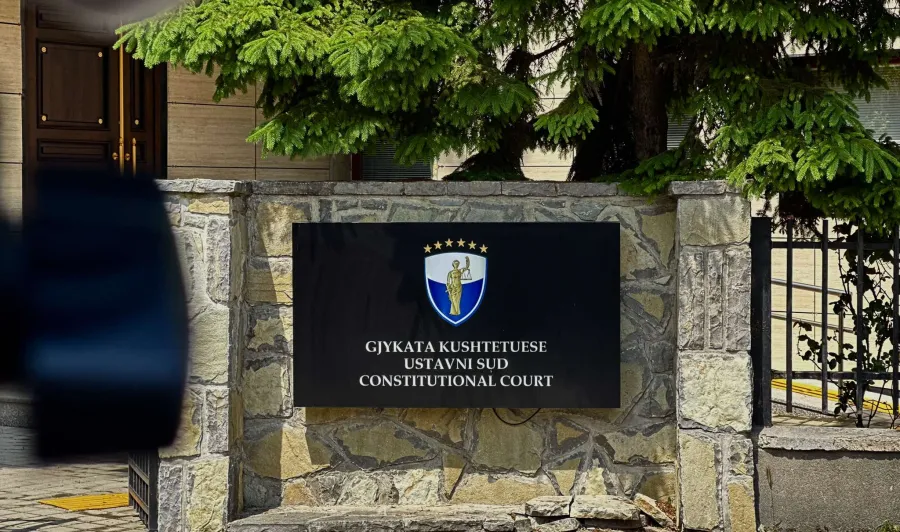
PRISTINA, Kosovo – August 6, 2026 – Kosovo finds itself in a critical constitutional juncture as the clock rapidly ticks towards an imminent deadline for the formation of its new Assembly. A definitive ruling by the Constitutional Court, issued just last year, unequivocally mandates that the country’s legislative body must be constituted within 30 days of the official announcement of election results. With the Central Election Commission (CEC) having certified the latest election outcomes on July 8th, 2026, this constitutional imperative culminates on Friday, August 7th, placing significant pressure on Kosovo’s political leadership.
The Constitutional Court’s pronouncement, delivered in June 2025, underscored the non-negotiable nature of this timeframe, asserting that the Constitution imposes a binding obligation on members of parliament. Failure to adhere to this strict deadline, while not automatically triggering punitive legal consequences like snap elections according to some legal experts, nevertheless carries profound implications for the nation’s political stability, democratic functionality, and international standing. As the deadline looms, the eyes of the nation, and indeed the international community, are fixed on Pristina, awaiting the crucial steps that will define the trajectory of Kosovo’s political landscape for the coming four years.
The Constitutional Mandate: A Race Against Time
The imperative to constitute the Assembly within a strict 30-day window is not a mere procedural guideline but a cornerstone of Kosovo’s constitutional framework, designed to ensure governmental continuity and prevent prolonged political paralysis. The recent general elections, held amidst a complex domestic and regional climate, saw citizens cast their votes, electing 120 representatives to the highest legislative body. The subsequent certification of these results by the Central Election Commission on July 8th, 2026, officially set in motion the constitutional countdown.
This means that by the end of Friday, August 7th, 2026, the newly elected deputies are constitutionally required to have convened their inaugural, constitutive session. This session is pivotal, as it marks the formal commencement of the new parliamentary mandate, the election of the Assembly Speaker and Deputy Speakers, and lays the groundwork for the eventual formation of a new government. The Constitutional Court’s previous ruling serves as a stark reminder to all political actors of the gravity of this deadline and the expectations placed upon them by the highest legal authority in the land. The coming hours are expected to be fraught with intense negotiations and political maneuvering as parties strive to meet this critical constitutional obligation.
Chronology of Events Leading to the Current Impasse
Understanding the current situation requires a look back at the key events that have culminated in this critical deadline. The path to the Assembly’s formation has been shaped by a series of significant constitutional and electoral milestones.
Recent General Elections
The foundation of the current situation lies in the recent general elections, the specific date of which is not provided but can be inferred as having occurred shortly before July 2026. These elections were a democratic exercise where citizens expressed their will, leading to the composition of the new 120-seat Assembly. The campaign period, voter turnout, and preliminary results likely generated significant public and media attention, reflecting the vibrant, albeit often challenging, nature of Kosovo’s multi-party democracy. The elections were crucial for determining the balance of power and the political alliances that would shape the country’s governance for the next four years.
Certification of Results by the CEC (July 8, 2026)
Following the elections, the Central Election Commission (CEC), as the independent body responsible for organizing and overseeing electoral processes, undertook the meticulous task of verifying and certifying the final results. This crucial step, completed on July 8th, 2026, marked the official conclusion of the electoral cycle and formally recognized the mandate of the newly elected members of parliament. The certification date is not just a bureaucratic formality; it is the precise trigger point from which the 30-day constitutional clock for the Assembly’s constitution begins. Any delays in this certification process would have, in turn, shifted the subsequent constitutional deadline.
The Constitutional Court’s Binding Decision (June 2025)
The most direct precursor to the current constitutional pressure is the landmark decision issued by the Constitutional Court in June 2025. This ruling, which addressed the interpretation of Article 66 of the Constitution, specifically clarified the mandatory nature of the 30-day period for constituting the Assembly. Although the specific trigger for this 2025 ruling is not detailed, such clarifications often arise from previous political impasses, requests for interpretation by state institutions, or general constitutional review to prevent future ambiguities. The Court’s decision, therefore, was not made in a vacuum but rather as a preemptive or reactive measure to ensure constitutional compliance in parliamentary formation processes. It served as a clear warning and guiding principle for all future post-election scenarios, including the current one.
The Imminent Deadline (August 7, 2026)
With the CEC’s certification on July 8th, 2026, the 30-day period concludes on August 7th, 2026. This means that by Friday, the political parties and their elected representatives must have overcome any internal divisions and inter-party disagreements to hold the constitutive session. The urgency of this deadline cannot be overstated; it represents a hard constitutional stop that demands decisive action from Kosovo’s political class. The period between certification and the deadline is typically dedicated to intense coalition negotiations, internal party caucuses, and the selection of candidates for the Assembly Speaker and other leadership positions. The success or failure to meet this deadline will have immediate and lasting repercussions on Kosovo’s democratic institutions.
Supporting Data: The Legal Foundation of the Deadline
The Constitutional Court’s 2025 decision is rooted firmly in the text and spirit of Kosovo’s highest legal document. The Court meticulously analyzed Article 66, Paragraph 1 of the Constitution, leaving no room for ambiguity regarding the mandatory nature of the Assembly’s formation timeline.
Article 66, Paragraph 1 of the Constitution
The core of the legal requirement lies within Article 66, Paragraph 1, which states:
- "Kuvendi i Kosovës zgjidhet me mandat katërvjeçar, duke filluar nga dita e seancës konstituive, që mbahet brenda tridhjetë (30) ditësh nga dita e shpalljes zyrtare të rezultateve të zgjedhjeve."
The Constitutional Court further highlighted the English version of this provision for added clarity:
- "The Assembly of Kosovo shall be elected for a mandate of four (4) years, starting from the day of the constitutive session, which shall be held within thirty (30) days from the official announcement of the election results."
Interpretation of "Shall Be Held"
In its June 2025 ruling, specifically at Point 124, the Constitutional Court provided a detailed explanation of its interpretation of the phrase "shall be held." The Court emphasized that this phrasing, particularly the use of "shall" in normative and constitutional language, denotes a mandatory, rather than a merely permissive or facultative, obligation. To bolster its argument, the Court referenced established legal principles and terminology:
- "(Gjykata sqaron se ky formulim në gjuhën angleze – ‘shall be held’ – paraqet një normë me karakter detyrues, dhe jo fakultativ, sipas përdorimit të standardizuar të gjuhës normative dhe kushtetuese edhe në të drejtën anglo – saksone, sipas Black’s Law Dictionary, ‘shall’ is ‘mandatory’, not ‘permissive’)."
This reference to Black’s Law Dictionary, a widely recognized authority in legal definitions, powerfully reinforces the Court’s position. By explicitly stating that "shall" is "mandatory" and not "permissive," the Court leaves no doubt that the constitutional provision imposes a binding duty on the elected deputies to convene the constitutive session within the stipulated timeframe.
The Nature of the Constitutional Obligation
Further elaborating on its interpretation, at Point 131 of its decision, the Constitutional Court reiterated that the structure of Article 66, Paragraph 1, itself signifies the mandatory nature of the 30-day deadline. It stressed that convening the constitutive session within this period is not an optional formality or a mere guiding principle, but a fundamental constitutional obligation intrinsically linked to the commencement of the new legislative mandate:
- "Më tej, Gjykata duke iu rikthyer përcaktimeve në paragrafin 1 të nenit 66 të Kushtetutës thekson se vetë struktura e kësaj dispozite kushtetuese nënkupton se mbajtja e seancës konstituive brenda afatit tridhjetë (30) ditor, nuk është mundësi formale apo orientuese, por detyrim kushtetues që lidhet ngushtë me fillimin e mandatit të legjislaturës së re."
This interpretation highlights the Court’s commitment to ensuring the smooth and timely functioning of democratic institutions. Delays in constituting the Assembly directly impede the formation of a new government, the adoption of essential legislation, and the overall capacity of the state to address the needs of its citizens. The Court’s ruling, therefore, serves as a powerful constitutional safeguard against prolonged political stalemates.
Official Responses and the Political Landscape
As the August 7th deadline approaches, the political temperature in Pristina is undoubtedly rising. While specific official statements from political parties regarding this particular deadline are not provided in the original article, a comprehensive journalistic analysis requires considering the typical responses and dynamics within Kosovo’s political landscape.
The Role of Major Political Parties
The responsibility for meeting the constitutional deadline primarily rests with the major political entities that have secured seats in the new Assembly. The party or coalition that garnered the most votes and is tasked with leading the government formation process faces the most immediate pressure. They are expected to be engaged in intensive, often behind-the-scenes, negotiations with potential coalition partners to secure the necessary majority (at least 61 votes out of 120) to elect the Assembly Speaker and, subsequently, form a government.
- The Leading Bloc: The party or coalition with the highest number of seats would typically be working diligently to build consensus. Their public statements would likely emphasize their commitment to upholding the Constitution and forming stable institutions quickly. Internally, they would be negotiating ministerial portfolios, policy platforms, and the distribution of power within the Assembly.
- Opposition Parties: While not directly responsible for forming the government, opposition parties play a crucial role. They can either facilitate the process by offering conditional support or, conversely, create obstacles through their demands or refusal to participate in a constructive dialogue. Their statements might focus on transparency, accountability, and the need for a broad-based, inclusive government, or they might criticize the leading bloc’s inability to form a government.
The President’s Facilitative Role
The President of Kosovo, as the head of state, holds a significant, albeit largely ceremonial, role in facilitating the government formation process. The President is constitutionally mandated to consult with political parties and propose a candidate for Prime Minister once the Assembly has been constituted. During an impasse, the President often acts as a mediator, encouraging dialogue and seeking consensus among political leaders. Public statements from the President would typically urge all parties to act responsibly, prioritize the national interest, and adhere to the constitutional timeline.
The Central Election Commission (CEC)
Beyond certifying the election results, the CEC’s role is largely concluded once the results are finalized. However, its previous actions (the certification date) directly define the current constitutional clock. The CEC itself would likely refrain from commenting on the political negotiations, maintaining its neutrality as an electoral body.
International Community’s Observation
The international community, particularly the European Union, the United States, and various international organizations, closely monitors Kosovo’s democratic processes. Their representatives would likely be engaging with political leaders, emphasizing the importance of institutional stability, adherence to the rule of law, and the timely formation of a functional government. While they do not directly intervene, their diplomatic pressure and expressions of concern can significantly influence political actors.
Implications: What Happens Next?
The impending deadline on August 7th presents a critical moment for Kosovo. The consequences of meeting or missing this deadline are multifaceted, ranging from immediate political ramifications to longer-term impacts on the country’s democratic maturity and international standing.
Immediate Consequences of Missing the Deadline
Ehat Miftaraj from the Kosovo Institute for Justice (KJI), in a statement to Radio Free Europe, provided a crucial clarification regarding the legal consequences of failing to meet the 30-day deadline. He stated that while the Assembly is constitutionally obliged to be constituted within this period, "its non-realization does not automatically produce legal consequences." This is a significant nuance, implying that the failure to meet the deadline does not automatically trigger specific, pre-defined punitive measures like immediate snap elections.
However, "not automatically" does not mean "without consequences." The implications of missing the deadline, even without immediate legal penalties, are severe:
- Political Instability and Legislative Vacuum: A failure to constitute the Assembly means a continued legislative vacuum. No new laws can be passed, no government can be formally appointed, and no state budget can be approved for the coming year. This creates significant political instability and hampers the country’s ability to govern effectively.
- Challenge to Democratic Legitimacy: Prolonged failure to form the Assembly undermines the democratic mandate given by the citizens. It signals an inability of political leaders to put aside differences for the common good, eroding public trust in institutions.
- Economic Uncertainty: Political instability directly impacts economic confidence. Investors, both domestic and foreign, are deterred by uncertainty, potentially leading to a slowdown in economic growth, delayed projects, and increased unemployment.
- International Scrutiny and Damage to Reputation: Kosovo’s progress towards Euro-Atlantic integration is closely tied to its ability to demonstrate stable democratic governance. A prolonged political crisis would draw negative international attention, potentially delaying or hindering key processes like visa liberalization or progress towards EU candidacy.
- Potential for a New Constitutional Court Referral: If the deadline passes without the Assembly being constituted, and a prolonged stalemate ensues, it is highly probable that one of the state institutions (e.g., the President, or a group of deputies) might refer the matter back to the Constitutional Court for further clarification on the next steps and the available mechanisms to break the deadlock.
Potential Scenarios
Based on the constitutional framework and expert analysis, several scenarios could unfold:
- Successful Formation (Best-Case Scenario): In the ideal scenario, political parties manage to reach a consensus, elect the Assembly Speaker and Deputy Speakers, and formally constitute the Assembly by August 7th. This would signal political maturity and allow the process of government formation to move forward without constitutional impediments.
- Delayed Formation with Eventual Success: If the deadline is missed by a few days or even a week or two, but parties eventually come to an agreement, the Assembly could still be constituted. While technically violating the 30-day mandate, the absence of automatic legal consequences might allow for this. However, it would come at the cost of political credibility and potentially invite further constitutional scrutiny.
- Prolonged Political Crisis: If political parties remain entrenched in their positions, unable to form a governing coalition or even elect the Assembly’s leadership, Kosovo could face a prolonged political crisis. This would involve continued caretaker government, legislative paralysis, and heightened public frustration.
- Path to Snap Elections (Conditional): While Ehat Miftaraj stated that snap elections are not an automatic consequence, a prolonged and irreconcilable political crisis could eventually lead to them. If repeated attempts to form a government fail, and there is no viable path forward, the President, in consultation with political parties, might be compelled to dissolve the Assembly and call for new elections as a last resort to break the deadlock. This would typically be a measure taken only after all other constitutional and political avenues have been exhausted.
Expanded Expert Analysis
Ehat Miftaraj’s clarification that "non-realization does not automatically produce legal consequences" is critical. It suggests that the Constitution, while mandatory, does not prescribe an immediate, automatic "punishment" for non-compliance with this specific deadline. This distinguishes it from, for example, a vote of no confidence which automatically triggers certain government dissolution procedures. Instead, the consequences are more political and institutional in nature, creating a vacuum that needs to be addressed through further political negotiation or, potentially, new constitutional interpretations regarding a prolonged impasse.
The absence of automatic legal consequences places an even greater onus on political leaders to demonstrate responsibility and a commitment to democratic principles. It means that the onus is on them to find a solution, rather than relying on a constitutional mechanism to force one. The coming days will be a true test of Kosovo’s political leadership and its ability to navigate a delicate constitutional challenge while upholding the trust placed in them by the electorate.