The landscape of generative artificial intelligence has entered a new epoch. For years, the industry has been defined by incremental gains, but the latest showdown between OpenAI’s GPT-5.6 Sol and Anthropic’s Claude Fable 5 represents a fundamental shift in how frontier models are being built, deployed, and monetized. As these two titans vie for supremacy, developers, enterprises, and power users find themselves at a crossroads: do they prioritize the raw, unbridled reasoning power of a research-first model, or the high-velocity, cost-efficient utility of an agentic powerhouse?
This analysis dissects the core technical architectures, pricing strategies, and real-world performance metrics of these two flagship models to determine which reigns supreme in the current ecosystem.
The Main Facts: A New Era of Agentic Intelligence
At the heart of this competition are two distinct philosophies. OpenAI’s GPT-5.6 Sol is engineered as a multipurpose workhorse. It is designed to handle high-volume coding tasks, complex data research, and multi-step professional workflows with a focus on "Max Reasoning" capabilities. By utilizing a "Parallel Agent" architecture, Sol allows users to deploy multiple sub-agents simultaneously, making it a formidable choice for massive software engineering projects.
Conversely, Claude Fable 5, Anthropic’s most advanced iteration, is built with a focus on deep autonomy and long-running agentic tasks. Its integration with Claude Code and Managed Agents allows for a level of self-correction and task-delegation that currently sets the benchmark for complex, low-supervision projects. While Sol is the engine for productivity, Fable 5 is increasingly viewed as the brain for strategic execution.
Chronology: The Escalation of Model Capabilities
The rivalry intensified mid-2026, marking a turning point in AI development:
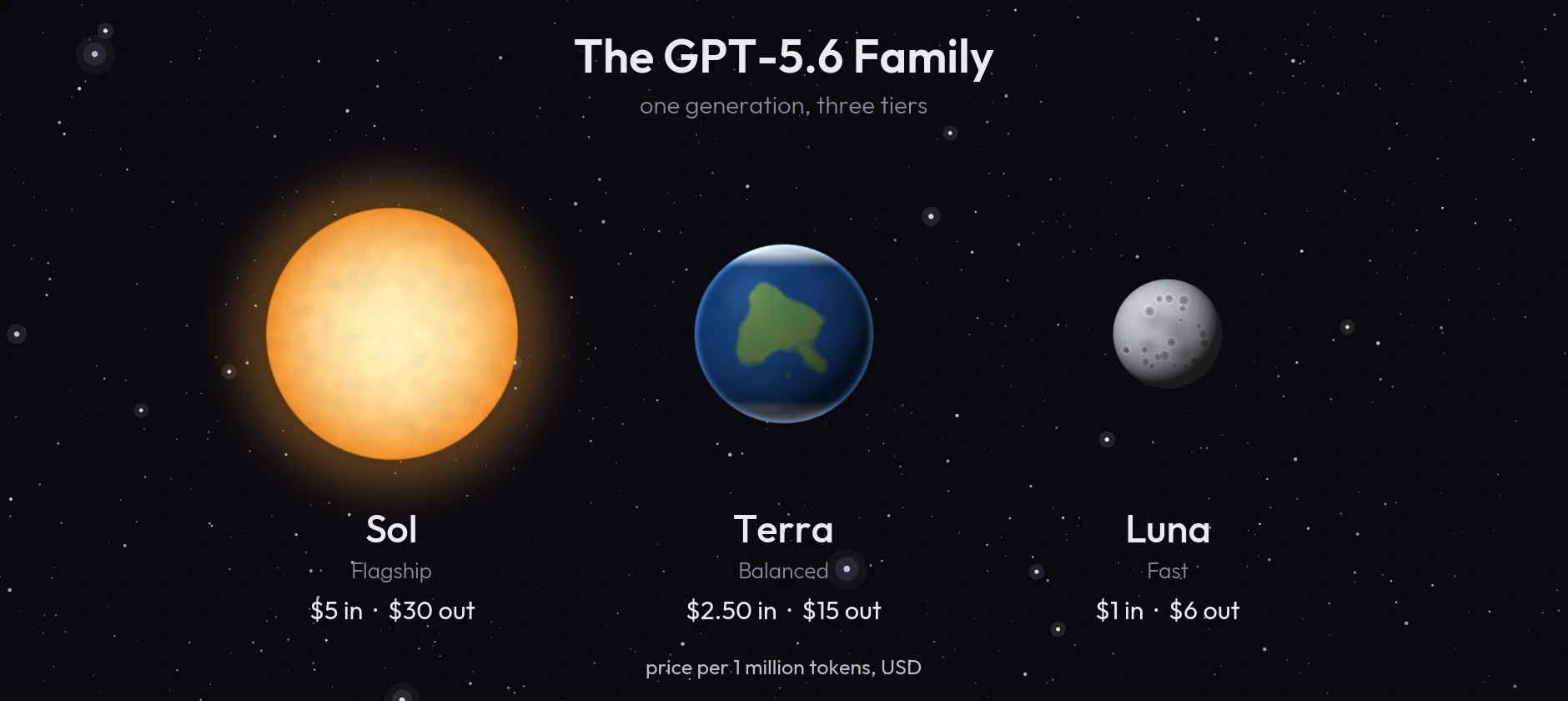
- Early July 2026: The industry was shaken by the simultaneous rollout of high-performance models. OpenAI introduced the GPT-5.6 "Sol" series, emphasizing "Terra" and "Luna" variants that focus on different compute-to-reasoning ratios.
- Mid-July 2026: Anthropic responded by pushing Fable 5 into public availability, positioning it as the ultimate tool for deep research and multi-step reasoning.
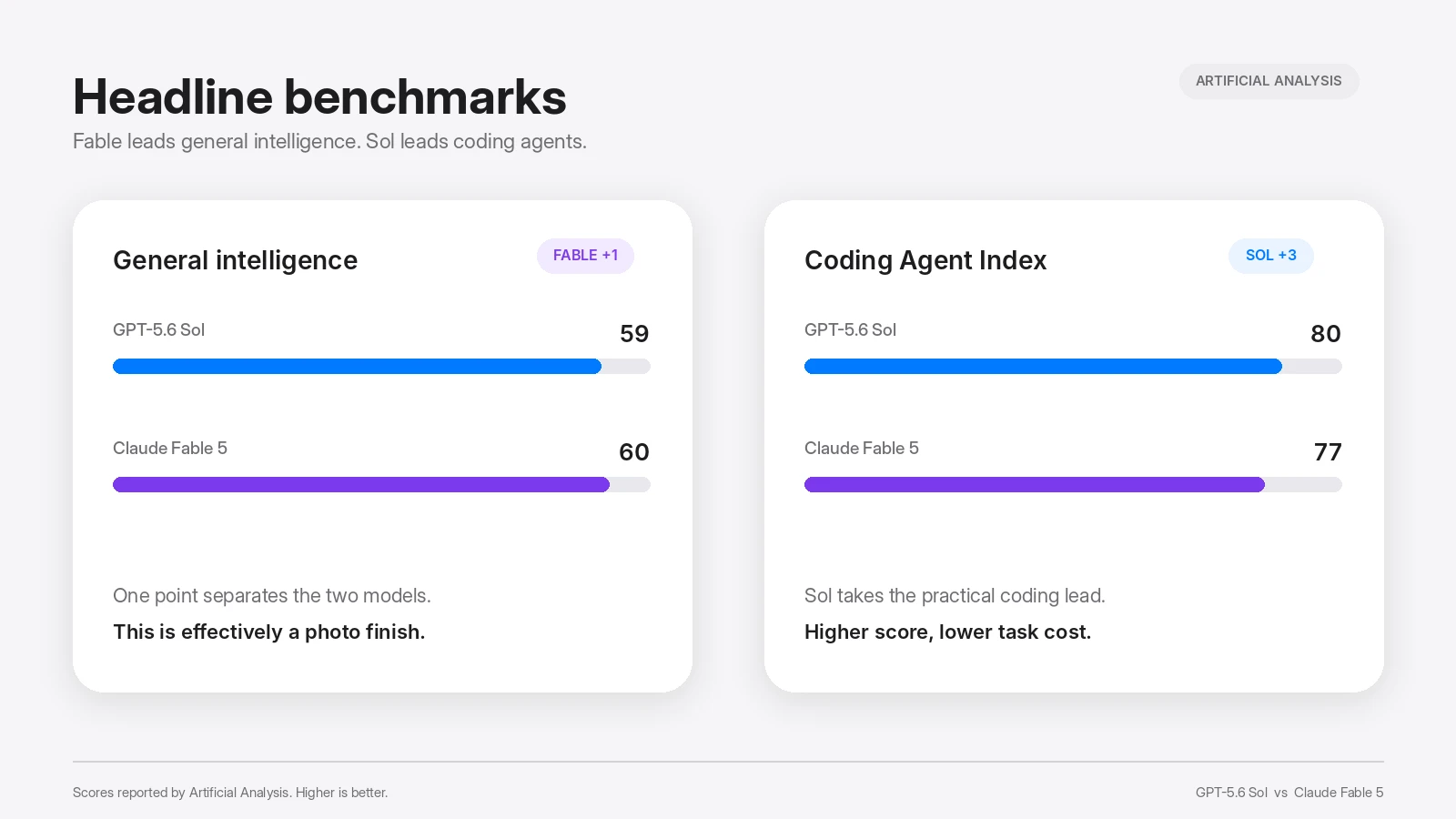
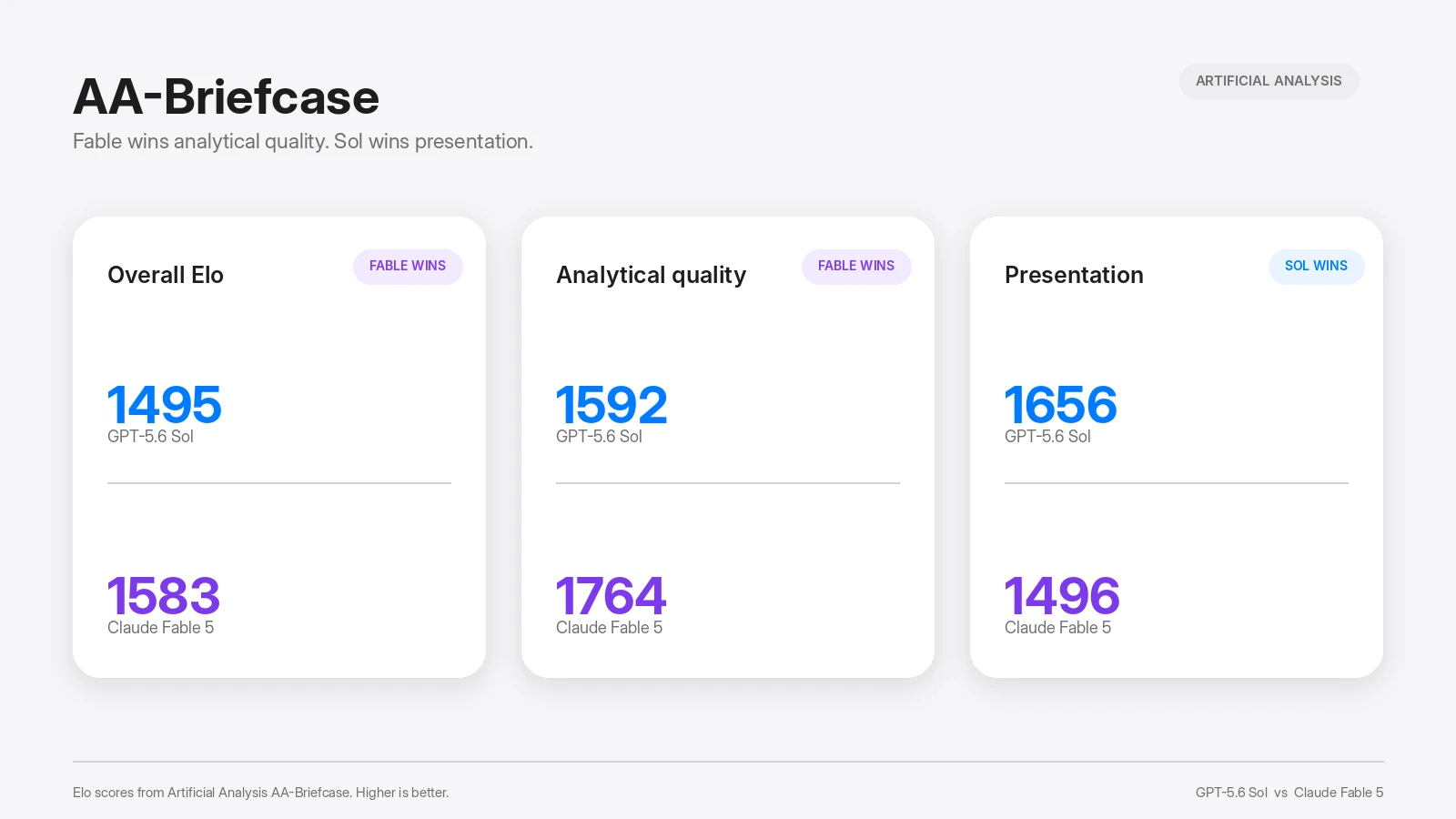
- Late July 2026: Independent benchmarks began to emerge, revealing a split in the market. While Fable 5 held a marginal lead in pure cognitive Elo ratings, Sol began dominating the "Coding Agent" category, creating a clear division of labor in the professional workspace.
Supporting Data: By the Numbers
To understand the economic and technical trade-offs, one must look at the underlying cost structures and performance benchmarks.

Pricing Comparison: The Economics of Scale
API costs per million tokens reveal a significant disparity that will dictate adoption rates for startups and enterprise clients:
| Model | Input (per M) | Cached Input | Output (per M) |
|---|---|---|---|
| GPT-5.6 Sol | $5 | $0.50 | $30 |
| Claude Fable 5 | $10 | $1.00 | $50 |
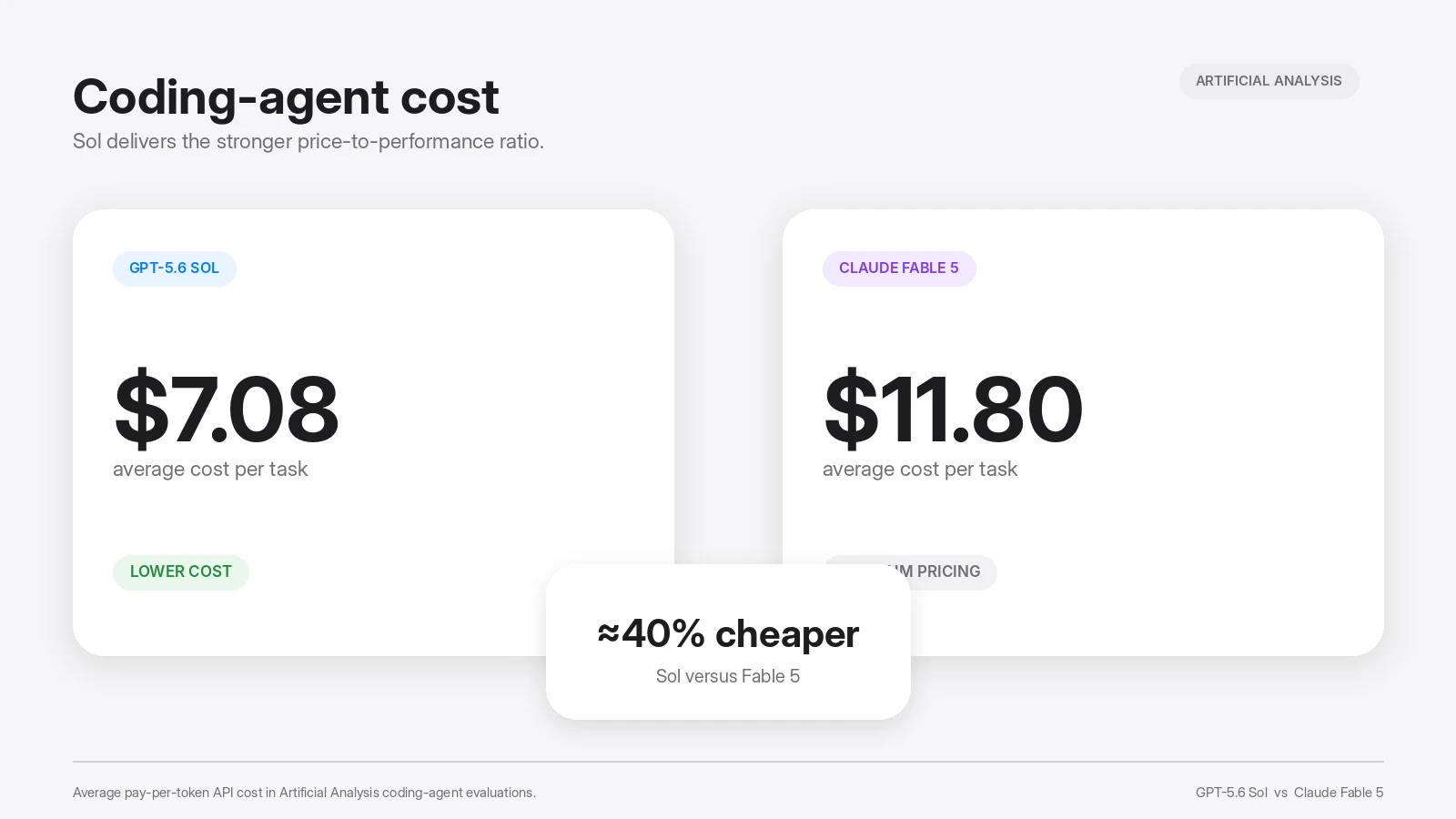
Sol is effectively 50% cheaper on input and 40% cheaper on output. While both models offer generous context windows—Sol leading slightly with 1.05 million tokens—the price efficiency of Sol is a clear tactical advantage. However, users should note that Sol triggers higher pricing for any request exceeding 272,000 input tokens, a caveat that heavy users must manage.
Coding and Reasoning Benchmarks
The battle is fought on several fronts, including the Artificial Analysis Intelligence Index and various Coding Agent benchmarks.
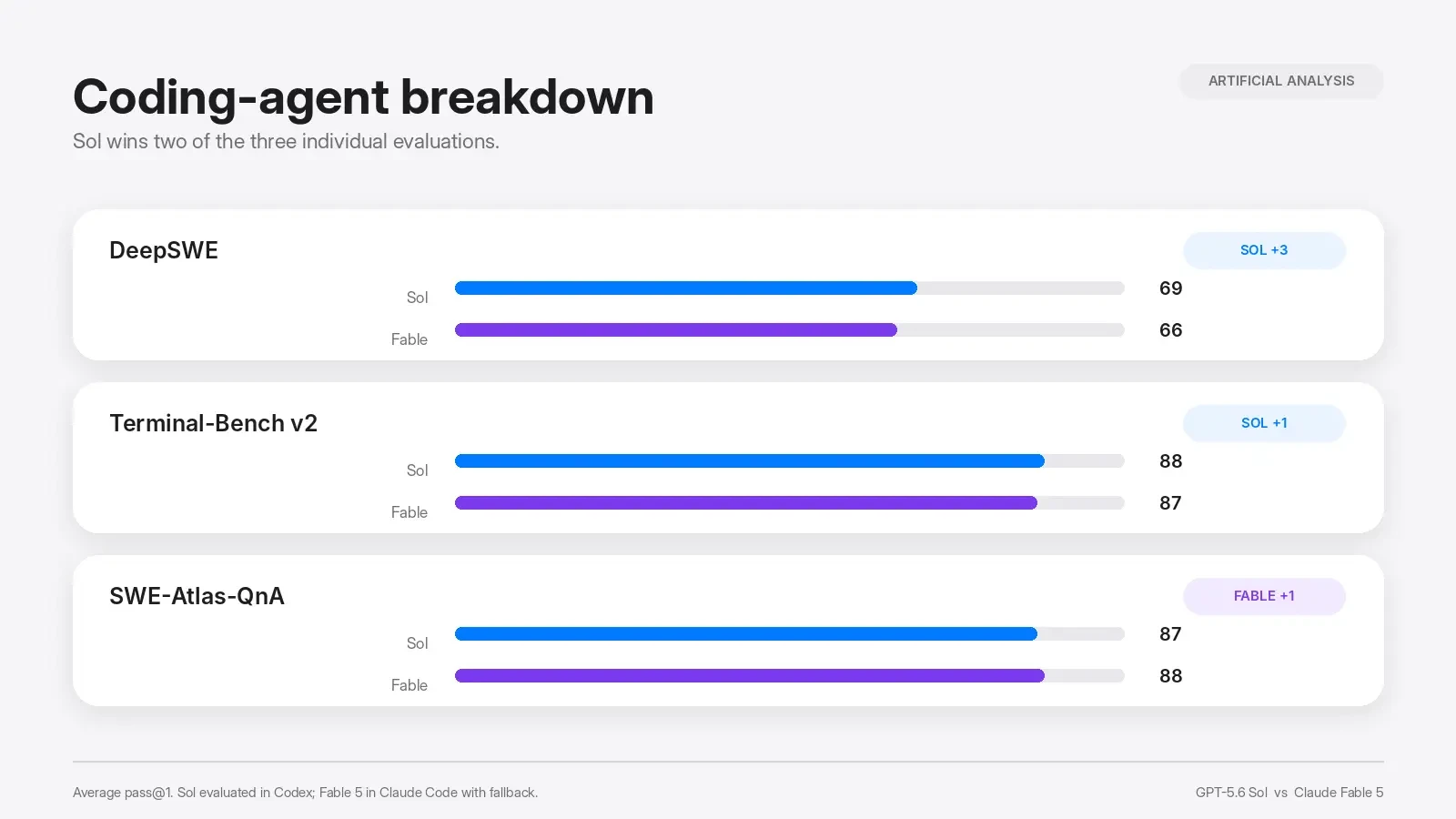
- Coding Performance: Sol leads on DeepSWE and Terminal-Bench v2. Its ability to resolve complex coding errors with minimal hallucination has made it the darling of the dev-ops community.
- Analytical Depth: Fable 5 maintains a narrow lead in general reasoning and strategic analysis. In tests involving business logic and executive summary generation, Fable 5 consistently provides more nuanced, structurally sound recommendations.
Hands-On Analysis: The Three Pillars of Testing
In side-by-side testing, the divergence in personality and performance between the two models becomes apparent.

1. Web Application Development
When tasked with building a responsive, feature-rich finance dashboard (using only vanilla HTML, CSS, and JS), Fable 5 demonstrated superior velocity, completing the task in 3 minutes and 10 seconds. Sol, while producing equally functional code, took 6 minutes and 30 seconds. The trade-off here is clear: Fable 5 is the choice for rapid prototyping, while Sol’s slower pace suggests a more cautious, iterative approach to code generation.
2. Business Data Analysis
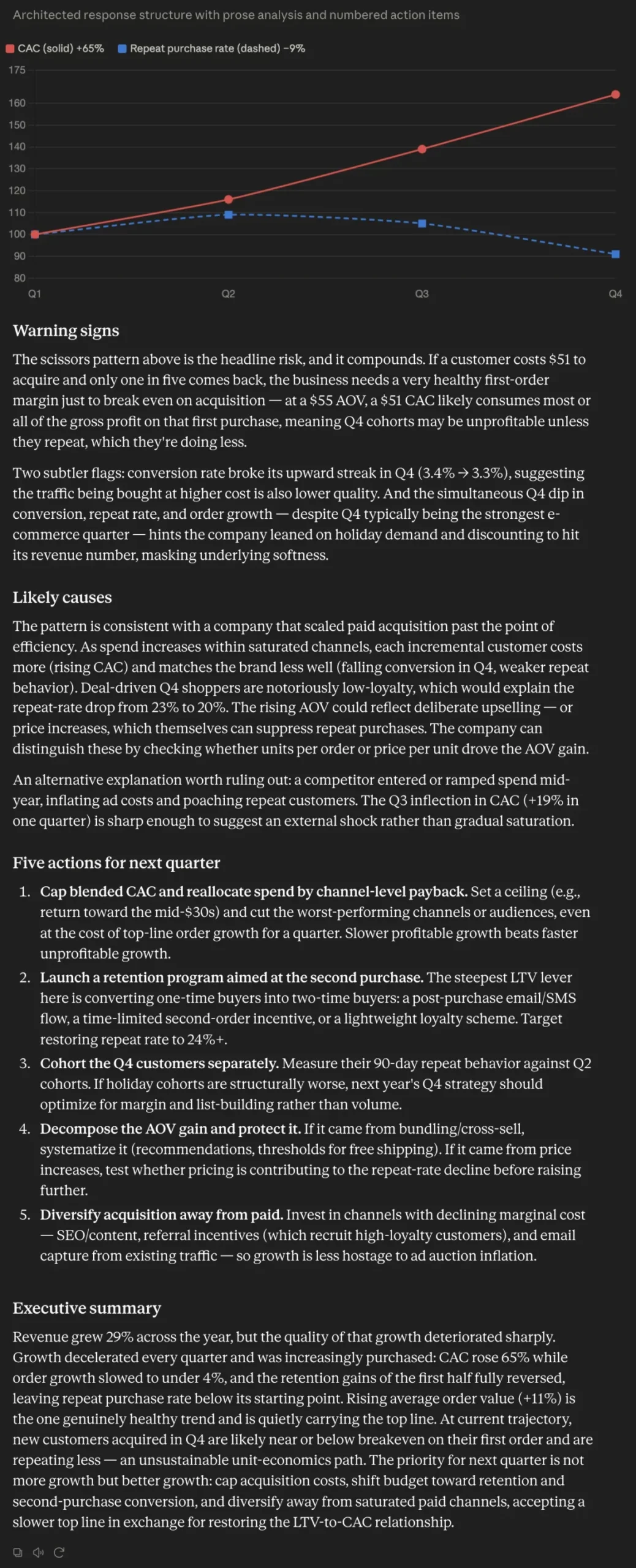
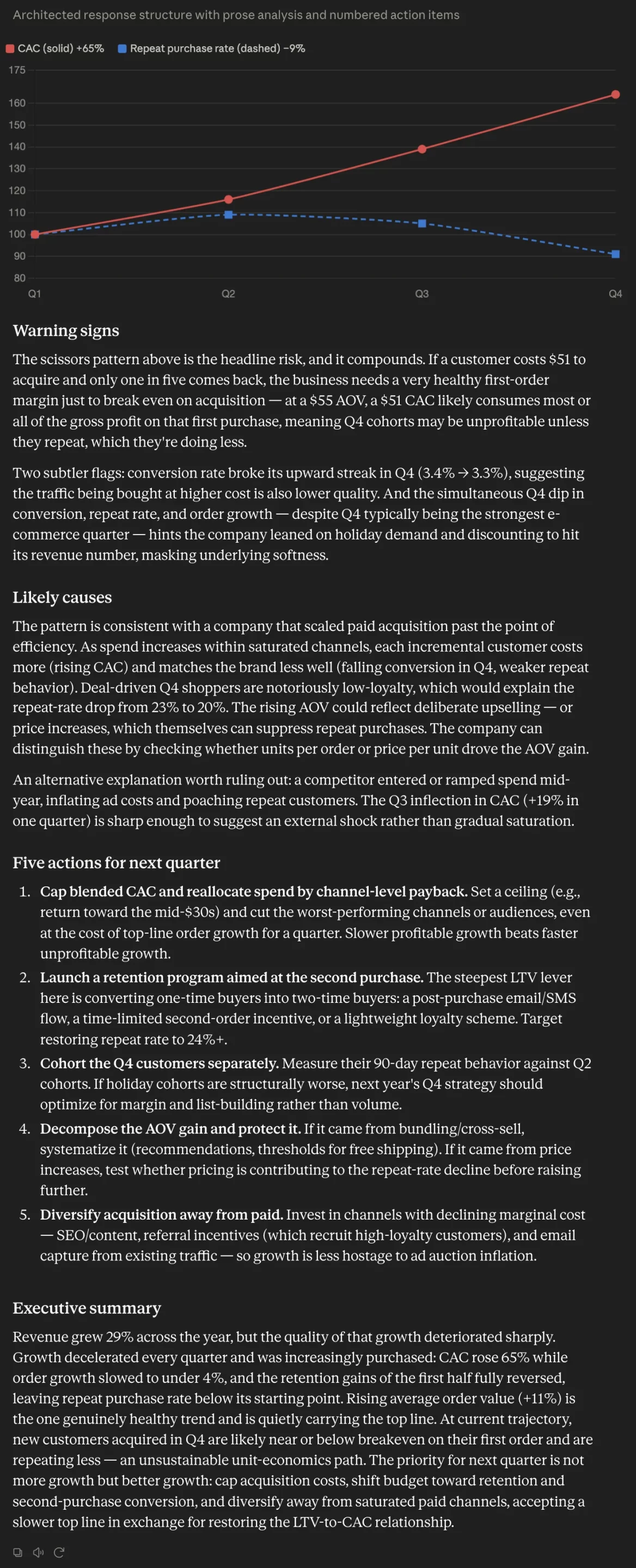
In a scenario requiring the analysis of four quarters of e-commerce performance data, the roles were reversed. Sol delivered its findings in 1 minute and 20 seconds, narrowly outpacing Fable 5. More importantly, while both provided accurate numerical interpretations, Sol’s presentation—bulleted, actionable, and formatted for a C-suite executive—outshone Fable 5’s more narrative-heavy approach.
3. Presentation Creation
For the creation of an eight-slide investor pitch deck, Fable 5 excelled in structure and thematic coherence. It understood the "narrative arc" of the presentation better than Sol. However, Sol’s ability to generate specific, realistic sample data to fill the slides made it more "ready to present" than its competitor.
Official Responses and Developer Sentiment
Developer communities, particularly on platforms like Reddit and GitHub, have been vocal. The consensus is that while Claude Fable 5 offers a more "intelligent" experience for complex tasks, its strict usage limits act as a significant bottleneck. Users have frequently hit "limit reached" screens after only a handful of complex prompts.

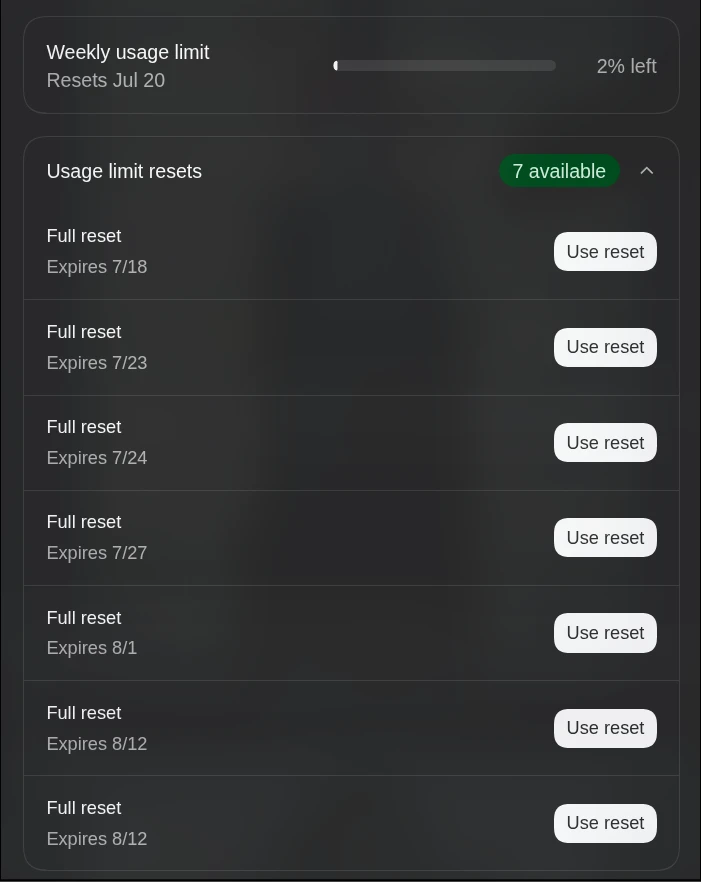
OpenAI’s approach with Sol, which includes free-to-use token resets and more predictable availability, has garnered favor with professional teams that require consistent, uninterrupted access. Anthropic, while maintaining the higher-tier "intelligence" crown, has faced criticism regarding its restrictive access, leading to calls for a more scalable subscription model for power users.
Implications: The Future of AI Workflow
The takeaway from this comparison is not that one model is inherently "better," but that they serve different roles in the modern tech stack.
The "Hand-off" Paradigm:
The most effective way to utilize these models is to view them as a dual-engine system.
- Use GPT-5.6 Sol for your daily, high-frequency work. It is the model you work with. Its speed, cost-effectiveness, and coding prowess make it ideal for the "grind" of development and data cleaning.
- Use Claude Fable 5 as the model you hand work to. When you have a massive, abstract, or highly complex strategic problem that requires deep, sustained reasoning and minimal human intervention, Fable 5’s architecture justifies its higher cost and slower availability.
Strategic Recommendations
For organizations, the implication is a shift toward a multi-model architecture. Relying on a single provider is becoming increasingly obsolete. By integrating both models via API, companies can leverage Sol for the heavy lifting of code and data, while routing high-level strategic, legal, or complex planning queries through Fable 5.
As we move into the latter half of 2026, the gap between these models is expected to narrow. However, for the current moment, the "Sol-Fable" dichotomy provides a perfect blueprint for how AI will integrate into the workforce: as specialized tools, not just generalized chatbots.
Frequently Asked Questions (FAQ)
Q: Which model is more cost-effective for a large-scale project?
A: GPT-5.6 Sol is significantly cheaper, offering a 40-50% reduction in costs compared to Fable 5. For teams running automated agents at scale, Sol is the clear economic winner.
Q: Is there a trade-off in reasoning when choosing the cheaper model?
A: Only marginally. While Fable 5 leads in general intelligence indices, the gap is narrow enough that for 90% of professional tasks, the performance of Sol is indistinguishable from Fable 5.
Q: Why does Fable 5 feel slower despite its intelligence?
A: Fable 5 prioritizes depth of reasoning and multi-step verification. It is often "thinking" longer to reduce the need for follow-up prompts, whereas Sol may move faster by relying on its more optimized, parallelized architecture.
Q: Which model should I use for coding?
A: GPT-5.6 Sol currently leads in major independent coding-agent benchmarks. It is the preferred choice for writing, debugging, and maintaining complex codebases.