
As climate volatility threatens the agricultural heartlands of Southern Africa, industry leaders are calling for a radical shift in how sugar is produced. At the recent Standard Bank Regional Sugar Summit, experts argued that the survival of the sector hinges on a tri-fold strategy: rapid irrigation expansion, the adoption of climate-smart technologies, and the forging of robust financial-agribusiness partnerships.
1. Executive Summary: The Climate Imperative
The Southern African sugar industry stands at a crossroads. Long recognized as a vital economic engine—providing employment, infrastructure, and export revenue—the sector is increasingly besieged by erratic rainfall, prolonged droughts, and shifting temperature patterns.
At the Standard Bank Regional Sugar Summit held at the Simunye Country Club, Dr. Samson Sithole, Chief Executive Officer of the Eswatini Water and Agricultural Development Enterprise (EWADE), delivered a sobering prognosis. He posited that the era of rain-fed sugar cane production is rapidly coming to an end. To maintain regional competitiveness, the industry must transition toward high-tech, climate-resilient irrigation systems. This transition is not merely an environmental goal but a prerequisite for economic survival and rural development.
2. Chronology of the Crisis and Transformation
The need for this summit arose from years of observable decline in crop stability across Eswatini and neighboring regions.
- 2020–2023: Regional meteorological data indicated a sharp increase in the frequency of "drought years," leading to significant yield gaps in sugar cane production.
- 2024: Industry stakeholders began formalizing the "Irrigation-Led Growth" framework, acknowledging that water scarcity is the primary bottleneck for emerging farmers.
- 2025: Successful pilot programs, such as the LUSIP II (Lower Usuthu Smallholder Irrigation Project) expansion, provided a blueprint for integrating smallholder farmers into the commercial value chain.
- May 2026 (The Summit): Industry leaders converged to codify these lessons into a broader regional strategy, with Dr. Sithole highlighting the shift from subsistence-based irrigation to sophisticated, data-driven water management.
3. Supporting Data: The Smallholder Contribution
A critical element of Dr. Sithole’s address was the role of the "emerging farmer." In the Eswatini model, smallholder growers are no longer on the periphery; they are central to the industry’s output.
- Market Share: Approximately 30% of the total cane supply for Ubombo Sugar Limited—one of the region’s largest producers—is now sourced from smallholder growers.
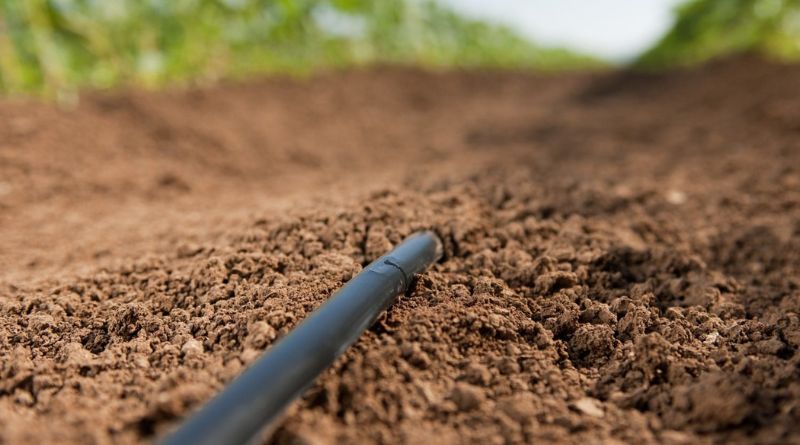
- Efficiency Gains: Through EWADE’s intervention in irrigation and technical support, these smallholders have transitioned from traditional methods to center-pivot and sub-surface drip irrigation.
- The Productivity Gap: Data presented at the summit indicated that farms utilizing modern irrigation technology report yields significantly higher than those relying on traditional or rain-fed methods, proving that "Climate-Smart" is synonymous with "Profit-Smart."
4. Official Responses and Strategic Pillars
Dr. Sithole’s presentation focused on three strategic pillars designed to stabilize the industry:
The EWADE Infrastructure Model
EWADE has moved beyond providing water; it now acts as an architect of agricultural ecosystems. By developing the necessary bulk infrastructure and partnering with private entities like Ubombo Sugar, EWADE ensures that farmers have the physical foundation to succeed. Ubombo manages the crop establishment, while EWADE ensures the water reaches the field. This division of labor allows the farmer to focus on core production rather than engineering hurdles.
Climate-Smart Technologies
The definition of "climate-smart" in this context involves two distinct approaches:
- Efficiency: Utilizing sub-surface drip irrigation to minimize evaporation and maximize water delivery directly to the root zone.
- Modernization: Implementing center-pivot systems that offer uniform coverage over large terrains, allowing for consistent growth even in arid spells.
Bridging the Financial Gap
Perhaps the most contentious issue addressed at the summit was the "Finance Gap." Dr. Sithole was explicit: the traditional banking sector has historically viewed smallholder agriculture as "high risk," leading to exorbitant interest rates and rigid repayment terms.
"We need financial products that reflect the agricultural cycle," Dr. Sithole noted. "You cannot expect a farmer to repay a loan during a drought-induced harvest failure without a buffer. We need tailored products—loans that align with harvest timelines, and, crucially, financing for mechanization that reduces the reliance on manual labor."
5. Implications for the Southern African Economy
The implications of failing to adapt are severe. Sugar remains a primary source of rural income in Southern Africa. If smallholders are pushed out by climate-related insolvency, the result would be a massive consolidation of land, increased unemployment, and a potential collapse of the rural supply chain.
The Role of Financial Institutions
Standard Bank and other regional financiers are now being pressured to innovate. The consensus at the summit was that commercial banks must view climate-smart irrigation not as a luxury, but as a risk-mitigation strategy. By funding irrigation infrastructure, banks are effectively insuring the viability of the crop.

Rural Development and Social Stability
The success of the Eswatini model serves as a beacon for the rest of the SADC (Southern African Development Community) region. By professionalizing the smallholder sector, the industry creates a "middle class" of farmers. This creates a multiplier effect: increased agricultural income flows into local shops, schools, and services, driving regional economic development.
6. Conclusion: A Call to Action
As the summit concluded, the message was clear: the survival of the sugar industry is no longer a matter of soil quality or market demand—it is a matter of water security.
Dr. Sithole’s vision for the future involves a coordinated effort where:
- Governments prioritize water infrastructure as a national security asset.
- Financial Institutions create flexible, climate-resilient loan portfolios.
- Agribusinesses continue to mentor and integrate smallholders into the value chain.
The climate will continue to shift, and the weather will continue to test the endurance of the Southern African farmer. However, through the adoption of precision irrigation, improved mechanization, and inclusive financing, the industry has the tools to weather the storm. The shift toward climate-smart agriculture is not just an environmental imperative; it is the only viable path forward for a sector that defines the livelihoods of millions.
Key Takeaways for Stakeholders:
- Technology is the Lever: Shift investment from land expansion to irrigation efficiency (drip/pivot).
- Collaboration is Mandatory: The EWADE-Ubombo model demonstrates that large-scale success is contingent on smallholder integration.
- Finance must Evolve: Banks must move away from generic retail lending toward agri-cycle-specific financial instruments.
- Climate Finance: There is a growing, untapped opportunity for "Green Bonds" or climate-specific grants to fund the necessary transition to water-saving technologies in the sugar sector.