
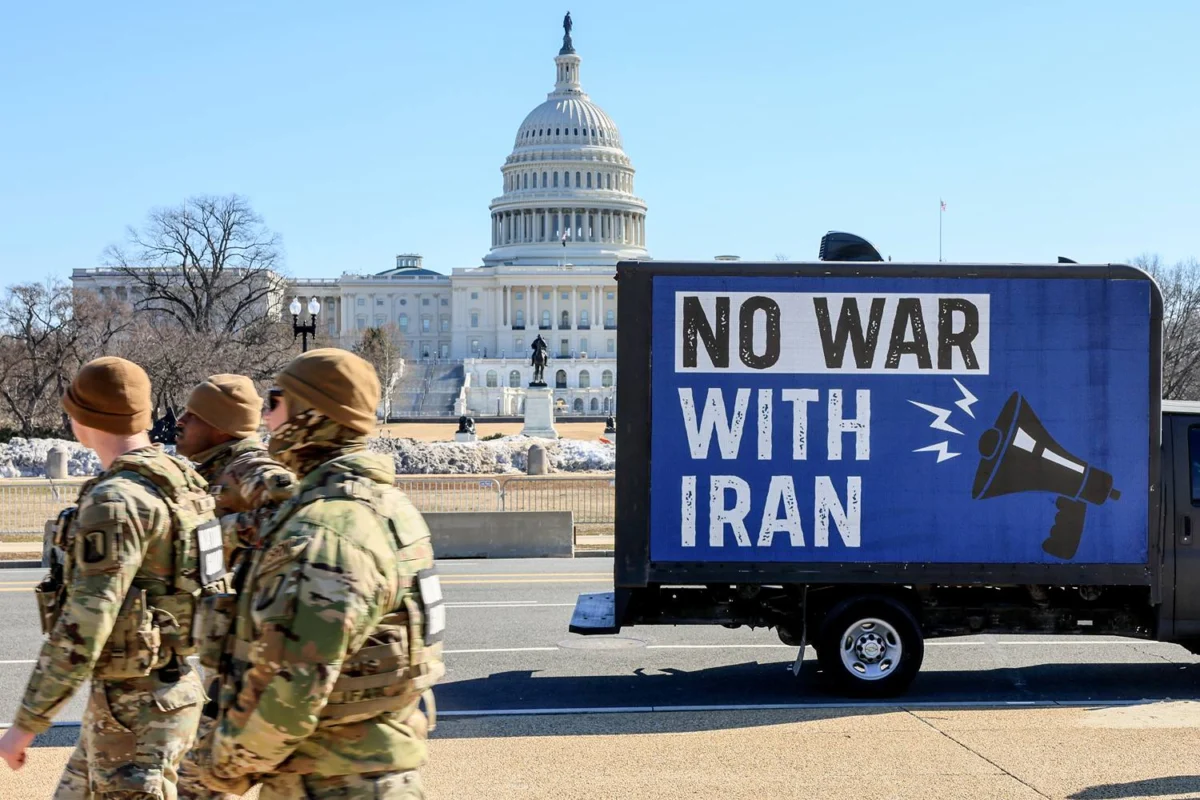
The United States currently finds itself in the grip of a constitutional paradox. Despite widespread public disapproval, significant economic strain, and a growing consensus among legal scholars that the ongoing military engagement with Iran is unauthorized and illegal, the U.S. Congress appears functionally paralyzed. The war, initiated by President Donald Trump in late February, has evolved into a case study of how decades of executive expansion, judicial deference, and political polarization have fundamentally altered the balance of power envisioned by the nation’s Founding Fathers.
The Illusion of Legislative Control
Under the U.S. Constitution, the power to declare war rests exclusively with the legislative branch. Yet, in the modern era, the mechanisms designed to check executive aggression—the "power of the purse" and the War Powers Resolution of 1973—have proven increasingly toothless.
The primary hurdle for lawmakers is not merely a lack of votes, but the institutional structure of the presidency. Even if a majority of the House and Senate were to align against the conflict, the President’s veto power creates a nearly insurmountable threshold. To end a war, Congress must now muster a two-thirds supermajority to override a veto—a feat that, in an era of intense political tribalism, is historically rare.
"It’s a tragic commentary on the dysfunction of our political system that a war that is this unpopular can go on and on, and there is no practical way to stop it," says Michael Glennon, a professor of constitutional and international law at Tufts University. "The end result is exactly the situation the Founding Fathers had hoped to avoid: a single individual with the unchecked capacity to commit the nation to blood and treasure."
A Chronology of Escalation and Evasion
The legal architecture of this conflict hinges on the 1973 War Powers Resolution, which mandates that a president must terminate unauthorized military operations if they persist beyond 60 days. The United States crossed this critical threshold on May 1.
The Trump administration, however, has sidestepped this constraint through a creative, albeit controversial, legal argument. White House officials claim that a cease-fire on April 8 "froze" the 60-day clock, effectively resetting the count and rendering the conflict legally dormant despite continued skirmishes.
- Late February 2026: President Trump initiates military strikes against Iranian targets, citing national security imperatives.
- April 8, 2026: The administration declares a cease-fire, which it later uses as a legal justification to claim the 60-day clock on hostilities has been paused.
- May 1, 2026: The 60-day window under the War Powers Resolution expires, sparking a firestorm of debate in Washington regarding the legality of continued operations.
- Present: Congress struggles to pass binding legislation to halt funding, as the executive branch maintains that the war remains within the bounds of presidential prerogative.
Legal experts, including Glennon, who served as counsel on the Senate Foreign Relations Committee in the 1970s, dismiss the "frozen clock" argument as frivolous. "The text of the War Powers Resolution provides no basis for concluding that it’s possible to pause the clock," Glennon notes. "The president can call the sky green if he wants to, but the fact remains that hostilities—defined as a state of confrontation with a clear and present danger of conflict—are ongoing."
Supporting Data: The Military-Industrial Momentum
The inability of Congress to act is exacerbated by the sheer scale of modern military spending. In the early 19th century, a small standing army required constant congressional approval for its operations. Today, the U.S. defense budget is a trillion-dollar behemoth that provides the executive branch with unprecedented operational autonomy.
Fiscal year 2026 saw defense appropriations hit a record-breaking $1 trillion, bolstered by an additional $153 billion authorized by Republicans. This massive influx of capital allows the Department of Defense to reallocate funds to the Iran theater without seeking an immediate supplemental appropriation from Congress. By the time lawmakers attempt to tighten the purse strings, the military apparatus is often already funded for months, if not years, of continued activity.
Furthermore, President Trump’s call for $1.5 trillion in defense funding for the upcoming cycle signals an intent to normalize this high-intensity, high-cost engagement, making the legislative task of "defunding" the war a Herculean effort.
Official Responses and Executive Defiance
The administration’s stance is one of unapologetic executive authority. Secretary of State Marco Rubio, speaking to reporters in Rome, characterized the legal debate as a matter of common sense rather than constitutional minutiae.
"If you fire a drone or a missile at our destroyer, what are we supposed to do? Let it hit it?" Rubio asked. "Of course we fired back at them. They were shooting at us. Only stupid countries don’t shoot back when you’re shot at."
This rhetoric mirrors the administration’s broader legal position: that the War Powers Resolution itself is an unconstitutional infringement on the commander-in-chief’s authority. Trump has repeatedly labeled the 60-day requirement "totally unconstitutional," while administration officials have suggested they only "comply" with certain elements of the law as a courtesy to Congress, rather than a legal obligation. This rejection of the statute is particularly jarring given that previous administrations—including those of George W. Bush and Barack Obama—at least acknowledged the validity of the legal frameworks governing war powers.
Judicial Abdication: The Final Barrier
If Congress is unable to act, one might expect the judiciary to serve as the ultimate arbiter. However, federal courts have consistently invoked the "political question" doctrine to avoid adjudicating matters of war and national security.
In a series of precedents stretching back to the 1978 Goldwater v. Carter case, the Supreme Court has signaled that disputes between the executive and legislative branches regarding foreign policy are for the branches to resolve amongst themselves. The 1983 Supreme Court decision in INS v. Chadha, which invalidated the "legislative veto," dealt a further blow to congressional oversight. By striking down the mechanism that allowed Congress to end hostilities via a simple majority vote, the Court effectively forced the legislature to reach a two-thirds supermajority—a hurdle that has rendered the War Powers Resolution largely ineffective.
"These are the sorts of things the courts do not like to get into," says John Bellinger, a former top legal advisor to the State Department. "The chances that a court would conclude that the president violated Article I by continuing the war are close to zero."
Implications for the American Republic
The current standoff over the war with Iran is not merely a dispute over military tactics; it is a profound crisis of democratic governance. The shift from a system where the legislative branch authorizes war to one where it merely observes the executive waging it represents a reversal of the constitutional design.
As the Senate prepares to vote on a joint resolution to end the conflict, the debate serves as a stark reminder of the 800-year evolution of law—from the Magna Carta’s assertion that the King is not above the law to the current struggle to prevent the concentration of war-making power in the hands of a single executive.
If Congress fails to reassert its authority, the precedent set by the Iran war will likely cement a new reality: one where the United States can stumble into conflicts with ease, but finds itself constitutionally and politically unable to climb out of them. The "mammoth constitutional issue," as Glennon describes it, remains the most significant test of the American political system in the 21st century. Whether the elected representatives of the people can reclaim the power to decide the nation’s path to peace remains an open—and increasingly urgent—question.