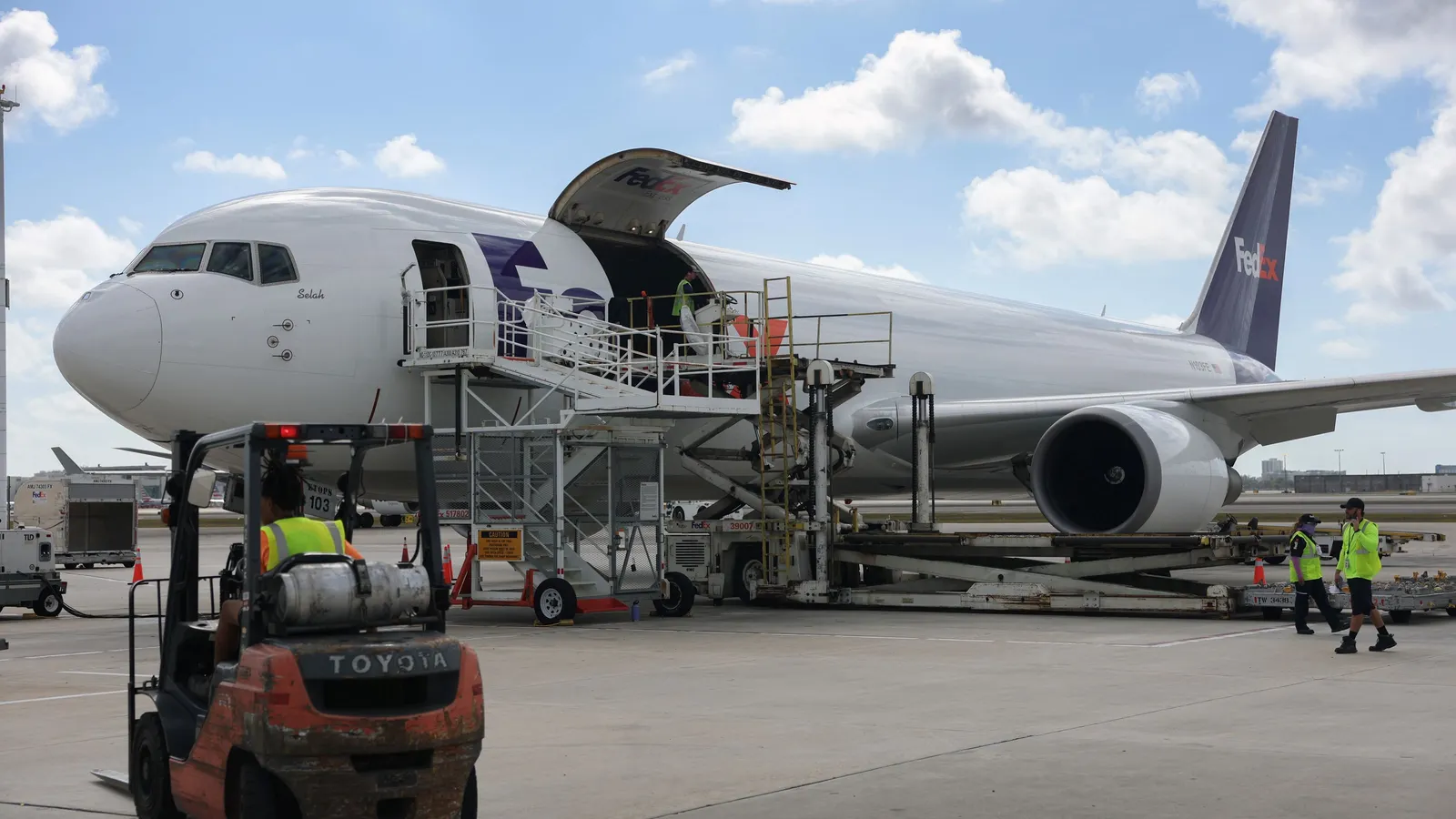
The global air freight industry is currently navigating a period of intense structural adjustment, defined by a decoupling of traditional cost drivers and a complex interplay between capacity expansion and geopolitical volatility. While recent months have seen sharp spikes in spot rates for key lanes, industry analysts suggest that the market may have reached its peak, with "market fundamentals"—rather than fuel costs—dictating the future trajectory of pricing.
As shippers head into the second half of the year, the landscape is defined by a paradoxical mix of recovering passenger belly-hold capacity and persistent anxieties over fuel surcharges and supply chain security.
Main Facts: A Market in Flux
Recent data from freight analytics firm Xeneta reveals that while global air cargo volumes rose by 2% year-over-year (YoY) in April, the financial environment remains volatile. The average global spot rate reached $3.34 per kilogram, a significant 30% increase compared to the same period last year.
However, the narrative is far from uniform across all geographic lanes. While Southeast Asia and Northeast Asia have seen dramatic rate hikes—up 33% and 28% respectively—the Transatlantic corridor has bucked the trend. Spot prices from Europe to North America actually declined by 17% YoY, falling to $2.57 per kilogram. This divergence underscores a critical reality: air freight pricing is increasingly being driven by local supply-and-demand dynamics rather than a singular, global cost index.
Niall van de Wouw, Chief Airfreight Officer at Xeneta, emphasizes that this serves as a correction to a long-standing industry misconception. "We need to bust the myth that if jet fuel goes up, airfreight prices necessarily follow," van de Wouw stated. The market is shifting away from cost-plus pricing models toward a more nuanced, demand-responsive framework.
Chronology: The Evolution of the 2024 Air Freight Market
To understand the current state of the industry, it is necessary to examine the timeline of events that shaped the first four months of 2024:
- February 2024: The escalation of the conflict in Iran led to the blockade of the Strait of Hormuz, a critical chokepoint for global oil transit. This triggered immediate concerns regarding jet fuel availability and long-term price stability.
- March 2024: The industry observed a sustained decline in e-commerce shipments originating from China, marking the fourth consecutive month of contraction. This signaled a cooling of the post-pandemic e-commerce boom that had previously supported high cargo volumes.
- Early April 2024: Spot fuel prices hit their peak, prompting several major air cargo carriers to introduce or adjust fuel surcharges to mitigate rising operational costs.
- Late April to Present: As carriers began flooding the market with summer passenger capacity, the increased belly-hold space began to put downward pressure on spot rates in select markets, providing a glimmer of relief for shippers who had previously stalled their Q3 and Q4 contract tenders.
Supporting Data: April 2024 Performance Metrics
The following data points encapsulate the volatility and regional disparities observed in April:
| Metric | Performance |
|---|---|
| Global Cargo Volume (YoY) | +2% |
| Global Avg. Spot Rate/kg | $3.34 (+30% YoY) |
| SE Asia to N. America Rate | $6.46 (+33% YoY) |
| NE Asia to N. America Rate | $5.54 (+28% YoY) |
| Europe to N. America Rate | $2.57 (-17% YoY) |
| Global Dynamic Load Factor | 62% (+3 percentage points) |
The increase in the global dynamic load factor—which measures the interaction between cargo volume, weight, and available capacity—to 62% highlights that while demand is stable, the influx of capacity is beginning to recalibrate the competitive balance between airlines and freight forwarders.
Official Responses and Strategic Analysis
Industry experts and analysts are calling for a fundamental shift in how shippers approach their procurement strategies. According to Xeneta, the "feast of surcharges" being implemented by carriers is often an attempt to hedge against fuel price volatility, but it is not necessarily a reflection of true operational costs.
"You can’t always avoid higher rates," van de Wouw noted, "but the more you understand how your freight forwarder moves your stuff—like whether they are doing longer-term deals or buying capacity on the short-term market—the better you’ll be able to negotiate the financial impact."
The firm is actively advising shippers to move toward contracts that explicitly exclude fuel charges or, at the very least, allow for greater transparency in how those surcharges are calculated. By auditing how forwarders acquire capacity, shippers can avoid being caught in a cycle of reactive, high-cost booking during periods of market disruption.
Implications for the Second Half of 2024
The air freight sector is currently balancing on a knife’s edge. While the "peak" for global air freight rates appears to have passed, the path forward is laden with structural uncertainties.
1. The E-commerce Retrenchment
The 9% YoY decline in e-commerce volumes from China in March suggests that the consumer appetite for rapid, air-shipped goods may be plateauing. If this trend continues, carriers that relied heavily on the e-commerce sector to fill capacity will need to pivot their strategies, potentially leading to further rate stabilization or even softening on key trans-Pacific routes.
2. Geopolitical and Fuel Risks
Despite the volatility in the Strait of Hormuz, the expected "fuel shock" has not fully materialized in the long-haul intercontinental air freight market. While some carriers have discussed reducing flight frequencies to mitigate fuel consumption, analysts remain skeptical that this will lead to a systemic, capacity-stunting reduction. The resilience of the market is currently being supported by the strong return of international passenger travel, which naturally drives the availability of belly-hold cargo space.
3. Contract Negotiations
For logistics managers, the current environment presents a critical window for negotiation. With many tenders for the second half of the year having been stalled, the recent cooling in spot rates provides a strategic opening. However, the success of these negotiations will depend on the shipper’s ability to demand visibility. Shippers who remain in the dark regarding their forwarders’ capacity-buying habits will likely remain vulnerable to the next wave of surcharges or unexpected market shifts.
4. Macroeconomic Pressures
The looming question for Q3 and Q4 remains: what happens when inflationary pressures ease and production costs stabilize? If global demand surges, the currently returning capacity may be absorbed quickly, leading to a new cycle of rate inflation. Conversely, if economic growth remains sluggish, the market may enter a period of sustained "normalization" where supply and demand reach a more durable equilibrium.
Conclusion
The air cargo industry is entering a new chapter, one defined less by the emergency measures of the pandemic and more by the classic mechanics of trade and capacity. While the immediate threat of runaway pricing appears to be subsiding, the volatility inherent in modern global trade—driven by both geopolitical friction and the cooling of e-commerce—demands a sophisticated approach to supply chain management.
For the modern shipper, the lesson is clear: volatility is the new baseline. Success in the latter half of 2024 will not be found in predicting the perfect rate, but in building the transparency and contractual flexibility necessary to navigate an unpredictable, but increasingly competitive, global marketplace. As Xeneta’s data suggests, while the peak of the storm may have passed, the industry must remain vigilant against the next wave of disruption.