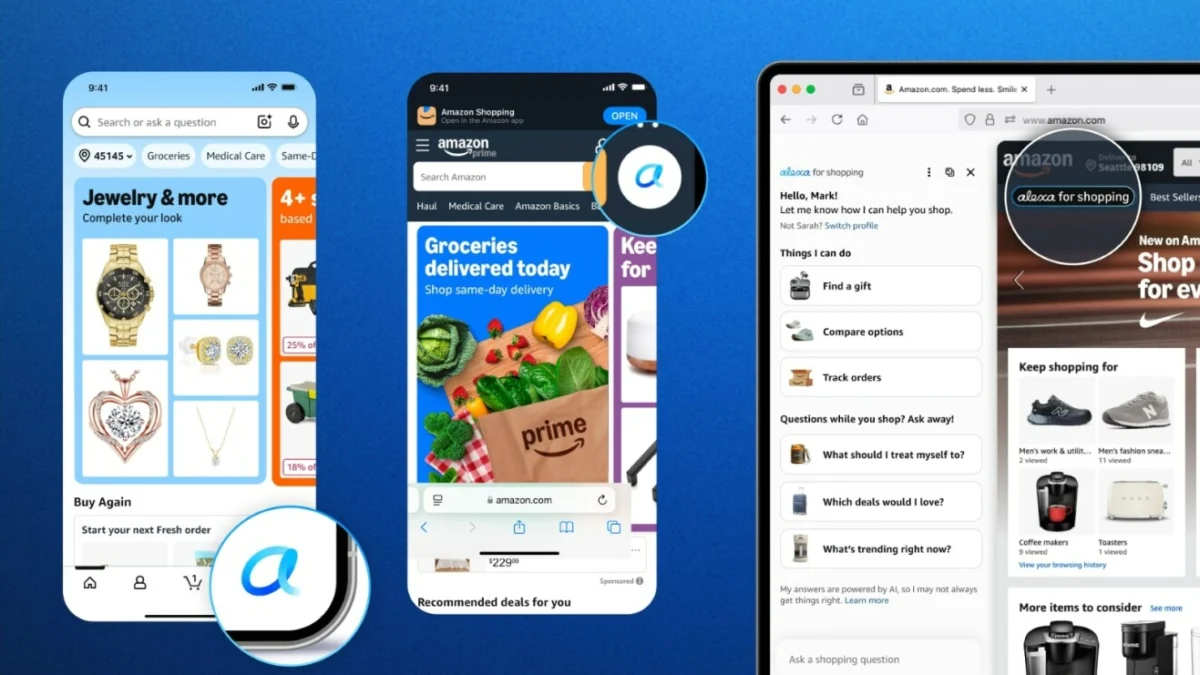
In a move that signals a paradigm shift in how consumers interact with digital marketplaces, Amazon has officially launched "Alexa for Shopping." This sophisticated artificial intelligence (AI) agent represents the culmination of years of R&D, effectively merging the company’s specialized shopping assistant, Rufus, with the generative capabilities of its upgraded voice assistant, Alexa+. By consolidating these powerful tools, Amazon aims to transform the digital shopping journey from a series of disjointed clicks and searches into a fluid, personalized, and highly automated experience.
This rollout marks a significant milestone for the e-commerce giant as it attempts to solidify its dominance in the age of "agentic AI"—a term referring to software that doesn’t just respond to commands, but actively completes complex tasks on behalf of the user.
The Convergence: Rufus and Alexa+
To understand the impact of Alexa for Shopping, one must look at the building blocks Amazon has assembled over the past two years.
Rufus, introduced in 2024, was designed primarily as a shopping-focused conversational assistant. Its core competency lies in product research: answering questions about features, comparing items, and helping customers navigate the vast, often overwhelming, catalog of goods on Amazon. Ahead of the 2025 holiday season, Amazon bolstered Rufus with advanced analytics, making it a staple for millions of shoppers looking to streamline their gift-buying process.
Alexa+, launched in February 2025, served as the sophisticated successor to the original Alexa voice assistant. By integrating advanced generative AI, Alexa+ moved beyond simple command-and-control functionality to offer nuanced, context-aware conversations. With hundreds of millions of devices already active, the foundation for a unified AI experience was already in place.
The new "Alexa for Shopping" interface synthesizes the product-specific expertise of Rufus with the deep, contextual, and cross-device intelligence of Alexa+. The result is a seamless ecosystem where a user’s shopping history, search preferences, and voice-activated requests are unified into a single, proactive shopping companion.
A Chronology of Amazon’s AI Integration
Amazon’s journey toward an agentic shopping assistant has been deliberate and data-driven:
- Early 2024: Amazon debuts Rufus, an AI-powered conversational assistant specifically tuned for e-commerce, allowing users to ask questions like "What’s the best hiking boot for beginners?"
- February 2025: The company launches Alexa+, an upgraded generative AI layer for its voice assistant, and introduces "Shop Direct," a feature designed to bridge Amazon with third-party merchant sites.
- April 2025: Amazon experiments with "Buy for Me," an agentic AI tool capable of completing transactions on behalf of users by utilizing saved payment methods and shipping details.
- Late 2025: Rufus receives a major performance boost to assist with the surge in holiday traffic, processing queries for over 300 million customers.
- May 2026: The official launch of "Alexa for Shopping" merges these disparate initiatives into a singular, free-to-use platform for all account holders.
Decoding the Mechanics: How Alexa for Shopping Functions
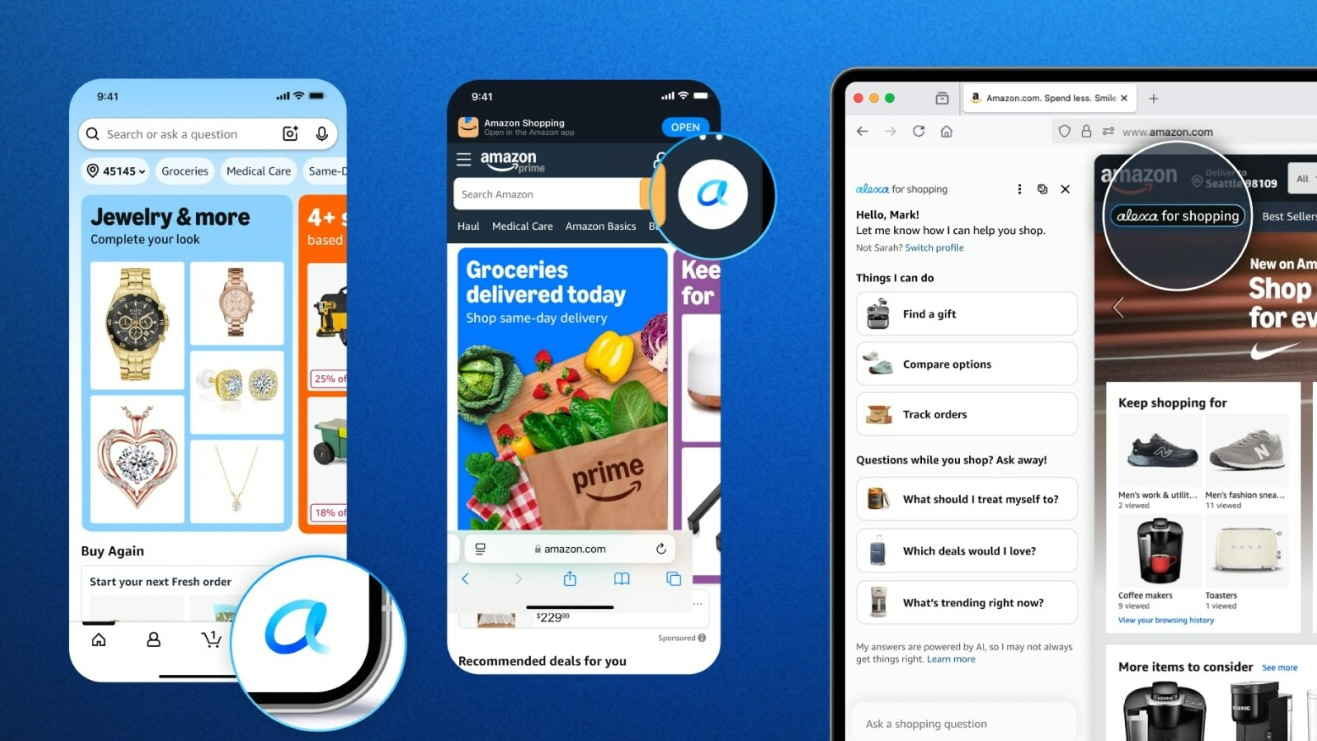
The genius of the new platform lies in its "omni-surface" capability. Whether a user is browsing on a desktop, tapping through the mobile app, or speaking to an Echo device in their kitchen, the assistant maintains a continuous memory of the user’s intent.
Personalized Context
Amazon emphasizes that the system operates in a bidirectional loop. Conversations held with an Echo device inform the user’s browsing experience on the website, while items viewed on the website improve the assistant’s ability to offer recommendations via voice. This "memory" is the core value proposition: it eliminates the need to "start over" when moving between devices or returning to a search performed days prior.
Advanced AI Capabilities
The features introduced under the Alexa for Shopping umbrella go far beyond basic customer support:
- AI-Generated Overviews: Located at the top of search results and on product detail pages, these summaries distill thousands of customer reviews and product descriptions into actionable insights.
- Side-by-Side Comparison: Users can select multiple products within a search list, and the AI will generate a comparative analysis, highlighting differences in price, specifications, and user ratings.
- Price History Tracking: By integrating with historical data, the assistant can tell a user not only if a price has dropped but also how it compares to the previous year’s pricing trends.
- Scheduled Actions: This is perhaps the most "agentic" feature. Users can set conditional triggers, such as: "Add this blender to my cart if the price drops below $80 and I haven’t purchased a kitchen appliance in six months." The AI monitors the marketplace and executes the task, requiring the user only to perform the final checkout.
Implications for the E-Commerce Landscape
The decision to make Alexa for Shopping free for all users—not just Prime members—is a calculated strategic play. By lowering the barrier to entry, Amazon is positioning its AI agent as the default "shopping interface" for the internet, effectively competing with search engines like Google and specialized AI models like ChatGPT.
The Death of the "Search and Click" Era
For decades, e-commerce has been defined by the "Search-Filter-Compare-Add to Cart" funnel. Alexa for Shopping threatens to compress this funnel. If an AI can research, compare, monitor prices, and initiate purchases on a user’s behalf, the traditional "shopping session" becomes obsolete. For retailers, this means that the "top of the funnel" (discovery) is increasingly being controlled by Amazon’s proprietary AI.
Impact on Third-Party Merchants
With features like "Shop Direct" and "Buy for Me," Amazon is signaling that it wants to be the central node for all commerce, even transactions occurring outside its own ecosystem. While this creates convenience for the consumer, it raises questions about the long-term power dynamics between Amazon and the third-party merchants who rely on the platform for traffic. If the AI agent is the one making the purchasing decision, the ability of smaller brands to differentiate themselves through traditional marketing may diminish.
Official Stance and Future Outlook
Rajiv Mehta, vice president of conversational shopping at Amazon, encapsulated the company’s vision in a recent statement: "Alexa for Shopping is like having an expert personal shopper who already knows you and remembers your preferences… whether you’re comparing products, tracking a price drop, or continuing research you started yesterday, you don’t have to start over."
Amazon’s data, which consistently ranks them as the #1 retailer in the North American market according to Digital Commerce 360’s Top 2000 Database, suggests that they have the infrastructure to scale this technology rapidly. By leveraging its vast repository of transactional history and product data, Amazon is building a "moat" that is increasingly difficult for competitors to cross.
As the industry moves toward 2027, the success of Alexa for Shopping will likely be measured by its adoption rate and the accuracy of its autonomous purchasing actions. If successful, Amazon will have transitioned from being a retailer to being a personal shopping concierge—a role that could redefine the very nature of consumerism in the digital age.
Data Source Note: Amazon holds the top position in Digital Commerce 360’s Top 2000 Database and ranks third in the Global Online Marketplaces Database, which tracks the largest marketplaces by third-party gross merchandise value.