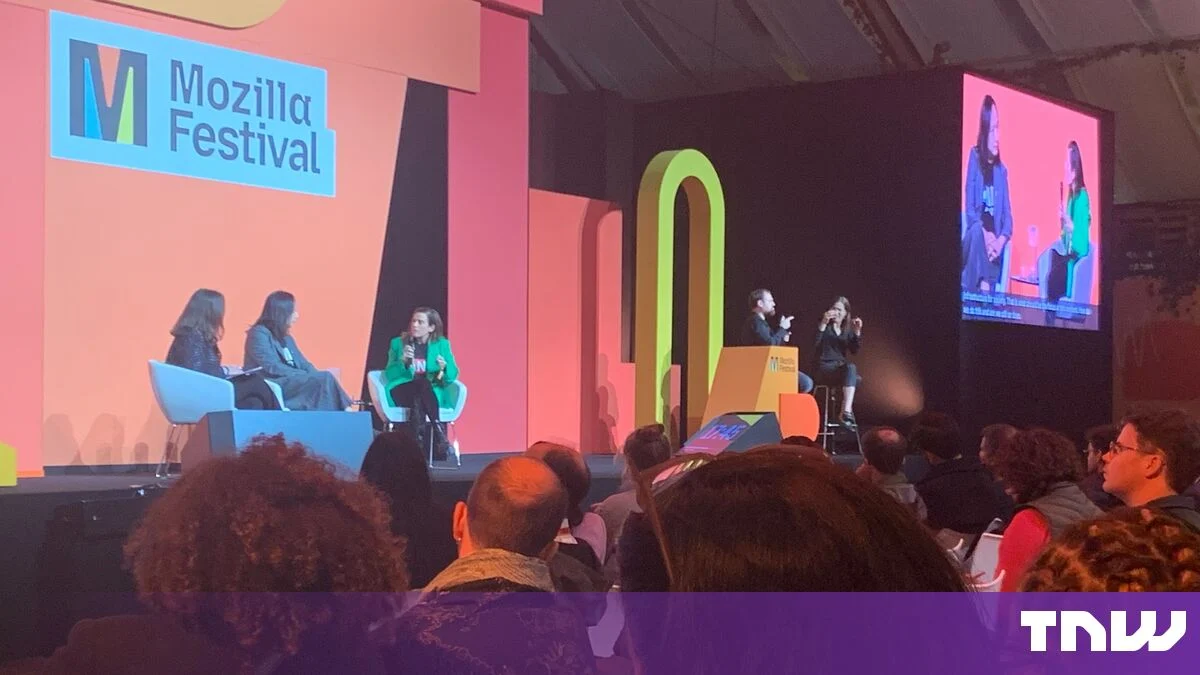
As the digital landscape becomes increasingly dominated by a handful of tech conglomerates, a fundamental question echoes through the corridors of the industry: What would technology look like if it were built by communities rather than dictated by corporate bottom lines? This query serves as the intellectual bedrock for the upcoming Mozilla Festival (MozFest), which returns to the historic streets of Barcelona from October 28 to 30.
Organized by the nonprofit Mozilla Foundation in partnership with the City of Barcelona, the festival is set to transform the Recinte Fabra i Coats—a sprawling former textile factory turned vibrant arts center—into a laboratory for a decentralized future. As the event enters its second consecutive year in the Catalan capital, it does so with a renewed sense of urgency, forming a centerpiece of the city’s annual Open Tech Week.
The Philosophy of "Wilding"
This year’s theme, "Wilding," is more than a creative moniker; it is a manifesto. It represents a call for technology to evolve in a more organic, open, and shared manner, moving away from the "monoculture" of Big Tech.
"Technology today is fueled by a closed, controlled, and often extractive system," explains Zeina Abi Assy, the festival’s director. "Mozilla Festival exists to be a counterpoint. It is an invitation to imagine what happens when we stop trying to tame technology to serve corporate interests and instead let it grow in ways that serve human dignity and communal connection."
Nabiha Syed, CEO of the Mozilla Foundation, echoes this sentiment, framing the struggle as a battle against the concentration of power. "Wilding is simple: the future of tech shouldn’t grow in a monoculture owned by a handful of companies," she says. For the organizers, the goal is not merely to offer a critique of existing systems, but to build a tangible architecture for something entirely different.
A Chronology of the Movement
The journey toward this year’s "Wilding" theme is the result of years of advocacy and global collaboration.
- 2023: Mozilla and the City of Barcelona solidified their partnership by signing a landmark agreement to host the festival in the city through 2027. This move signaled a deepening commitment to integrating open-source principles into the urban infrastructure of one of Europe’s most progressive technology hubs.
- Early 2024: Mozilla launched a provocative public awareness campaign in New York City, featuring posters that directly challenged the influence of tech titans like Elon Musk and Mark Zuckerberg. The campaign served as a prelude to the current year’s focus, highlighting the growing public appetite for regulation and alternative digital ownership models.
- October 2024: The festival arrives in Barcelona, expecting to draw over 2,000 technologists, artists, and activists. The event builds on the success of last year’s edition, which attracted 2,200 participants from 79 countries, fostering a global network of "digital resistance."
A Convergence of Voices
The speaker lineup for this year’s MozFest reflects a deliberate effort to bridge the gap between high-level activism, academic rigor, and grassroots art.
Key figures taking the stage include Egyptian activist Alaa Abd El-Fattah, whose recent release from prison following a presidential pardon has made him a poignant symbol for the fight for digital and human rights. He will be joined by Issam Hijazi, the founder of the social network UpScrolled, and Ruha Benjamin, a Princeton University professor renowned for her critical analysis of the racial biases embedded in algorithmic systems.
The interdisciplinary nature of the event is further underscored by the participation of Elizabeth Alexander, president of the Mellon Foundation; the young inventor and author Gitanjali Rao; and artist Stephanie Dinkins. Hosting the event will be the poet and comedian ALOK Vaid-Menon, whose work often interrogates the intersection of technology, identity, and social norms.
The Program: Beyond the Conference Stage
The festival’s structure is designed to move beyond passive observation. With more than 200 talks, workshops, and installations, the program is divided into thematic clusters that address the most pressing issues in modern computing.
1. Digital Heritage and Preservation
One of the most anticipated sessions is led by Sudanese music producer Khaled Alsedeg, who is exploring how digital archives can safeguard Sudan’s musical traditions against the threat of conflict and cultural erasure. This highlights a recurring theme: who owns our history, and how can we use digital tools to preserve it outside the reach of major platforms?
2. Urban Ecology and Data
The installation Wild Lots provides a bridge between environmentalism and data science. First presented at New York’s Open Data Week, the project uses city data to imagine how vacant urban land could be returned to nature, challenging the "tech-fix" mentality of urban planning in favor of ecological restoration.
3. The "Next Generation" Lab
Recognizing that the future of the internet lies with those who will inhabit it longest, MozFest has curated an extensive program for youth. Teenagers aged 13 to 17 will participate in role-playing exercises to "govern" AI, testing the boundaries of online platforms and mental health safeguards. Additionally, a workshop based on an AI guide developed by and for girls in The Gambia aims to demonstrate that digital literacy is a global, community-driven process, not a top-down mandate.
Implications: A New Social Contract for Tech
The implications of the Mozilla Festival reach far beyond the three-day event. By fostering a community that prioritizes care, shared power, and digital sovereignty, Mozilla is attempting to rewrite the social contract of the internet.
Addressing the AI Crisis
The festival’s focus on the social tensions created by AI is timely. As generative models consolidate power, the workshops at Fabra i Coats aim to provide participants with the tools to demand accountability. The goal is to move from a "move fast and break things" philosophy to one that asks, "move with care and build things that last."
Challenging the Monoculture
The broader campaign by the Mozilla Foundation represents a shift in the role of tech nonprofits. Rather than simply providing software, organizations like Mozilla are positioning themselves as political entities that advocate for a digital public sphere. By supporting movements that favor community-owned digital tools, they are signaling to policymakers and corporations alike that there is a viable, growing alternative to the current extractive model of the internet.
A Sustainable Future
The agreement to remain in Barcelona through 2027 is a crucial piece of this puzzle. By anchoring itself in a city known for its "digital sovereignty" initiatives, Mozilla is demonstrating that open-source values can be scaled from a small software project to the governance of a major metropolitan area.
Conclusion
As the attendees descend upon the Recinte Fabra i Coats, the atmosphere will be one of intense, collaborative energy. The "Wilding" of technology is not a return to a pre-digital state; rather, it is an evolution toward a more chaotic, diverse, and human-centric future.
Whether the festival will succeed in curbing the influence of the world’s most powerful tech companies remains to be seen. However, by bringing together the people who actually build, use, and are impacted by these systems, the Mozilla Festival is successfully shifting the narrative. The conversation is no longer about how we can live within the confines of Big Tech, but how we can collectively dismantle those walls and build something—as the festival theme suggests—that is wild, free, and truly our own.
As the world watches, the lessons coming out of Barcelona this October may well serve as the blueprint for the next era of the internet. In a landscape dominated by the predictable and the proprietary, the "wild" path may be the only one that leads to true innovation.