
In the sprawling industrial landscape of Mesquite, Texas, a logistical revolution is unfolding that promises to redefine the parcel delivery industry. FedEx, the global shipping titan, is currently in the midst of "Network 2.0," an ambitious, multi-year strategic transformation that CEO Raj Subramaniam has described as "one of the biggest industrial transformations in recent history."
For decades, FedEx operated under a dual-track philosophy: separate networks for Express (time-definite air/ground) and Ground (day-definite surface delivery). Today, that operational wall is being dismantled. Inside the Mesquite facility, package handlers, advanced robotics, and delivery drivers are working in tandem to merge these historically siloed operations, creating a unified flow that promises to streamline costs, simplify the customer experience, and sharpen the company’s competitive edge against rivals like UPS.
The Core Mandate: Eliminating Redundancy
The logic behind Network 2.0 is rooted in efficiency. Before this overhaul, FedEx’s bifurcated structure meant that in many American neighborhoods, two or three different FedEx trucks might traverse the same street on the same day—one for Express, one for Ground, and another for Home Delivery. This created significant redundancies, overlapping routes, and bloated infrastructure costs.

"It was a must-do, in my opinion," says Mark Waverek, managing partner at PlaidMark Management Consulting Services. According to Waverek, the previous operational model suffered from excessive overlapping costs that stifled the company’s potential for margin expansion. By consolidating these networks into a single, cohesive entity, FedEx aims to realize approximately $2 billion in structural savings.
Johnne Moore, the district managing director for FedEx’s East Texas operations, echoes this sentiment. "At one point we were Ground, Home Delivery, and Express, and now it’s just Federal Express," Moore explains. "You see one truck in one neighborhood instead of three, which removes significant confusion for the customer and maximizes our route density."
A Chronology of Transformation
The path to Network 2.0 is a culmination of years of internal debate and market pressure.
- 1973–1998: FedEx builds its legacy through the rapid development of its Express network, followed by the strategic acquisition of RPS (the predecessor to FedEx Ground) in 1998. This period solidified the "separate but specialized" model, which allowed the company to scale quickly by tailoring services to specific customer needs.
- 2022: As volume growth stagnated and e-commerce shifted, FedEx executives—including Richard Smith, international COO and airline CEO—began publicly signaling the need to streamline operations. The overlapping footprints of the two networks became an operational burden rather than a strategic asset.
- 2023–2024: The consolidation of separate operating companies into one unified entity began. This phase involved the painful but necessary closure of hundreds of stations and the realignment of thousands of employees.
- 2025–2027: The current phase involves the physical integration of facilities. By the end of 2025, the network was roughly 60% integrated. FedEx leadership projects full completion of the network unification by 2027.
Supporting Data and Technical Upgrades
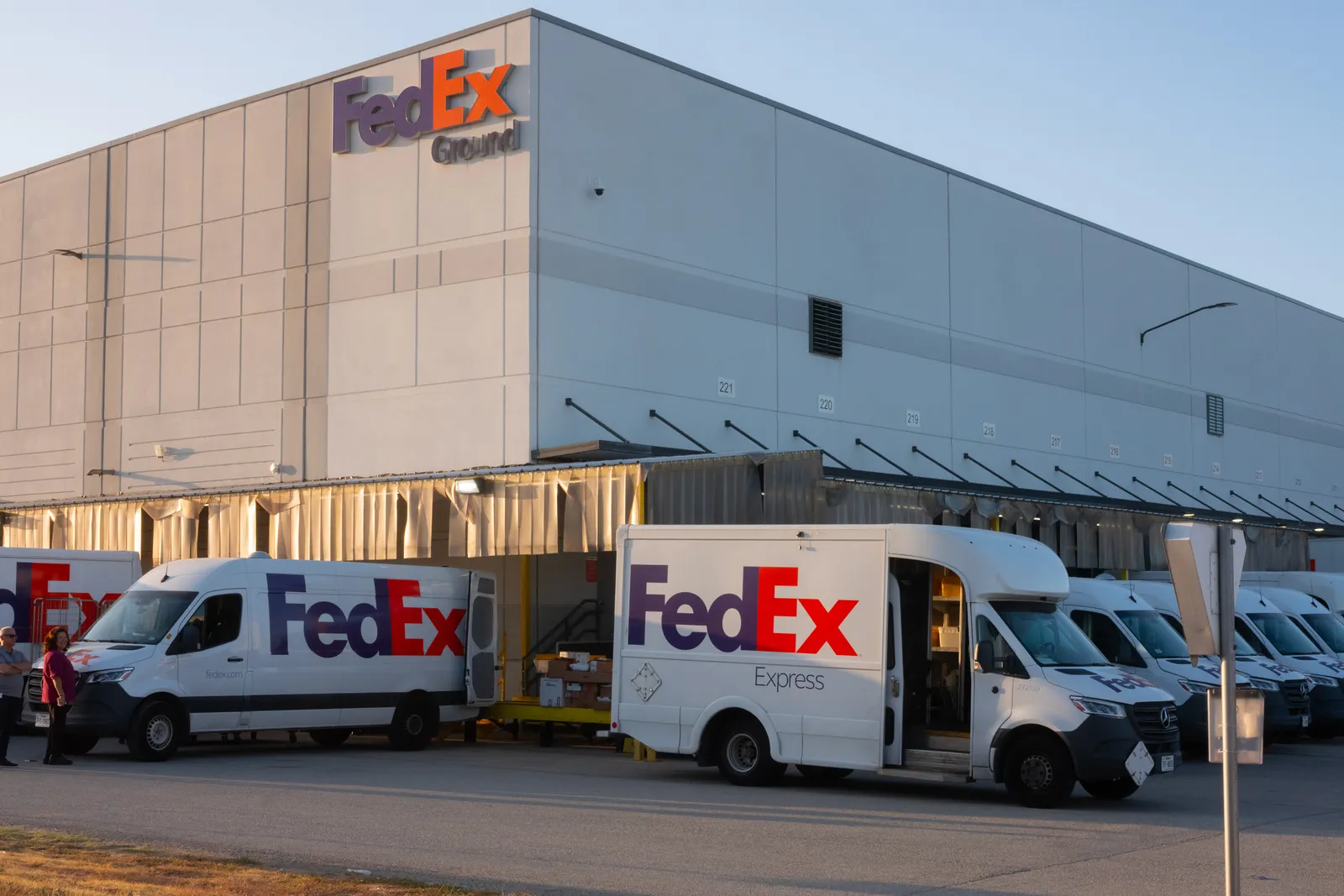
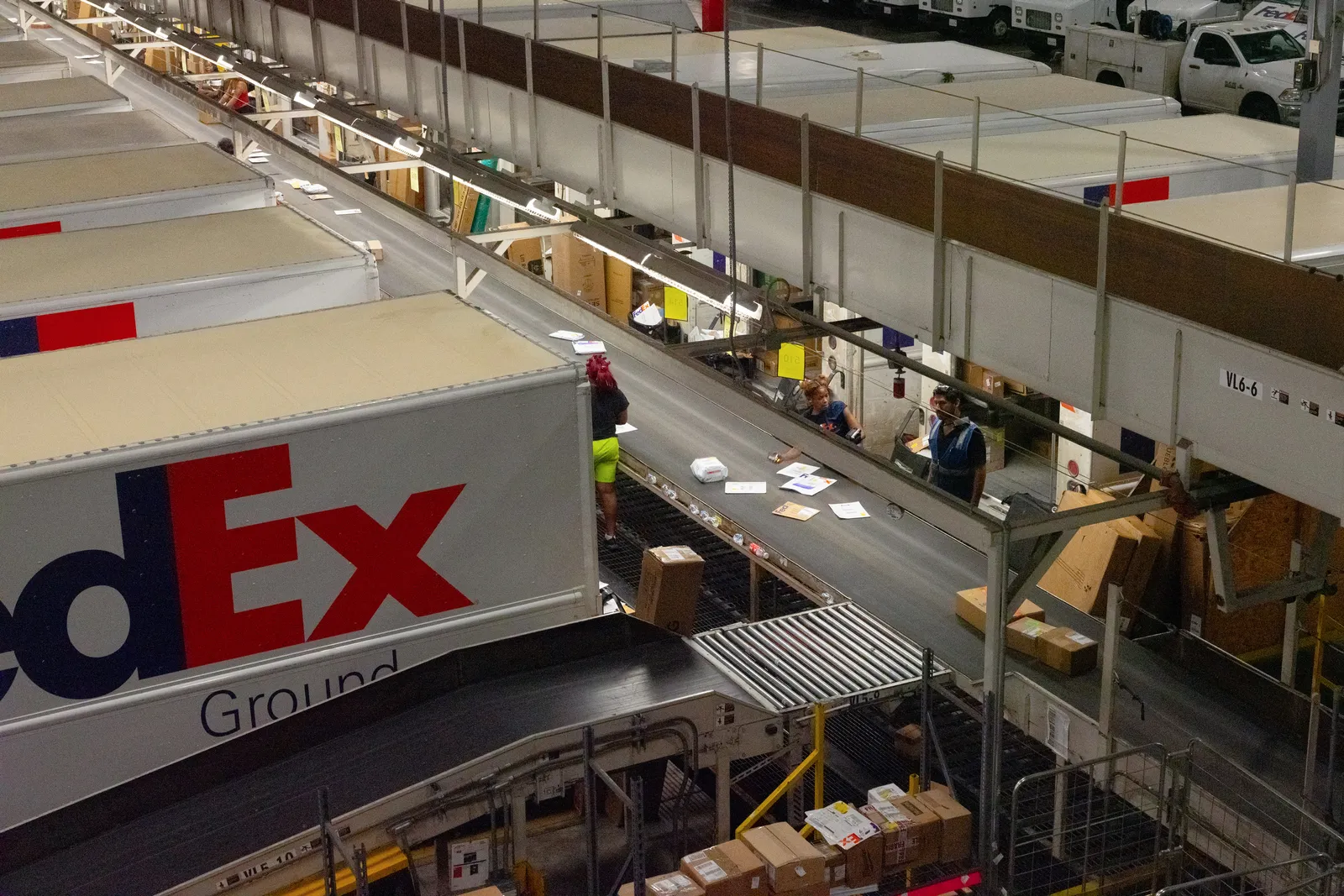
The transformation is not merely organizational; it is highly technical. The Mesquite facility serves as a blueprint for this technological shift. The site, which handles up to 100,000 packages on peak weekdays, has undergone extensive physical renovations to accommodate the influx of Express volume into a ground-centric environment.
Key technical upgrades include:
- Caster Deck Systems: These allow for the rapid movement of heavy air cargo pallets, a staple of the Express network, directly onto the floor for sorting.
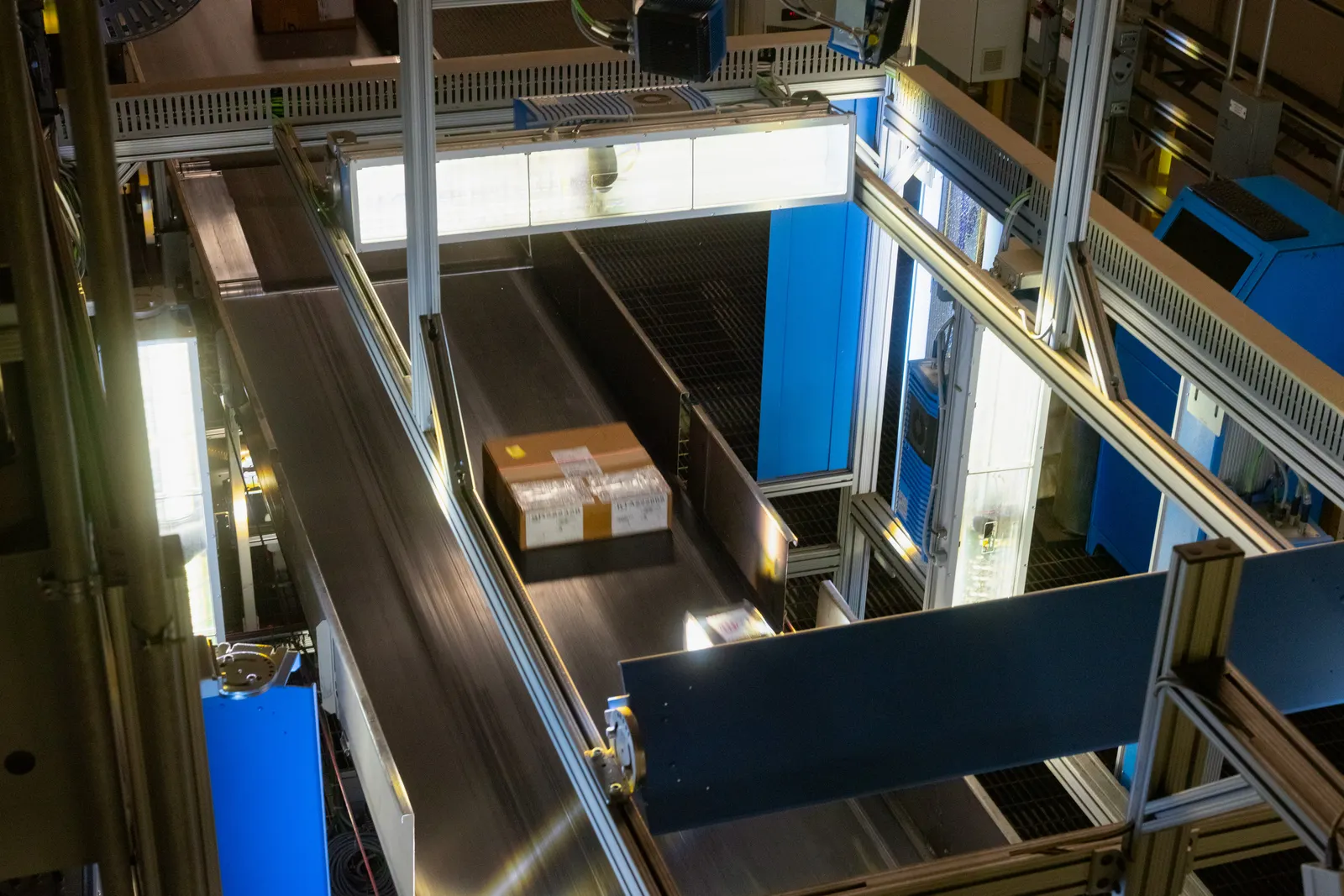
- Six-Sided Scanning Tunnels: These automated systems use lasers and cameras to capture package data from every angle, eliminating the need for manual scanning and reducing human error.
- High-Velocity Sortation: The facility now features two independent sortation systems, each capable of processing 7,500 parcels per hour.
- Temperature-Controlled Infrastructure: Recognizing the importance of high-priority healthcare shipments—such as GLP-1 medications—the facility added dedicated refrigeration units to maintain cold-chain integrity for sensitive parcels.
The facility’s performance metrics are telling. During the 2025 holiday peak season, even as overall network volume surged, FedEx reported a 95.3% on-time delivery rate, a marked improvement from the 91.8% recorded in December 2024.
Official Responses and Operational Challenges
While the long-term goal is simplicity for the customer, the transition presents profound complexity for the operator. Jeremy Tancredi, a partner in West Monroe’s operations excellence practice and a former UPS industrial engineer, notes that balancing different service levels is a massive undertaking.
"It’s simpler for the customer, but it’s much more complicated for you," Tancredi says. Unlike Ground, which is largely day-definite, Express requires rigid, time-definite delivery windows—sometimes as early as 8 a.m.
To manage this, contracted service providers—who traditionally handled only ground volume—are now being trained to prioritize time-sensitive Express packages. This adds a "new wrinkle" to route planning. Providers must now simulate routes that account for specific "must-deliver-by" times, a practice that requires advanced algorithmic support and, in some cases, additional manpower and fleet capacity.
Despite these hurdles, the consensus among industry observers is that the operational transition has been surprisingly stable. "I think it created a lot of unknown, but I don’t think it created a lot of service issues," says Tony DiNitto, founder of the consultancy Route Tycoon.
Implications for the Future of Logistics
The success of the Mesquite pilot, led by managers like Keith Belt and Johnne Moore, has provided a roadmap for the rest of the company. Moore’s district, which covers roughly one-third of Texas, was one of the first to fully integrate.
"I raised my hand to be the first to stand up," Moore says. "My team thought I was crazy, but I said, ‘As we are going to set a standard, it’s going to help others get better as they stand up, too.’"

The broader implications for the logistics sector are clear: the era of the "separate network" is closing. As consumer expectations for speed and transparency rise, the ability to integrate air and ground, time-definite and day-definite shipments under one roof is becoming the new baseline.
For FedEx, the future hinges on balancing this massive shift with its commitment to a 24/7, high-speed delivery model. With more robotics, RFID tracking, and automated labeling on the horizon, the Mesquite facility is not just a sorting hub—it is a laboratory for the future of global commerce. As the company marches toward its 2027 completion date, the lessons learned in the suburbs of Dallas will likely influence how the entire logistics industry approaches the challenges of scale, cost-efficiency, and the relentless, non-stop pursuit of delivering the world on time.
For the employees on the ground, the transition has been a test of endurance and adaptability. "It’s one of the most challenging things we did," Moore concludes, "but it was one of the most rewarding." For FedEx, the gamble on Network 2.0 is not just about saving $2 billion; it is about ensuring that the company remains the indispensable backbone of the global supply chain for the decades to come.