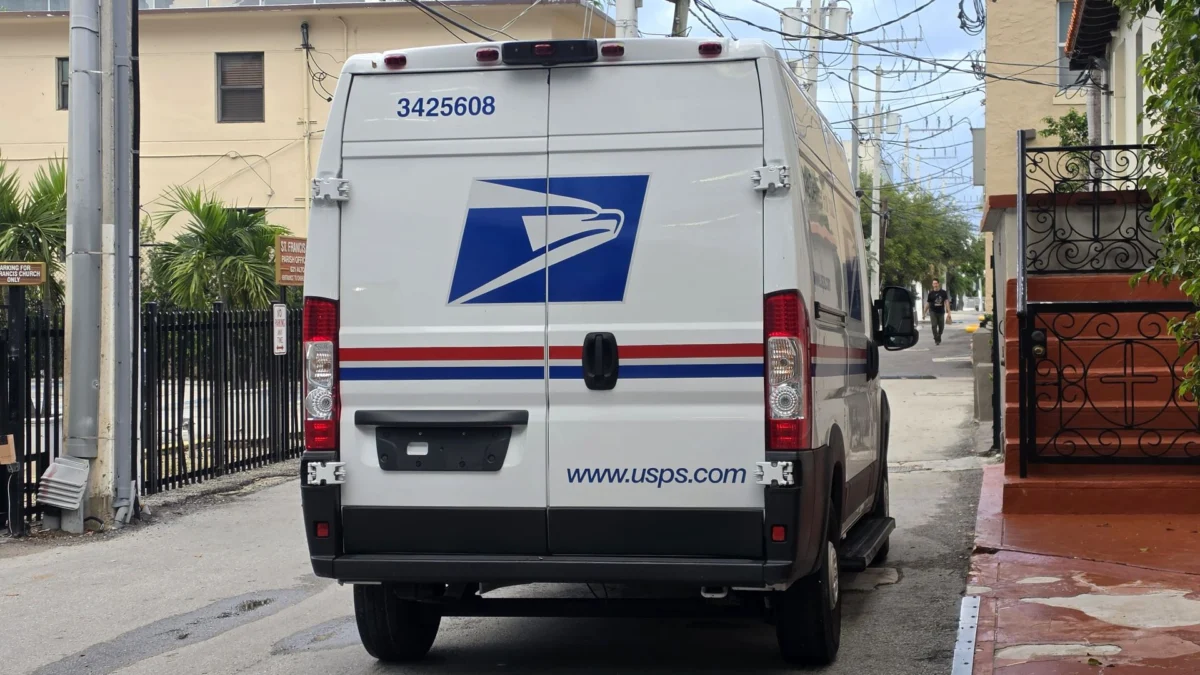
As the calendar turns toward the year-end holiday surge, the United States Postal Service (USPS) has signaled that it is entering the 2026 peak season with a level of confidence and operational readiness unseen in previous years. Following a period of aggressive infrastructure investment and workforce stabilization, the quasi-private organization is poised to manage an anticipated 40% spike in mail and package volumes between October 1 and December 31.
Postmaster General David Steiner, addressing the organization’s preparedness, stated, “We have been preparing all year for this peak season, and we have enough capacity to handle whatever comes our way.” This message of resilience arrives at a critical juncture for the agency, which faces intense competition from private-sector giants and the ongoing scrutiny of its financial viability.
The State of Readiness: Facts and Figures
The logistical challenge of the holiday season is immense. Every year, from mid-October through the end of December, the Postal Service’s daily volume surges, testing the limits of its sorting facilities and last-mile delivery network.
The metrics from the previous year suggest that the agency’s modernization efforts are already yielding dividends. During the 2025 peak season, the USPS successfully delivered mail and packages in an average of 2.5 days—an improvement over the 2.8-day average recorded in 2024. This trend toward faster processing is not merely a result of seasonal effort but a reflection of systemic changes in how the organization moves freight across the country.
One of the most notable shifts is the reduction in reliance on temporary labor. The USPS has hired approximately 10,000 seasonal workers for the current season, a significant drop from the 14,000 hired last year and a stark contrast to the 40,000 seasonal hires required just a few years ago. The organization attributes this transition to a more stable core workforce, achieved through reduced supervisor vacancies and lower overtime rates, which have collectively fostered a more consistent and experienced internal team.
A Chronology of Modernization: The Decade-Long Overhaul
To understand how the Postal Service reached this point, one must look at the trajectory of its “Delivering for America” plan, initiated in 2022. This $40 billion investment strategy was designed to move the agency away from a fragmented, aging network toward a centralized, technology-driven logistics hub.
2022–2024: Laying the Groundwork
The early years of the plan focused on the installation of high-speed sorting technology and the initial acquisition of facility sites. The agency recognized that its reliance on over 18,000 destination delivery units (DDUs)—small, ill-equipped post offices with minimal loading dock space—was a bottleneck preventing efficiency.
2025: The Year of Technological Acceleration
By 2025, the investment began to bear fruit. The agency rolled out a significantly improved tracking and reporting platform. This new digital infrastructure provides package visibility nearly four times faster than its predecessor, with updates often appearing within a minute of a scan. This visibility is integrated into the USPS mobile application, providing customers with real-time, accurate data that mirrors the expectations set by modern e-commerce standards.
2026: Consolidation and Scale
In the current fiscal year ending September 30, 2026, the Postal Service reached a new milestone in its structural overhaul. The agency opened 31 Sorting and Delivery Centers (S&DCs) and 10 Regional Processing and Distribution Centers (RPDCs). These facilities act as the backbone of the new network, working in tandem with 35 local processing facilities. Since 2022, the USPS has successfully launched 182 S&DCs, 19 regional DCs, and four standalone regional transfer hubs.
Supporting Data: The Impact of Automation
The physical backbone of this transformation is the deployment of sophisticated automation. In the last year alone, the USPS installed 164 automated package sorting machines, bringing the total count of high-speed sorters added since 2022 to 673.
These machines are not simply faster; they are more versatile, capable of handling a wider range of parcel sizes—a direct response to the shift in consumer behavior toward larger, bulkier e-commerce deliveries. The S&DC model, which consolidates the work once performed by approximately 10 individual DDUs, uses equipment capable of processing between 2,500 and 4,300 pieces per hour. By centralizing these operations, the USPS is able to serve upwards of 200,000 customers daily per facility, dramatically reducing the "haphazard" nature of its previous delivery network.
Official Responses and Strategic Leadership
The leadership at the USPS is not only focused on hardware but also on a total reorganization of its strategic planning. The creation of the Chief Solutions and Strategy Office represents an attempt to unify the agency’s disparate business units, centralizing network planning to better match postal services with the specific needs of commercial clients.
A key development in this strategic pivot is the promotion of Gary Reblin to Chief Commercial Officer. Reblin, a 35-year veteran of the organization, previously served as the Chief Technology Officer. His background is considered vital for the agency’s future, as he was instrumental in developing the partnerships that allow private carriers to "inject" pre-sorted freight directly into the postal network—a high-margin revenue stream that has become essential for the organization’s financial health.
“Insights gained as CTO will help decision-making to modernize sales, competitive pricing for parcels, retail stores, delivery and tracking,” Reblin noted in a recent corporate communication. His appointment signals a desire to blend technical capability with commercial agility.
Implications: The High Stakes of the Peak Season
The implications of this year’s performance extend far beyond the holiday shipping window. The Postal Service is currently operating under the shadow of significant financial instability, with leadership having previously warned Congress of the risk of collapse. In this context, the holiday peak is not just an operational necessity; it is a proof-of-concept for the agency’s long-term survival.
The Competitive Landscape
The USPS is no longer the sole dominant force in parcel delivery. The rise of Amazon’s internal logistics network has fundamentally changed the market, with the retail giant now acting as both a customer and a major competitor. The USPS has had to pivot its strategy to prioritize high-efficiency, last-mile delivery for third-party consolidators, who inject pre-sorted freight into local post offices to bypass upstream processing.
The Customer Experience
For the average consumer, these changes translate into better tracking, faster delivery, and more reliable service. As the agency moves away from its reliance on aging, poorly maintained DDUs, the frequency of "lost" or "stalled" packages in the middle-mile network is expected to decline.
Future-Proofing the Organization
The consolidation of the network into S&DCs is a long-term play. By removing duplication in its delivery routes, the USPS is positioning itself to be more flexible in the face of future economic fluctuations. While the agency has faced criticism for its financial state, the data suggests that its transition from an antiquated mail-based system to a modern, automated parcel-delivery network is firmly underway.
As the 2026 holiday season kicks into high gear, all eyes will be on these new sorting centers. If the performance metrics match the organizational rhetoric, the USPS may finally be on the path to reclaiming its status as a reliable, efficient, and financially sustainable backbone of the American economy. The success of this peak season will likely dictate the pace and scope of future investments, proving whether the agency’s billion-dollar bet on modernization can keep it relevant in a world dominated by instant, high-tech logistics.