The opinions expressed by Trellis expert contributors are their own, not those of Trellis.
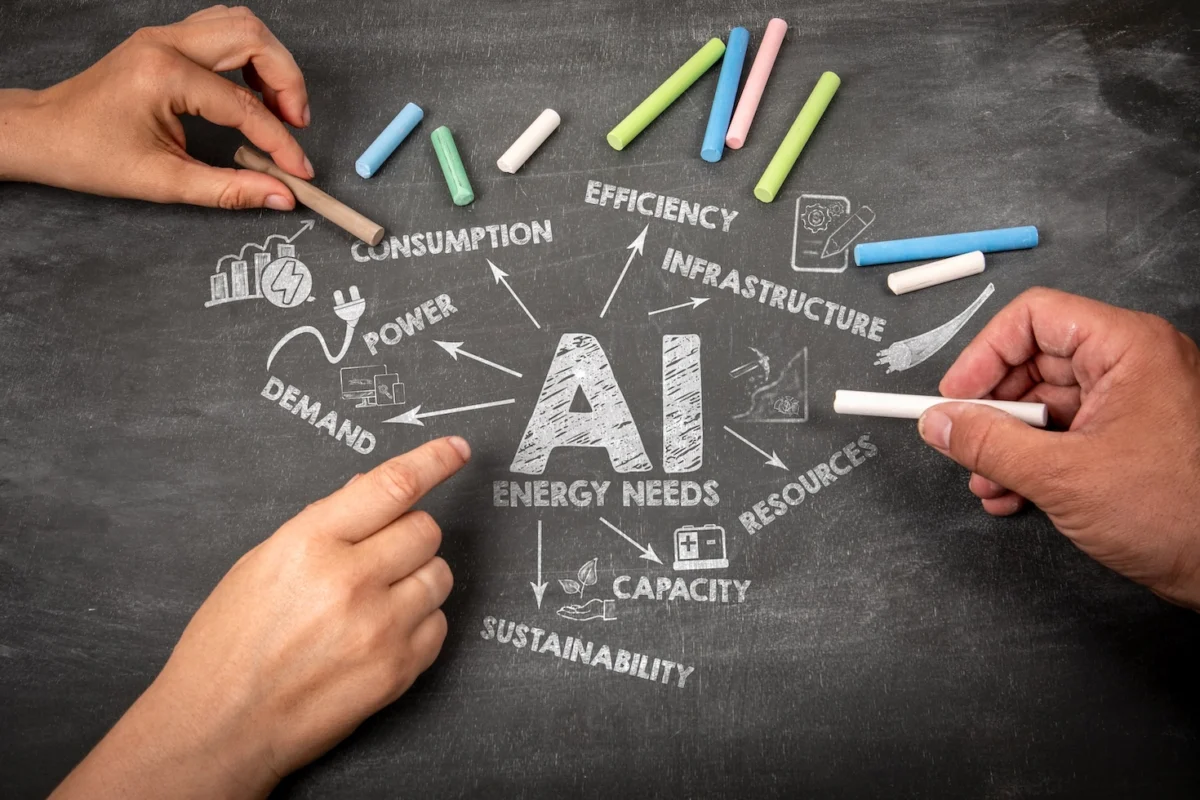
The rapid ascent of artificial intelligence (AI) has sparked a contentious debate among sustainability practitioners: Do the environmental costs of massive computational power and energy-intensive training runs outweigh the transformative potential of the technology itself? As the world grapples with a deepening climate crisis, this "green paradox" of AI has become a focal point for corporate environmental, social, and governance (ESG) strategies.
While the exact carbon cost of AI remains obscured by opaque reporting—with training emissions often omitted from standardized lifecycle assessments—the emerging consensus suggests that hesitation is not the answer. When applied with precision and intent, AI is proving to be a potent catalyst for resource efficiency, waste reduction, and climate risk mitigation.
The AI Calculus: Weighing Costs and Benefits
At the heart of the debate is the sheer energy appetite of Large Language Models (LLMs) and advanced machine learning architectures. The lifecycle of an AI model—from data center construction and hardware procurement to the electricity required for training and ongoing inference—presents a significant carbon footprint. Critics argue that we are effectively "spending" carbon to solve carbon, creating a net-neutral or even net-negative impact in the short term.
However, proponents argue that the efficiency gains provided by AI in sectors like heavy manufacturing, agriculture, and logistics far exceed the emissions generated by the software’s operation. The following analysis examines how these tools are currently being deployed to turn the tide on resource management.
Chronology of AI-Driven Sustainability Gains
The integration of AI into sustainability operations has evolved from experimental pilot programs to mission-critical infrastructure over the last five years.
- 2020–2021: The Optimization Era. Early adopters began testing machine learning for granular supply chain improvements. Companies like Cub and Heidelberg Materials initiated pilots focusing on reducing "shrinkage" (waste) and optimizing kiln heat.
- 2022–2023: The Rise of the Digital Twin. As cloud-based computing became more accessible, corporations began building "digital twins"—virtual replicas of physical production lines—to simulate efficiency improvements before deploying them on the shop floor.
- 2024–Present: The Predictive Nature Era. The current frontier involves using AI to model ecosystem services, specifically through Nature Adjusted Economic Valuation (NAEV), allowing firms to quantify their dependence on natural capital and predict long-term environmental risks.
Supporting Data: Real-World Impacts
The theoretical potential of AI is rapidly being validated by tangible performance metrics across global industries.
Case Study 1: Transforming Grocery Retail
For the Midwest-based grocery chain Cub, traditional forecasting was a game of educated guessing, which often resulted in excessive food waste and diminished profit margins. By partnering with Afresh, a software firm specializing in AI-driven inventory management, Cub transformed its supply chain.
- The Pilot: During a three-month test, the chain saw a 2% increase in sales and a 7% reduction in inventory holdings.
- The Full Rollout: Following full implementation, produce shrink fell by 18%.
- The Environmental Dividend: The initiative is now projected to avoid 1,200 metric tons of greenhouse gas emissions, save 43 million gallons of water, and prevent 2 million pounds of food waste annually.
Case Study 2: Decarbonizing Heavy Industry
Cement production is notoriously energy-intensive, with fuel combustion accounting for nearly 30% of a plant’s emissions. Heidelberg Materials, in a collaboration with Gigaton, deployed an AI platform at its Mokra facility in the Czech Republic. By continuously adjusting oxygen levels, fuel mix, and kiln speed, the AI achieved:
- A 4% reduction in average fuel costs within the first month.
- A 2% reduction in fuel-derived emissions.
- A shift toward less carbon-intensive fuel sources, made possible by the software’s precise thermal management.
Case Study 3: The Digital Twin Revolution
Unilever and Accenture have embarked on a multi-year partnership to scale digital twins across 40 manufacturing sites. By creating virtual models fed by real-time sensor data, the company can identify process bottlenecks before they manifest as physical waste.
- Raeford, NC Facility: A twin of the deodorant production line predicts 95% of flow restrictions, resulting in a 20% reduction in total waste.
- Haldia, India Facility: Optimization of thermal systems and fan speeds has yielded a sustained reduction in thermal energy consumption over a two-year period.
Official Perspectives: The Regulatory and Strategic View
While corporations are racing to adopt these tools, there is a mounting push from regulatory bodies for transparency. Many ESG practitioners are now calling for a standardized "AI Carbon Accounting" framework.
"The uncertainty surrounding the energy cost of AI shouldn’t be an excuse for inaction," says one industry analyst. "However, it does mandate that we shift from a ‘move fast and break things’ approach to a ‘measure fast and optimize things’ approach."
Industry leaders emphasize that the value of AI in sustainability lies in its ability to process complex, multi-variable data—such as temperature, moisture, and chemical composition—far beyond the capabilities of human operators. The official stance from early-adopting firms is that the environmental ROI of these tools is quickly becoming a primary driver of competitive advantage.
Implications: The Future of Nature-Based Risk Analysis
Looking ahead, the most promising application of AI may be in the realm of NAEV (Nature Adjusted Economic Valuation). For industries dependent on timber, water, or mineral extraction, the degradation of the natural world is not just an environmental concern; it is a fiduciary one.
Assessing Natural Capital
AI allows firms to ingest massive datasets from field studies and ecosystem modeling to calculate how close a resource-rich region is to exhaustion. This modeling provides:
- Risk Mitigation: Companies can identify potential supply chain disruptions years before they occur due to environmental collapse.
- Economic Viability: By mapping ecosystems to financial performance indicators—such as the weighted average cost-of-capital—firms can make data-backed arguments for conservation, framing it as a strategy for long-term fiscal health.
Before the maturation of AI, such granular risk analysis was economically unfeasible, requiring thousands of hours of manual labor and complex statistical modeling. Now, it is becoming an automated component of risk management.
Conclusion: A Net-Positive Trajectory
The sustainability practitioner’s "judgment call" regarding AI is shifting. While the energy footprint of training large-scale models is a legitimate concern, the evidence from the grocery sector, heavy manufacturing, and natural capital management suggests that the "intelligence" provided by these systems is the most effective tool we have for curbing industrial inefficiency.
The path forward requires a dual commitment: first, to demand greater transparency regarding the carbon footprint of AI infrastructure; and second, to aggressively scale the applications of AI that demonstrably reduce waste, energy, and water usage. If the trajectory of the last five years is any indication, AI will not just be an energy consumer—it will be the primary engine of the next industrial revolution in sustainability. By converting raw data into actionable environmental strategy, AI is proving that it is not merely a part of the problem, but an indispensable pillar of the solution.