The global maritime industry stands at a technological crossroads. As the International Maritime Organization (IMO) prepares to grant final approval to its comprehensive Digitalization Strategy next year, the shipping world is bracing for a fundamental shift. Having already secured the backing of the organization’s specialized committees, this strategic framework is set to act as the primary catalyst for the widespread integration of digital solutions across the global fleet. More than a mere technological upgrade, this mandate is designed to elevate efficiency, bolster safety, and ensure the long-term environmental sustainability of the $14 trillion global trade industry.
The Convergence of Policy and Practice
For decades, the maritime sector—often characterized by its conservative, traditionalist approach—has relied on manual processes, paper-based logs, and human-centric decision-making. However, the IMO’s upcoming strategy signals an official end to this era of analog management.
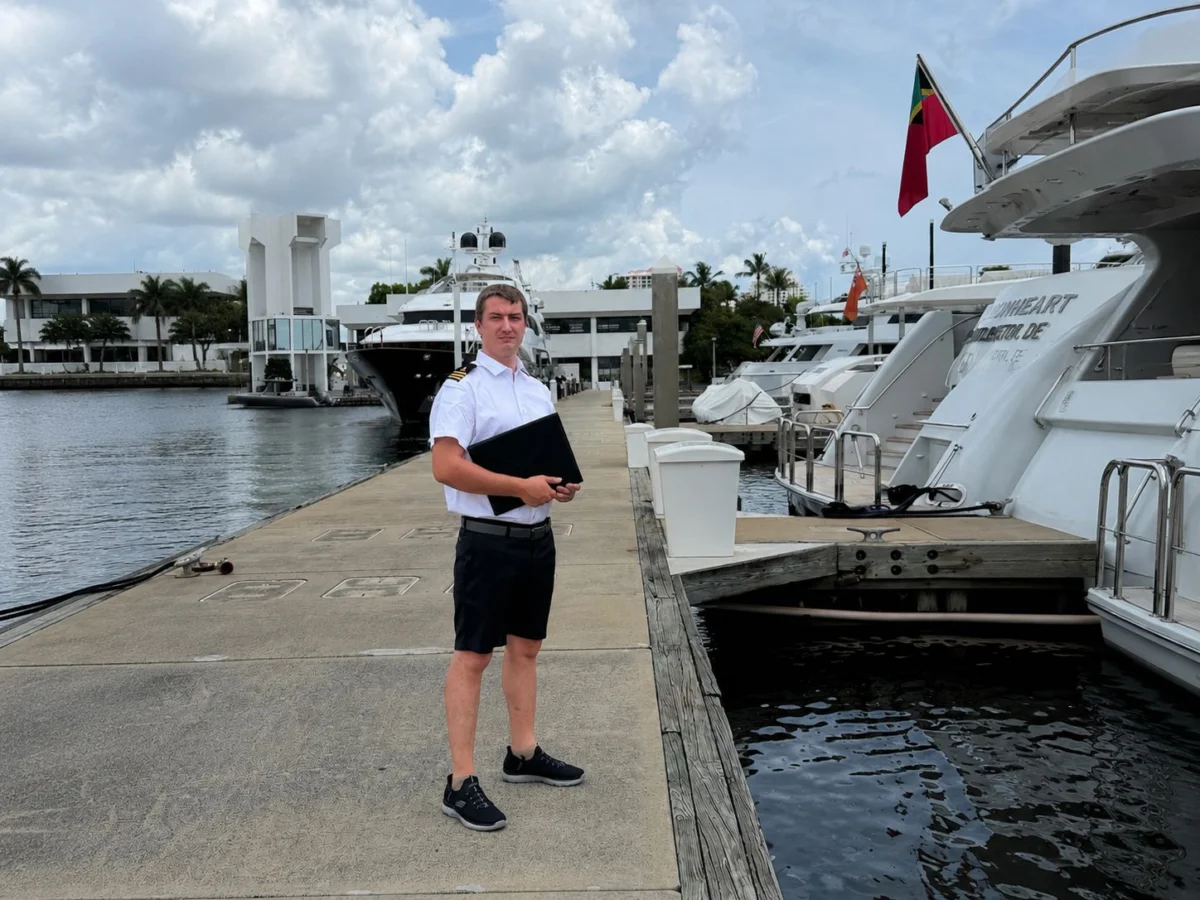
"When people talk about digitalization, many of them picture the rollout of individual technologies, such as a new sensor or a software dashboard," explains Viktor Genkulov, a seasoned marine engineer and researcher. "But what’s really at stake is the transformation of the entire system of fleet technical operations—from administrative document management and equipment maintenance to high-level engineering decision-making."
Genkulov, whose recent methodological guide “Digitalization of Technical Operations” aligns perfectly with the IMO’s roadmap, notes that this transition is not just a regulatory requirement but an "objective reality." As ships grow more complex and international requirements for safety and carbon emission reporting become more stringent, traditional manual processes have reached their limit.
A Chronology of Maritime Transformation
To understand why this strategy is surfacing now, one must look at the evolution of shipping operations:
- The Manual Era (Pre-2010s): Ships were operated via physical ledgers. Maintenance was strictly "planned," meaning parts were replaced based on manufacturer-suggested time intervals, regardless of actual wear.
- The Early Digital Phase (2010–2020): Isolated digital tools began to emerge. Shipowners started testing electronic logs and basic remote monitoring. However, these systems were often "siloed," meaning data from the engine room didn’t communicate with the bridge or the shore-based management.
- The Integration Phase (2020–2024): The COVID-19 pandemic served as a massive stress test for the industry. The necessity of remote operations forced companies to adopt cloud-based management, satellite-linked diagnostics, and digital documentation at an accelerated pace.
- The Strategic Era (2025 and Beyond): With the IMO’s new framework, digitalization becomes an industry-wide standard. The focus shifts from "adopting tools" to "systemic transformation," where data-driven decision-making replaces gut feeling across the entire lifecycle of a vessel.
Addressing the "Human Factor" in Maritime Safety
One of the most compelling arguments for rapid digitalization is the reduction of human error. According to the European Maritime Safety Agency (EMSA), the human element remains a primary contributor in the vast majority of maritime incidents.
Genkulov’s research highlights a stark statistic: the transition to electronic checklists alone can reduce human-factor errors by 70 to 80 percent. The logic is simple but profound. A paper checklist is prone to "the slip of the pen," loss, or simple forgetfulness—especially during high-stress maneuvers or fatigue-inducing night shifts.
"An electronic system doesn’t just record that a task is done; it enforces the protocol," Genkulov says. "If a specialist misses a critical valve check during a system startup, the system identifies the omission in real time. It prevents the operator from moving to the next phase until the check is completed. This creates a safety net that simply does not exist with paper."
The Economic Reality: From Planned to Condition-Based Maintenance
Perhaps the most debated topic in maritime digitalization is the transition from "Planned Preventive Maintenance" (PPM) to "Condition-Based Maintenance" (CBM).
Traditional PPM is notoriously wasteful. Shipowners often replace functional, expensive components simply because the "hours-run" manual suggests it is time. CBM, conversely, utilizes IoT sensors to monitor real-time vibration, temperature, and fluid pressure. This allows for intervention only when the equipment actually shows signs of fatigue.
The Investment Breakdown
While the upfront costs of digitizing a fleet can be daunting, experts argue that the ROI is significant. A typical modernization project—covering sensors, controllers, and software integration—ranges from $55,000 to $105,000. However, compared to the $250,000–$450,000 price tag often charged by shipyards for similar upgrades, the custom-engineered approach championed by specialists like Genkulov can save shipowners over $150,000 per vessel.
Cost Components:
- Hardware (Sensors/IoT): $15,000 – $20,000
- Labor & Engineering Integration: $40,000 – $85,000
- Hidden Costs: Identification and remediation of legacy system errors from original shipyard builds.
Sustainability and the Fuel Efficiency Mandate
The IMO’s strategy is inextricably linked to environmental goals. As the industry pivots to alternative fuels—such as biofuels and low-sulfur variants (VLSFO)—the chemical and physical characteristics of these fuels are far more volatile than traditional heavy oils.
Digitalization offers a solution through real-time fuel quality monitoring. Modern Mass Flow Meters (MFM) allow ships to measure fuel mass rather than volume, providing an accuracy margin of less than 0.5 percent. This transparency prevents "short-delivery" fraud and ensures the engine is receiving fuel at the optimal viscosity (10–15 cSt). By maintaining precise viscosity, the engine achieves more complete combustion, significantly reducing specific fuel oil consumption (SFOC) and, consequently, lowering greenhouse gas emissions.
Implications for the Future of Shipping
The transition will not be without resistance. The maritime industry is historically conservative, and many in leadership positions view the rise of AI and automation as a threat to the expertise of the individual mariner.
"Any change looks confusing to the older generation, even frightening," Genkulov admits. "The question often comes up: ‘If a computer can monitor processes and issue recommendations, am I, as a specialist, replaceable?’"
The answer, according to the IMO’s vision, is not replacement but augmentation. The goal is to remove the "routine" from the human workload—filling out logs, tracking parameters—so that engineers can spend their time on what truly matters: analyzing complex data, managing risk, and solving non-standard engineering problems that computers cannot yet comprehend.
Conclusion
As the industry prepares for the formal adoption of the IMO Digitalization Strategy, the message to shipowners is clear: the era of "wait and see" is over. Digitalization is no longer a competitive advantage reserved for the tech-forward; it is becoming the baseline requirement for a safe, efficient, and compliant fleet.
Those who begin the integration process now will find themselves at a significant advantage. By the time the regulation becomes the industry standard, early adopters will have already optimized their maintenance cycles, slashed their fuel costs, and created a culture of safety that the analog world simply cannot match. In the words of Viktor Genkulov, "We cannot run a modern ship the way we did 20 years ago; it is inefficient and, more importantly, unsafe. It is better to start today than to be catching up tomorrow."