The American energy landscape is undergoing a seismic shift. Once a subject of partisan debate, the transition to renewable energy sources has increasingly become a pragmatic economic strategy, delivering tangible financial relief to consumers while fortifying grid reliability. Recent data confirms that massive investments in solar infrastructure and battery storage are not just "green" aspirations—they are the new bedrock of affordable, resilient power.
From the sun-drenched plains of Texas to the innovation hubs of California, the results of this transition are now undeniably visible. New analysis from the Solar Energy Industries Association (SEIA) reveals that as these states scaled up their clean energy capacity, they effectively decoupled record-breaking electricity demand from rising costs, shielding consumers from the volatility of traditional energy markets.
The Economics of Scale: A Tale of Two States
The summer of 2026 marked a pivotal milestone for the United States’ two most populous states. Despite facing record-setting heat and increased electricity consumption, California and Texas saw wholesale electricity prices plummet, a phenomenon directly linked to the rapid deployment of solar and battery storage.

By the Numbers: Savings and Expansion
Between June and August 2026, the financial impact of this buildout was staggering. Texans saved approximately $3.55 billion, while Californians saw $2.5 billion in savings compared to the same period in 2021. These savings were facilitated by an explosive growth in infrastructure:
- Texas: Solar generation increased by 421%, while battery storage capacity expanded more than 26-fold.
- California: Solar generation grew by 90%, and battery storage capacity increased nearly sevenfold.
The data further demonstrates that efficiency is no longer at odds with growth. In the California Independent System Operator (CAISO) territory, power usage rose by 2.5% compared to 2021, yet the average wholesale electricity price was 40% lower when adjusted for inflation. Similarly, the Electric Reliability Council of Texas (ERCOT) managed a 30.1% increase in power demand while maintaining wholesale prices that were 42% lower than five years prior.
A Transcendent Priority
SEIA CEO Tim Pawlenty noted that these achievements underscore a shift in political and economic reality. "As the midterm elections approach, delivering affordable, reliable power is a priority that transcends party lines," Pawlenty stated. "Texas and California are proof that the growth of solar and storage is driving down prices, contradicting the narrative that renewables are inherently more expensive than fossil fuel alternatives."

Chronology of Innovation: Key Developments
The success seen in California and Texas is mirrored by a flurry of activity across the U.S. energy sector, ranging from virtual power plants to massive transmission infrastructure projects.
1. Scaling the "BYOC" Model
The concept of "Bring Your Own Capacity" (BYOC) is gaining momentum. Voltus and Google have expanded their partnership to develop a 1-gigawatt (GW) virtual power plant (VPP) within the PJM territory. This initiative aggregates energy flexibility from businesses and homes, utilizing batteries, smart thermostats, and industrial load management. When the grid faces stress, this collective resource stabilizes the system, preventing potential outages and reducing the need for expensive "peaker" plants.
2. Financing the Future: Pivot Energy’s Milestone
Independent power producers are also securing unprecedented financial backing. Pivot Energy recently closed a $500 million corporate credit facility with Nuveen Energy Infrastructure Capital. This capital is earmarked for late-stage project development and equipment procurement, aiming to bring over 1 GW of solar and 700 megawatt-hours of battery storage online by 2029.

3. Strengthening the Backbone: MISO’s Transmission Project
Reliability is only as good as the wires that carry the power. The Midcontinent Independent System Operator (MISO) has officially selected a consortium—comprising Ameren Transmission Company of Illinois (ATXI), GridLiance Heartland, and Dairyland Power Cooperative—to develop a $1.23 billion transmission project in Iowa. The EASL (East Adair – Minnesota/Iowa State Line – Arbor Hill – York Avenue) project will feature a new 765-kV transmission line, creating a robust regional backbone to accommodate future energy resources.
4. Community-Level Impact: The Sandwich Project
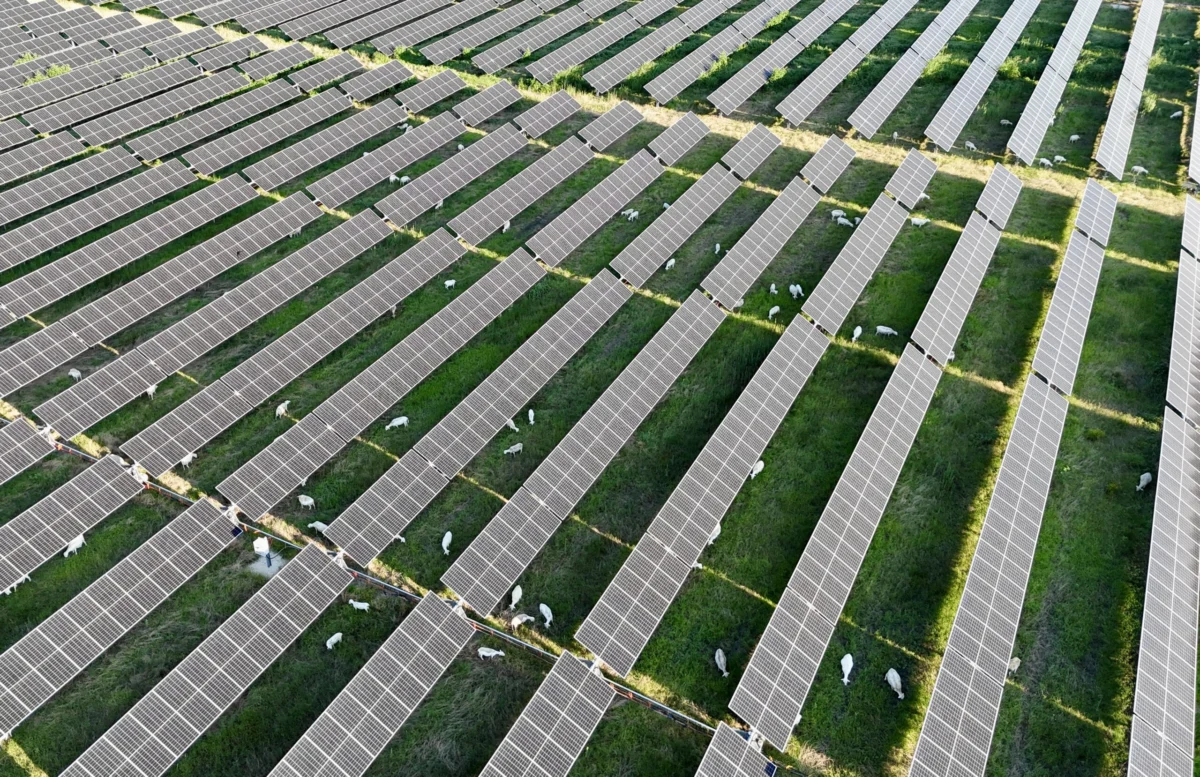
At the local level, community solar is proving that infrastructure can be both beneficial and biodiverse. In Sandwich, Illinois, Generate Capital and TurningPoint Energy celebrated the completion of a 3.5 MWac solar project. Beyond generating enough clean energy to power thousands of homes, the site utilizes agrivoltaic practices—employing sheep grazing for vegetation management and planting native flowers to support local pollinators.
Implications for the National Grid
The cumulative effect of these developments points toward a decentralized, digitized, and decarbonized grid. The transition is moving from "large-scale only" to a hybrid model where massive transmission lines coexist with hyper-local virtual power plants.

Resilience and Economic Security
The primary implication of this shift is enhanced grid resilience. By distributing resources across thousands of locations (like the Voltus VPP) and bolstering the transmission backbone (like the MISO project), the grid becomes less susceptible to single points of failure. Furthermore, the financial stability offered by long-term renewable contracts protects consumers from the price shocks associated with global fossil fuel market fluctuations.
The "Farm-to-Table" Energy Approach
CleanChoice Energy’s recent $85 million loan facility with Aiga Capital Partners highlights a broader trend: retailers are becoming generators. As companies like CleanChoice pivot from merely selling energy to developing it, they create a "farm-to-table" approach to renewable energy. This vertical integration allows for greater price control and ensures that clean energy is sourced locally, further reducing transmission losses and supporting regional economic development.
Conclusion: The Path Forward
The evidence is clear: the energy transition is not merely an environmental goal; it is an economic necessity. The combination of legislative support, private sector innovation, and the falling costs of battery and solar technology has created a virtuous cycle.

As the U.S. continues to integrate these technologies, the focus will likely shift toward optimizing the existing infrastructure and ensuring that the workforce is prepared to maintain this modernized grid. The success stories in Texas, California, Illinois, and the Midwest provide a roadmap for other states to follow.
While challenges remain—particularly regarding permitting timelines and the continued need for transmission expansion—the momentum is undeniable. The energy industry is no longer waiting for the future; it is actively constructing it. Through the convergence of policy, finance, and engineering, the vision of a clean, affordable, and reliable electric future is becoming a reality, one solar panel, one battery, and one transmission line at a time.
For industry observers and stakeholders, the lesson of the past year is simple: those who invest in the grid of tomorrow are already reaping the dividends of a more stable, cost-effective energy system today. As we look toward the next decade, the integration of these distributed assets and regional transmission projects will remain the defining challenge and opportunity for the American power sector.