By Mark Segal
October 23, 2026
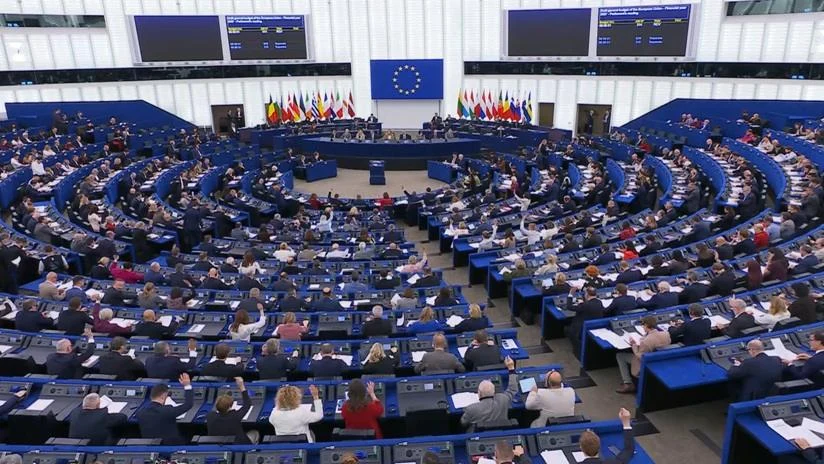
In a significant legislative pivot that has sent ripples through the European energy sector, lawmakers in the European Parliament have voted 341 to 225 to push back critical methane monitoring and reporting requirements for oil, gas, and coal importers. The decision, finalized today, represents a major departure from the European Commission’s initial proposal for a one-year delay, effectively granting industry players a three-year reprieve. This move underscores the intensifying tension between the European Union’s ambitious climate neutrality goals and the harsh realities of maintaining energy security in a volatile geopolitical landscape.
The Core of the Dispute: Climate Ambition vs. Energy Security
The legislation in question, enacted in 2024, was heralded as the world’s first comprehensive framework designed to regulate methane emissions associated with imported fossil fuels. Methane is a potent greenhouse gas (GHG), possessing a warming potential approximately 80 times greater than carbon dioxide over a 20-year period. Given that the oil and gas sector is one of the world’s largest industrial emitters of methane, the 2024 law was considered a cornerstone of the EU’s strategy to limit global temperature rise to 1.5°C.
The law mandates rigorous standards for measuring, reporting, and verifying (MRV) emissions, while also imposing strict requirements for leak detection and repair (LDAR) and limiting the practice of venting and flaring. However, the implementation of these standards on importers—who bring natural gas, oil, and coal into the European market—has become a flashpoint for debate.
The European Commission, citing concerns over potential supply chain disruptions, proposed earlier this month to delay the MRV requirements for importers by one year. The Parliament’s decision to triple that delay to three years signals a recognition of the severe warnings issued by energy importers, who argue that the current strained state of global energy markets leaves little room for the additional regulatory burden of certifying complex supply chains.
A Chronology of the 2024 Methane Regulation
To understand the weight of today’s vote, it is necessary to track the development of this policy:
- 2024 (Legislation Enacted): The EU passed its groundbreaking methane regulation, setting a global precedent for fossil fuel import standards. It established a timeline for phased implementation of monitoring and reporting, with initial requirements for importers slated to begin in 2028.
- Early 2026: As the implementation dates approached, industry stakeholders began voicing concerns regarding the technical feasibility of verifying emissions from non-EU jurisdictions.
- October 2026 (Early Month): The European Commission officially proposed a one-year extension for the implementation of MRV requirements for importers, acknowledging the geopolitical pressures on energy supply chains.
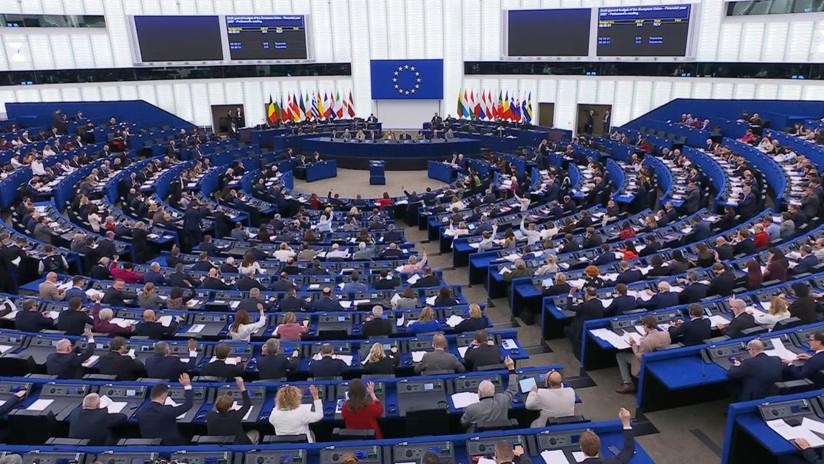
- October 23, 2026: The European Parliament votes 341 to 225 to extend the delay to three years, citing concerns from importers about the risk of market instability and potential supply shortages.
Supporting Data: The Methane Problem
The urgency to address methane emissions remains undiminished, even as the implementation timeline is pushed back. Scientific consensus highlights that methane reduction is the most effective "near-term" lever to slow the rate of global warming. Because methane has a shorter atmospheric lifetime than CO2, reducing emissions today provides immediate cooling benefits that are vital for preventing climate "tipping points."
Data from the International Energy Agency (IEA) and various environmental research bodies indicate that:
- Warming Potential: Methane’s global warming potential (GWP) is consistently cited as 80-84 times that of CO2 over a 20-year horizon.
- Industrial Footprint: The oil and gas sector is responsible for nearly 40% of all energy-related methane emissions globally.
- The Import Factor: Since the EU is one of the world’s largest importers of fossil fuels, the 2024 legislation was intended to leverage European market power to force global producers to adopt better monitoring technologies.
Critics of the delay point out that by pushing these requirements to 2031, the EU risks losing the momentum generated by its initial leadership in climate policy, potentially allowing significant volumes of "unverified" gas to continue entering the European market without penalty.
Official Responses and Political Maneuvering
The vote reflects a deep divide within the European Parliament. Supporters of the three-year delay argue that it is a pragmatic necessity. Energy security, they contend, must take precedence during a period of high volatility in global fossil fuel markets. They argue that forcing importers to meet stringent, unproven certification standards on a tight schedule could lead to a reduction in supply, subsequently driving up energy prices for European households and industries.
Conversely, environmental advocates and several MEPs have expressed profound disappointment. They argue that the industry has had sufficient time to prepare and that the delay is a capitulation to lobbying efforts.
"We are essentially giving the fossil fuel industry a ‘get out of jail free’ card for another three years," noted one legislative aide following the vote. "While we acknowledge the energy security challenges, the climate crisis does not offer extensions for its deadlines."

In addition to the import-related delay, the Parliament also approved a reprieve for domestic operators. Under the new resolution, EU-based oil and gas companies will now have until February 2030 for operated assets and August 2031 for non-operated assets to submit verified reports that combine site-level and source-level measurements. This effectively extends the previous 2027 deadline by three years, reflecting the technical complexity involved in scaling up accurate measurement technologies.
Implications for the Energy Transition
The decision to delay these regulations will have far-reaching implications for both the climate and the energy market:
1. Market Uncertainty and Compliance
Companies operating within the EU energy sector now have a longer runway, but they also face a period of policy uncertainty. While the delay provides breathing room, it does not remove the ultimate requirement for compliance. Companies that continue to invest in monitoring and verification technology now may find themselves at a competitive advantage when the new 2031 deadline finally arrives.
2. Global Climate Leadership
The EU has long positioned itself as the standard-bearer for global environmental regulation. By softening its stance on the methane rules, the bloc faces the risk of appearing less committed to its own Green Deal objectives. This may weaken the EU’s hand in international climate negotiations, such as COP summits, where it has historically urged other nations to adopt similar, high-standard methane reporting rules.
3. Investment in Measurement Technology
The three-year delay may inadvertently slow the pace of investment in methane-detection technology. If the regulatory stick is removed for several years, there is a risk that companies will deprioritize the adoption of satellite-based monitoring, aerial surveillance, and continuous ground-based sensors. Innovation in this space, which was booming as a result of the 2024 law, may see a cooling-off period as the market adjusts to the extended timeline.
4. Supply Chain Resilience
On the positive side, the delay may prevent the immediate shock to energy prices that some importers feared. By allowing more time to build out the necessary infrastructure for supply chain verification, the EU is attempting to ensure that the transition to cleaner energy does not come at the cost of economic stability.

Looking Forward: What Happens Next?
The vote marks the establishment of the Parliament’s formal negotiating position. The next phase of the process will involve "trilogue" negotiations—a series of meetings between the Parliament, the European Commission, and the Council of the European Union to reach a final, binding agreement.
Observers expect these negotiations to be heated. The Council, representing the interests of the individual member states, will have to balance the concerns of their national energy industries against the collective desire to uphold the EU’s climate commitments.
As of late October 2026, the sentiment in Brussels suggests that while some delay is inevitable, the final agreement may seek a middle ground—perhaps a shorter extension than the three years favored by Parliament, or perhaps a phased implementation approach that begins sooner than 2031.
Regardless of the final outcome, the events of this week demonstrate that the path to a decarbonized energy sector is rarely linear. As the EU navigates the "Trilemma" of energy—balancing sustainability, security, and affordability—it is clear that the politics of climate policy are becoming as complex as the engineering required to monitor a leaking gas pipe.
For now, industry leaders, environmental groups, and market analysts alike are watching closely, waiting to see if the "three-year delay" becomes the new standard, or if political pressure will force a compromise that brings the EU back to its original, more aggressive climate timeline.