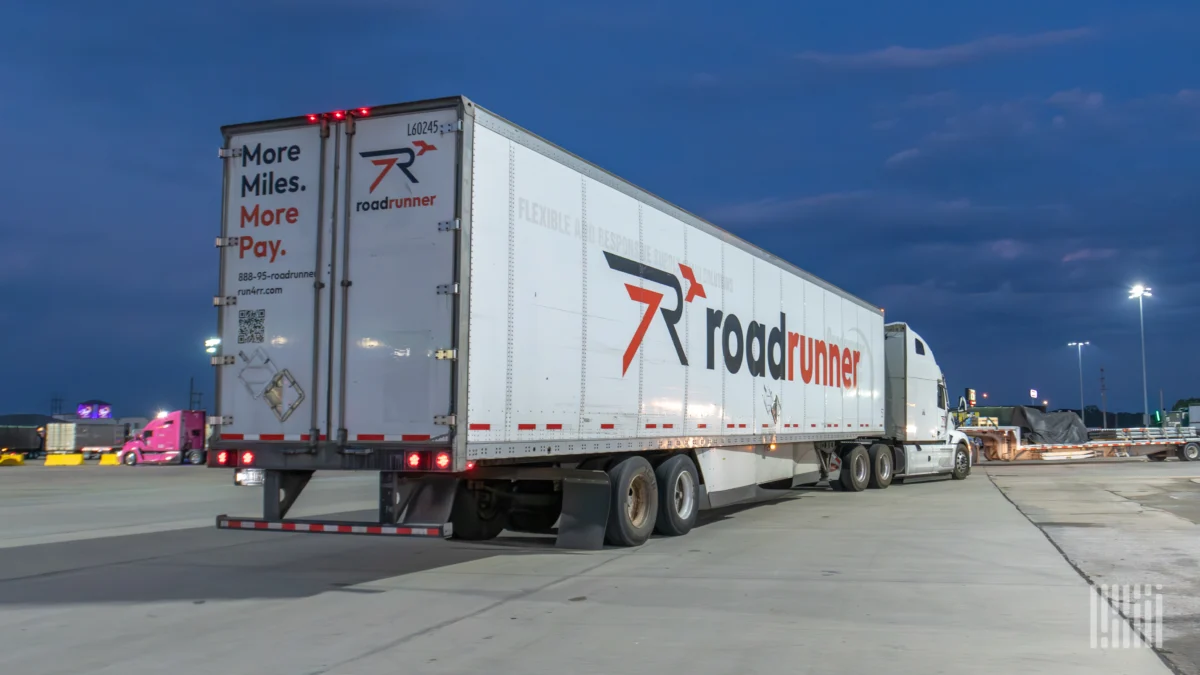
In a strategic maneuver aimed at bolstering its North American logistics footprint, less-than-truckload (LTL) carrier Roadrunner (OTC: RRTS) has officially announced the launch of a new, direct outbound service connecting Canada to the United States. This expansion marks a significant milestone in the company’s ongoing efforts to optimize its proprietary "Smart Network." Concurrent with this service expansion, the company has signaled a shift in its pricing structure, announcing a 5.9% general rate increase (GRI) scheduled to take effect on November 2.
These developments arrive at a critical juncture for the North American freight sector, which continues to grapple with fluctuating demand, inflationary pressures, and a renewed emphasis on operational efficiency. By leveraging its truck-only, long-haul infrastructure, Roadrunner aims to provide a more streamlined alternative to traditional intermodal services, promising faster transit times and enhanced cargo visibility for shippers operating in the cross-border trade corridor.
The Strategic Expansion: Canada to the U.S.
Roadrunner’s latest offering is designed to bridge the logistical gap between Canadian shippers and the vast American consumer base. The service provides direct, long-haul, metro-to-metro connectivity to approximately 40 major markets across the United States.
What distinguishes this service from traditional cross-border offerings is the company’s commitment to a strictly over-the-road execution. By eschewing rail-based linehaul, Roadrunner aims to eliminate the "touch points" typically associated with intermodal transport. In the logistics world, every transfer point is a potential site for delays, cargo damage, or data gaps. By maintaining a single-mode, truck-only approach, Roadrunner intends to offer a more predictable service experience for high-value or time-sensitive LTL freight.
The "Smart Network" Philosophy
Dave Black, vice president of strategic sales at Roadrunner, emphasized that this expansion is the natural next step for the carrier’s specialized infrastructure.
"We built a proprietary Smart Network for direct, long-haul, metro-to-metro service, delivering fewer handling points, faster transit, real-time visibility, and greater accountability with no unnecessary transfer points to delay shipments or compromise visibility," Black said. "We have focused primarily on strengthening our U.S. network, and we are pleased to announce our next phase of expansion."
This model relies on a robust network of over 40 terminals and a fleet of independent drivers who act as the backbone of the company’s long-haul strategy. By optimizing these lanes, Roadrunner is positioning itself to capture a larger share of the cross-border market, which has historically been dominated by larger, asset-heavy carriers that often rely on a mix of rail and truck.
Chronology of Roadrunner’s Transformation
To understand the significance of this announcement, one must look at the recent history of Roadrunner, which has undergone a radical transformation over the past several years.
- Restructuring Phase: Following a period of financial volatility, Roadrunner embarked on a multi-year effort to shed non-core assets and refocus entirely on its LTL operations. This involved significant downsizing and a pivot toward a more agile, technology-driven service model.
- The Pivot to Long-Haul: With its core business stabilized, the company began investing heavily in its "Smart Network," focusing on long-haul lanes where its specialized terminal-to-terminal model could offer the most competitive advantage.
- Expanding the Border Reach: Initially, the company focused on U.S.-outbound lanes into Canada. The successful integration of these lanes served as a proof-of-concept, allowing the carrier to refine its customs-handling protocols and cross-border documentation processes.
- The Current Announcement: With the infrastructure now fully tested, the launch of the Canada-to-U.S. service marks the transition from a regionalized U.S. carrier to a truly integrated North American logistics provider.
- November 2nd Implementation: The upcoming GRI marks the next fiscal milestone, intended to provide the necessary capital to sustain the investments required for this network expansion.
Supporting Data and Economic Implications
The decision to implement a 5.9% GRI is not an isolated incident but part of a broader trend within the LTL sector. As operating costs—ranging from diesel prices to insurance premiums and driver wages—continue to climb, carriers are increasingly moving away from annual rate adjustments toward more frequent, tactical pricing strategies.
The Anatomy of the GRI
A 5.9% increase is substantial, though it reflects the current inflationary environment of the trucking industry. The GRI, which applies to general tariff codes and lanes, is designed to ensure that the carrier’s revenue keeps pace with the rising costs of maintenance, terminal labor, and technology investments.
Nathalie de Champlain, chief transformational officer at Roadrunner, articulated the necessity of this move: "To support expansion and further investment in better offerings, we’re introducing the GRI to sustain investment in our leading network. The adjustment addresses increased costs driven by market conditions and supports continued investment in network efficiency and service quality."
Market Dynamics
For shippers, the math is becoming increasingly complex. In an environment where capacity is tightening, the ability to rely on a consistent, high-visibility carrier often outweighs the sticker shock of a 5.9% increase. However, the move also signals that carriers are feeling the pressure of a "correction" in the freight market. After the pandemic-era surge in spot rates, carriers are now balancing lower volumes with higher overhead, forcing them to be more disciplined with their pricing power.
Implications for the LTL Industry
The shift toward direct, long-haul, truck-only LTL services like those offered by Roadrunner suggests a broader industry trend: the "premiumization" of LTL freight. As e-commerce and just-in-time manufacturing models require tighter delivery windows, the inefficiencies inherent in traditional hub-and-spoke or intermodal models are being scrutinized.
Competitive Pressure
By eliminating rail-based transfers, Roadrunner is essentially challenging the traditional LTL incumbents to justify their own handling times. If a carrier can provide end-to-end visibility and faster transit without the risk of rail-related bottlenecks, it creates a powerful value proposition for shippers managing complex supply chains.
The Visibility Imperative
The emphasis on "real-time visibility" in Roadrunner’s messaging is a direct response to the demands of modern logistics managers. In the era of digital supply chain management, data is as valuable as the cargo itself. By maintaining total control over the linehaul segment, Roadrunner ensures that data integrity remains intact from pickup in a Canadian metro area to delivery in the U.S.
Looking Forward: Navigating a Changing Landscape
As Roadrunner prepares for the November 2nd rollout of its new service and rate structure, the industry will be watching closely to see how the market responds. The combination of service expansion and price adjustment is a bold strategy, but one that is common among high-performing carriers that prioritize network health over volume-at-any-cost.
Challenges Ahead
Despite the optimism surrounding the expansion, the company faces external headwinds. The cross-border trade environment is subject to geopolitical shifts, customs delays, and potential fluctuations in the Canada-U.S. currency exchange rate. Furthermore, the reliance on independent drivers requires a delicate balance of maintaining a competitive compensation package while managing the company’s own operating margins.
The Role of Technology
The "Smart Network" is ultimately a technological endeavor. As the company continues to refine its software and terminal management systems, its ability to integrate Canadian shippers into the U.S. digital ecosystem will determine the long-term success of this expansion.
Conclusion
Roadrunner’s announcement is a bellwether for the LTL sector in late 2024. It demonstrates that even in a challenging economic climate, companies that invest in niche, high-value network capabilities can carve out significant market share. By focusing on direct, fast-transit, cross-border lanes, Roadrunner is positioning itself as a premium service provider. Simultaneously, the 5.9% GRI serves as a reminder that the cost of logistics excellence is rising, and shippers must prepare for a future where pricing models are as dynamic and data-driven as the networks that support them.
As the industry converges on major events—such as the upcoming FreightWaves Future of Freight Festival—discussions regarding network resilience, capacity management, and pricing strategies will undoubtedly dominate the discourse. For Roadrunner, the focus remains clear: refine the network, expand the reach, and maintain the margins necessary to lead in a competitive, high-stakes market.