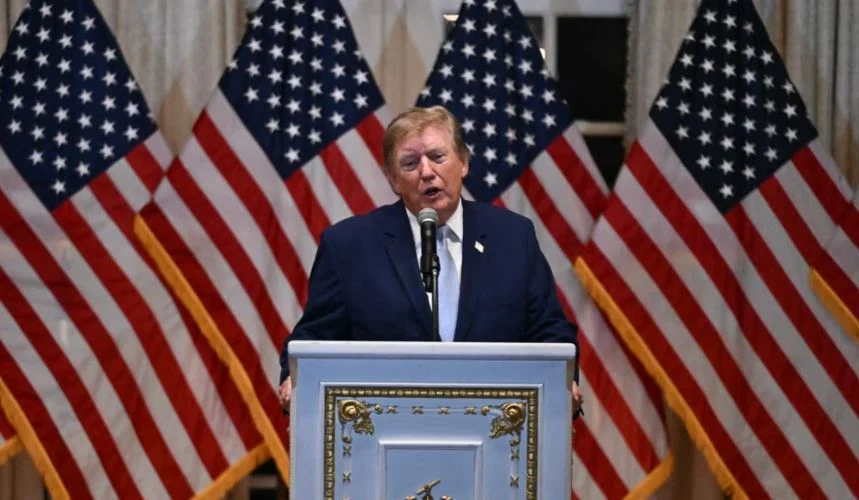
Washington D.C. – October X, 2026 – In a highly anticipated statement from the White House, President Donald Trump declared on Friday that Canada is exerting considerable effort to forge a new trade agreement with the United States. The President’s remarks, delivered to reporters on the White House lawn, underscored the persistent tensions and complex dynamics that have characterized the North American trade landscape for years, particularly following the contentious renegotiation of the North American Free Trade Agreement (NAFTA).
"Canada is working very hard to make a deal with us, and I don’t want to say this, but we have all the cards," Trump stated, exuding confidence in the U.S. negotiating position. His assertive tone reflected a consistent theme of his administration’s "America First" trade policy, which has often prioritized bilateral agreements and threatened tariffs to achieve desired outcomes. The declaration comes amidst a prolonged trade impasse between the two historically close allies, an impasse that ignited after initial talks faltered in August of the previous year (referring to 2018/2019 period, not 2026), leading to a tit-for-tat exchange of tariffs and retaliatory measures across the shared border.
The breakdown in negotiations deepened a significant divide between Washington and Ottawa, two nations that have long maintained one of the world’s most robust and integrated economic relationships. Both sides have pointed fingers, assigning blame for the stalled discussions. This contentious period even saw Canadian Prime Minister Justin Trudeau exploring avenues for Canada to further diversify its trade relationships, signaling a potential shift away from its largest trading partner and casting a shadow of doubt over the durability and comprehensive nature of the nascent United States-Mexico-Canada Agreement (USMCA), which had already been reached between the U.S. and Mexico.
A Shifting Landscape in North American Trade
The President’s comments, though brief, encapsulate a period of profound re-evaluation and recalibration of trade relations within North America. For decades, NAFTA served as the bedrock of economic integration, fostering interconnected supply chains and robust cross-border commerce. However, the Trump administration’s ascent brought with it a fundamental challenge to this established order, driven by a perception that previous trade deals had disadvantaged American workers and industries.
Trump’s Assertive Stance
President Trump’s declaration that the U.S. holds "all the cards" is emblematic of his negotiating style and broader trade philosophy. From the outset of his presidency, he signaled a departure from traditional multilateral trade agreements, favoring instead bilateral deals negotiated from a position of perceived American strength. This approach, often characterized by brinkmanship and the strategic use of tariffs, aimed to extract concessions from trading partners deemed to be engaging in unfair practices. For Canada, a long-standing ally and neighbor, this new paradigm represented a significant shift, forcing Ottawa to navigate an unprecedented level of pressure and uncertainty in its relationship with its most crucial economic partner. The "America First" doctrine, while popular with a segment of the U.S. electorate, often created friction with allies who felt unfairly targeted by protectionist measures.
The Core of the Dispute: Renegotiating NAFTA
At the heart of the trade friction lay the renegotiation of NAFTA. The agreement, implemented in 1994, had facilitated a nearly seamless flow of goods, services, and capital across the continent. However, the Trump administration argued that NAFTA was outdated and detrimental to American interests, particularly in the manufacturing sector. Key U.S. demands included stricter rules of origin for automobiles, increased access to Canada’s protected dairy market, and the elimination of Canada’s independent dispute resolution mechanism (Chapter 19), which the U.S. viewed as an infringement on its sovereignty. Canada, while open to modernizing NAFTA, steadfastly defended its supply management system for dairy and insisted on retaining Chapter 19, viewing it as a critical safeguard against arbitrary trade actions. These deeply entrenched positions became the primary stumbling blocks in the arduous negotiation process.
Chronology of a Contentious Negotiation
The path to the current trade standoff was paved with a series of high-stakes negotiations, political rhetoric, and retaliatory actions that tested the limits of the US-Canada relationship.
The NAFTA Genesis and Initial Challenges
Signed into law in 1994, NAFTA created one of the world’s largest free trade zones, aiming to eliminate most tariffs among the U.S., Canada, and Mexico. It profoundly integrated the economies of the three nations, particularly in sectors like automotive manufacturing, agriculture, and energy. For over two decades, it largely operated without significant revisions, becoming a foundational element of North American economic stability. However, criticisms emerged over time regarding its impact on manufacturing jobs in the U.S. and labor standards in Mexico, providing fertile ground for future political challenges.
Trump’s Call for Renegotiation (Early 2017)
Donald Trump made NAFTA renegotiation a central plank of his 2016 presidential campaign, labeling it "the worst trade deal ever" and vowing either to secure a "much better deal" or withdraw the U.S. from the agreement entirely. Upon taking office in January 2017, his administration quickly moved to initiate the renegotiation process, formally notifying Canada and Mexico of its intent in May 2017. This signaled the beginning of an intense and often acrimonious period of diplomatic and trade discussions.
Trilateral Talks Begin (August 2017 – August 2018)
Formal negotiations commenced in August 2017, with representatives from all three countries engaging in multiple rounds of talks. Early discussions focused on modernizing aspects of the agreement, such as digital trade, intellectual property, and environmental provisions. However, progress soon bogged down on more contentious issues, including:
- Automotive Rules of Origin: The U.S. pushed for significantly higher North American content requirements (from 62.5% to 75%) and a new "wage value content" rule, demanding that a certain percentage of vehicle parts be made by workers earning at least $16 an hour, primarily targeting Mexican production. Canada and Mexico resisted, fearing disruption to integrated supply chains.
- Dairy Market Access: The U.S. sought to dismantle Canada’s long-standing supply management system for dairy, which protects Canadian farmers through production quotas and import tariffs. Canada viewed this as a non-negotiable aspect of its agricultural policy.
- Dispute Resolution (Chapter 19): Canada staunchly defended Chapter 19, which allows independent panels to review anti-dumping and countervailing duty decisions. The U.S. sought its abolition, preferring to rely solely on domestic courts, a move Canada feared would expose its industries to unfair trade remedies.
- Sunset Clause: The U.S. proposed a five-year "sunset clause," meaning the agreement would expire unless all three countries agreed to renew it. Canada and Mexico opposed this, arguing it would create perpetual uncertainty for businesses and investors.
Mexico’s Early Agreement (August 2018)
As negotiations dragged on through 2018, the U.S. unexpectedly announced a breakthrough with Mexico in August. This bilateral agreement, initially dubbed the "U.S.-Mexico Trade Agreement," signaled a strategic move by the Trump administration to isolate Canada and exert maximum pressure. The deal addressed several U.S. demands, particularly regarding automotive rules of origin, and set a precedent for what the U.S. expected from Canada. This development put Ottawa in a precarious position, facing the prospect of being left out of a revamped North American trade bloc.
Breakdown in US-Canada Talks (Late August/Early September 2018)
Following the US-Mexico deal, intense bilateral negotiations between the U.S. and Canada ensued, with a self-imposed deadline of September 30, 2018, for Canada to join the agreement or face potential exclusion. Despite round-the-clock talks, Canada and the U.S. failed to bridge their differences by the deadline. The sticking points remained Canada’s dairy supply management system and the preservation of Chapter 19. President Trump’s rhetoric grew increasingly hostile towards Canada during this period, even threatening tariffs on Canadian auto imports if a deal wasn’t reached.
Imposition of Tariffs and Retaliation
Adding another layer of complexity and animosity, the U.S. had earlier in the year (March 2018) imposed tariffs of 25% on steel and 10% on aluminum imports from Canada (and other allies) under Section 232 of U.S. trade law, citing national security concerns. Canada viewed these tariffs as unjustified and an affront to its status as a close ally. In retaliation, Ottawa implemented its own tariffs on $12.6 billion worth of U.S. goods, including steel, aluminum, and a range of consumer products, escalating the trade dispute into a full-blown tariff war. These tariffs remained a significant hurdle even as NAFTA renegotiations progressed.
Supporting Economic Data and Sectoral Impacts
The trade relationship between the United States and Canada is one of the largest and most intricate in the world, with profound implications for both economies. The tensions surrounding NAFTA renegotiation and the subsequent tariffs sent ripples across various sectors.
The Magnitude of US-Canada Trade
Canada is the United States’ second-largest trading partner, with bilateral trade in goods and services exceeding $700 billion annually. Millions of jobs in both countries are directly and indirectly supported by this commerce. For many U.S. states, Canada represents the largest export market. This deeply integrated relationship means that any disruption, such as tariffs or significant changes to trade agreements, carries substantial economic weight. The interdependence is particularly evident in manufacturing, energy, and agriculture, where supply chains often cross the border multiple times before a final product is assembled.
Impact of Steel and Aluminum Tariffs
The U.S. tariffs on steel and aluminum, and Canada’s retaliatory tariffs, had tangible effects on businesses and consumers. U.S. manufacturers that relied on Canadian steel and aluminum faced increased input costs, which were often passed on to consumers or absorbed, impacting profitability. Similarly, Canadian industries reliant on U.S. inputs or those targeted by Canadian retaliatory tariffs (e.g., U.S. whiskey, yachts, washing machines, agricultural products) experienced market disruptions, reduced demand, and financial strain. While the overall macroeconomic impact was often debated, specific industries and regions felt the pinch acutely.

Dairy Sector Sensitivity
Canada’s dairy supply management system is a politically sensitive and economically significant issue. It regulates the production and import of dairy products, ensuring stable prices for farmers but often resulting in higher prices for consumers and limited access for foreign producers. The U.S. consistently argued that this system unfairly restricted market access for American dairy farmers, particularly in states bordering Canada. For Canada, dismantling this system would have profound consequences for its agricultural sector, impacting thousands of farmers and potentially reshaping rural economies. The issue became a symbol of Canada’s resolve to protect its national interests against U.S. demands.
Automotive Industry at Stake
Perhaps no sector highlighted the interdependence of the North American economy more than the automotive industry. Manufacturers operate highly integrated supply chains, with parts and components often crossing the U.S.-Canada-Mexico borders multiple times before final assembly. The proposed changes to rules of origin, combined with the threat of auto tariffs, created immense uncertainty. Industry leaders warned that higher content requirements or tariffs could lead to increased production costs, reduced competitiveness against Asian and European manufacturers, job losses, and ultimately, higher vehicle prices for consumers across the continent. The fear was that disrupting this complex ecosystem could unravel decades of integration and efficiency.
Official Responses and Diplomatic Tensions
The trade dispute elicited strong reactions from leaders on both sides, revealing deep-seated ideological differences and contributing to an unprecedented strain on diplomatic relations.
President Trump’s Perspective
President Trump’s assertion that the U.S. holds "all the cards" was consistent with his administration’s belief in America’s economic leverage. He frequently framed the trade negotiations as an opportunity to correct what he saw as decades of unfair trade practices that had harmed American workers. His rhetoric often emphasized the U.S. trade deficit with Canada (though often disputed by Canadian figures, especially when services were included) and the perceived protectionism of Canada’s dairy sector. He maintained that the U.S., as the larger economy and primary market, had the right to dictate terms, and his willingness to walk away from a trilateral deal, as demonstrated by the initial agreement with Mexico, underscored this conviction. For Trump, the goal was not merely a modernized NAFTA but a fundamentally more advantageous deal for the United States, even if it meant challenging traditional alliances.
Canada’s Steadfast Stance (Justin Trudeau)
In stark contrast to President Trump’s aggressive posture, Canadian Prime Minister Justin Trudeau and his government adopted a stance of firm but measured resolve. Trudeau consistently emphasized Canada’s commitment to a fair and updated trade agreement, one that protected Canadian jobs and industries. He vigorously defended Canada’s supply management system as a cornerstone of its agricultural policy and insisted on retaining Chapter 19 dispute resolution as an essential mechanism for ensuring fair trade.
Throughout the negotiations, Trudeau’s government sought to rally international support against U.S. protectionism, particularly regarding the Section 232 tariffs on steel and aluminum, which Canada viewed as an abuse of national security provisions. Canadian officials frequently highlighted the mutual benefits of the long-standing trade relationship and warned against the economic harm that a fractured North American trade bloc would inflict on all parties. Despite immense pressure, Trudeau maintained that Canada would not sign a deal "at any cost," signaling a willingness to walk away if Canadian interests were not adequately protected. This position, while popular domestically, intensified the diplomatic friction with the Trump administration.
Broader International Reactions
The US-Canada trade dispute, particularly the renegotiation of NAFTA, was closely watched by the international community. Many countries expressed concern over the rise of protectionism and the potential erosion of the rules-based global trading system. The imposition of tariffs on allies raised questions about the stability of international trade relations and the future of multilateral agreements. The World Trade Organization (WTO) found itself in a challenging position, as the U.S. frequently circumvented its mechanisms or challenged its authority. The North American trade saga became a case study for how a major economic power could leverage its position to renegotiate long-standing agreements, setting a potential precedent for future trade negotiations worldwide.
Implications for North America and Beyond
The prolonged trade dispute and the arduous path to a new North American trade agreement carried significant implications, not only for the economies involved but also for diplomatic relations and the broader global trade architecture.
Erosion of Long-Standing Alliance
The trade tensions undeniably strained the traditionally close US-Canada relationship. Decades of strong diplomatic ties, shared values, and military cooperation were tested by the often-harsh rhetoric and punitive trade measures. Public opinion in both countries reflected this strain, with approval ratings for leaders declining across the border. The dispute highlighted how economic disagreements, even between allies, could quickly spill over into broader diplomatic friction, impacting trust and cooperation on other critical issues. The language used by President Trump often stung Canadians, leading to a sense of betrayal among some segments of the population.
Uncertainty for Businesses and Investors
The protracted uncertainty surrounding NAFTA’s future and the threat of tariffs had a chilling effect on business investment across North America. Companies delayed expansion plans, reconsidered supply chain strategies, and held back on hiring, awaiting clarity on the trade rules. This hesitation impacted economic growth and created a climate of instability. Industries dependent on cross-border trade, from agriculture to manufacturing, faced difficult decisions about their long-term viability under potentially new trade regimes. The lack of predictability made long-term planning extremely challenging for businesses operating in an integrated North American market.
The Future of USMCA (US-Mexico-Canada Agreement)
The original article mentions "casting doubts over the stability of the USMCA." This implies that while the U.S. and Mexico had reached their bilateral agreement (which was then named USMCA), Canada’s inclusion was still uncertain. The primary implication was whether Canada would eventually join, creating a truly trilateral successor to NAFTA, or if North America would instead operate under a fractured system, with a U.S.-Mexico deal and separate U.S.-Canada arrangements. The eventual agreement, which saw Canada join, brought a measure of stability, but the path to its ratification and full implementation still involved navigating domestic political landscapes in all three countries. The initial doubt underscored the fragility of the trilateral concept when faced with strong bilateral pressures.
Precedent for Future Trade Negotiations
The Trump administration’s approach to NAFTA renegotiation, characterized by aggressive demands, the threat of tariffs, and a willingness to negotiate bilaterally even within an existing trilateral framework, set a significant precedent. It demonstrated a shift in U.S. trade policy towards a more protectionist and transactional model. Other countries observed how the U.S. leveraged its economic power, potentially influencing their own strategies in future trade talks with Washington or in forming new alliances to counter such pressures. This approach challenged the norms of international trade diplomacy that had prevailed for decades.
Domestic Political Ramifications
The trade dispute also had significant domestic political ramifications. In the U.S., President Trump’s tough stance resonated with his base, who believed he was delivering on his promise to fight for American jobs. However, it also drew criticism from some business groups and agricultural sectors that were negatively impacted by retaliatory tariffs. In Canada, Prime Minister Trudeau’s firm stance against U.S. demands generally garnered strong domestic support, uniting various political factions in defense of national interests. However, the economic impact of tariffs and the uncertainty also posed challenges for his government, particularly in regions heavily reliant on trade with the U.S.
Conclusion
President Trump’s statement regarding Canada’s efforts to reach a trade deal, while appearing to signal potential progress, is a stark reminder of the complex and often fraught journey that redefined North American trade relations. The period of intense negotiation, marked by economic pressure and diplomatic friction, laid bare the vulnerabilities of even the strongest international alliances when confronted with fundamental shifts in national trade policy.
While the eventual conclusion of the USMCA provided a new framework, the underlying tensions and the lessons learned from the arduous negotiation process continue to resonate. The episode underscored the immense stakes involved in international trade, the intricate web of economic interdependence, and the enduring challenge of balancing national interests with the imperatives of global cooperation. As the world navigates an increasingly complex geopolitical and economic landscape, the North American trade saga stands as a powerful testament to the need for sustained diplomacy, strategic compromise, and a clear understanding of the profound implications of trade policy decisions.