In the current startup ecosystem, the barriers to entry for software development have effectively collapsed. Where once a founder needed a technical co-founder, a modest development budget, and months of engineering runway to build a Minimum Viable Product (MVP), today’s entrepreneurs are leveraging Large Language Models (LLMs) to construct complex applications in a matter of days.
However, this democratization of building has created a paradox: while software has never been cheaper to create, it has never been harder to monetize. As technical hurdles vanish, the competitive advantage has shifted away from the code itself toward the intangibles—customer trust, brand equity, and the ability to answer the "brutal" questions of a skeptical market.
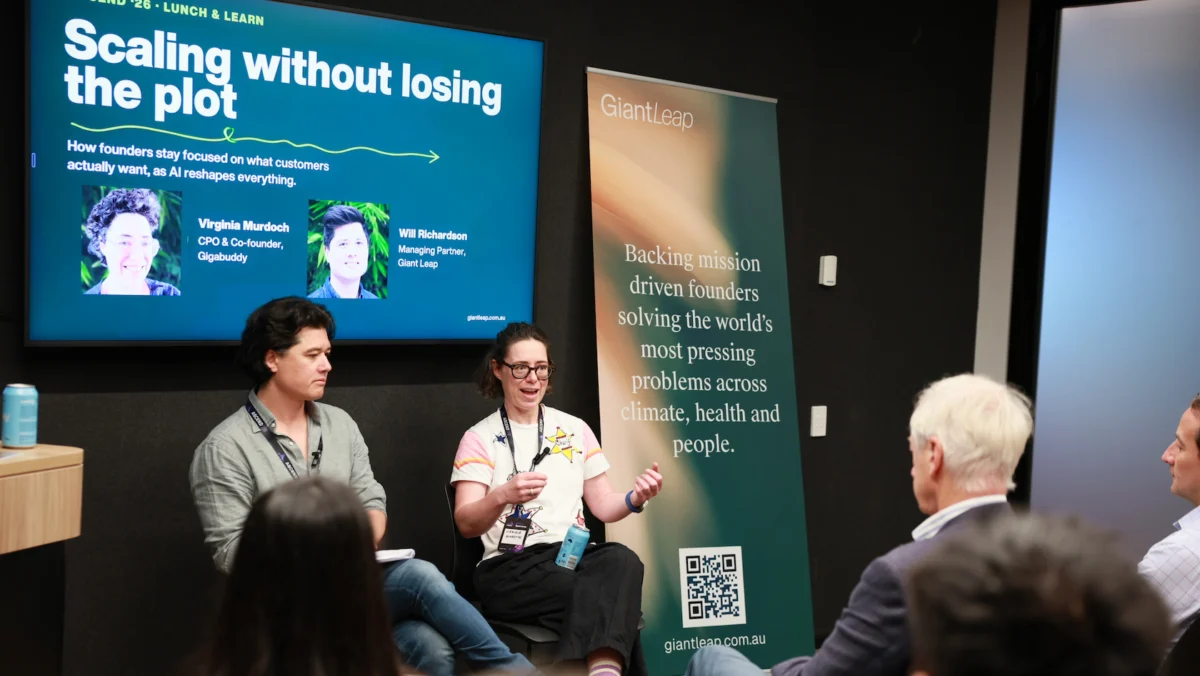
This paradigm shift was the central theme at a recent Google Ascend session in Sydney, where industry veterans Virginia Murdoch and Will Richardson discussed the evolving landscape of the AI-driven startup economy.
Chronology: From Bespoke Engineering to "Vibe Coding"
To understand the current state of play, one must look at the evolution of the software development lifecycle.
The Pre-AI Era (2011)
Virginia Murdoch’s entry into the startup world offers a stark contrast to today’s environment. In 2011, she co-founded Booki.sh, a web-native ebook reader. At the time, the digital publishing space was dominated by the walled gardens of Amazon and Apple. Booki.sh was an outlier—a platform that anticipated the modern consumer’s growing anxiety over digital ecosystem lock-in.
Building Booki.sh was an exercise in extreme technical discipline. Without the benefit of automated code generation, every line of code was a manual commitment of resources. The company was acquired by industry giant OverDrive after just three months on the market and with a user base of only 150 people. The acquisition was a testament to the fact that, in 2011, having a working, unique piece of software was a profound competitive moat in itself.
The Rise of the AI-Enabled Founder (2024–2026)
Today, the landscape has shifted to what industry insiders call "vibe coding." This term refers to the process of using AI agents to scaffold, write, and debug code based on natural language prompts. As Murdoch noted at the Google Ascend event, "Vibe coding makes you feel like a genius."
The shift is absolute: the bottleneck is no longer the ability to build the product; it is the ability to identify a problem that is actually worth solving.
Supporting Data: The Devaluation of "Build"
The economic implications of AI-driven development are profound. Historically, the "Build" phase of a startup accounted for 60% to 80% of initial capital expenditure. In 2026, that figure has plummeted.
- Development Speed: Projects that previously required a three-person engineering team for six months can now be prototyped by a single founder in two weeks using AI-augmented tools.
- Cost Efficiency: Cloud computing and AI API costs have become the primary line items, replacing heavy salary expenditures for junior developers.
- The Market Saturation Effect: Because the cost to launch a SaaS product has neared zero, the number of competing applications has exploded. Data from recent venture capital reports indicates a 400% increase in the launch of "niche" software solutions compared to 2020.
However, this efficiency has led to a "sea of sameness." Investors are reporting a significant decline in the quality of pitches that rely solely on technical utility, as every new entrant now possesses the same baseline of AI-generated functionality.
The New Moat: Trust and Brutal Inquiry
With code commoditized, the "moat"—the sustainable competitive advantage—has migrated to the human side of the business. Murdoch and Richardson emphasized that in an age of infinite software, the winners are determined by two specific factors:
1. The Architecture of Trust
In an era where AI can generate content, marketing copy, and even fake social proof, genuine human trust has become the scarcest resource. Companies that prioritize transparency, data privacy, and ethical AI deployment are seeing higher retention rates. Founders who can articulate not just what their software does, but why they are the right people to handle the user’s data and workflow, are winning the long game.
2. The "Brutal" Customer Questions
Successful founders are now those who can withstand—and effectively answer—what Murdoch describes as "brutal" customer questions. These are not inquiries about feature sets or technical specifications; they are fundamental questions about the business model and the necessity of the product:
- "Why shouldn’t I just use a free AI wrapper to do this?"
- "What happens to my business if your platform disappears in six months?"
- "How does your solution change my internal culture, not just my output?"
Founders who have spent time in the trenches, understanding the deep-seated pain points of their specific niche, can answer these questions with authority. Those who are merely "vibe coding" a solution to a problem they haven’t lived often stumble when faced with the harsh reality of customer discovery.
Official Responses and Industry Perspectives
At the Google Ascend event, the discussion turned toward the responsibility of the modern founder. Will Richardson, representing the perspective of Giant Leap, noted that while the tools have changed, the psychology of the market remains static.
"The temptation is to build fast because you can," Richardson remarked. "But building fast is the easy part. The hard part is building something that people actually need. We are seeing a shift where investors are asking less about the technical stack and more about the founder’s ‘unfair advantage’—which is almost always their unique insight into a customer’s pain."
Experts argue that we are entering a "Post-SaaS" era. In this environment, the software is merely a utility, similar to electricity or water. If you are selling software, you are essentially selling a commodity. To succeed, you must bundle that software with service, domain expertise, and a brand promise that AI cannot replicate.
Strategic Implications for Founders
For those looking to navigate this new terrain, the advice from the panel is clear:
- Stop Leading with the "How": Investors and customers no longer care about your tech stack. If you are still pitching your "advanced AI implementation" as the primary value prop, you are already behind. Lead with the customer outcome.
- Focus on the Human Element: If AI can do the building, your role as a founder must evolve into a curator, a storyteller, and a problem-solver. The human touch—customer service, community building, and ethical leadership—is where your brand will live or die.
- Pressure Test Your Business Model: If your startup’s value proposition can be replicated by a competitor using a prompt-engineering session over a weekend, you do not have a business; you have a feature. You must find a way to anchor your product in proprietary data, workflows, or community networks that are difficult to replicate.
- Embrace the "Brutal" Feedback: Don’t fear the skeptic. If a customer is asking hard questions, they are engaged. Use those interactions to refine your product’s value proposition until the answers are not just defensible, but obvious.
Conclusion
The democratization of coding is undoubtedly a net positive for innovation. It allows for a more diverse group of creators to build solutions that were once locked behind high technical barriers. However, the ease of creation has fundamentally altered the startup hierarchy.
As Virginia Murdoch’s journey from the early days of Booki.sh to the current AI-dominated landscape illustrates, the tools may change, but the fundamentals of business remain constant. AI can build the house, but it cannot move the residents in. Founders who lean into the "brutal" reality of their markets, build deep trust with their users, and focus on human-centric value will be the ones who survive the current transition.
The era of "building to build" is over. We have entered the era of building to solve, and the stakes—and the questions—have never been higher.