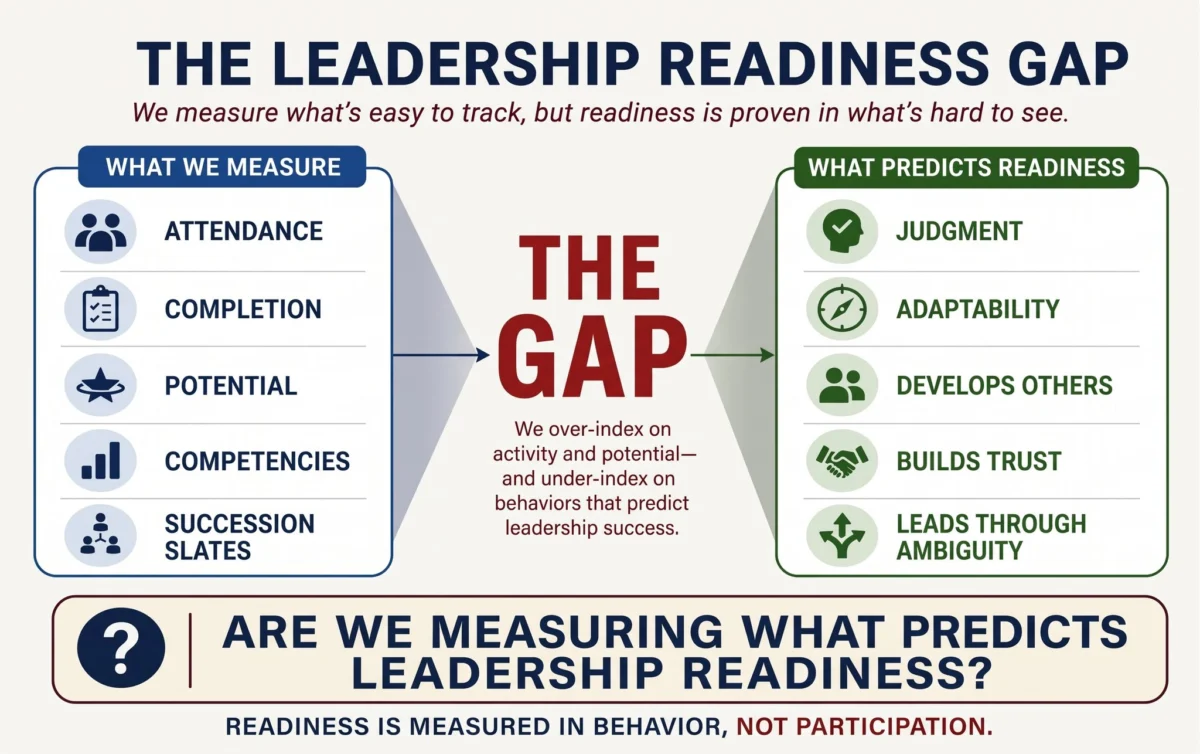
In the modern corporate landscape, the “Launch Day Success” metric is a familiar, if deceptive, milestone. A learning and development (L&D) team releases a slickly produced training video to a workforce of hundreds. Within a fortnight, the Learning Management System (LMS) dashboard glows green: 90 percent completion rates. Stakeholders are satisfied, and the project is marked as a triumph.
Yet, a sobering reality often emerges just six weeks later. Despite the high engagement metrics, the same operational errors persist. Whether on the manufacturing floor, within the call queue, or buried in an audit report, the behavior that the training was meant to correct remains unchanged.
After two decades of producing video content for corporate, healthcare, and manufacturing sectors, the evidence is clear: the failure is rarely in the production quality or the narrative flair. It is a failure of objective. To bridge the gap between "watching" and "doing," organizations must stop treating video as an explanation tool and start treating it as a performance-enablement engine.
The Chronology of a Failed Training Initiative
To understand why training videos often fail to stick, one must look at the typical lifecycle of a corporate training request. It usually begins with a broad, ill-defined topic: "We need a video on the new expense system," or "Can we get a safety video for the warehouse?"
These requests are essentially invitations to fail. They prioritize the topic over the task.
Phase 1: The Pre-Production Gap
In the current standard model, the request arrives, a script is drafted, and production begins. There is no conversation about what the employee should do differently once the video ends. By the time the video reaches the learner, it is often a polished explanation of a system, not a guide for performance.
Phase 2: The Passive Consumption Trap
The video is released. Learners watch, hit “complete,” and return to their desks. Because the video focused on explaining—narrating steps while showing generic footage—the learner has been a passive observer. They have gained awareness, but not competence.
Phase 3: The Reality Gap
Weeks later, when the employee encounters a complex decision point, they realize that watching a video about "warehouse safety" is not the same as knowing how to lock out a line during a conveyor jam. Without the muscle memory or the mental scaffolding built through active practice, the training fades.
Defining Behavior: The Bedrock of Effective Training
The pivot toward effective training begins with a shift in language. Before a camera is ever turned on, L&D professionals must conduct a discovery phase that moves from abstract topics to observable behaviors.
The Behavioral Inquiry
When a department requests training, the discovery process should center on four specific questions:
- The Context: What should the learner do, in what specific situation, and to what standard?
- The Friction: Where do learners currently fail, and what is the tangible cost of that failure?
- The Evidence: How would a manager know, just by observing, that the learner has mastered the task?
- The Necessity: Is a video actually the solution? Or is there a systemic issue—such as a broken user interface or a missing tool—that training cannot fix?
By shifting from "Warehouse Safety" to "Locking out the line when a conveyor jams," the training becomes actionable. It is no longer a passive video; it is a blueprint for performance. This granular approach also acts as a critical filter, stripping away "nice-to-know" information that bloats content and dilutes the core message. If information doesn’t support the Standard Operating Procedure (SOP), it belongs in a job aid, not a video.
Supporting Data: Why Active Engagement Wins
The science of learning supports the move away from pure narration. A landmark meta-analysis by Paul Taylor, Darlene Russ-Eft, and Daniel Chan, published in the Journal of Applied Psychology, reviewed 117 studies on training efficacy. Their findings were definitive: when training demonstrates a behavior and requires the learner to practice it, the gains in job performance are durable.
The Harvard Insight: Attention and Testing
Furthermore, research by Karl Szpunar, Novall Khan, and Daniel Schacter at Harvard University demonstrated that the "passive lecture" format is prone to high rates of mind-wandering. When they divided recorded lectures into segments interspersed with quizzes, student attention levels skyrocketed, and performance on final assessments improved significantly.
In a corporate setting, this means the video should be treated as a dialogue, not a monologue. Breaking a video at critical decision points and inserting a scenario-based question—e.g., "The indicator light is still on, but the machine has stopped. What is your first step?"—forces the learner to engage with the material as a practitioner, not a spectator.
Implementing the LTEM Framework
To measure impact effectively, organizations should move beyond "view counts" and "completion rates." Will Thalheimer’s Learning-Transfer Evaluation Model (LTEM) provides a robust framework for assessing training efficacy:
- Comprehension: Instead of testing for fact recall, embed scenario-based questions between video segments that require the learner to make a decision.
- Task Competence: Post-training, have the learner perform the task while a manager or peer uses a standardized checklist. This confirms that the training translated into actual ability.
- Application on the Job: At 30, 60, and 90-day intervals, managers should monitor the key performance indicators (KPIs) agreed upon at the project’s inception.
As noted by Cheryl Jackson and Peggy Durbin in Chief Learning Officer, observable behavior serves as a leading indicator. If you see the correct behavior on the floor, the business metrics—such as reduced downtime or fewer safety incidents—will follow.
Official Perspectives and Expert Implications
Industry experts argue that the greatest challenge to this model is the "SME Trap"—where Subject Matter Experts, with the best intentions, insist on including every detail they know.
"The role of the L&D professional is to be the curator of necessity," says a senior consultant in the field. "If the SME wants to include 15 minutes of background history on a system that the operator only needs to know how to turn on, we have to push back. Every extra minute in a video is a minute where the learner’s focus is diluted."
The Manager’s Role
A crucial implication of this strategy is the elevation of the manager’s role. A single video cannot be expected to carry the full weight of behavioral change. If the frontline manager does not know what to look for, or if the internal systems (incentives, tools, workflows) contradict the training, the video will fail regardless of its quality.
Therefore, part of the training roll-out must include a "manager’s brief"—a concise guide that explains what the team has been trained on and what observable behaviors should be reinforced during daily supervision.
The Path Forward: Questions for Your Next Project
Before the next training request lands on your desk, prepare a checklist to ensure you are building a performance tool rather than a vanity project. Ask these questions:
- What is the observable behavior? (If you cannot see it, you cannot measure it.)
- What is the current cost of the error? (This justifies the investment and defines the success metric.)
- What happens if they don’t learn this? (If the answer is "nothing," do not make the video.)
- Where are the decision points? (Identify the moments where the learner must make a choice and build the video around those.)
- How will the manager support this? (Ensure the supervisor is part of the implementation loop.)
Video remains one of the most powerful tools in the L&D arsenal, particularly for visual tasks that require demonstration. However, its power is not in its aesthetic quality, but in its ability to facilitate the transfer of skill. By aligning content with real-world tasks and measuring outcomes rather than engagement, L&D teams can move from being content creators to being genuine performance partners.
The goal is not to produce the most-watched video in the company; the goal is to produce the most effective one. If you want to test this theory, pull an existing SOP from your library today and subject it to the "behavioral inquiry." You may find that the biggest upgrade you need isn’t a new camera or a new editing suite—it’s a new conversation.