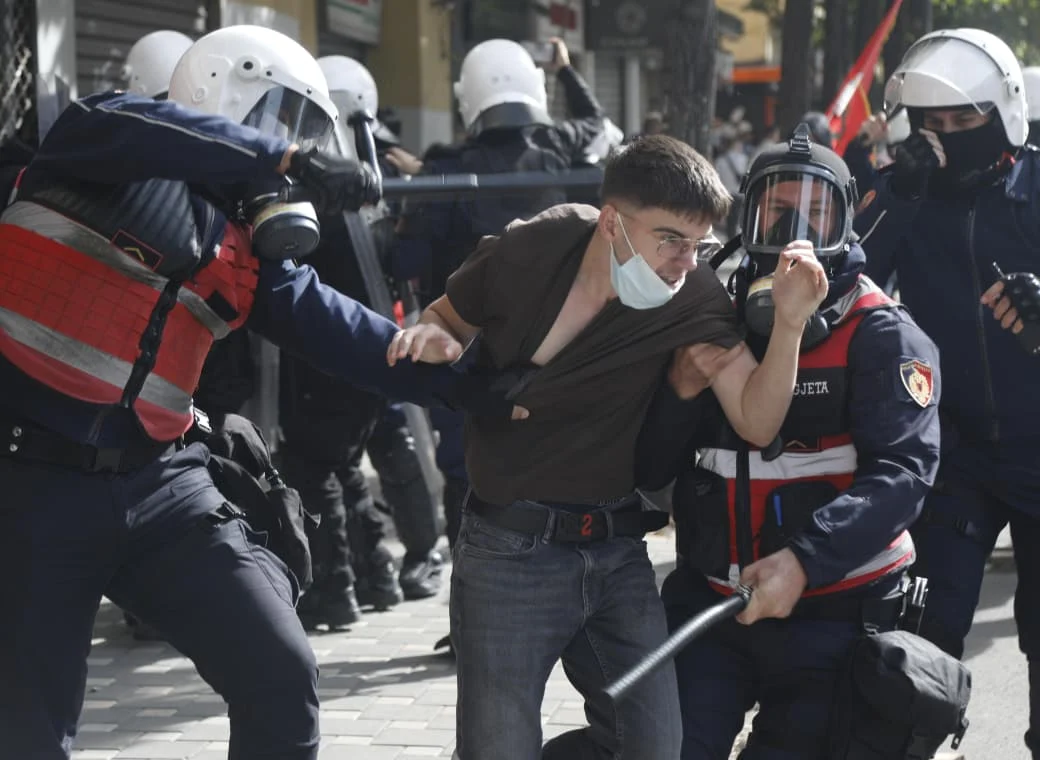
TIRANA, Albania – October 22, 2026 – In a significant legal development that underscores the growing tensions in Albania, the Court of Appeals in Tirana has largely dismissed the prosecution’s requests to validate the detention of 27 individuals arrested during recent protests. The court’s ruling, delivered on Thursday, October 22nd, found the arrests of a majority of the protestors to be unlawful, ordering their immediate release unless held for other offenses. This decision marks a crucial moment in the ongoing wave of demonstrations that have gripped the Albanian capital since mid-October.
The court’s intervention comes as the country grapples with widespread civil unrest fueled by deep-seated grievances including rampant corruption, a soaring cost of living, and a perceived lack of economic prospects for the nation’s youth. The protests, which began as student and youth-led movements, have escalated into broader demonstrations against the government of Prime Minister Edi Rama, with protestors demanding his resignation.
The Legal Challenge: Unlawful Detentions Questioned
The legal battle unfolded across three separate court sessions on Thursday, as the prosecution sought to legitimize the arrests of 27 individuals and impose personal security measures against them. The charges brought against the protestors included "Organization and participation in illegal gatherings and demonstrations," "Resistance to the order of public order police officers," and in 13 instances, "Destruction of property."
However, Judges Marçela Shehu and Yrfet Shkreli of the Court of Appeals delivered a stark verdict, deeming the arrests of 22 of the protestors, including six minors, to be illegal actions by the State Police. The court’s decision directly challenges the police’s operational methods and the legal grounds upon which these individuals were detained.
The ruling mandated the immediate release of all 27 protestors. This directive stands unless any of the individuals are being held for separate criminal offenses. For six of the detained individuals, the court did impose a personal security measure, requiring them to report to authorities, a less stringent alternative to pre-trial detention.
A Lawyer’s Account: Random Arrests and Disproportionate Force
The legality of the arrests was further brought into question by the testimony of lawyer Stefan Topalli, who represented one of the detained individuals. In a phone conversation with BIRN following the court’s decision, Topalli detailed how his client was apprehended while simply walking on the sidewalk, despite not having participated in the protest itself.
"My client had no connection to the protest," Topalli stated. "He was merely passing by. He had nothing with him. The police were pursuing protestors and, in a place where the road narrowed, they apprehended everyone they found." This account suggests a pattern of indiscriminate arrests, where individuals not directly involved in the demonstrations were caught in the police dragnet.
The lawyer’s statement paints a picture of law enforcement tactics that may have exceeded the bounds of lawful procedure, potentially leading to the detention of innocent bystanders. This raises broader concerns about the proportionality of the police response to the ongoing protests and the adherence to fundamental rights during such events.
Chronology of Escalation: From Peaceful Assemblies to Confrontation
The current wave of unrest in Tirana began on October 13th, marking a significant escalation from previous, largely peaceful, protest movements. What started as a series of student and youth demonstrations has now broadened in scope and intensity, drawing in a wider segment of the population disillusioned with the current political and economic climate.
The initial demonstrations were characterized by their peaceful nature, with participants expressing their discontent through marches and public gatherings. However, as the protests gained momentum and the underlying issues remained unaddressed by the government, the situation began to deteriorate.
Key developments in the protest movement include:
- Early October: Student and youth-led protests commence, focusing on issues of educational reform and corruption.
- Mid-October (October 13th onwards): Protests intensify and expand beyond student demographics. Clashes with law enforcement begin to occur, marking a shift from purely peaceful assemblies.
- Ongoing Confrontations: Demonstrations become increasingly marked by confrontations between protestors and police. Reports emerge of property damage, both public and private, and the use of crowd-control measures by the police.
- October 22nd: The Court of Appeals delivers a ruling that significantly impacts the legal landscape surrounding the protests, ordering the release of numerous detained individuals and questioning the legality of their arrests.
This timeline illustrates a rapid descent from organized, peaceful dissent to more volatile and confrontational public demonstrations, punctuated by legal challenges to the state’s response.
The Grievances of the Youth and the Nation
The root causes of the current widespread discontent are multifaceted and deeply ingrained in the fabric of Albanian society. The young people taking to the streets are voicing a litany of frustrations that resonate with a broader population facing significant economic and social challenges.
The primary grievances fueling the protests include:
- Pervasive Corruption: A persistent and systemic issue that erodes public trust in institutions and diverts vital resources away from public services and economic development. The protestors view corruption as a fundamental impediment to progress and a betrayal of the public good.
- Soaring Cost of Living: Rising inflation and stagnant wages have created immense financial pressure on households across Albania. The inability of many to meet basic needs, coupled with perceived government inaction, has become a major catalyst for public anger.
- Lack of Economic Prospects: A significant concern for the younger generation is the scarcity of viable economic opportunities, leading to widespread unemployment and underemployment. This lack of future prospects fuels a sense of disillusionment and a desire for systemic change.
- Deteriorating Education System: Protests have also highlighted concerns about the quality and accessibility of education, with students demanding improvements in curriculum, resources, and opportunities for future employment.
- Demand for Government Resignation: At the core of many demands is the call for the resignation of Prime Minister Edi Rama and his government, whom protestors hold responsible for the prevailing social and economic conditions.
These grievances are not isolated; they are interconnected and collectively paint a picture of a nation at a crossroads, with a significant portion of its population demanding accountability and a fundamental shift in governance.
The Tactics of Protest and Policing: A Cycle of Conflict
The nature of the protests themselves has evolved, moving from predominantly peaceful assemblies to more confrontational engagements. This shift has been met with a forceful response from law enforcement agencies, creating a cyclical pattern of conflict.
Key elements of the protest and policing dynamics include:
- Protestor Actions: The demonstrations have been characterized by marches, the occupation of public spaces, and, in some instances, acts of vandalism targeting both public and private property. These actions, while often a tactic to draw attention and exert pressure, have also provided justification for a strong police response.
- Police Response: The State Police have employed a range of crowd-control measures, including tear gas, water cannons, and rubber bullets. These tactics, while intended to disperse crowds and maintain order, have been criticized for their potential for excessive force and the risk of injury to protestors and bystanders alike.
- Property Damage: Reports of damage to public and private property have emerged from various protest sites. This aspect of the demonstrations has drawn condemnation from some segments of society and has been a focus of the prosecution’s charges.
- Mass Arrests: The scale of arrests, as highlighted by the recent court case, suggests a broad approach to law enforcement during demonstrations, leading to concerns about the rights of individuals and the proportionality of police actions.
- Injured Officers and Damaged Institutions: The police have reported injuries to their personnel and damage to state institutions, underscoring the volatile nature of the confrontations.
The interplay between protestor actions and police responses has created a challenging environment, raising questions about the effectiveness of current strategies for managing public dissent and the potential for de-escalation.
Implications and Future Outlook: A Nation at a Crossroads
The Albanian court’s decision to overturn a significant number of protestor arrests carries profound implications for the ongoing civil unrest and the broader political landscape of Albania. It signals a potential check on the executive branch’s power and a reinforcement of judicial oversight in matters of civil liberties.
The ruling has several key implications:
- Judicial Independence: The decision reinforces the role of the judiciary as an independent arbiter, capable of scrutinizing the actions of law enforcement and upholding constitutional rights. This can bolster public confidence in the justice system, even amidst widespread disillusionment.
- Police Accountability: By deeming the arrests illegal, the court’s ruling places a spotlight on the conduct of the State Police. It may prompt a review of operational procedures and a greater emphasis on adhering to legal frameworks during crowd control.
- Potential for De-escalation: The release of protestors, particularly those arrested unlawfully, could potentially de-escalate tensions. It may also provide an opportunity for dialogue and a reassessment of strategies by both the government and protest organizers.
- Impact on Future Protests: This legal precedent could influence how future protests are managed and how arrests are made. It might encourage more cautious and legally sound approaches by law enforcement.
- Continued Civil Unrest: While the court’s decision is a significant development, it does not resolve the underlying grievances that fuel the protests. The deep-seated issues of corruption, economic hardship, and lack of opportunity remain, suggesting that civil unrest may continue until substantive policy changes are implemented.
- Political Pressure on the Government: The ruling adds to the mounting political pressure on Prime Minister Edi Rama’s government. The perceived illegitimacy of some arrest tactics, coupled with the ongoing public demonstrations, could force a reassessment of the government’s approach to dissent and public dissatisfaction.
As Albania navigates this period of heightened social and political activity, the court’s decision stands as a critical juncture. The coming weeks will reveal whether this legal intervention can pave the way for a more constructive and rights-respecting resolution to the nation’s complex challenges, or if the cycle of protest and confrontation will persist. The future trajectory will depend on the government’s response, the continued resolve of the protestors, and the ongoing dialogue between civil society and the state.