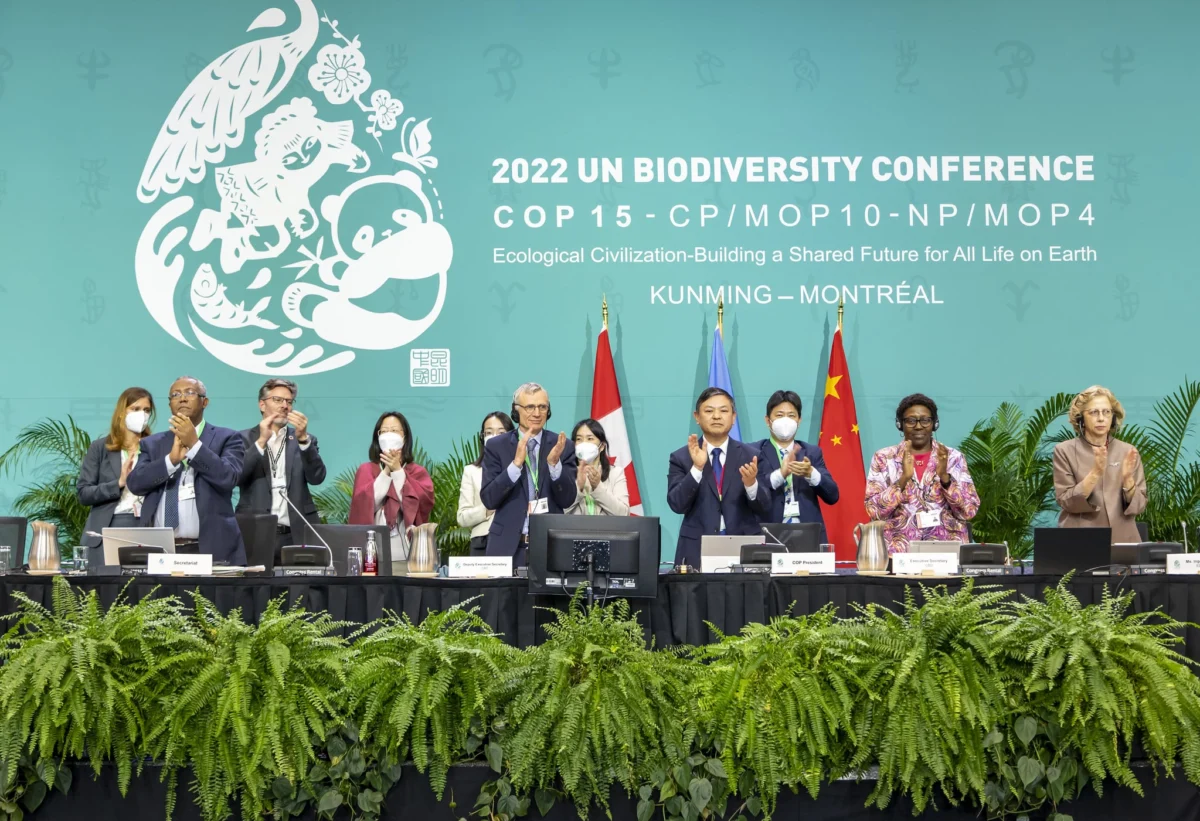
As delegates descend upon Yerevan, Armenia, for the upcoming COP17 biodiversity conference, the atmosphere is heavy with the weight of global expectation. For years, the biennial gatherings of the UN biodiversity framework have been defined by high-level rhetoric and the pursuit of “big numbers”—ambitious targets for habitat protection and multi-billion-dollar funding pledges. However, a quiet but profound shift is beginning to reshape the discourse.
According to Kaveh Zahedi, Assistant Director-General of the Food and Agriculture Organization (FAO), the time for setting targets has passed. The era of implementation must begin, and that starts with recognizing that biodiversity cannot be saved in a vacuum—it must be integrated into the very systems that sustain human life: agriculture, forestry, and fisheries.
The Agrifood Pivot: A New Paradigm for Conservation
Historically, agriculture was viewed by conservationists primarily as a threat—a driver of deforestation and habitat fragmentation. Today, that narrative is evolving. A landmark FAO analysis of 78 national biodiversity plans reveals that more than one-third of all planned actions now involve the transformation of agrifood systems.
This is a critical development. There is no plausible path toward meeting the goals set out in the Kunming-Montreal Global Biodiversity Framework without fundamentally changing how the world produces food. Yet, the leap from writing a policy to shifting practices on a farm is a chasm that remains largely unbridged. Many nations possess the political will to craft biodiversity plans but lack the institutional infrastructure and technical support required to turn those aspirations into tangible, on-the-ground outcomes.
Chronology: From Montreal to Yerevan
To understand the stakes at COP17, one must look back at the trajectory of international environmental diplomacy:
- December 2022 (COP15): The world reached a historic consensus in Montreal, adopting the Kunming-Montreal Global Biodiversity Framework (GBF). This “Paris Agreement for Nature” set the ambitious “30×30” target—to protect 30% of the planet’s land and sea by 2030.
- 2023–2024: Nations began the arduous process of updating their National Biodiversity Strategies and Action Plans (NBSAPs). The FAO’s research during this period highlighted that while countries are increasingly incorporating agriculture into their strategies, the focus remains top-heavy, prioritizing policy architecture over field-level implementation.
- Early 2025: Initial assessments of pilot programs in nations like Madagascar demonstrated that local, community-led interventions—such as crab-fattening and agroforestry—could yield significant biodiversity and livelihood benefits.
- October 2026 (COP17): As negotiators gather in Yerevan, the focus shifts to "means of implementation." The conversation is no longer just about what to do, but how to pay for, monitor, and scale the "unglamorous" work that makes conservation sustainable.
The "Unglamorous" Gap: Why Monitoring Matters
A recurring theme in the failure of past environmental initiatives is the lack of robust monitoring systems. Without data aligned with global standards, it is impossible for governments to know which projects are succeeding and which are merely "greenwashing" efforts that look good on paper but fail to produce ecological results.

The FAO’s analysis provides a sobering reality check: only 43% of current national biodiversity plans include specific indicators to track progress on agrifood-related actions. Even more concerning is the nature of these indicators. Most track "activity" rather than "impact." For instance, a country might report on the number of hectares reforested or the number of seed banks established. However, only 3% of the analyzed plans measure actual shifts in behavioral practices, compliance with sustainable standards, or tangible improvements in food security and ecosystem health.
Effective monitoring is the backbone of accountability. It informs governments where to allocate scarce financial resources and provides donors with the confidence that their investments are driving systemic change rather than subsidizing stagnation.
Case Study: Madagascar’s Path to Resilience
Madagascar serves as a poignant microcosm of the challenges—and potential—inherent in this transition. The island nation has developed a sophisticated national roadmap designed to weave biodiversity protection into the fabric of its agricultural and fishing sectors.
Central to this effort is a commitment to phase out highly hazardous pesticides by 2035. This is a monumental task that requires more than just a ban; it requires a structural transition. In the Boeny region, the FAO has supported over 500 farmers in adopting alternatives, including biopesticides, composting, and integrated rice-crab farming systems.
The results are striking. By creating ponds for crab-fattening, local fishers have gained a sustainable income source that removes the pressure to harvest immature crabs from the wild. At FAO-supported sites, both rice and crab production have doubled since 2024. Furthermore, community-led reforestation efforts—which include firebreaks and rigorous outreach—have seen survival rates for seedlings reach 90% in some areas.
These projects prove that conservation does not require a choice between nature and food. On the contrary, protecting biodiversity strengthens the natural infrastructure—pollinators, soil health, and water regulation—upon which food security ultimately depends.

Supporting Data: The Disconnect in Reporting
The data gap in Madagascar reflects a global trend. While the country has a robust pesticide strategy, national data on pollution levels remains fragmented. Similarly, while firebreaks and reforestation efforts are documented, there is no centralized, consolidated baseline to track whether the frequency or intensity of bushfires is actually decreasing.
This "data blindness" hampers progress at a national level. If a government cannot quantify the impact of its interventions, it cannot secure the funding necessary to scale those interventions. The current global approach to biodiversity financing is often trapped in a cycle of short-term project cycles that favor easily quantifiable, superficial metrics over the deep, structural changes that yield long-term resilience.
Official Perspectives and The Road to Yerevan
The leadership at the FAO, including Kaveh Zahedi, is calling for a fundamental pivot at COP17. The argument is clear: the responsibility for biodiversity cannot be siloed within environment ministries.
"Biodiversity is not just an environmental issue; it is an economic and survival issue," observers note. Ministries of Agriculture, Fisheries, and Finance must be brought to the table. They must be equipped with the technical cooperation, technology, and financial instruments necessary to operationalize the Global Biodiversity Framework.
The official agenda for COP17 in Yerevan highlights several priority areas:
- Capacity Building: Transferring technical knowledge from global research hubs to local farming communities.
- Scientific Cooperation: Establishing standardized, globally recognized indicators for "impact" rather than just "activity."
- Financial Alignment: Directing capital toward the "unglamorous" systems—data collection, extension services, and local infrastructure—that provide the foundation for success.
Implications: The Decade of Delivery
The implications of failing to bridge the gap between policy and action are severe. If COP17 concludes with more lofty promises but no mechanisms to ensure they are implemented, the 2030 targets will become unattainable.
However, if the conference succeeds in shifting the focus toward the "critical but unglamorous" work, the impact could be transformative. This involves:
- Empowering Local Communities: Recognizing that the best stewards of biodiversity are those who live and work on the land.
- Integrating Value Chains: Encouraging private sector engagement that rewards farmers for regenerative practices, not just for volume of output.
- Long-term Financial Commitment: Moving away from fragmented project funding toward national programs that provide the long-term stability required to transform agricultural landscapes.
As Kaveh Zahedi and other advocates emphasize, the upcoming conference in Yerevan is a litmus test for global environmental governance. The world has the plans. It has the targets. It even has the initial pilot programs showing that a more sustainable future is possible. The missing ingredient is the systemic commitment to the dull, difficult, and absolutely essential work of implementation.
If the international community can move beyond the rhetoric of the assembly halls and into the reality of the fields and forests, COP17 could be remembered not as just another meeting, but as the moment when the world finally began to act with the urgency that the planetary crisis demands. Protecting biodiversity is not merely an altruistic endeavor; it is the most vital investment we can make in the natural systems that sustain our global food security, our economies, and our future.