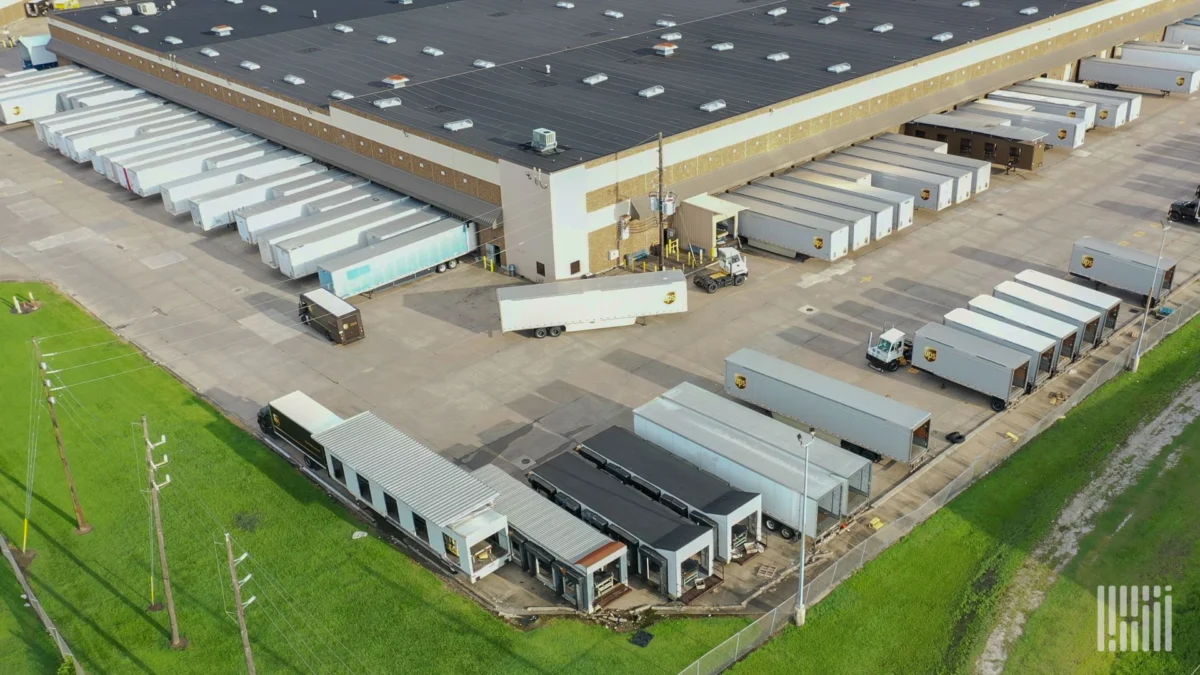
As the logistics industry pivots from the pandemic-era surge toward a future defined by efficiency and high-yield profitability, United Parcel Service (NYSE: UPS) is accelerating its multiyear transformation. The logistics giant recently announced the successful conversion of four additional package sortation centers into fully automated facilities, ensuring the network is primed to handle the heavy volume of the upcoming holiday shipping season.
The upgraded facilities, located in Denver, Colorado; St. Paul, Minnesota; Syracuse, New York; and Portland, Oregon, represent the latest milestone in a broader, capital-intensive effort to re-architect the company’s distribution footprint. This transition, which involves integrating cutting-edge robotics and sensor technology, is central to UPS’s strategy to lower structural costs, enhance operating margins, and adapt to a changing parcel landscape where volume growth has stabilized.
The Strategic Imperative: Modernizing the Network
The initiative to automate these four sites is not an isolated project but a foundational component of a long-term plan to modernize the UPS network. The company is currently executing a massive consolidation strategy, which includes the closure of 200 legacy manual sort facilities over a five-year period. These aging sites are being phased out in favor of larger, high-capacity, automated hubs that can process higher volumes from broader geographic catchment zones.
This architectural shift is as much about labor strategy as it is about technology. The consolidation process has resulted in the elimination of approximately 30,000 positions, as the company seeks to reduce its reliance on manual labor in favor of high-speed automated systems. By centralizing operations, UPS aims to reduce the "touch points" each package encounters, thereby minimizing the potential for errors, reducing damage, and significantly increasing the speed of the supply chain.
The Role of Technology in Warehouse Operations
The modernization of these warehouses involves a suite of "smart" technologies. Autonomous guided vehicles (AGVs) navigate the warehouse floor to transport heavy loads, while sophisticated automated sortation systems prioritize, scan, and route parcels without human intervention. These systems are programmed to manage specific customer requirements—such as expedited handling or fragile item care—at a speed and accuracy level that far exceeds manual sorting capabilities.
According to UPS management, the reduction of human intervention not only optimizes package flow but also drives significant fiscal efficiency. During the company’s most recent second-quarter earnings call, executives highlighted that the cost per piece in an automated facility is approximately 28% lower than in a conventional, mechanically-operated facility. This disparity provides the company with significant operating leverage, allowing it to absorb the fixed costs of automation while reaping the long-term benefits of lower unit costs.
Chronology of the Transformation
The transition to an automated network has been a steady, deliberate process rather than a sudden overhaul.
- Mid-2023: UPS signals a shift in strategy, prioritizing high-yield freight over low-margin, lightweight B2C shipments, particularly those originating from large retailers.
- Late 2023 – Early 2024: The company accelerates its investment in RFID tracking technology, installing sensors across its U.S. delivery stations and integrating them into the UPS Store ecosystem.
- Spring 2024: UPS completes the installation of RFID sensors in all package delivery vehicles, a move designed to provide real-time, granular tracking data.
- July 1, 2024: Official reporting shows that 68.5% of U.S. volume now flows through automated facilities, a significant increase from 64% the previous year.
- Q3 2024: Construction and retrofitting efforts reach a crescendo. While facilities in Denver, St. Paul, and Syracuse remained operational throughout their respective modernization phases, the Portland facility on Swan Island required a temporary shutdown to allow for a major, deep-facility retrofit.
- Q4 2024: The four facilities come online just in time for the peak holiday shipping season, marking a major success for the company’s internal logistics roadmap.
Supporting Data and Financial Outlook
The financial stakes of this transformation are immense. UPS has set a target of achieving $3 billion in annual cost savings by 2028 through its restructuring efforts. As the company moves away from the explosive, unpredictable volume growth of the pandemic years, it is focusing on optimizing its core assets to maintain profitability in a slower-growth environment.
The shift is evident in the company’s data regarding network utilization. With nearly 70% of its volume now automated, the "leverage" mentioned by executives is beginning to show in the balance sheet. Furthermore, the company’s commitment to Radio Frequency Identification (RFID) technology underscores its focus on the "closed-loop" network advantage. Having invested over $100 million in RFID deployment, UPS is now working to equip regional hubs and aircraft with reading devices, creating a transparent, real-time tracking network that competitors operating fragmented systems find difficult to match.
By the end of 2026, UPS expects to deliver more than four billion RFID-enabled packages. This level of data density will not only improve customer satisfaction but also provide management with the diagnostic tools needed to further refine the network, identify bottlenecks, and eliminate waste.
Official Responses and Operational Challenges
The process of upgrading a massive, national logistics network is not without its logistical hurdles. Managing the downtime associated with facility retrofits requires precise coordination to prevent service disruptions. UPS spokeswoman Karen Tomaszewski Hill noted that the company employed a phased approach to keep three of the four recently updated facilities running during construction. The Portland site, which required a more intensive overhaul, was taken offline temporarily, with its volume diverted to surrounding facilities to ensure that service levels were maintained.
These capital projects are occurring simultaneously with the perennial challenge of seasonal scaling. As the holiday peak approaches, UPS is actively hiring 100,000 seasonal employees nationwide. While this is a standard operating procedure for the company, it stands in contrast to the hiring strategies of its primary rival, Amazon. The e-commerce giant recently announced a recruitment drive for over 300,000 seasonal, part-time, and full-time roles. This disparity highlights the fundamental difference between the two companies: UPS operates as a comprehensive, integrated logistics network, while Amazon continues to scale its proprietary, massive-scale logistics arm, which has now officially surpassed others to become the largest parcel delivery company in the United States.
Implications for the Future of Logistics
The implications of UPS’s current strategy are far-reaching for the broader logistics and supply chain sector.
1. The Death of the Manual Hub
The announcement that 27 additional facilities are slated for closure by 2026 reinforces the reality that the "manual" era of parcel logistics is ending. Smaller, regional hubs that rely on human labor for physical sortation are increasingly becoming liabilities in a market that demands low-cost, high-speed delivery.
2. A Focus on High-Yield Segments
By intentionally moving away from high-volume, low-margin B2C packages—a clear pivot away from the Amazon-centric model—UPS is signaling that its future lies in B2B logistics and higher-margin specialty shipping. This allows the company to operate more efficiently by choosing the shipments that align best with its automated infrastructure.
3. The "Network Advantage" Through Data
The massive investment in RFID is not just about tracking; it is about data-driven optimization. By turning every package into a smart, trackable node within the network, UPS can effectively "see" its entire operation in real-time. This visibility is expected to lead to even greater efficiencies in the future, as AI-driven logistics platforms begin to use this data to predict volume surges and automatically re-route assets.
4. Labor Market Shifts
The reduction of 30,000 roles over the course of this transformation is a stark indicator of how automation is reshaping the blue-collar workforce in the transportation sector. While UPS continues to hire seasonally, the long-term trend points toward a more highly skilled workforce focused on maintaining and managing the automated systems, rather than performing the manual labor of sorting and loading.
In conclusion, the completion of these four facility upgrades serves as a microcosm of the larger transformation occurring within UPS. As the company prepares for the rigors of the holiday season, the emphasis on automation, data transparency, and structural consolidation demonstrates a clear intent to remain the premier carrier for high-value freight. While the industry faces ongoing challenges from shifting e-commerce habits and a tightening labor market, UPS is positioning itself to be leaner, faster, and more profitable than it was in the pre-automation era. The next two years will be critical as the company completes its planned facility closures and pushes toward its 2028 savings goal, fundamentally changing the face of American logistics in the process.