
Albania Reels from Protests: Families Face Police Brutality and a Bleak Future
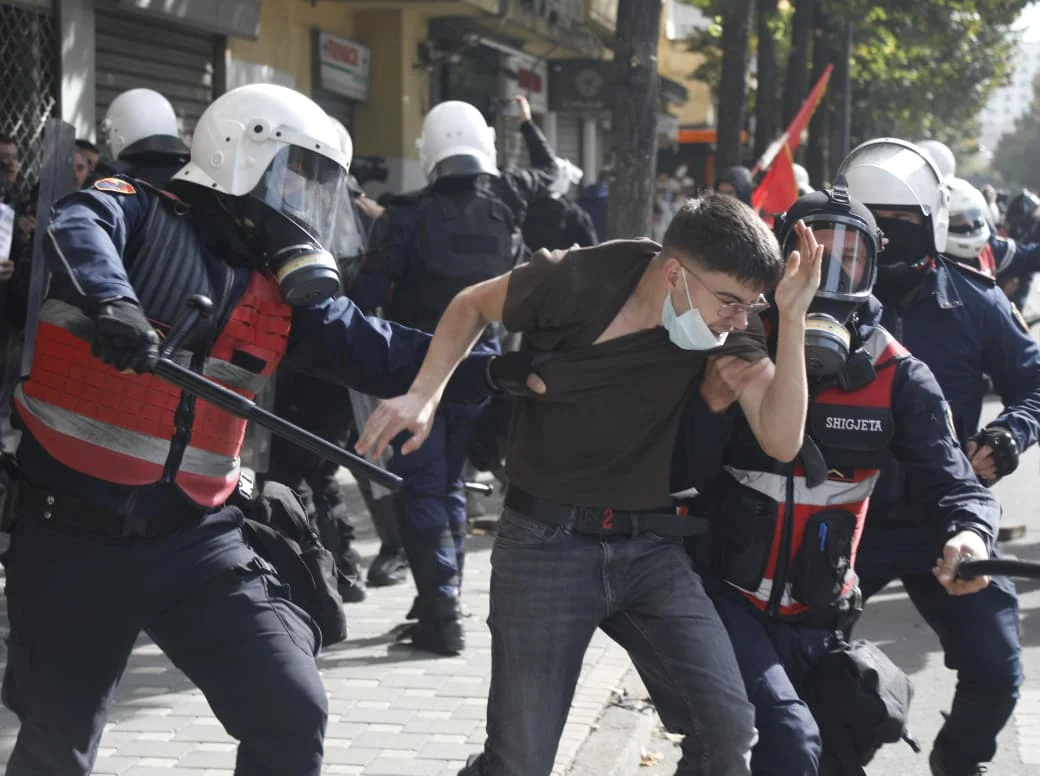
Tirana, Albania – October 15, 2026 – The streets of Tirana, once vibrant with the hopeful energy of its youth, have become a canvas of tension and despair. What began as widespread student and citizen protests against perceived government corruption, soaring living costs, and a lack of future prospects has escalated into a volatile confrontation between demonstrators and law enforcement. Beyond the televised images of clashes and tear gas, a quieter, more poignant drama unfolds daily at police stations and courtholders across the capital: the anguish of parents desperately seeking their detained children, many bearing the marks of alleged police brutality.
This report delves into the human cost of the escalating unrest, highlighting the personal stories of families caught in the crossfire, the systemic issues fueling the demonstrations, and the growing sense of disillusionment that threatens to drive another generation away from Albania.
The Human Face of the Crackdown: A Father’s Despair
Just outside the imposing gates of Police Station No. 3 in Tirana, a 54-year-old man, his face etched with a profound sorrow, struggles to hold back tears. His 21-year-old son, a third-year student at the Agricultural University, is currently in custody, reportedly injured during the protests that have engulfed the city. The last time the father spoke to his son, it was around 7:30 PM. His son had called to say he was walking on the sidewalk to catch a taxi. Then, silence. Subsequent calls went unanswered.
"They used barbaric violence," the father recounted, his voice thick with emotion, describing his son’s injuries: a broken nose and a swollen face, allegedly from police baton strikes. He claims a friend of his son’s ended up in the hospital after being beaten with rubber batons, a claim amplified by a video circulating on Instagram showing young women pleading with officers to stop their assault on two young men.
"I beg the State Police not to cripple our children," the distraught father pleaded, his voice trembling as he spoke. "Arrest them, yes, but don’t brain them." The raw plea, laced with the deep-seated fear of a parent, underscores the human toll behind the political turmoil.
This man, who works as a security guard, earns a meager salary of approximately 500,000 old Albanian Lek per month, barely enough to sustain his family. Now, the added burden of legal fees for a lawyer to defend his son weighs heavily upon them. His story is not an isolated incident; it is one of many family dramas unfolding at the doors of police stations and courts, mirroring the widespread allegations of police brutality accompanying mass arrests during the ongoing protests against Prime Minister Edi Rama’s government.
Parents waiting for their children’s release report beatings with rubber batons, mistreatment during detention, and what they deem to be unjust arrests. Their distress extends beyond the immediate violence; it encompasses deep-seated frustrations with low wages, the high cost of living, rampant corruption, and a pervasive lack of future prospects – the very issues that propelled their children into the streets in the first place. A profound sense of disillusionment pervades their narratives, directed at a state that, in their eyes, has failed to create opportunities for its youth, and now punishes them for demanding change.
From Protest Squares to Police Station Halls: A Nation in Turmoil
Since October 13th, Tirana has been the epicenter of escalating clashes between protesters and law enforcement, marking a significant intensification of demonstrations by students and citizens against Prime Minister Edi Rama’s administration. The youth are protesting against corruption, the exorbitant cost of living, a bleak economic outlook, and substandard educational conditions, all while demanding the Prime Minister’s resignation.
These demonstrations, which followed months of largely peaceful protests, have been marred by clashes, damage to public and private property, and the forceful deployment of riot control measures by the police, including tear gas, water cannons, and rubber bullets. Numerous arrests have been made. The police have reported injured officers and damage to institutions, while human rights and media organizations have raised concerns about the proportionality of the force used.
However, alongside the widely televised scenes of confrontation, another drama has been unfolding in the waiting rooms of police stations and courtrooms. Here, parents anxiously await news of their detained children, many of whom claim to have been subjected to excessive force.
A Father’s Comparison: Echoes of a Tyrannical Past
Standing outside the Tirana Court, awaiting the assessment of his son’s detention measure, another father described his experience as a "demonstration of fear that has replaced trust in institutions." He drew a stark parallel between the current government and the totalitarian regime of the former communist dictator, Enver Hoxha, stating, "Enver executed them, now he’s drowning them with beatings." His wife and daughter stood by his side, sharing his palpable anxiety.
The father asserted that his son had joined the protest not to cause unrest, but because he desired a better future in Albania. "My son went to protest for his rights, for a better future in Albania. To not leave Albania, to stay here," he explained. During a visit to Police Station No. 3, he claimed to have witnessed another young man with a broken nose who had allegedly not received adequate medical assistance. "Our first request is for there to be law in Albania, not police violence. Everyone should have rights," he declared.
Allegations of Abuse: From Pepper Spray to Rubber Batons
Another parent, the father of an 18-year-old student, waits near a security checkpoint. He alleges that his son was pepper-sprayed and hit on the back of the neck with a rubber baton before being detained. Two hours after his son’s arrest, he received a call from a police officer asking him to come for information about his son. "You can pick him up, you can verify, but not under these conditions," he stated, imploring the police to refrain from using violence against students and schoolchildren. He expressed hope that the court would release his son.
The brother of another detained student, also waiting outside the courthouse, deemed the arrest illegal, claiming there was no evidence against his sibling. He mentioned that the family was informed of the detention through a call made by the young man himself. "Stop the violence against students," he urged, calling on citizens to support the protest and for students to distance themselves from acts of violence. "Rama should resign, Albania won’t die if he resigns," he added.
Parents Take to the Streets: A United Front Against Injustice
The recent clashes seem to have broadened the protest movement, drawing parents, pensioners, and academics to the streets. They view the youth’s mobilization as an opportunity to voice years of accumulated dissatisfaction. A woman in her late 40s, participating in the protests in solidarity with the students, urged parents and intellectuals not to remain indifferent. "Youth is the future of this country. They must take the reins of this country’s destiny," she stated, condemning the police violence as unprecedented. "We must protect our children. It doesn’t matter if it’s mine or yours; they are all children of mothers," she emphasized.
Another woman, around 55 years old, who has been attending demonstrations for over 120 days, found the past week’s clashes particularly harrowing. "We don’t eat, we don’t work, we can’t even smile with this situation," she lamented, calling the police’s behavior irresponsible. For some of the older protesters, the demonstrations evoke memories of past fear and repression.
A pensioner, who has followed the protests since their inception, criticized his own generation for not being more resolute in supporting the youth. "The new generation that has risen and is demanding its rights has not been helped by their fathers and grandfathers, because they were scared," he observed. He believes the responsibility for the country’s future cannot be placed solely on the students.
Solidarity has also extended to the academic community. Marsela Musabelliu, an economics lecturer, views the protest as a call for moral responsibility towards a generation losing hope. "I am sorry to see empty auditoriums this year. I am sorry to see my students losing the light of hope in their eyes from month to month," she said. Musabelliu urged her colleagues and fellow citizens to show solidarity, arguing that indifference to the fate of the youth will have consequences for all of society. "Let’s gather, let’s support them, whatever we can, whenever we can," she implored.
A Nation Losing Its Youth: Economic Hardship Fuels Discontent
Beyond the anger over arrests and police brutality, interviews with families and protesters reveal another source of deep dissatisfaction: the struggle for survival in Albania. Low wages, inflated prices, unaffordable housing, and emigration are recurring themes in the accounts of people from various ages and professions.
One woman, who returned from emigration to live in Albania, stated that both of her children now live abroad. "I chose to return to my country to live, but I see that the difficulties are immense," she said. For her, the protests are not just a confrontation with the government but also a plea to halt the continuous exodus of young people. "Do we need Europe if we cannot fix our country?" she questioned. "Let’s provide job opportunities, so there is a future in this country. People should not leave. They should return and enjoy this country."
A former miner, 71, offers another perspective on the economic hardships. He worked his entire life in the mines and now receives a monthly pension of 250,000 old Albanian Lek, which he says is insufficient to cover electricity bills and medication. "I worked as a miner my whole life and I get 250,000 old Lek per month. It’s not enough even to pay for electricity," he stated. Although his children are married, he notes they continue to face economic difficulties and uncertainty about the future. The pensioner links current discontent to old property issues and the abandonment of villages, believing the students’ protests are an expression of disillusionment that transcends generational boundaries.
Fear and Hope: A Glimmer of Change Amidst Despair
For many interviewed, Prime Minister Edi Rama’s resignation is seen as a way out of the crisis. Others demand an investigation into police violence, the release of students claiming wrongful arrest, and the guarantee of the right to protest. However, behind these political demands lies the fundamental concern for the future of their children.
Families waiting outside police stations are not necessarily interested in partisan politics. They want to know if their children are safe, if they will be released, and if, one day, they will be able to live with dignity in the country of their birth.
For the 54-year-old father waiting outside the security checkpoint, this future now seems difficult to imagine in Albania. The past few days have been among the most difficult of his life. Amidst the worry for his son, the impending lawyer fees, and the struggle to make ends meet, the decision to leave Albania appears increasingly irreversible. Three days after his son’s arrest, he no longer speaks of his son’s potential opportunities in Albania, but of where he will send him once he is released from jail.
"I will disappear from here," the 54-year-old declared. "I won’t leave my children here." His words resonate with a growing sentiment of despair, suggesting that the current turmoil may lead to a permanent loss of talent and hope for Albania. The nation, it seems, is not only grappling with political unrest but also facing a profound crisis of confidence, with its youth and their families questioning whether a viable future exists within its borders.


