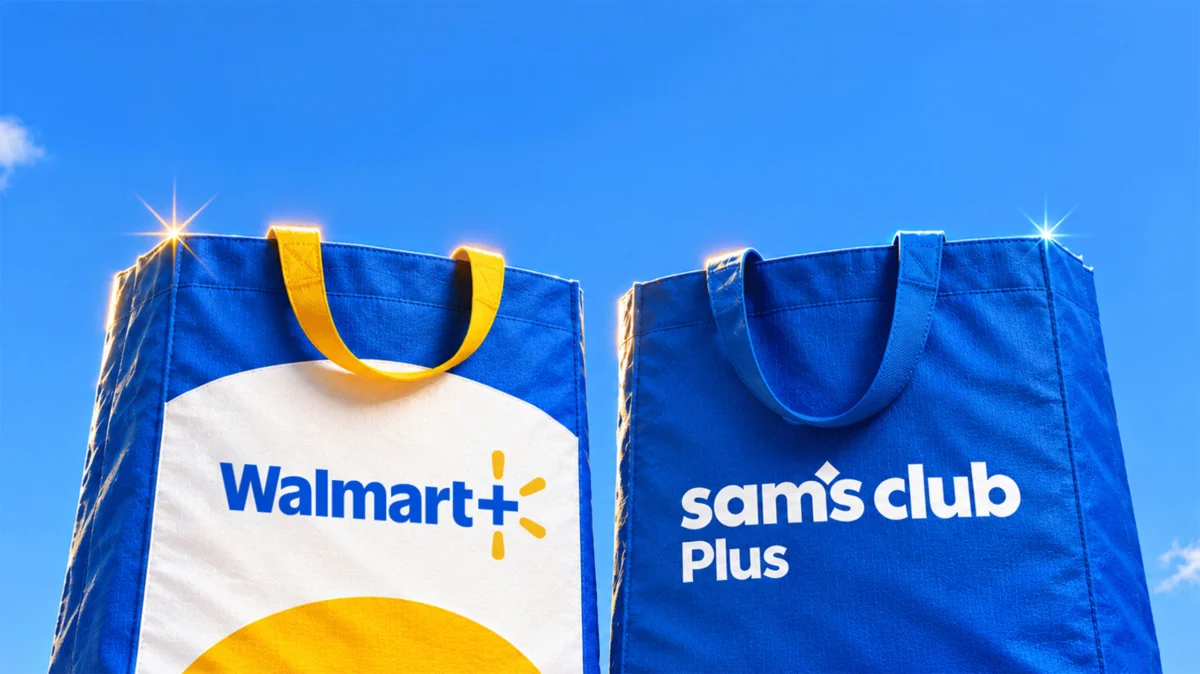
In a major maneuver to solidify its dominance in the retail sector and aggressively challenge the supremacy of Amazon Prime, Walmart Inc. has announced a landmark integration of its two flagship membership programs: Walmart+ and Sam’s Club Plus. By bundling these services into a single, high-value annual subscription, the retail giant is betting that the promise of nearly $100 in annual savings will be the catalyst needed to drive cross-platform loyalty among millions of American shoppers.
This bold consolidation represents a significant shift in how the world’s largest retailer approaches customer retention. With a combined annual fee of $120, the new offering seeks to transform the traditional shopping experience into an ecosystem of convenience, blending the digital-first utility of Walmart+ with the bulk-purchasing power of Sam’s Club.
Main Facts: The Anatomy of the Bundle
The core of the initiative is a streamlined subscription model. For a flat annual fee of $120, members gain access to the full suite of benefits from both Walmart+ and Sam’s Club Plus. This move effectively collapses the barrier between Walmart’s general merchandise ecommerce operations—where it currently holds the No. 2 position in the Digital Commerce 360 Top 1000 Database—and its warehouse club business.
Tiered Implementation and Pricing
The financial structure of the rollout is designed to capture different segments of their existing customer base:
- Existing Walmart+ Annual Members: These subscribers can opt into the bundle for an additional $22 per year.
- Existing Sam’s Club Plus Members: In a bid to maximize adoption, these members can add the full Walmart+ suite to their existing membership at no additional cost.
- New or Standard Sam’s Club Members: Those not currently enrolled in the Plus tier can upgrade to the combined membership for an additional $60 annually.
The package touts a total of 26 distinct perks. Beyond standard free delivery and shipping options, the bundle includes strategic lifestyle incentives such as discounted fuel at over 17,000 participating stations and access to major streaming platforms, specifically Peacock or Paramount+.
Chronology of a Retail Evolution
To understand why this move is occurring now, one must look at the timeline of Walmart’s recent transformation into a membership-centric enterprise.
2020: The Birth of Walmart+
Launched during the height of the global pandemic, Walmart+ was conceived as an answer to the rapidly shifting consumer preference for grocery delivery and contactless shopping. It was designed to leverage Walmart’s massive physical footprint to compete directly with Amazon Prime’s logistics speed.
2023–2024: Diversification of Benefits
Recognizing that delivery alone was insufficient to maintain long-term loyalty, Walmart began aggressively layering lifestyle benefits onto its membership. The company initiated partnerships that extended beyond retail, incorporating food-service discounts, such as the 2024 integration of Burger King purchase savings. Simultaneously, Sam’s Club Plus began emphasizing wellness and health, most notably by integrating Weight Watchers options into its membership benefits during the summer of 2026.
2026: The Consolidation Phase
The decision to merge the two programs follows years of data collection on cross-shopping behavior. By mid-2026, Walmart’s position as a leader in AI-driven commerce—reflected in its No. 37 ranking in the Digital Commerce 360 and ReFiBuy AI Commerce Rankings—suggests that the company has reached a level of predictive capability that makes this bundle a mathematically sound risk.
Supporting Data and Market Positioning
Walmart’s strategy is rooted in the hard data of North American ecommerce. As the second-largest online retailer in the United States, Walmart has the scale to subsidize these memberships in a way that smaller competitors cannot.
The Competitive Landscape
The retail industry is currently locked in a "membership arms race." Amazon Prime has long been the gold standard, but with the rise of Target Circle 360 and the maturation of club-based models, consumers are increasingly discerning about where they allocate their subscription dollars.
By offering 26 perks, Walmart is betting on "utility density"—the idea that the more a single membership touches a consumer’s daily life (gas, entertainment, grocery, health), the less likely they are to churn. The inclusion of streaming services is particularly telling; it mirrors the successful "Prime Video" hook that has kept Amazon customers tethered to the Amazon ecosystem for over a decade.
AI-Driven Personalization
Walmart’s investment in the Top 1000 Pro with AI Database underscores its commitment to using machine learning to personalize these new bundles. By analyzing purchase patterns, Walmart can offer the specific perks most likely to appeal to individual demographics, thereby increasing the "stickiness" of the new $120 annual fee.
Official Responses: The Philosophy of "More"
The messaging from Walmart’s leadership emphasizes a shift in the value proposition. John Furner, president and CEO at Walmart, framed the decision as a response to the economic pressures facing modern households.
"We’re giving people a reason to expect more from their memberships," Furner stated during the announcement. "For $120 a year, we’re raising expectations for what a membership can deliver: more money in their pockets and more time to call their own."
This rhetoric highlights the company’s dual focus on "time and money," which has been the cornerstone of the Walmart brand identity for decades. By positioning the bundle not as an additional expense, but as a "savings engine," the company is attempting to insulate itself from inflationary concerns that often cause consumers to cancel non-essential subscriptions.
Implications for the Future of Retail
The implications of this bundling strategy are far-reaching, touching on supply chain logistics, consumer behavior, and the future of the "everything store" model.
1. The Death of the Siloed Membership
For years, Walmart and Sam’s Club operated as distinct entities under the broader corporate umbrella. This move signals a permanent shift toward a unified brand experience. Expect further integration of logistics and inventory management as Walmart works to make the transition between "bulk shopping" at Sam’s and "quick-need shopping" at Walmart as seamless as possible.
2. A New Standard for Subscription Value
Competitors will now be forced to evaluate their own membership tiers. If Walmart can offer a comprehensive bundle for $120, companies like Target and Costco may feel pressure to either lower prices or significantly expand their current perks to remain competitive. This could trigger a new cycle of benefit-inflation, where the value of a membership is measured by the sheer breadth of its non-retail partnerships.
3. Data Collection and AI Integration
By centralizing data from two distinct shopping experiences, Walmart is creating a massive repository of consumer behavior. This data will be instrumental in training the next generation of AI-commerce tools. As Walmart continues to climb in the AI Commerce Rankings, this consolidated membership will provide the granular data necessary to predict future shopping trends with unprecedented accuracy.
4. Impact on Customer Loyalty
Ultimately, this is a play for "wallet share." By locking customers into a $120 annual contract, Walmart increases the cost of switching to a competitor. If a shopper knows they have already paid for the convenience of both Walmart+ and Sam’s Club Plus, they are statistically less likely to visit a competing retailer, even if a small price difference exists.
Conclusion
Walmart’s decision to bundle its membership programs is a calculated move to dominate the retail landscape by increasing the utility of its services. In an era where consumers are increasingly wary of "subscription fatigue," Walmart is betting that a high-value, multi-service bundle is the only way to remain relevant.
As the retail industry watches closely, the success of this initiative will likely serve as a blueprint for the future of omnichannel commerce. Whether this bundle will successfully neutralize the threat of Amazon Prime remains to be seen, but one thing is clear: Walmart is no longer just selling products—it is selling a comprehensive, integrated lifestyle, and it is doing so at a price point that is designed to be impossible to ignore.