The landscape of U.S. foreign policy in Latin America is undergoing a profound and potentially volatile transformation. In a move that signals a decisive shift toward kinetic engagement, the U.S. military has begun deploying hundreds of troops to Panama. This initial deployment serves as a staging ground for jungle warfare training, with forces subsequently slated for onward movement to Colombia and Honduras. Once in theater, these troops are expected to train alongside local security forces and provide operational support to U.S. special operations units currently tasked with dismantling transnational drug cartels.
This escalation is not an isolated incident but the latest iteration of the Trump administration’s "militarized approach" to regional security. By designating powerful cartels as terrorist organizations, the White House has effectively pivoted from traditional law enforcement cooperation to a combat-oriented paradigm. This shift, characterized by the Pentagon’s recent positioning of armed Reaper drones in Colombia and Ecuador, underscores a broader strategic doctrine that prioritizes "lethality" and direct action over diplomatic or development-led interventions.
A Chronology of Escalation: From Interdiction to Kinetic Warfare
The current deployment follows a trajectory of increasing military involvement that has redefined the U.S. posture in the Western Hemisphere over the past eighteen months.
- Mid-2025: The Launch of Operation Southern Spear. As reported by the Washington Post, the U.S. initiated a series of aggressive interdiction operations, including the bombing of small vessels in the Caribbean and the eastern Pacific. These operations, framed as an anti-narcotics campaign, have faced intense scrutiny for their extrajudicial nature and the resulting civilian casualties.
- October 2026: Drone Positioning. In a significant expansion of surveillance and strike capabilities, the Pentagon confirmed the deployment of armed drones to Colombia and Ecuador. This move signaled a willingness to conduct remote-strike operations against cartel targets, bypassing the limitations of traditional ground-based task forces.
- October 14, 2026: The Panama Deployment. The announcement of troop movements into Panama for jungle warfare training represents the most overt expansion of U.S. combat presence in the region in recent history. The training cycle is designed to prepare U.S. soldiers for high-intensity conflict within the dense, unforgiving geography of Central and South American rainforests.
- Ongoing: The "Dairy Farm" Incident. Reports from Ecuador have highlighted the risks of this kinetic approach. A high-profile raid aimed at a purported cartel training center resulted in the destruction of a civilian dairy farm, a blunder that critics point to as a harbinger of the intelligence failures that accompany an overly militarized, "shoot-first" strategy.
Supporting Data: The Illusion of "Lethality"
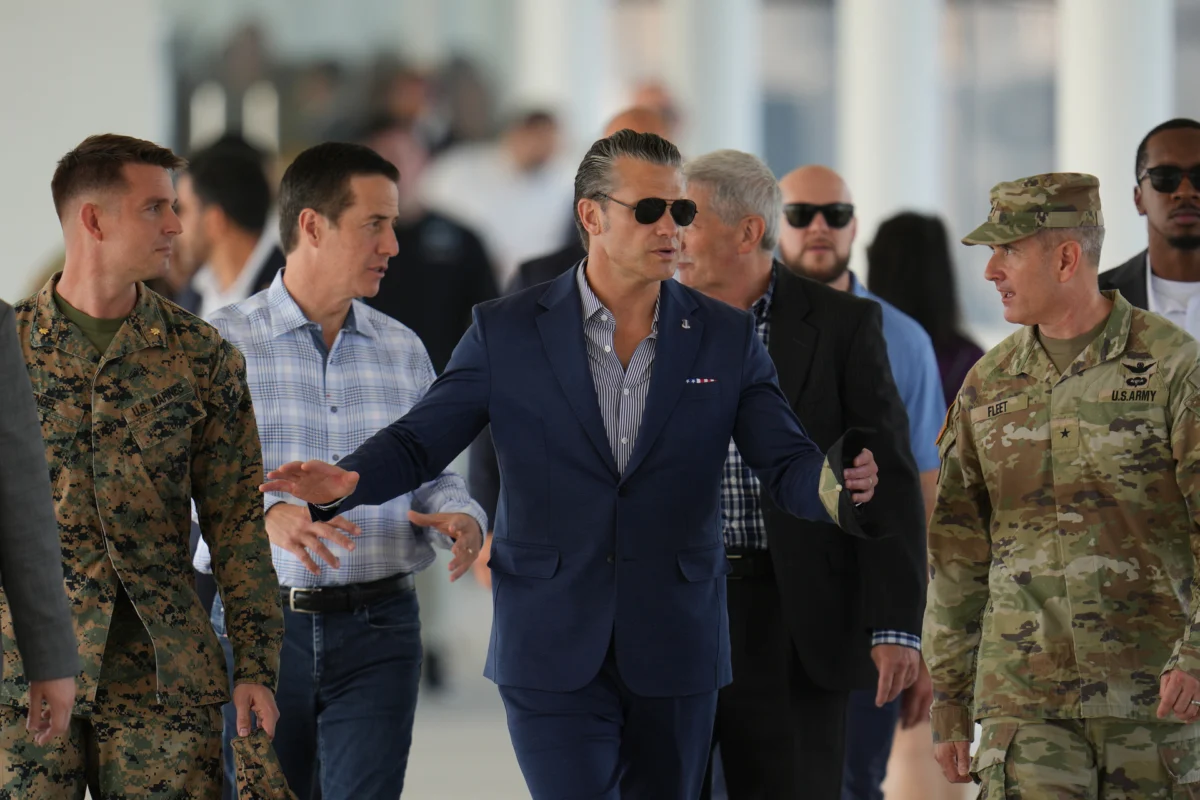
The strategic pivot, championed by Defense Secretary Pete Hegseth, is rooted in a philosophy that favors raw "lethality" and the warrior ethos above all else. Hegseth’s fixation on warfighting, while popular among certain political constituencies, has raised alarms among defense analysts and regional experts who argue that this approach neglects the structural realities of the narcotics trade.
The Failure of Interdiction Metrics
Despite the relentless bombing of maritime assets under Operation Southern Spear, empirical data suggests the impact on the cocaine supply chain has been negligible. Analysis of drug flow data indicates that the amount of cocaine reaching U.S. shores has remained virtually unchanged since the campaign’s inception. This discrepancy between tactical activity (bombing boats) and strategic success (reducing drug availability) highlights a critical disconnect: the drug trade is an economic phenomenon that relies on high-volume logistics and systemic corruption—neither of which is susceptible to destruction by aerial bombardment.
The Intelligence Gap
The destruction of the dairy farm in Ecuador serves as a case study in the dangers of the current intelligence-gathering model. When military forces are tasked with "eradicating" targets based on intelligence filtered through a lens of combat-readiness rather than meticulous investigation, the margin for error shrinks. When the U.S. military treats cartels as traditional insurgent armies, it often misinterprets local social and economic structures, leading to catastrophic miscalculations that alienate the very local populations whose cooperation is essential for long-term stability.
Official Responses and Administrative Doctrine
The Trump administration has consistently framed these actions as a necessary "War on Terror" applied to the Western Hemisphere. The White House maintains that the cartel organizations have transcended traditional criminal activity, evolving into quasi-state actors that threaten the national security of the United States.
"We are not going to wait for the cartels to bring the war to our doorstep," a senior Pentagon official remarked during a recent press briefing. "By integrating advanced surveillance drones with specialized jungle warfare units, we are changing the calculus for these criminal entities."
However, the administration’s rhetoric has faced stiff opposition from regional leaders and diplomatic corps. There is a palpable tension between the administration’s focus on military-to-military engagement and the need for regional economic investment. While the Pentagon emphasizes the "lethality" of its new training modules, critics argue that these measures undermine the sovereignty of host nations and exacerbate the domestic instability that cartels exploit in the first place.
Implications: The Risks of a Narrow Security Policy
The shift toward a militarized posture carries significant implications for the future of U.S. foreign policy and regional stability.
The Erosion of Soft Power
By prioritizing combat operations, the U.S. risks diminishing its diplomatic influence. Latin American governments, many of which rely on U.S. aid, find themselves in a precarious position. Public support for the U.S. military presence is already fragile, and high-profile errors—such as the destruction of civilian property—provide fodder for anti-American sentiment and nationalist political factions that advocate for distancing from Washington.
The "War on Terror" Trap
Applying the "War on Terror" framework to drug trafficking presents a dangerous conceptual trap. Terrorist organizations have political goals that can sometimes be addressed through negotiation or containment; cartels, by contrast, are driven by profit motives that adapt to pressure. If the U.S. military treats the drug trade as a war to be won, it enters a cycle of endless engagement where every "victory" merely displaces the cartel leadership, often leading to more violent splinter groups and increased regional chaos.
The Domestic Toll
For the U.S. military, this approach forces a diversion of resources toward a conflict that has no clear "end state." The obsession with "lethality" and warfighting, as championed by Secretary Hegseth, risks institutionalizing a combat-centric mindset within the military that may be ill-suited for the complex, gray-zone challenges posed by transnational criminal organizations. Soldiers trained in jungle warfare are being prepared for the wrong kind of conflict—one where the adversary is not a standing army, but a fluid, networked enterprise embedded in civilian infrastructure.
Conclusion: A Strategy in Search of Success
As U.S. troops prepare for their deployment into the jungles of Central and South America, the path forward appears increasingly fraught. The Trump administration’s decision to elevate the struggle against cartels to a primary theater of military operation is a high-stakes gamble. It relies on the assumption that force—when applied with sufficient intensity—will yield security.
However, if the past year of maritime interdictions and failed intelligence operations is any indication, this "lethality-first" strategy may be destined to repeat the failures of previous interventions. By focusing on the destruction of assets rather than the dismantling of criminal networks and the strengthening of local governance, the U.S. is essentially engaged in a war of attrition against an adversary that excels at adaptation. Without a holistic strategy that incorporates judicial reform, economic development, and intelligence-led law enforcement, the deployment of jungle warfare units is likely to result in more headlines about combat success than any meaningful reduction in the drug threat facing the American public.
The coming months will serve as a litmus test for this administration’s worldview. If the U.S. military finds itself bogged down in local conflicts without a clear strategy for victory, the administration will face a reckoning not just from its regional partners, but from a domestic audience increasingly skeptical of the costs—both in blood and treasure—of a perpetual war in our own hemisphere.