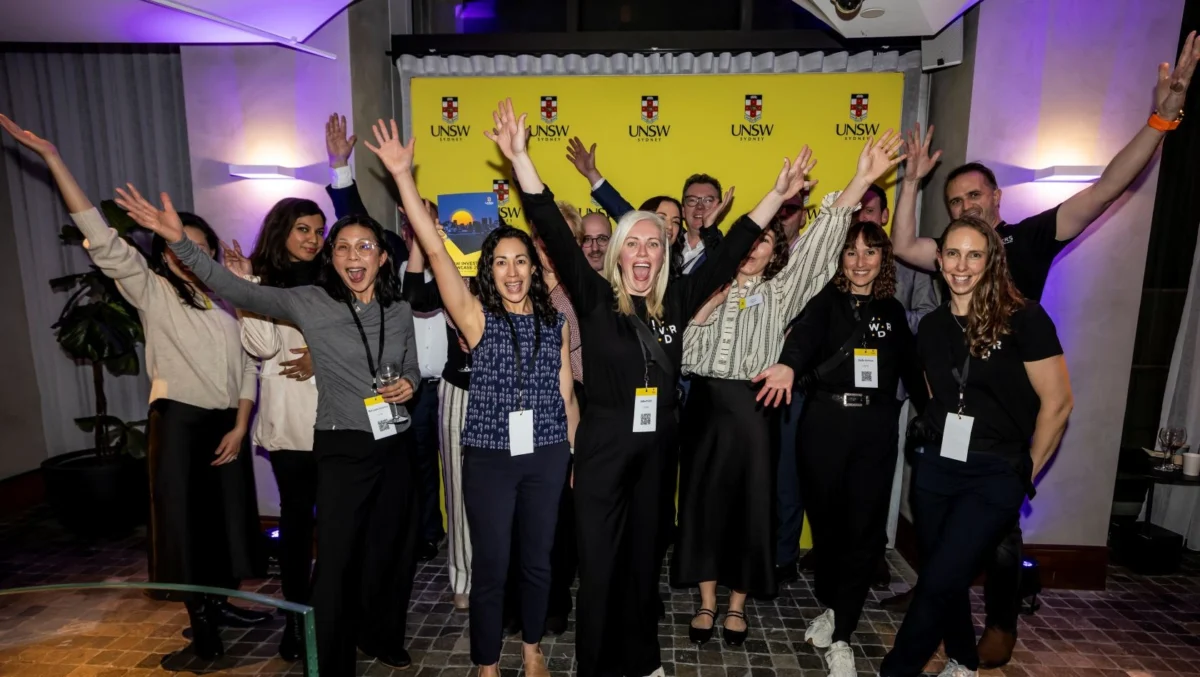
The landscape of Australian deep-tech is set to undergo a high-stakes stress test this Thursday, October 15, as the University of New South Wales (UNSW) hosts its annual Investor Showcase. In an era where venture capital has become increasingly discerning, 55 hand-picked startups are preparing to present their visions, technologies, and scalability roadmaps to an elite audience of investors, venture capitalists, and industry leaders.
The event, which has cemented itself as a cornerstone of the national innovation ecosystem, serves as a bridge between high-level academic research and commercial viability. From the complex architecture of quantum computing to the rapid evolution of artificial intelligence, biotechnology, and the burgeoning space-tech sector, this year’s cohort represents some of the most ambitious research-to-commercialization efforts currently emerging from the Australian university sector.
The Main Event: Bridging the "Valley of Death"
The core objective of the UNSW Investor Showcase is to address the notorious "valley of death"—the period where promising research requires significant capital to transition from a laboratory prototype to a market-ready product.
By curating a list of 55 startups, UNSW is not merely hosting a networking session; it is curating a pipeline of investable assets that have already undergone rigorous internal validation. The showcased ventures are largely born from the university’s world-leading research departments, meaning they possess a technical "moat" that is often lacking in more generic software-as-a-service (SaaS) startups.
A Focus on Deep Tech
Unlike generalist startup pitch events, this showcase focuses heavily on "Deep Tech"—innovation based on tangible engineering breakthroughs or scientific discoveries. These companies often require longer gestation periods, but they also offer the potential for industry-defining returns and the ability to solve global-scale problems, such as cybersecurity vulnerabilities, health equity, and sustainable resource management.
Chronology: The Evolution of the UNSW Showcase
The trajectory of the UNSW Investor Showcase mirrors the maturation of the Australian startup ecosystem over the last decade.
- 2018–2020: The Inception Phase: The early iterations of the showcase were focused on proving that university research could actually be translated into commercial entities. The primary goal was awareness, connecting academics with the local venture capital community.
- 2021–2023: The Growth Phase: As the ecosystem grew, the showcase pivoted toward scaling. The introduction of standardized pitch coaching and investor readiness programs ensured that founders were not just scientists, but business leaders.
- 2024–2025: The Global Outlook: The event began to attract interest from international family offices and corporate venture capital (CVC) arms, recognizing that Australian research had global export potential.
- 2026: The Current Landscape: This year’s showcase marks a return to fundamental security and hard science. In an uncertain macroeconomic climate, the 55 selected startups were vetted specifically for their resilience, capital efficiency, and potential for immediate industrial application.
Spotlight: Quantum Lock and the Cybersecurity Frontier
Among the 55 startups vying for attention is Quantum Lock, founded by Dr. Jesse Laeuchli. In a digital environment where traditional encryption methods are increasingly threatened by the advent of quantum computing, Quantum Lock offers a critical, forward-looking solution.
The company is developing advanced methods to protect critical infrastructure—ranging from national power grids to financial communication networks—from the next generation of cyber threats. For the investors in attendance, Quantum Lock represents the intersection of urgent national security needs and the high-growth cybersecurity market.
Dr. Laeuchli’s project is emblematic of the "hard-tech" shift: it is not just an application, but a foundational layer of protection that addresses systemic risks.
Supporting Data: Why Deep Tech Matters in 2026
The appetite for deep tech in the current market is supported by compelling data regarding R&D translation. According to internal reports from university innovation hubs, startups that originate from research institutions tend to have:
- Higher Patent Portfolios: On average, companies in the UNSW cohort hold or have filed for 3.4 times more patents than the industry average for early-stage startups.
- Extended Longevity: Due to their foundational nature, these companies show a lower failure rate within the first three years of operation compared to purely speculative software startups.
- Collaborative Funding: A significant portion of these companies utilize "blended finance," combining government grants (such as the R&D Tax Incentive) with private equity, which effectively de-risks the early investment for VCs.
Furthermore, the 2026 cohort represents a diverse range of sectors:
- Quantum Technology (15%): Computing, sensors, and secure communication.
- Artificial Intelligence (25%): Predictive analytics, machine learning for medicine, and industrial automation.
- Biotech & Health (30%): Therapeutics, diagnostic devices, and personalized medicine.
- Space & Advanced Manufacturing (30%): Satellite components, propulsion, and sustainable materials.
Official Responses and Strategic Vision
UNSW leadership has emphasized that the university’s role in the 2026 economy goes beyond mere degree-granting. It is a fundamental engine of the national economy.
"Our role is to provide the raw material of innovation," says a university representative. "The Investor Showcase is the moment where we hand the baton to the private sector. We believe that by fostering these 55 startups, we are not just helping individual founders; we are contributing to the sovereign capability of the nation. Whether it is in space tech or cybersecurity, these companies are solving problems that affect us all."
Industry observers note that the partnership between the university and the investor community is becoming more symbiotic. "Investors are no longer looking for the next social media app," says a prominent Sydney-based VC. "They are looking for companies that have a defensible technology stack. That is exactly what you find at an event like the UNSW Showcase."
The Implications: What This Means for the Future
The success of Thursday’s showcase will likely have ripple effects across the Australian startup scene.
1. Market Validation for Australian R&D
If these 55 companies secure significant follow-on funding, it will validate the current government-backed research translation models. It proves that Australian universities are capable of producing world-class, commercial-grade technology.
2. The Shift in Investment Focus
The prevalence of quantum and space tech in this year’s cohort signals a shift in investor sentiment. Capital is flowing away from high-burn consumer tech toward high-utility, high-barrier-to-entry ventures. This is a maturing of the market, indicating that Australian investors are becoming more sophisticated and patient.
3. Economic Resilience
By diversifying the startup ecosystem into fields like biotech and infrastructure security, the Australian economy becomes more resilient. These are sectors that are less susceptible to the boom-and-bust cycles of the broader advertising or consumer spending markets.
4. A Talent Magnet
The ability to showcase such high-level innovation also serves as a talent magnet. When top-tier researchers see a clear pathway to commercialization—supported by events like this—they are more likely to remain in Australia rather than relocating to Silicon Valley or London.
Looking Ahead: How to Engage
For investors and industry stakeholders, the event is an invite-only opportunity to get an early look at technologies that could define the next decade of industry. The format of the day, designed to maximize interaction, includes moderated pitch sessions, breakout rooms for detailed technical inquiries, and open networking periods designed to facilitate the "handshake" that often precedes a multi-million dollar term sheet.
As the doors open this Thursday, the question is not just whether these startups will find funding, but which of them will emerge as the next Australian unicorn. For the 55 founders, the pressure is immense, but the opportunity is unparalleled. They are, quite literally, standing on the shoulders of the giants of research, aiming to reach the heights of the commercial global stage.
Investors wishing to follow the progress of these ventures or register their interest for future engagement can find further details on the official UNSW Investor Showcase portal.