In the modern logistics landscape, the mantra "location, location, location" has evolved. For today’s supply chain leaders, it is no longer just about where you are—it is about how quickly you can move when the ground shifts beneath you. As consumer demographics migrate and business investment patterns fluctuate, companies are finding that traditional, rigid distribution models are increasingly becoming a liability rather than an asset.
Expanding into a new market has historically been a high-stakes gamble. Companies often find themselves forced to commit to massive capital expenditures—building or leasing facilities—long before they possess the granular, real-world data necessary to justify such an investment. This "leap of faith" approach creates a precarious dynamic: businesses are forced to guess at regional demand, inventory turnover, and the precise footprint required to maintain service levels.
However, a new paradigm is taking hold. Through the use of flexible, third-party logistics (3PL) warehousing, companies are moving away from the "lock-in" trap, opting instead to test markets through data-driven pilots before committing to permanent infrastructure.
The High Cost of Rigidity: The Risks of Traditional Leasing
For decades, the standard playbook for market entry involved signing long-term, fixed-cost warehouse leases. While this provided stability during periods of predictable growth, it has become a significant bottleneck in a volatile global economy.
The "Locked-In" Dilemma
When a company signs a multi-year lease for a specific warehouse footprint, they are essentially betting on the accuracy of their long-term forecasts. If the market fails to materialize as expected, the company is saddled with "dead" capacity—paying for empty square footage that burns through capital and erodes margins. Conversely, if demand exceeds expectations, the company faces "capacity crunch" scenarios, where they lack the space to house inventory, leading to stockouts, backorders, and a loss of market share.
Operational Inflexibility
Beyond the financial burden, there is the issue of operational lock-in. A facility leased for a specific type of product or a particular volume of throughput may not be easily reconfigured. When a company realizes months into a contract that its transit times haven’t improved as predicted, or that a different region would have been a more strategic hub, they are often trapped by early termination fees or rigid subleasing clauses.
The Pilot Approach: Testing Before Committing
The modern solution is the market pilot. Instead of building a foundation on assumptions, companies are partnering with 3PL providers to place limited inventory in target markets. This "test-and-learn" methodology transforms the expansion process from a speculative financial decision into a tactical, data-driven operation.
How a Pilot Works
A pilot program typically begins with a specific segment of a company’s portfolio—perhaps a high-velocity product line or a specific, high-growth customer demographic. By leveraging a 3PL’s existing infrastructure, the shipper can:
- Measure Actual Demand: Move from theoretical sales projections to real-world ordering data.
- Test Service Improvements: Calculate the actual reduction in transit times and the subsequent impact on customer satisfaction scores.
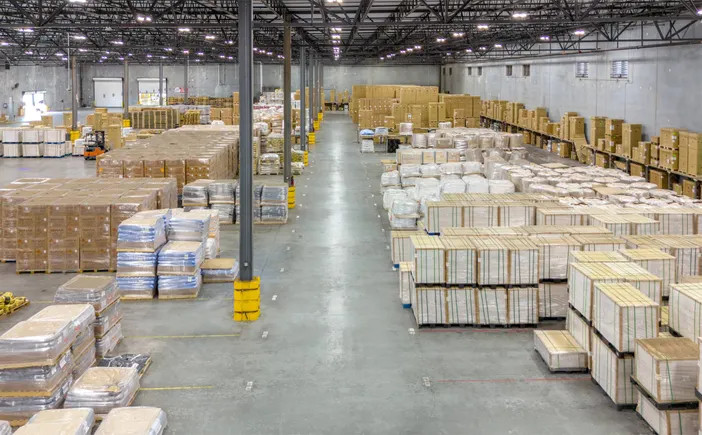
- Right-Size the Footprint: Determine exactly how much space, labor, and technology is needed for a permanent, scalable operation.
"The biggest thing from a flexible standpoint is when a customer looks at us and says, ‘We’re not quite sure how much space we’re going to need in a market. So let’s test that out,’" explains Ed Smith, Vice President of Distribution & Fulfillment at Averitt. By decoupling growth from fixed-asset ownership, companies like Averitt allow their clients to establish standard operating procedures—whether that involves pallet storage, floor-loaded freight, or complex kitting—without the immediate pressure of a long-term lease.
Chronology of Market Migration: Following the Consumer
The necessity of flexible warehousing is largely driven by the rapid, often unpredictable, shift in U.S. population and consumption. Logistics networks that were designed twenty years ago to serve the population centers of the Rust Belt or the Northeast are increasingly misaligned with the current economic reality.
The Southern Migration
The most significant trend in recent years has been the dramatic shift toward the American South and Southeast. Data from the U.S. Census Bureau underscores this: between April 2020 and July 2025, the South grew by 6%—a rate nearly double the national average. More importantly, it was the only region to see consistent growth across every age demographic, signaling long-term, sustainable consumer demand.
Reevaluating the Hub Strategy
Historically, companies anchored their networks in major traditional hubs like Chicago or Memphis. While these remain critical, the growth of secondary but strategically positioned cities—such as Nashville, Tennessee—has changed the calculus. Nashville, for instance, serves as a gateway to the explosive growth of the Southeast while maintaining efficient lanes to the North and Northeast.
The lesson for modern supply chain managers is clear: your distribution network should be a living, breathing entity. If your warehouses are still where your customers were rather than where they are, your logistics costs will inevitably climb as you attempt to bridge the gap with expensive, long-haul transportation.
Case Study: i5 Industries and the Future of Regional Fulfillment
A prime example of this strategic pivot is i5 Industries, a Texas-based importer and distributor of office furniture. Like many growing companies, i5 found itself at a crossroads: the need to scale was clear, but the risk of over-committing to a new, permanent regional footprint was high.
"Our future looks bright. We are really excited about expanding," says Tara Laughter, President and CEO of i5 Industries. By partnering with a flexible 3PL like Averitt, the company is testing regional inventory placement. Instead of buying land or committing to a five-year lease in a new state, i5 is utilizing existing fulfillment centers to "test the waters."
This allows i5 to observe real-time order velocity and transit metrics. If the data confirms that a permanent regional presence will significantly enhance their competitive edge, they can proceed with confidence. If the market shows signs of softening, they can pivot or withdraw without the catastrophic financial consequences of a failed facility launch.
The Metrics of Success: What Should You Measure?
A successful market pilot must be governed by clear, objective KPIs. Companies should not enter these tests simply to prove that sales exist, but to determine if the logistics infrastructure adds tangible value to the supply chain.
- Inventory Velocity: Does the presence of local inventory accelerate order fulfillment cycles by a meaningful margin?
- Cost-to-Serve: How does the total landed cost, including the 3PL’s management fees, compare to the previous model of shipping from a centralized location?
- Customer Satisfaction: Does the faster transit time result in higher repeat purchase rates or larger average order values?
- Operational Scalability: Does the 3PL provider possess the agility to scale from 500 square feet to 5,000 square feet as the market matures?
Implications for the Future of Logistics
The shift toward flexible warehousing is not merely a tactical change; it is a strategic necessity in an age of uncertainty. As global supply chains face disruption from geopolitical, environmental, and economic factors, the ability to "reconfigure on the fly" is the ultimate competitive advantage.
Building a Resilient Network
Companies that adopt flexible, scalable 3PL partnerships gain a level of resilience that their competitors lack. When a market changes—whether due to a sudden shift in consumer behavior or a macro-economic pivot—the company that can reallocate inventory within weeks, rather than years, will dominate the market.
The Role of the 3PL Partner
The criteria for selecting a 3PL partner have also shifted. It is no longer enough to look for warehouse space; companies must look for a partner that offers:
- Geographic Diversity: A network of centers that allows for regional agility.
- Tech-Enabled Transparency: Real-time visibility into inventory and order flow to inform decision-making.
- Cultural Alignment: A provider that views itself as an extension of the client’s team, willing to support the "test" phase with the same rigor as a permanent account.
Conclusion: Flexibility as a Competitive Edge
Forecasting will always remain an essential function of business planning, but it is no longer the final word. In a world where customer geography is fluid, the best way to evaluate a market is to operate within it.
By leveraging the power of flexible warehousing, companies can remove the "anchor" of long-term, high-risk contracts and replace it with the freedom to scale where the data leads. Whether entering a new territory or optimizing an existing one, the ability to test, learn, and then commit is the hallmark of a modern, responsive supply chain.
As the saying goes: Flexible by Design, Scalable by Demand. The companies that embrace this philosophy today will be the ones that hold the keys to tomorrow’s markets.