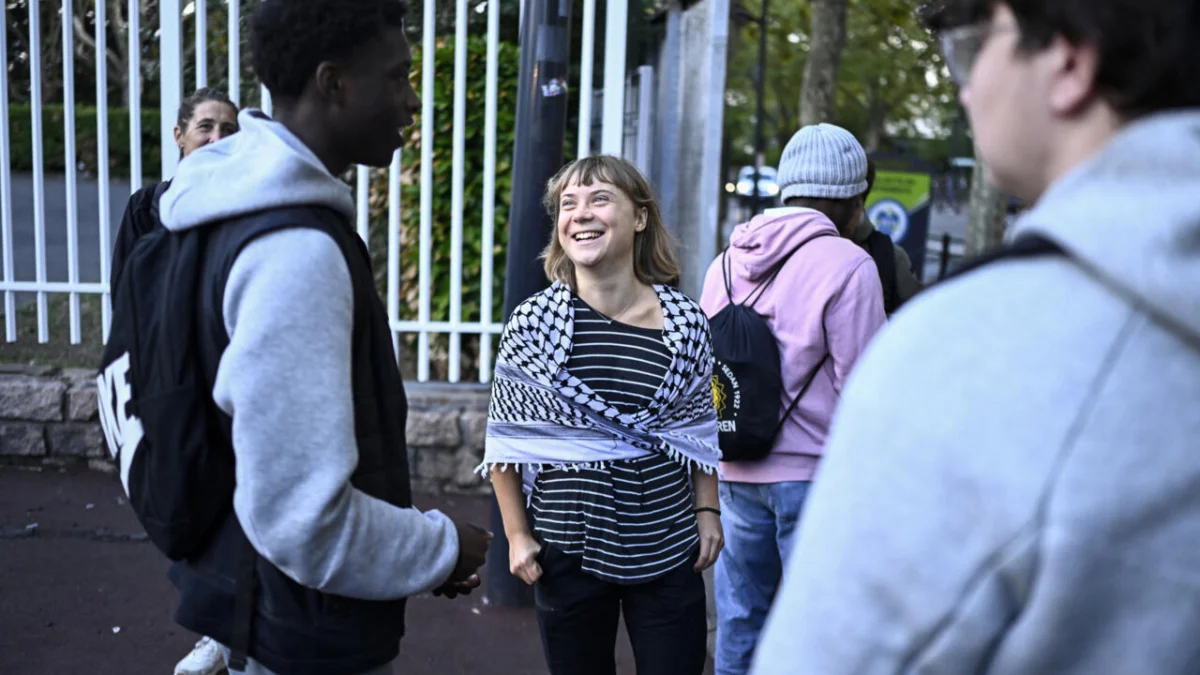
PARIS – The French education system has been thrust into the national spotlight as a wave of student-led protests, supported by labor unions and opposition political factions, has paralyzed several academic institutions across the country. The demonstrations, centered on grievances regarding decaying infrastructure, systemic teacher shortages, and a perceived lack of government investment, reached a symbolic turning point on Tuesday, October 13, 2026, when renowned climate activist Greta Thunberg joined a blockade at the Lycée Paul Éluard in Saint-Denis, on the northern outskirts of Paris.
The presence of the Swedish activist has significantly amplified the visibility of a movement that has been simmering for months. As students barricade school entrances and picket outside administrative offices, the French government finds itself in a precarious position, attempting to balance public order with the undeniable reality of a crumbling educational infrastructure.
The Core Grievances: A System Under Strain
The current unrest is not a sudden eruption but the culmination of long-standing frustration within the French public school system. Parents, educators, and students alike have voiced concerns that the Éducation Nationale is failing to meet the basic requirements of the 21st century.
1. Teacher Shortages and Burnout
The most acute issue facing the Ministry of Education is the chronic shortage of teaching staff. Low starting salaries, coupled with increasingly difficult working conditions and a lack of professional development, have led to a mass exodus from the profession. Vacant positions in core subjects—most notably mathematics, physics, and foreign languages—have left thousands of students without consistent instruction for months at a time.
2. Dilapidated Infrastructure
A significant portion of the student body is attending classes in buildings that have seen little to no renovation in decades. Reports from Saint-Denis and other suburban areas describe schools plagued by heating failures during winter months, mold-infested classrooms, and safety hazards that have forced local administrations to partially close campuses. For the students of Lycée Paul Éluard, the blockade is a desperate demand for a safe and functional learning environment.
Chronology of the 2026 Autumn Unrest
The trajectory of these protests has been characterized by a gradual escalation of tactics and a broadening of the coalition of supporters.
- Early September 2026: As the academic year began, teacher unions published reports highlighting the record number of unfilled posts, sparking initial localized walkouts in Paris and Marseille.
- Late September 2026: The movement transitioned from teacher-led strikes to student-led occupations. Social media campaigns under the banner #ÉducationEnDanger (Education in Danger) began to organize blockades at high schools across the Île-de-France region.
- October 5, 2026: The first major nationwide day of action saw thousands of students leave classrooms. Clashes were reported between protesters and riot police in several urban centers, raising concerns about the security of the demonstrations.
- October 12, 2026: Government officials held emergency talks with student representatives, but the meeting ended in a stalemate. The government promised long-term reforms, but student leaders demanded immediate budget allocations.
- October 13, 2026: The movement gained international attention as Greta Thunberg arrived at the Lycée Paul Éluard. Her presence turned a local blockade into a global news event, focusing the world’s eyes on the state of French public education.
Supporting Data: By the Numbers
The severity of the situation is reflected in data compiled by independent educational research groups and union audits:
- Teacher Vacancies: As of October 2026, there are approximately 14,000 unfilled teaching positions across the national network, an increase of 12% compared to the previous academic year.
- Infrastructure Investment: A survey of municipal secondary schools indicates that 35% of buildings require "urgent structural renovation" to meet safety standards.
- Student Participation: On the October 13 day of action, union sources estimated that over 250,000 students participated in some form of protest, ranging from peaceful sit-ins to full-scale blockades.
- Declining School Closures: While the number of schools fully shuttered by strikes has declined compared to the peak of the 2025 protests, the intensity of the disruptions—including building occupations—has increased, making it harder for authorities to manage.
Official Responses: The Government’s Dilemma
The French government, led by the Ministry of Education, has adopted a dual-pronged approach: acknowledging the validity of the grievances while strictly condemning the methods of the protesters.
The Government Stance
A spokesperson for the Ministry stated on Tuesday that the government "fully understands the anxieties of the youth" and is committed to a multi-year investment plan aimed at modernizing infrastructure. However, the government has signaled that it will not tolerate illegal blockades that prevent the "right to education" for non-participating students.

"The state cannot be held hostage by the obstruction of public facilities," the Interior Minister remarked. "While we engage in dialogue, we must also ensure that the rule of law is respected. Violence, whether directed at property or personnel, will be addressed with the full force of the law."
Opposition and Union Perspectives
Opposition political leaders have criticized the government for what they describe as "years of austerity disguised as reform." Left-wing parliamentary groups have openly supported the student blockades, arguing that when the state fails to provide the basic tools for learning, civil disobedience becomes a necessary democratic response.
"Greta Thunberg’s presence today is a signal that our educational system is not just failing French students; it is failing the future of our society," said a prominent opposition MP. "The students are doing what the government refuses to do: they are demanding a future."
Implications: A Nation at a Crossroads
The ongoing protests in France carry significant implications for the broader political landscape in Europe.
The Politicization of the Classroom
The involvement of international figures like Greta Thunberg signifies a transition from domestic educational policy issues to broader themes of social justice and environmental sustainability. For many students, the fight for a better school is part of a larger struggle for a better society. This suggests that the current movement may not dissipate quickly, as it is fueled by a generational sense of disenfranchisement.
Economic Consequences
The economic cost of the protests is beginning to mount. Parents unable to send their children to school due to closures are missing work, and the repeated disruption of the academic calendar threatens to impact student performance in national examinations. Economists warn that if the teacher shortage is not addressed by the next academic cycle, the long-term impact on the French labor market—specifically in STEM sectors—could be profound.
Future Scenarios
As the movement continues, three potential scenarios emerge:
- Concessions and De-escalation: The government accelerates the release of emergency infrastructure funds, potentially pacifying the student movement but risking a clash with fiscal conservatives concerned about budget deficits.
- Increased Policing: A "hardline" approach leads to a crackdown on student leaders, which could suppress the movement in the short term but risks a massive public backlash and potential general strikes across other sectors.
- The "Swedish Model" Intervention: Mediation led by international figures or neutral academic bodies could facilitate a structural reform agreement, though this remains an unlikely path given the current political polarization in the French National Assembly.
Conclusion
As the sun set on Saint-Denis on Tuesday evening, the blockade at Lycée Paul Éluard remained largely intact. The presence of Greta Thunberg among the students served as a poignant reminder that the education crisis in France is no longer a localized issue. It is a reflection of a society grappling with the costs of austerity, the demands of a changing world, and a generation of youth that is increasingly willing to disrupt the status quo to ensure their voices are heard.
Whether the government chooses to listen or to resist remains the central question of the coming weeks. For now, the students remain at the gates, their banners held high, waiting for a commitment that goes beyond empty promises and moves toward substantive, structural change.