As the rapid evolution of artificial intelligence continues to reshape the digital landscape, marketing professionals are moving beyond the "experimental" phase and into an era of deep, operational integration. From transforming single product photos into infinite image libraries to navigating the complexities of AI-driven search, the mandate for marketers is clear: adapt or become invisible.
This report synthesizes the latest industry developments, strategic pivots for content creators, and the seismic shift toward "agentic" AI, where software no longer just informs—it acts.
The Strategic Shift: From Asset Waste to Infinite Libraries
For years, the creative process was defined by a "use-it-or-lose-it" mentality. A product photoshoot would yield hundreds of images, but only a handful would be selected for a campaign; the rest were relegated to the digital archives, never to be seen again. Today, AI is rendering that inefficiency obsolete.
Transforming Single Assets into Ecosystems
The modern marketer no longer views a product photo as a static asset. Instead, it serves as a "seed" or reference point for Generative AI models. By feeding a single, high-quality product shot into advanced image-generation tools, creators can generate a comprehensive library of brand-consistent visuals.
The process is simple but transformative: the AI preserves the lighting, color palette, and texture of the original image while projecting the product into new, imaginative contexts. This creates a "shot library" that includes alternate angles, lifestyle settings, and high-fashion close-ups, all without the cost of additional studio time.
The Hidden Value of the "Discard Pile"
Perhaps the most significant strategic shift is the changing definition of "waste." In traditional workflows, rejected drafts are deleted. In an AI-integrated workflow, those drafts share the same visual DNA as the primary campaign assets. A "rejected" close-up generated today might serve as the perfect B-roll for a social media story three months from now. By treating AI-generated extras as part of a living library, brands can significantly reduce creative overhead while maintaining a cohesive visual identity across all platforms.

The New Frontier: SEO for the AI Age
The traditional search engine optimization (SEO) playbook is under siege. As users increasingly turn to AI-driven interfaces to answer their questions, the way businesses show up in search results is changing.
Why Your Content Strategy Needs a Dual Audience
Historically, content was written for two masters: the human reader and the search engine algorithm. Today, the "search engine" has evolved into an "AI answer engine." These systems do not consume content in the linear, top-to-bottom fashion that human readers do. They digest data, synthesize connections, and present the most "authoritative" source as the ultimate truth.
If your content isn’t structured to feed these AI models, you are essentially invisible to the next generation of consumers. Businesses must now design content that serves both human engagement and machine-readable data structures.
The Technical Barriers to AI Citation
Even the best content can be ignored if the technical infrastructure is flawed. Many businesses are currently experiencing "silent" blocks—technical configurations that prevent AI crawlers from accessing their sites.
- Accessibility: Ensure your site architecture allows AI agents to index your content effectively.
- Authority Signals: AI models evaluate the credibility of a source based on structured data and consistent, high-value information.
- The "Why" Factor: AI chooses sources that provide the most comprehensive, objective, and well-structured answers. Simply using AI to generate mass content is a failing strategy; these models prioritize original, authoritative insights that offer a unique perspective.
Chronology of Major AI Industry Developments
The past week has seen a cascade of updates from the world’s leading technology firms, signaling a transition from "generative" AI to "agentic" AI—tools that perform tasks, not just provide information.
- Google Gemini Windows App (Early Week): Google solidified its desktop presence with a dedicated Windows application for Gemini, allowing users to leverage AI via hotkeys like
Alt + Space. The integration with Gmail, Drive, and the new "Gemini Spark" feature for multi-step projects marks a shift toward deeper OS-level integration. - Gemini 3.8 Live Models (Mid-Week): Google introduced "Extended Thinking," a model capable of handling complex, multi-step reasoning while maintaining a fluid, spoken conversation. This is a massive leap for real-time customer service and voice-based assistants.
- Meta’s Muse (Late Week): Meta unveiled "Muse," a personal AI agent that moves beyond chatting. Muse can browse the web, fill out forms, coordinate schedules, and make purchases with user approval. It is designed to act as an extension of the user’s intent.
- OpenAI GPT-Live-1 (Current): OpenAI released a new full-duplex voice model for developers. This model is designed to handle the messy, human reality of conversation—interruptions, background noise, and pauses—making AI interactions feel significantly more natural and human-like.
Implications for Marketers: The Rise of the Agentic Era
The transition to "agentic" AI—where models like Meta’s Muse or OpenAI’s live agents take action on behalf of users—carries profound implications for the marketing industry.

From Engagement to Execution
For the past decade, the goal of marketing was "engagement"—clicks, likes, and views. In the age of agents, the goal is "access and action." If an AI agent is browsing the web to make a purchase for a user, your brand must be the one that the agent "trusts."
This requires a fundamental change in how we view the customer journey. The path to purchase will no longer be a series of clicks on a website; it will be a conversation between a user and an AI agent, followed by an automated transaction.
Privacy as a Competitive Advantage
As Meta and other firms roll out agents that handle sensitive tasks—like making purchases or organizing personal data—privacy and security will become the primary differentiator. Brands that can demonstrate secure, transparent data practices will win the trust of the AI agents that act on behalf of the consumer.

Expert Outlook: Preparing for 2027
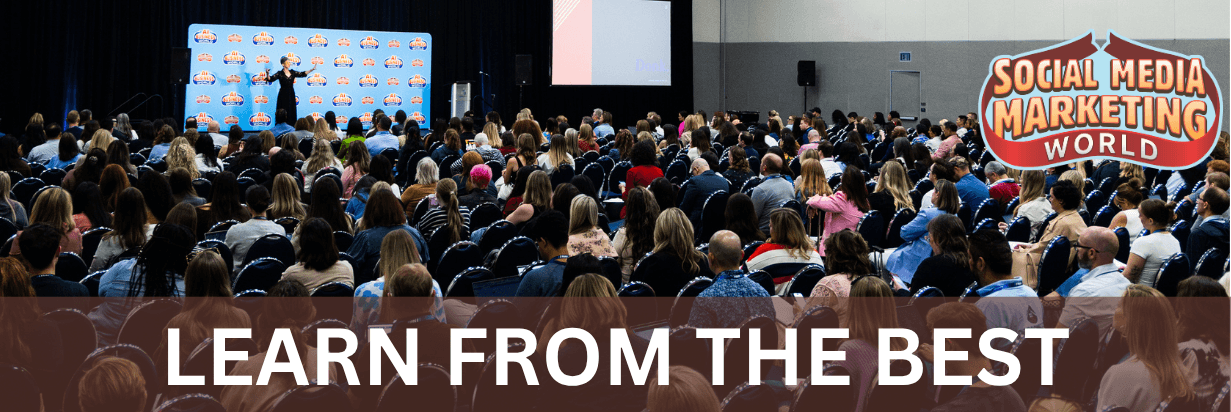
As we look toward the future, the industry is pivoting toward practical implementation. At the upcoming Social Media Marketing World 2027 conference, the focus will shift entirely away from theoretical "what is AI" discussions to hands-on "how to implement" workshops.
The industry is moving toward a "pitch-free" environment where practitioners share real-world workflows, from building brand-consistent image libraries to optimizing technical SEO for AI crawlers. The consensus is clear: the businesses that will dominate in 2027 are those that treat AI not as a novelty, but as a core component of their operational infrastructure.
Final Takeaway
The "AI Gap" is real. Many organizations are using AI on a daily basis but failing to see the results because they lack a cohesive strategy. Whether it is auditing your technical SEO to ensure you are discoverable by AI agents or adopting a "reuse-forever" mindset for your visual assets, the key is to stop treating AI as a series of disparate tools and start treating it as a foundational layer of your business.

As we move through the remainder of the year, the winners will be those who can balance the human element of brand storytelling with the mechanical, high-speed requirements of the AI-driven web.