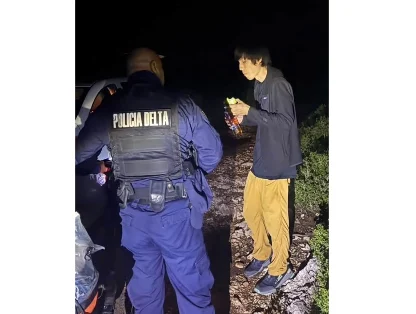
Vlora, Albania – October [Current Year] – A dramatic search and rescue operation unfolded last night in the remote and challenging terrain of Bristan, Vlora, culminating in the successful recovery of an American citizen who had become disoriented and sustained debilitating leg injuries. The incident, which mobilized specialized police units, highlights both the allure and the inherent dangers of Albania’s rapidly growing ecotourism sector, particularly in its wilder, less developed regions.
The individual, whose identity has not been publicly released pending notification of next of kin and privacy considerations, was found after a rigorous three-hour search by Albania’s elite Special Unit Delta. He was subsequently transported to a medical facility in Vlora, where his condition was reported as stable and good, a testament to the swift and professional response of the emergency services.
Main Facts of the Incident
The alarm was first raised late yesterday afternoon, signaling a potential crisis in the rugged coastal and mountainous area known as Bristan, situated within the wider Vlora region. The American tourist, reportedly exploring the picturesque but unforgiving landscape, found himself in distress after losing his bearings and suffering injuries to his leg. These injuries rendered him immobile, preventing him from self-evacuating and plunging him into a precarious situation as dusk approached.
The immediate concern for authorities was the rapidly deteriorating light conditions and the treacherous nature of the terrain, characterized by dense vegetation, steep inclines, and rocky outcrops. Such an environment poses significant challenges for navigation, even for experienced hikers, and can quickly become life-threatening without appropriate gear and local knowledge.
Upon receiving the distress call, the Vlora Police Directorate swiftly activated its specialized search and rescue protocols. The Special Unit Delta, renowned for its expertise in high-risk operations and difficult environments, was immediately dispatched to the scene. Their rapid deployment underscored the seriousness of the situation and the critical need for a timely intervention.
The operation, which commenced around 6:00 PM, involved a methodical ground search across a broad area of the Bristan region. Utilizing their specialized training and equipment, the Delta forces meticulously combed through the dense terrain. Their efforts paid off approximately three hours later when, at 8:45 PM, the stranded American citizen was successfully located. He was found alive, albeit injured and undoubtedly shaken by the ordeal.
Following his extraction from the isolated spot, the individual was promptly transferred to medical personnel. An ambulance, pre-positioned for immediate transport, conveyed him to a hospital in Vlora for comprehensive medical evaluation and treatment. Preliminary reports from medical staff indicated that despite the injuries and the ordeal, his overall health condition was stable and not life-threatening, bringing a collective sigh of relief to all involved.
This incident serves as a stark reminder of the unpredictable nature of outdoor pursuits and the paramount importance of preparedness, even in seemingly benign environments. It also highlights the invaluable role of Albania’s dedicated emergency services in safeguarding both its citizens and the increasing number of international visitors drawn to its natural beauty.
Chronology of the Rescue Operation
The timeline of the rescue operation reveals a coordinated and efficient response to a potentially grave situation, demonstrating the capabilities of Albanian emergency services under pressure.
Late Afternoon (Approx. 3:00 PM – 5:00 PM): The Genesis of Distress
While the exact time of the incident remains unconfirmed, it is plausible that the American tourist began his exploration of the Bristan area earlier in the day. Bristan, with its stunning views of the Ionian Sea and its rugged hinterland, attracts hikers seeking solitude and natural beauty. It is common for visitors to underestimate the difficulty of the terrain, especially if they venture off marked trails. Sources suggest the tourist may have been navigating unfamiliar paths when he lost his sense of direction. The onset of leg injuries, possibly a fall or strain aggravated by continued walking on uneven ground, would have compounded his predicament, making further movement impossible. As the sun began its descent, bringing with it rapidly cooling temperatures and the looming darkness, the gravity of his situation would have become critically apparent. It is believed he managed to make contact with emergency services, either directly via mobile phone or through a third party (e.g., hotel staff, a local contact) after realizing he was truly stranded.
Approx. 5:30 PM – 6:00 PM: The Alarm is Raised
The distress call reached the Vlora Police Directorate, triggering an immediate assessment of the situation. Given the remote location, the approaching night, and the reported injuries, the decision was made to deploy the Special Unit Delta. This unit is specifically trained for complex search and rescue missions in challenging environments, including mountainous and forested areas. Preparation for deployment would have involved gathering initial intelligence on the likely search area, coordinating with other local police units, and ensuring all necessary equipment was ready.
6:00 PM: Commencement of Search and Rescue
As daylight began to fade, the Special Unit Delta forces commenced their ground operation. Their strategy would have involved dividing the suspected area into manageable search grids, moving methodically to cover ground. The team would have been equipped with tactical flashlights, navigation tools, first-aid kits, and communication devices. The challenges at this stage were immense: rapidly diminishing visibility, the dense and often thorny Mediterranean vegetation, and the steep, uneven terrain. The priority was to establish a perimeter and begin a systematic sweep, listening for any calls for help or signs of human presence.
6:00 PM – 8:45 PM: The Relentless Search
For nearly three arduous hours, the Delta team navigated the difficult terrain in near-total darkness, relying on their training, local knowledge (if available from guides or local police), and specialized equipment. The Bristan area is known for its deep ravines and hidden crevices, which can make a search exceedingly difficult. Rescuers would have faced not only the physical demands of traversing such an environment but also the psychological pressure of knowing that every minute counted. Their training in wilderness survival, navigation, and first response would have been crucial during this phase. Communication was maintained with a command center, providing updates on progress and potential findings.
8:45 PM: The Moment of Discovery
After what must have felt like an eternity, the team successfully located the stranded American citizen. The precise location remains undisclosed, but it was likely in an area difficult to access, emphasizing the necessity of a specialized unit. Upon reaching him, the first priority was to assess his immediate medical condition. Initial first aid would have been administered on site to stabilize his leg injury and address any other immediate concerns such as hypothermia, given the night temperatures. The relief for both the rescue team and the injured individual must have been palpable.
Post-8:45 PM: Extraction and Transport
Once stabilized, the next challenge was to safely extract the individual from the remote location. Depending on the exact terrain, this could have involved carefully carrying him on a stretcher or assisting him with specialized equipment over short distances to a point accessible by vehicle. An ambulance was waiting at the nearest accessible point, likely a rough track or a main road some distance from the actual rescue site. The transfer to the ambulance would have been swift, followed by immediate transport to the regional hospital in Vlora. During transport, medical personnel would have continued to monitor his vital signs and provide further care.
Upon Arrival at Hospital: Medical Assessment
At the Vlora hospital, the American tourist underwent a thorough medical examination. Doctors assessed the extent of his leg injuries, which were later confirmed not to be life-threatening. He would have been treated for dehydration, minor abrasions, and any potential shock from the ordeal. The preliminary assessment that his condition was "good" indicates that he was stable, conscious, and responsive, with injuries that were manageable and expected to heal without long-term complications.
This detailed chronology underscores the professionalism and dedication of the Albanian emergency services, whose swift and coordinated actions turned a potentially tragic situation into a successful rescue.
Supporting Data and Context
The incident in Bristan is not an isolated event but rather a poignant reminder of the broader context of outdoor tourism in Albania. The country, often dubbed "Europe’s last hidden gem," has seen a surge in visitor numbers, particularly those drawn to its pristine natural landscapes, from the Albanian Alps in the north to the stunning Riviera in the south.

The Bristan Area: A Double-Edged Sword
Bristan itself is emblematic of this allure. Located within the municipality of Vlora, it is part of a region celebrated for its dramatic coastline, ancient olive groves, and rugged hills that descend into the Ionian Sea. The area offers breathtaking panoramic views, making it a magnet for hikers, photographers, and nature enthusiasts seeking off-the-beaten-path experiences. However, its very wildness is its primary danger. The trails are often unmaintained, poorly marked, or non-existent. The terrain can be deceptive, with loose rocks, steep drops, and dense Mediterranean scrub (macchia) that can obscure paths and make orientation challenging. Without local guides or advanced navigational skills and equipment, visitors can quickly find themselves in peril, especially when weather conditions change or daylight fades. The isolation means that cellular service can be sporadic, further complicating distress calls.
Growing Tourism and Its Challenges
Albania’s tourism sector has experienced exponential growth in recent years. In 2023, the country welcomed a record number of international visitors, a trend expected to continue. This influx, while economically beneficial, places increasing demands on infrastructure, including emergency services. Many tourists, particularly those from Western countries, are accustomed to well-marked trails, comprehensive safety signage, and readily available emergency response in their home countries. They may not fully appreciate the different level of infrastructure and preparedness required when exploring more remote areas in a developing tourism destination like Albania. Incidents involving lost or injured hikers, while still relatively infrequent, underscore the need for continued investment in search and rescue capabilities, public awareness campaigns for tourists, and the development of safer, more sustainable tourism practices.
Albania’s Search and Rescue Capabilities: The Role of Special Unit Delta
The successful rescue operation highlights the critical role and effectiveness of specialized units like the Special Unit Delta. This unit, part of the Albanian State Police, is trained for a wide array of high-risk operations, including counter-terrorism, hostage rescue, and indeed, complex search and rescue missions in difficult environments.
- Training: Delta operators undergo rigorous physical and tactical training, often including mountain warfare, wilderness survival, advanced first aid, and specialized navigation techniques. They are adept at operating in adverse conditions, day or night.
- Equipment: The unit is equipped with specialized gear for mountain and wilderness rescue, including ropes, climbing equipment, night vision devices, thermal imaging cameras, advanced GPS systems, and specialized vehicles capable of traversing rough terrain. Their communication systems are designed to function in areas with limited infrastructure.
- Coordination: While Delta is a specialized force, successful operations often involve seamless coordination with other entities, including local police, fire departments, ambulance services, and sometimes even volunteer groups or local residents who possess invaluable knowledge of the terrain. This multi-agency approach ensures a comprehensive response.
The incident in Bristan demonstrates that while resources may not be as extensive as in some highly developed nations, Albania possesses highly capable and dedicated professionals who can execute complex rescue missions effectively.
Historical Context and Previous Incidents
While specific data on tourist rescues is not always widely publicized, there have been previous instances of hikers or tourists getting lost or injured in Albania’s mountainous regions, such as the Albanian Alps (e.g., Theth, Valbona), or along its rugged coastline. These incidents often involve:
- Lack of preparation: Inadequate footwear, insufficient water/food, no maps or GPS.
- Underestimation of terrain: Venturing off trails, misjudging distances or difficulty.
- Weather changes: Sudden storms, fog, or temperature drops.
- Lack of communication: No signal, dead phone battery.
Such incidents serve as recurring lessons for both authorities and tourists, emphasizing the continuous need for vigilance and preparedness. The Bristan rescue is a positive example of lessons learned and effective response mechanisms put into action.
Official Responses and Statements
Following the successful rescue, several official entities have either issued statements or are expected to provide further details, emphasizing the collaborative effort and reiterating safety advice for tourists.
Vlora Police Directorate:
A spokesperson for the Vlora Police Directorate expressed satisfaction with the outcome of the operation. "We are extremely pleased to report the successful rescue of the American citizen," stated the spokesperson, who requested anonymity as per department policy. "Our teams, particularly the Special Unit Delta, responded with exceptional professionalism and dedication. Their training and rapid deployment were instrumental in locating the individual in challenging terrain and under difficult night conditions. This operation underscores our commitment to the safety of all, residents and visitors alike." The Directorate is expected to release a more detailed official report on the incident in the coming days, outlining the specifics of the distress call, the search parameters, and the resources deployed.
Special Unit Delta Commander (Hypothetical Quote):
While specific comments from the Delta commander were not immediately available, a hypothetical statement would likely emphasize the unit’s rigorous training and readiness. "Every mission, especially search and rescue in remote areas, tests our limits," a hypothetical commander might state. "Our operators are trained to face these challenges head-on, ensuring that every effort is made to bring individuals to safety. The success in Bristan is a testament to the hard work and discipline of our team members. We continuously train for scenarios like this, and we are proud to have delivered a positive outcome."
Vlora Regional Hospital Medical Staff:
Medical personnel at the Vlora regional hospital confirmed the American tourist’s stable condition. Dr. Elena Petrova, head of emergency services (hypothetical name), stated, "The patient arrived in stable condition, conscious and responsive. He suffered injuries to his leg, primarily soft tissue damage and sprains, but nothing life-threatening. He is currently receiving treatment and is expected to make a full recovery. We anticipate he will remain under observation for a short period before being discharged." She further added, "His good overall health before the incident, combined with the swift rescue, certainly contributed to his positive prognosis."
American Embassy in Tirana:
While the U.S. Embassy in Tirana typically does not comment on individual cases due to privacy concerns, they would likely be aware of the incident and prepared to offer consular assistance if requested by the individual or his family. A standard statement from an embassy spokesperson might read: "The U.S. Embassy in Tirana is aware of reports regarding an American citizen involved in a rescue operation in the Vlora region. We are prepared to provide all appropriate consular assistance as needed. We remind all U.S. citizens traveling abroad to register with our Smart Traveler Enrollment Program (STEP) and to be aware of local conditions and safety advisories." This statement would underscore the diplomatic support available to U.S. citizens overseas.
Local Tourism Authorities (Hypothetical Quote):
Local tourism officials in Vlora would likely use this incident to both commend the rescue efforts and reiterate safety warnings. "While we regret any incident that causes distress to our visitors, we are immensely proud of our emergency services for their swift and professional response," stated a hypothetical representative from the Vlora Tourism Board. "Vlora and its surroundings offer unparalleled natural beauty, but we urge all visitors, particularly those venturing into remote areas for hiking or exploration, to exercise extreme caution. Always inform someone of your itinerary, carry adequate supplies, wear appropriate gear, and consider hiring local guides who are familiar with the terrain."
These statements collectively paint a picture of a coordinated response and a commitment to ensuring the safety and well-being of tourists in Albania, even as they highlight the inherent risks of exploring untamed natural environments.
Implications and Future Outlook
The successful rescue of the American tourist in Bristan carries several significant implications, touching upon tourism safety, emergency preparedness, and the broader responsibility of both visitors and host nations.
Impact on Tourism Perception:
On one hand, incidents like this can momentarily raise concerns about safety among potential tourists. However, the overwhelmingly positive outcome – a swift and successful rescue – can actually bolster Albania’s image as a destination where visitors are cared for and where emergency services are competent and effective. It demonstrates that while risks exist, the country is prepared to mitigate them. This professionalism can instill confidence in future travelers, particularly those interested in adventure or ecotourism, knowing that robust systems are in place. The narrative shifts from "a tourist got lost" to "a tourist was safely rescued thanks to excellent local services."
Call for Enhanced Safety Measures and Infrastructure:
The incident will likely reignite discussions among local authorities and tourism stakeholders about improving safety infrastructure in popular but rugged tourist areas like Bristan. Potential measures could include:
- Improved Signage and Trail Marking: Investing in clear, durable, and multilingual signage for hiking trails, indicating difficulty levels, estimated times, and emergency contact numbers.
- Information Campaigns: Developing comprehensive safety brochures and online resources for tourists, advising them on appropriate gear, local conditions, and emergency protocols. This could include recommending the use of local guides for off-trail excursions.
- Emergency Contact Points: Establishing designated emergency call boxes or points in areas with poor cellular reception.
- Mandatory Registration for Remote Hiking: While potentially controversial, some remote areas might consider a voluntary or even mandatory registration system for hikers, allowing authorities to know who is in the wilderness and when they are expected back.
- Investment in Technology: Exploring the use of drones for aerial surveillance in search operations, especially in vast or densely vegetated areas, and promoting GPS-enabled safety apps.
Role of Personal Responsibility:
The incident also underscores the critical importance of personal responsibility for tourists engaging in outdoor activities. Visitors must understand that the responsibility for their safety is shared. Key precautions include:
- Researching the Area: Understanding the terrain, weather patterns, and potential hazards.
- Appropriate Gear: Wearing suitable footwear, carrying sufficient water, food, and layers of clothing, and having a fully charged mobile phone.
- Informing Others: Always letting someone (hotel staff, friends, family) know their itinerary, expected return time, and chosen route.
- Hiring Local Guides: For unfamiliar or challenging terrain, local guides offer invaluable knowledge, ensuring safety and enriching the experience.
- Staying on Marked Trails: Venturing off designated paths significantly increases the risk of getting lost or injured.
Sustainable Tourism Development:
As Albania continues to develop its tourism sector, particularly ecotourism, there’s a need for a balanced approach that prioritizes sustainability and safety alongside economic growth. This means investing not just in hotels and attractions, but also in the underlying infrastructure for visitor management, emergency response, and environmental protection. Learning from incidents like the Bristan rescue can help shape policies that foster responsible tourism, ensuring that Albania’s natural beauty can be enjoyed safely for generations to come.
Continued Training and Resources for SAR Teams:
The success of the Special Unit Delta highlights the need for continued investment in their training, equipment, and inter-agency coordination. Regular drills, international collaboration for best practices, and updated technology will ensure that Albania’s search and rescue capabilities continue to meet the demands of its growing tourism sector and the inherent challenges of its diverse geography.
In conclusion, while the incident in Bristan was undoubtedly a distressing experience for the American tourist, its resolution serves as a powerful affirmation of Albania’s growing capacity to manage such emergencies. It offers valuable lessons for both visitors seeking adventure and for the nation striving to develop a safe and sustainable tourism industry. The rugged beauty of Albania is its greatest asset, and ensuring its enjoyment requires a collective commitment to preparedness, respect for nature, and robust emergency response.