The daily ritual of the New York Times word game suite has become a cornerstone of morning routines for millions of players globally. Among the burgeoning library of puzzles—which includes the globally viral Wordle, the associative Connections, and the classic Spelling Bee—Strands has carved out a unique space. It challenges players to engage in a spatial and linguistic search, tasking them with finding a series of theme-related words hidden within a grid of letters.
For those currently staring at their screens, puzzled by today’s grid, you are in the right place. This article provides comprehensive guidance for NYT Strands game #953, including thematic hints, the elusive "spangram," and a full breakdown of the solution.
The Core Concept: How to Master NYT Strands
For the uninitiated, Strands operates differently than its counterparts. While Wordle relies on deduction and Connections on semantic categorization, Strands functions as a hybrid between a word search and a logic puzzle. Every puzzle features a specific theme, and players must find all the words on the board that fit that theme. Once all words are found, the grid is completely cleared.
The "Spangram" is the game’s crown jewel—a special, usually longer, word that touches two opposite sides of the board, effectively acting as a bridge across the grid. Understanding how to identify the spangram is often the key to unlocking the rest of the puzzle.
Game #953: Thematic Analysis
Today’s theme for game #953 is: "In a manner of speaking."
This theme is inherently linguistic, focusing on the nuances of human communication and the varying ways we construct meaning. When you approach the board, keep in mind that the answers are not necessarily common objects, but rather technical or descriptive terms related to speech, language, and regional dialects.
Hint #1: The Spangram
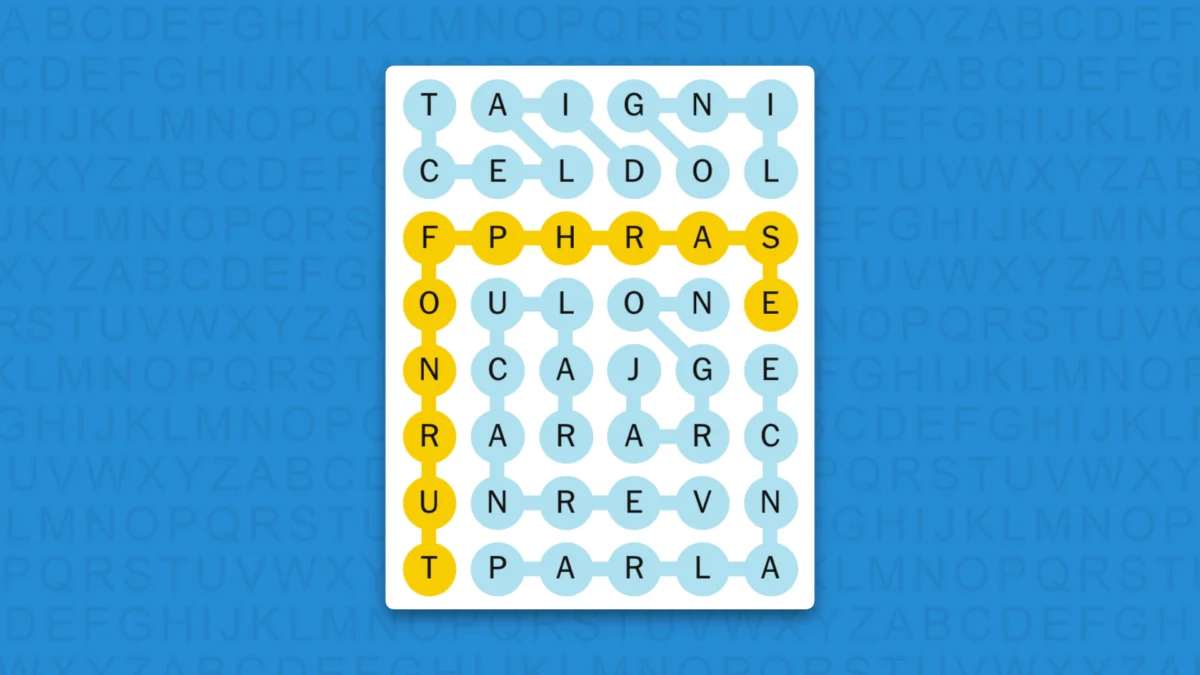
The spangram for today’s puzzle consists of 12 letters. It is a phrase that encapsulates the entire theme of the game. If you are struggling to find it, look for a path that stretches from the left side of the grid (near the 8th row) to the right side (near the 4th row). The spangram today is TURNOFPHRASE.
Hint #2: Strategic Gameplay
If you find yourself stuck, remember that the game allows you to use "hint words." By finding smaller, non-theme-related words, you can fill your hint meter. Once the meter is full, the game will highlight the location of a theme word, allowing you to solve the board more efficiently.
A Linguistic Breakdown of Today’s Answers
The focus on "In a manner of speaking" offers a fascinating look at the versatility of language. The answers found within the grid for game #953 include terms that reflect how we categorize human speech.
The Role of Dialects and Vernacular
One of the most engaging aspects of today’s puzzle is the inclusion of words that highlight the richness of human expression. The concept of a "dialect" is particularly interesting. Across the globe, geography, social class, and culture influence how individuals construct sentences and choose vocabulary. Whether it is the difference between a "soda," "pop," or "coke" in different regions of the United States, or the distinct rhythm of a London accent compared to a Glaswegian one, the ways in which we speak serve as a blueprint of our identity.
Why "Turn of Phrase" Matters
The spangram, Turn of Phrase, is a perfect encapsulation of the puzzle. It refers to a specific way of expressing something, often an idiomatic expression or a clever arrangement of words. In literature and oratory, a well-placed turn of phrase can change the entire impact of a speech or a poem. By centering today’s puzzle around this concept, the New York Times is inviting players to think not just about vocabulary, but about the artistry of language itself.
Implications of the Daily Puzzle Culture
The success of Strands and its sibling games is not a mere accident. It represents a shift in how digital media engages with its audience. By providing a low-friction, high-engagement daily challenge, the New York Times has successfully fostered a digital community.
The Psychology of Daily Puzzles
Psychologists often point to the "completion effect" as a major driver for the popularity of these games. Completing a Strands puzzle provides a small, immediate hit of dopamine, reinforcing a habit of returning to the site daily. Furthermore, the collaborative nature of discussing hints on social media or in group chats turns these solitary tasks into social experiences.
The Evolution of the NYT Games Portfolio
Since the acquisition of Wordle, the New York Times has aggressively expanded its gaming vertical. Connections was the first major follow-up to see massive success, challenging users to categorize words based on hidden relationships. Strands represents the next evolution: a game that requires visual-spatial processing in addition to lexical knowledge. It is a testament to the fact that even in the age of generative AI and short-form video, there is still a massive, hungry market for high-quality, human-curated word games.
Chronology and User Experience
For those who are tracking their progress, Strands game #953 marks another entry in a long-running series that has been active for over a year.
- Midnight Refresh: The game updates at midnight in your local time zone. This creates a rolling wave of discussion across the internet as people wake up in different parts of the world and begin their daily solve.
- Difficulty Scaling: Like all NYT games, Strands varies in difficulty. Some days offer straightforward, intuitive themes; others, like today’s, require a more nuanced understanding of linguistic concepts.
- The "Spoiler" Culture: As with all daily puzzles, there is a delicate etiquette regarding spoilers. Enthusiasts often share their progress without revealing the answers, protecting the experience for those who have yet to play.
Supporting Data: Why We Play
Data regarding NYT Games usage suggests that the average player spends between 5 and 15 minutes per day on their "daily fix." This is a significant commitment in an era of constant digital distraction. The retention rate for these games is remarkably high, which is largely attributed to the quality of the puzzles—rarely are they "broken" or unfair.
The inclusion of the spangram ensures that the game has a "solved state" that feels satisfying. Unlike some open-ended puzzles, Strands provides a clear beginning, middle, and end, which is essential for the structure of a daily habit.
Official Responses and Future Outlook
While the New York Times rarely comments on the specific design process of individual puzzles, the editorial team has noted in past interviews that their goal is to keep the games "accessible yet challenging." The team curates the themes to ensure they are culturally relevant and broadly understood, though they occasionally throw in "expert level" themes to keep veteran players on their toes.
Looking ahead, we can expect the NYT to continue experimenting with the Strands format. Whether it introduces new mechanics, like timed modes or competitive leaderboards, remains to be seen. However, for now, the community is more than content with the current iteration.
Conclusion: Final Thoughts on Game #953
Today’s Strands puzzle was a refreshing exercise in vocabulary. While I personally found the spangram early, the challenge of fitting the remaining words into the grid provided a pleasant distraction from the morning’s news cycle.
If you are a regular player, you know that some days you "see" the board instantly, and other days it takes a bit of work. Today’s theme, "In a manner of speaking," was a clever nod to the very thing we are doing while playing the game: engaging in the act of language.
For those still working on today’s grid, take your time. Look for those hidden patterns, don’t rush the spangram, and remember: it’s all in the way you look at it. If you enjoyed today’s challenge, be sure to check back tomorrow for game #954, and don’t forget to tackle the daily Connections and Wordle to keep your brain sharp.
Happy solving!