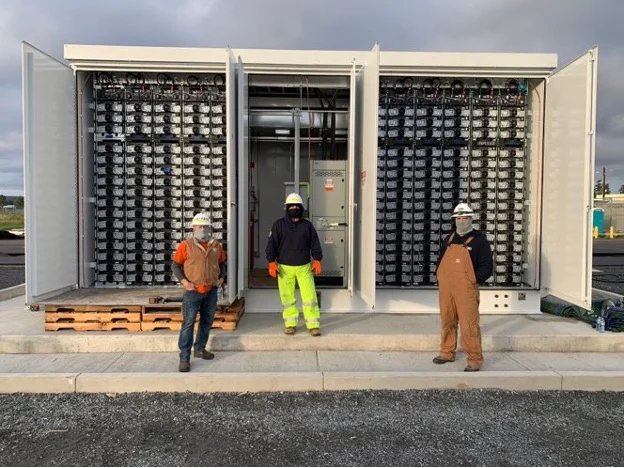
While lithium-ion batteries—specifically lithium iron phosphate (LFP) variants—remain the undisputed heavyweights of the global energy storage sector, the industry is standing at a technological crossroads. As the global energy transition accelerates, the limitations of current lithium-centric models are becoming increasingly apparent. For manufacturers, grid operators, and investors, the next decade will not be defined by the total displacement of lithium, but by the strategic integration of a diverse "toolkit" of chemistries designed for specific, high-performance applications.
Main Facts: The Lithium Hegemony and the Quest for Alternatives
Lithium-ion technology, bolstered by two decades of intensive R&D and massive economies of scale, currently serves as the backbone of stationary energy storage. It is "bankable"—a crucial industry term meaning that financiers and insurers have enough historical data to trust the technology at the gigawatt-scale. However, the energy industry is beginning to recognize that "one size fits all" is a flawed strategy.
The primary drivers for exploring alternatives—such as sodium-ion, flow batteries, and iron-air systems—are cost optimization, safety, temperature resilience, and the duration of discharge. While lithium-ion is exceptional for short-duration frequency regulation and rapid-response services, it struggles in extreme climates and faces inherent degradation challenges over time. The push for diversification is no longer just a laboratory exercise; it is an economic imperative driven by the need for localized supply chains and long-duration storage (LDS) that can sustain the grid for 8, 12, or even 100 hours.
Chronology: The Evolution of Storage Technology
The trajectory of energy storage has been a swift evolution from early experimental installations to the industrial juggernaut seen today:
- 2010–2015: The Lithium Inflection Point. Lithium-ion technology moves from consumer electronics into pilot-scale grid projects. Early adopters faced significant risk, as the bankability of the technology was unproven.
- 2016–2022: Scaling and Dominance. LFP chemistry emerges as the industry standard due to its safety profile and cycle life. Gigafactories proliferate, and lithium-ion costs plummet, effectively sidelining most competitors.
- 2023–2025: The Diversification Phase. Emerging chemistries—sodium-ion, vanadium-flow, and iron-air—begin transitioning from bench-top prototypes to pilot installations. The industry begins to grapple with supply-chain volatility in lithium markets.
- 2026–2030: The "Toolkit" Era (Projected). A maturation of alternative supply chains begins. Sodium-ion is expected to reach commercial cost parity with lithium, and long-duration storage (LDS) becomes a standard feature of grid planning.
- 2030 and Beyond: A bifurcated market where lithium-ion maintains dominance in mobile and short-duration applications, while a mix of specialized chemistries dominates long-duration, industrial, and extreme-environment storage.
Supporting Data: Comparing the Contenders
To understand why the industry is moving toward a multi-chemistry future, one must examine the unique value propositions of the primary contenders:
Sodium-ion Batteries: The Cold-Weather Contender
Sodium-ion is widely regarded as the most promising successor to lithium for specific use cases. Because sodium is the sixth most abundant element, it offers a path toward significantly lower costs and reduced geopolitical dependence.
- Advantage: Exceptional performance in cold weather and inherent safety features.
- Constraint: Requires precise thermal management; some variants risk thermal runaway with higher gas release profiles than lithium.
- Use Case: Ideal for grid-scale storage where physical footprint is less critical than cost and environmental resilience.
Flow Batteries: The Marathon Runners
Flow batteries (vanadium- and zinc-based) solve the "capacity vs. power" dilemma. In a traditional lithium battery, energy and power are coupled; in a flow battery, they are decoupled.
- Advantage: Zero degradation over time. They can be left at 0% or 100% charge indefinitely. Capacity is scaled simply by increasing the size of electrolyte tanks.
- Constraint: Potential for leaks requires complex secondary containment, which adds to the capital expenditure (CAPEX).
- Use Case: Long-duration storage (6 to 12+ hours).
Iron-Air Batteries: The Multi-Day Solution
Iron-air technology utilizes the oxidation of iron (rusting) to store and release energy. It is arguably the most cost-effective solution for multi-day storage.

- Advantage: Extremely low material costs and high capacity (up to 100 hours).
- Constraint: Slower response times and the physical wear-and-tear associated with the "unrusting" process.
- Use Case: Providing backup for renewable energy droughts lasting multiple days.
Official Perspectives and Industry Implications
Industry leaders, such as Bill Mitchell of Jabil, emphasize that the shift requires a fundamental change in manufacturing philosophy. "Since no one knows which storage technologies will be competitive five years from now, battery manufacturers should build flexibility into their product architecture," Mitchell notes.
The implication for Original Equipment Manufacturers (OEMs) is profound. Instead of building static production lines tied to a single chemistry, companies must design "configurable platforms." By standardizing the mechanical, electrical, and thermal interfaces of a battery cabinet, manufacturers can swap out the underlying cell chemistry—whether it be LFP, sodium, or flow-based—without the need for an expensive factory overhaul.
Furthermore, the shift toward a more diverse battery portfolio is a direct response to supply-chain fragility. The current concentration of lithium refining in specific geographic regions has created systemic bottlenecks. By diversifying into chemistries like sodium-ion, which can be manufactured using local materials, the energy sector can build more resilient, localized energy infrastructure.
The Future: A Strategic Toolkit
The transition away from a lithium-only model is not a sign of failure for lithium-ion; rather, it is a sign of a maturing industry. Just as a construction site requires different tools—hammers, drills, and saws—for different tasks, the future electrical grid requires different storage chemistries for different applications.
For investors and project developers, the decision-making process is becoming more nuanced. A data center requiring millisecond-level frequency regulation will likely continue to choose high-density lithium-ion. Conversely, a municipal utility looking to store solar energy for use during a week-long cloudy period will find the economics of iron-air or flow batteries far more compelling.
This shift promises to drive down costs for the end-user through increased competition and innovation. As performance data continues to accumulate for these emerging technologies, the barriers to financeability will fall, and the "bankability" gap between lithium and its challengers will close.
In conclusion, the next chapter of energy storage is defined by the move from a singular reliance on lithium to a diversified ecosystem. By embracing this flexibility, the energy sector is not only securing its supply chain but is also ensuring that the grid of the future is as resilient, cost-effective, and sustainable as the renewable energy it aims to store. The "toolkit" approach is the ultimate safeguard against the unpredictable nature of the energy transition, ensuring that no matter the challenge, there is a chemical solution ready to meet it.