In the high-stakes environment of modern business, the difference between a minor operational hiccup and a recurring, costly failure often lies in the depth of the investigation. When a system breaks, the human instinct is to apply a quick bandage—replacing a faulty component or retraining an employee—and move on. However, this reactionary approach often ignores the systemic vulnerabilities that allowed the failure to occur in the first place.
The "5 Whys" is a powerful, deceptively simple root cause analysis technique designed to strip away the layers of a symptom until the underlying, evidence-supported cause is revealed. Far from being a rigid quota, the "five" is a rule of thumb; it represents the iterative discipline required to pivot from superficial fixes to structural, lasting solutions.
The Anatomy of the 5 Whys: Method and Mechanics
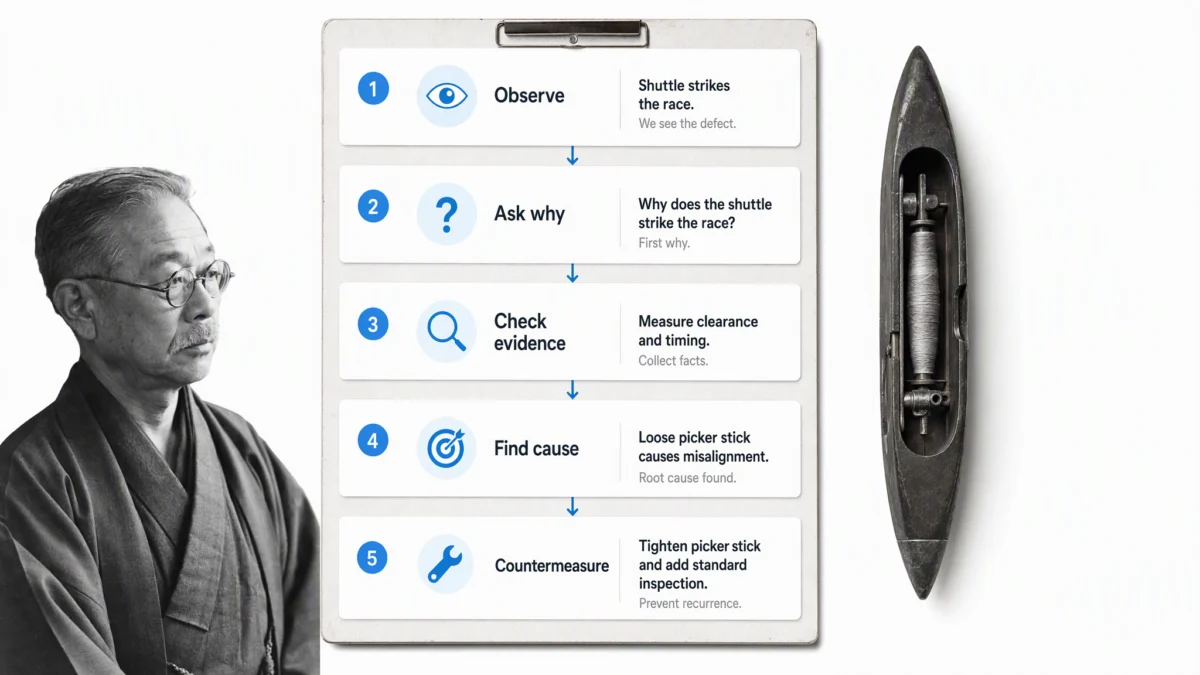
At its core, the 5 Whys is a structured interrogation of a problem’s causal chain. The process begins with a clearly defined problem statement. By asking "why" in response to every answer, the team moves backward through the sequence of events until they reach a point where a practical, systemic change can be implemented.
The Logic of Causality
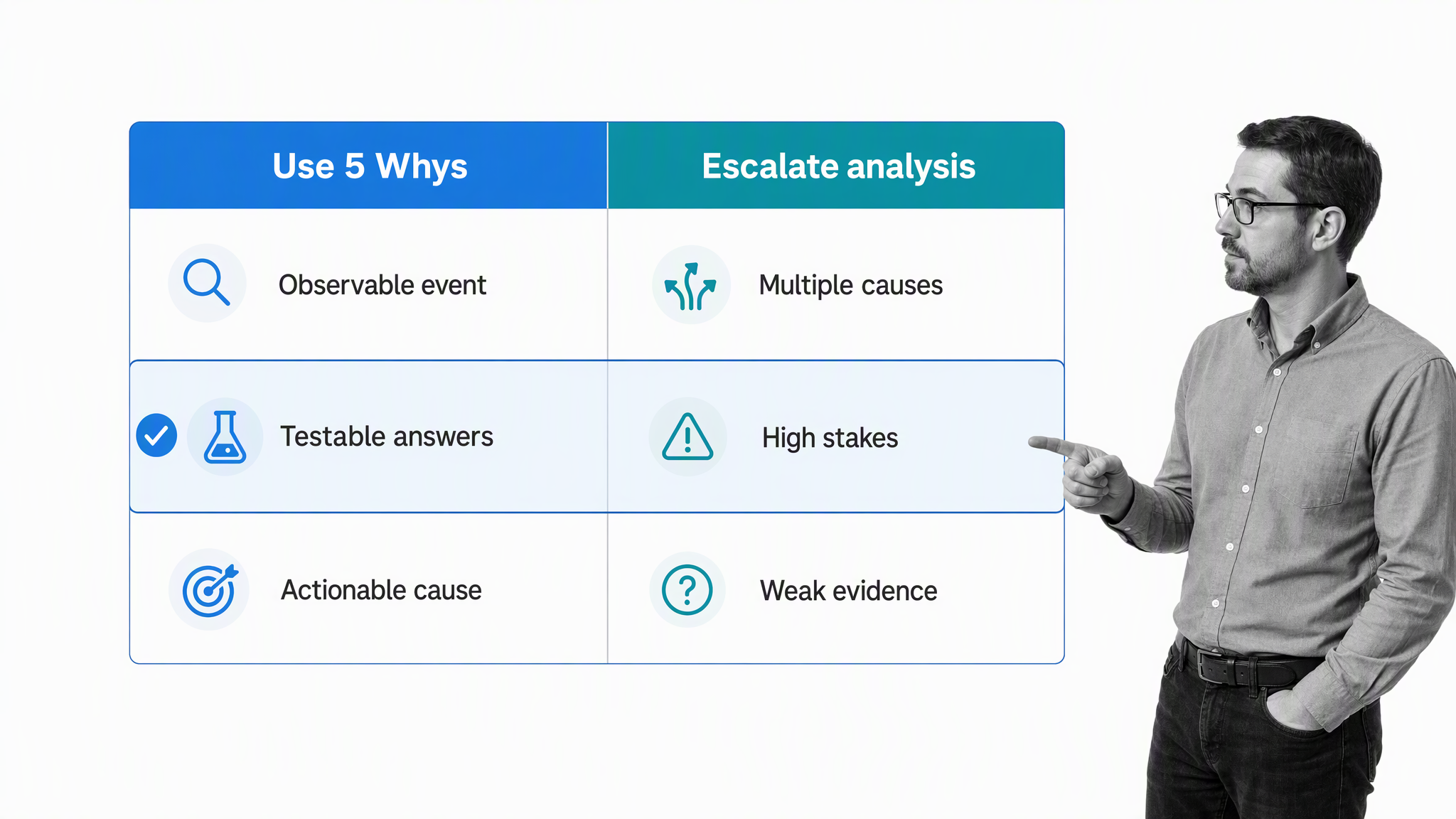
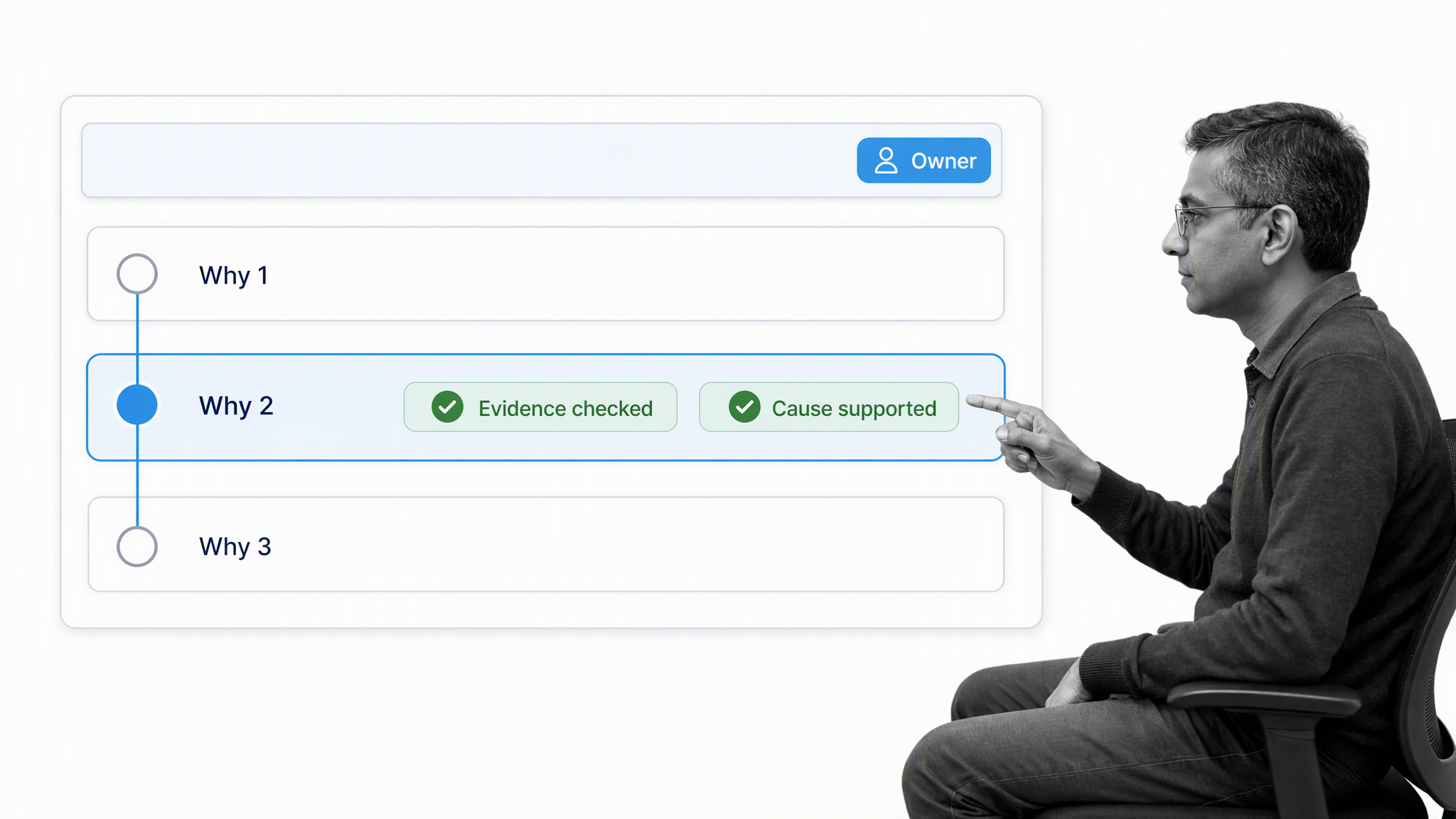
The effectiveness of the technique hinges on the quality of the "why." Each answer must be verified by objective evidence—such as system logs, observational data, or audit reports—rather than assumptions or gut feelings.

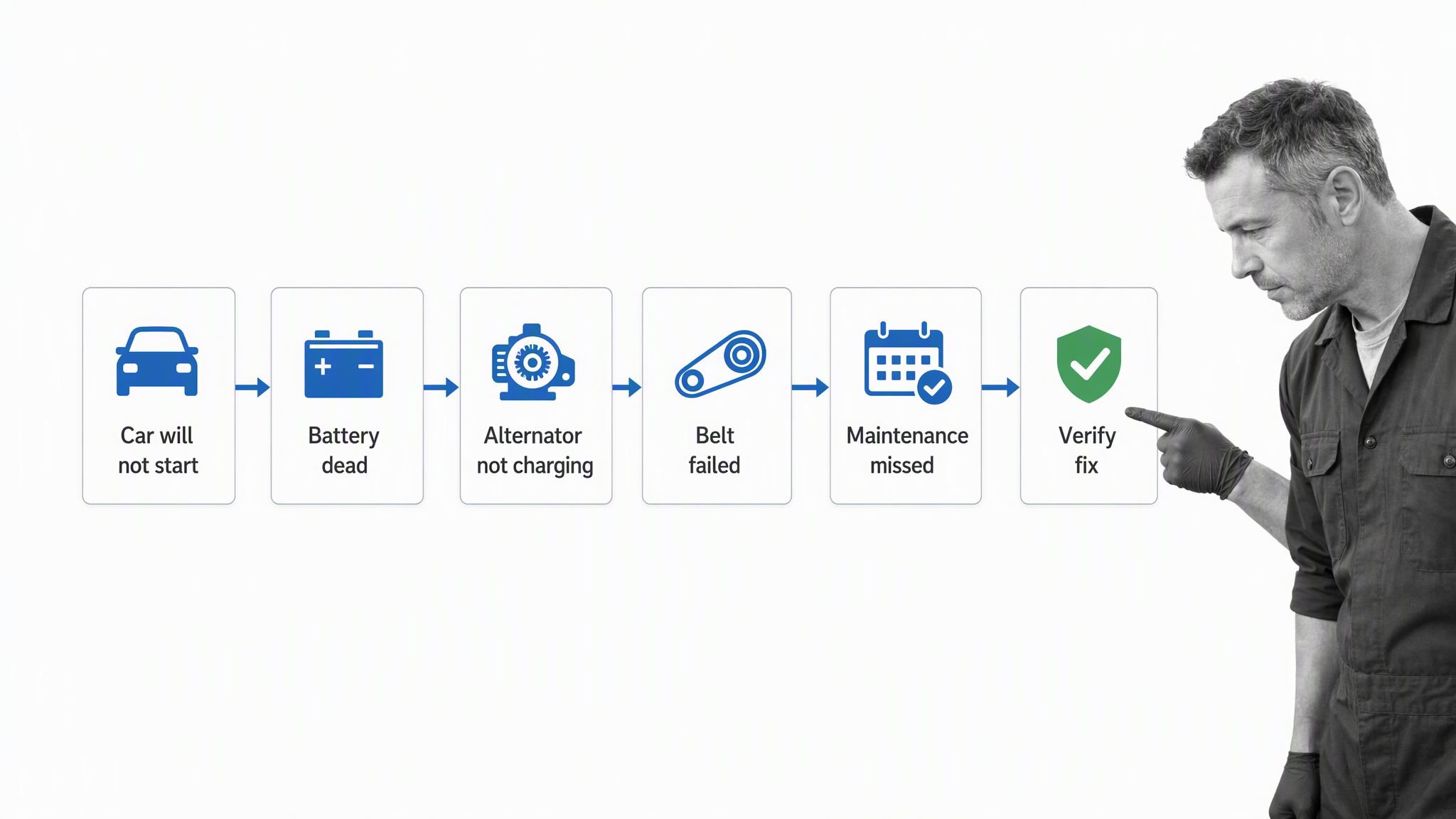
Consider a common scenario: a car failing to start.
- Why won’t it start? The battery is dead.
- Why is the battery dead? The alternator failed to charge it.
- Why did the alternator fail? The drive belt snapped.
- Why did the belt snap? It was well beyond its service life and had not been replaced.
- Why was the maintenance schedule ignored? The vehicle tracking system failed to trigger a service reminder for this specific unit.
Replacing the battery (the symptom) is a temporary fix. Addressing the breakdown in the maintenance tracking system (the root cause) prevents the entire fleet from suffering the same fate.
Historical Context: From Toyoda to the Modern Enterprise
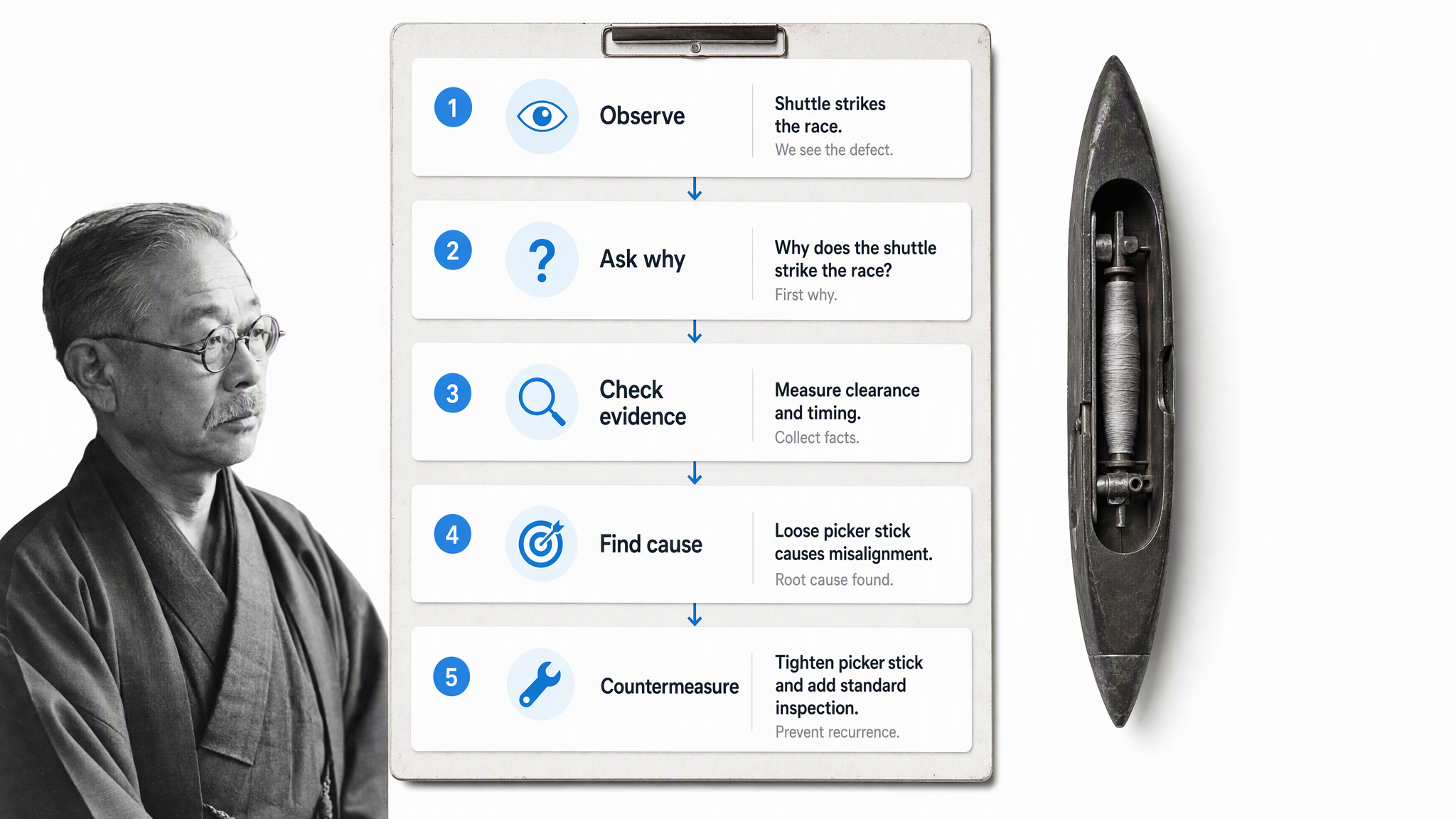
The 5 Whys did not emerge from a boardroom workshop but from the factory floor. It is deeply rooted in the history of Toyota Industries, specifically the work of Sakichi Toyoda. In the 1930s, Toyoda championed the idea that leaders must go to the "gemba"—the place where the work actually happens—to witness the reality of production rather than relying on reports.
The Toyota Production System Evolution
Later, Taiichi Ohno, the architect of the Toyota Production System (TPS), institutionalized this questioning methodology. As Toyota scaled globally, competing against Western giants like Ford and General Motors, the ability to rapidly identify and neutralize defects became a competitive advantage.
However, it would be a mistake to credit the 5 Whys as the sole catalyst for Toyota’s meteoric rise. The technique was part of a larger ecosystem of continuous improvement (Kaizen) and lean manufacturing principles. It provided a scalable, lightweight way to cultivate a culture of problem-solving. By the time Toyota weathered the severe financial and labor crises of the late 1940s, the practice of digging for root causes had become part of the company’s DNA, demonstrating that disciplined observation is a more effective management tool than top-down directives.
Supporting Data: Why Evidence Matters
A root cause analysis is only as strong as the evidence supporting its links. Without data, the 5 Whys can easily devolve into a "blame game."
Maintaining Psychological Safety
When an investigation turns toward finding a culprit—"The operator made a mistake"—the flow of honest information stops. A professional, productive 5 Whys session must focus on the process rather than the person. If an operator made a mistake, the subsequent questions should be:
- Was the training documentation clear?
- Was the user interface designed to allow this error?
- Was the workload so high that attention was compromised?
By focusing on systemic failures, organizations create an environment where employees are willing to share the "unvarnished truth" about what went wrong, which is the essential fuel for an effective 5 Whys cycle.
Strategic Implications: When to Escalate
While the 5 Whys is an excellent tool for daily operational issues, it is not a panacea for all organizational ills. Complex failures—such as a catastrophic data breach or a total product recall—often involve multifaceted, non-linear causal chains.
Integrating Advanced Frameworks
For high-stakes issues, the 5 Whys should serve as the entry point rather than the final destination. Organizations should consider integrating it with:
- Failure Mode and Effects Analysis (FMEA): To identify potential risks before they materialize.
- Fishbone (Ishikawa) Diagrams: To map out the various categories of causes (man, machine, method, material, measurement, environment).
- DMAIC (Define, Measure, Analyze, Improve, Control): For comprehensive, data-driven process improvement.
Digital Transformation: Using Technology to Operationalize Analysis
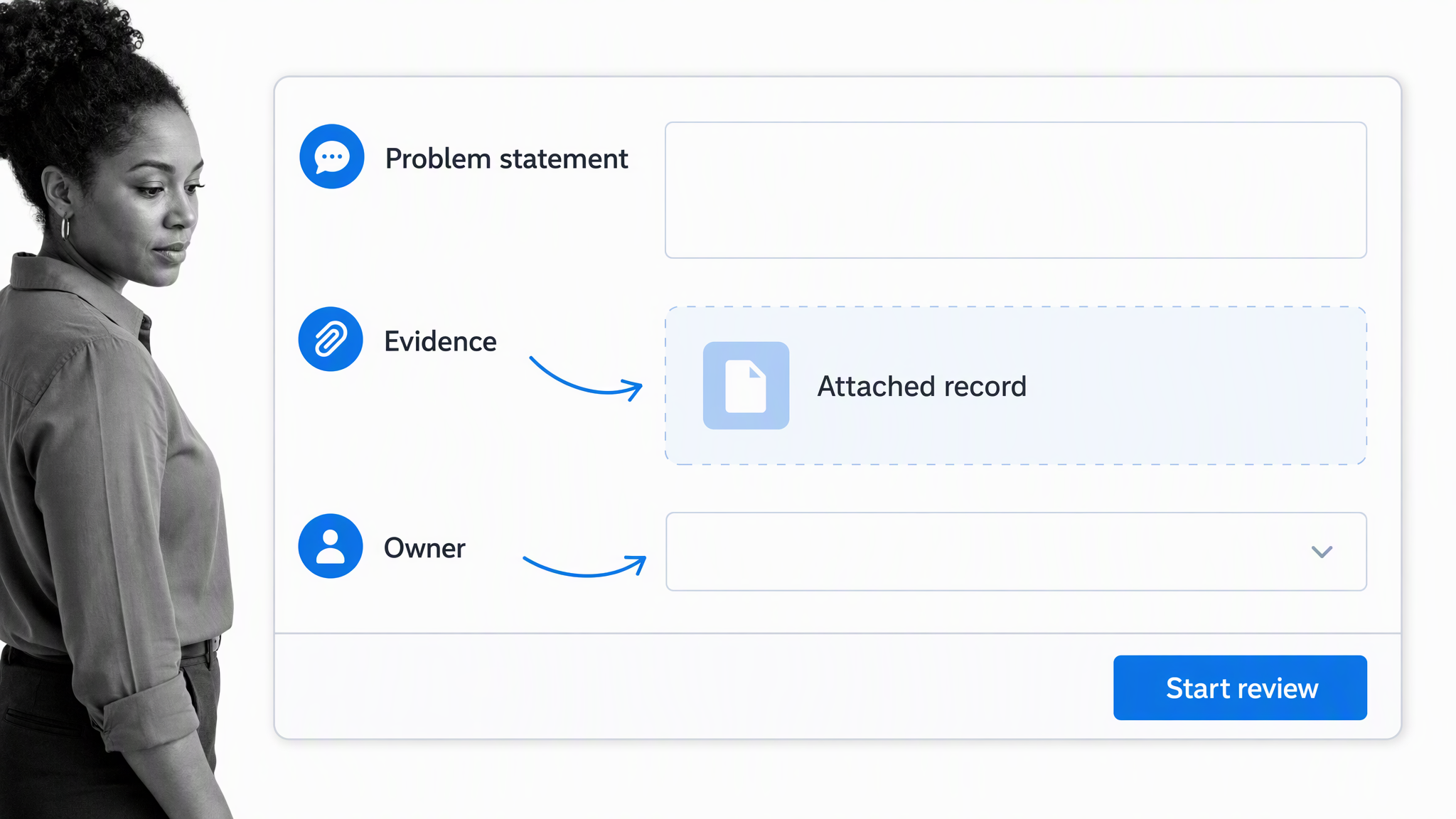
In the digital age, a static, manual 5 Whys exercise is rarely enough. The most effective organizations integrate this methodology into their operational workflow platforms. Tools like the Process Street 5 Whys template allow teams to capture the entire causal chain in a digital, auditable format.
The Power of Integrated Workflows
By using a dedicated platform to manage the analysis, organizations gain several advantages:
- Connectivity: The problem statement, supporting evidence, and identified countermeasures are kept in a single, accessible record.
- Accountability: Owners are assigned to specific corrective actions, with due dates and automated notifications.
- Verification: The system enforces a loop where the "fix" must be reviewed after implementation to ensure it actually solved the problem. If the issue recurs, the original analysis is already there to be reopened and refined.
This approach transforms the 5 Whys from a one-off meeting into a continuous improvement habit. It ensures that when a problem is "solved," it stays solved, providing a clear audit trail for compliance and quality management.
Official Guidance: Best Practices for Execution
To maximize the efficacy of a 5 Whys session, team leads should adhere to the following professional standards:
- Scope the Problem: Avoid vague statements like "our quality is poor." Instead, use specific, time-bound evidence: "Three units failed the final quality check on Tuesday due to a calibration drift in the laser cutter."
- Include the Right Stakeholders: Bring in those closest to the work. An investigation into a software deployment error should involve both the developer and the QA tester who spotted the bug.
- Facilitate, Don’t Dictate: A neutral facilitator should guide the conversation, ensuring that every answer is backed by empirical data and that the team doesn’t skip steps to arrive at a convenient conclusion.
- Document and Audit: Ensure every step of the chain is recorded. This documentation is invaluable for future training and for identifying recurring patterns across the organization.
Conclusion: The Path to Operational Resilience
The 5 Whys is more than a technique; it is a mindset. It challenges the status quo by refusing to accept the first answer as the final one. By embedding this practice into the operational fabric of the company, leaders can move away from the "firefighting" mentality that plagues so many organizations.
Whether it is a minor service delay or a recurring supply chain bottleneck, the commitment to ask "why" five times—and to follow the evidence wherever it leads—is the hallmark of a mature, resilient, and learning-focused organization. By leveraging technology to track these investigations, teams can ensure that their improvements are not just temporary patches, but foundational shifts that drive long-term excellence.
5 Whys Quick-Reference FAQs
Do you have to ask why exactly five times?
No. Five is a suggestion, not a mandate. Stop when you reach a verified, actionable cause. If you reach it in three questions, you are done. If you need seven to uncover the system failure, keep going.
Can a 5 Whys analysis have more than one root cause?
Yes. Modern systems are complex. If your evidence points to multiple contributors (e.g., a hardware failure compounded by a software configuration error), document both branches and address them as distinct, necessary improvements.
How do you prevent 5 Whys from becoming a blame exercise?
Focus on the "how" and "where" rather than the "who." If an answer points to human error, reframe the next question to examine the process environment that allowed that error to occur.
Who should participate in a 5 Whys session?
Include the individuals closest to the work, the process owner, and a neutral facilitator. Avoid inviting too many senior managers, as this often inhibits the candid, evidence-based discussion required for an honest analysis.
What should happen after the root cause is identified?
Execution. Assign a clear owner to the countermeasure, set a deadline, and—most importantly—define the criteria for success. Schedule a follow-up review to verify that the fix is performing as expected. If the problem persists, treat it as a new data point and restart the cycle.