As the geopolitical landscape shifts and the Strait of Hormuz becomes a flashpoint of global instability, the United Kingdom has found itself in the eye of a storm. Since the outbreak of hostilities between the United States and Iran in February 2026, global energy markets have been plunged into a period of extreme volatility. Yet, amidst this turmoil, a quiet revolution in the UK’s energy grid has provided an unexpected, multi-billion-pound buffer.
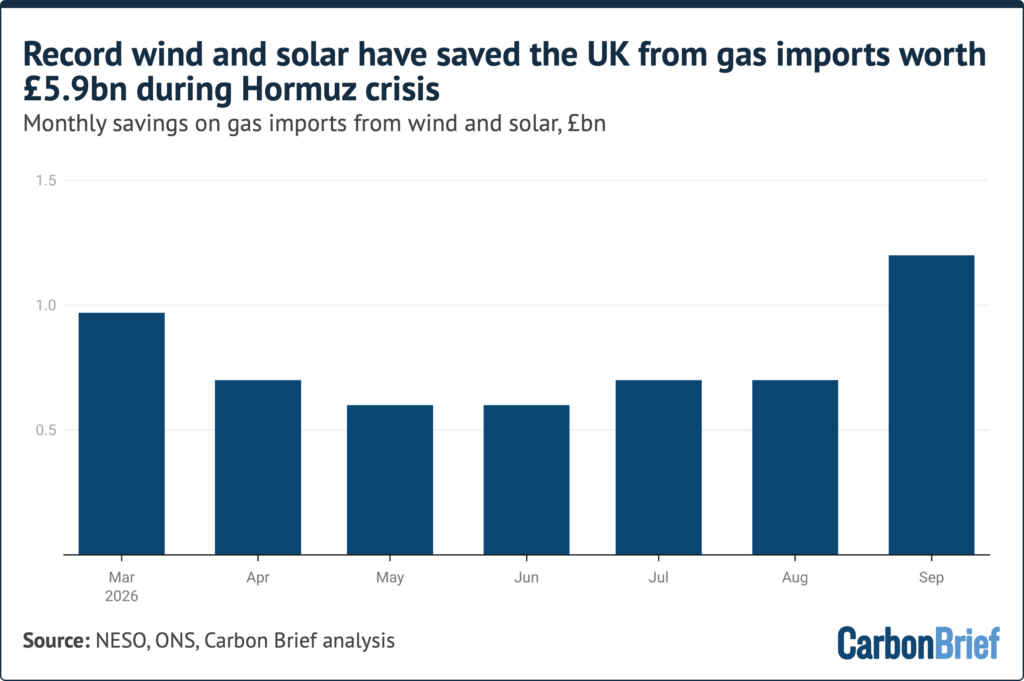
New analysis from Carbon Brief reveals that record-breaking generation from wind and solar power has saved the UK an estimated £5.9bn in potential gas import costs since the onset of the Hormuz crisis. This milestone underscores a critical transition: the nation is finally beginning to break the shackles of its reliance on volatile international fossil fuel markets.
The Financial Shield: By the Numbers
The economic impact of this clean energy surge is profound. By generating 14% more electricity from wind and solar year-on-year, the UK has successfully lowered its demand for gas-fired power generation by nearly 10% in 2026.
To put the £5.9bn figure into perspective, this equates to avoiding the need for more than 100 additional tanker deliveries of liquefied natural gas (LNG). In September 2026 alone, the UK saved £1.3bn on imports, driven by record output from renewables—nearly 10 terawatt hours (TWh)—coupled with the relentless ascent of global gas prices.
While gas provided 25% of the UK’s electricity needs for the year to date, wind and solar collectively accounted for a record 41%. This divergence is not merely a statistical curiosity; it is a structural shift that is actively preventing the current geopolitical crisis from translating into an even more catastrophic domestic energy shock.
A Chronology of Crisis and Transition
The current instability is the latest chapter in a long saga of energy insecurity that began in earnest following the 2022 invasion of Ukraine.
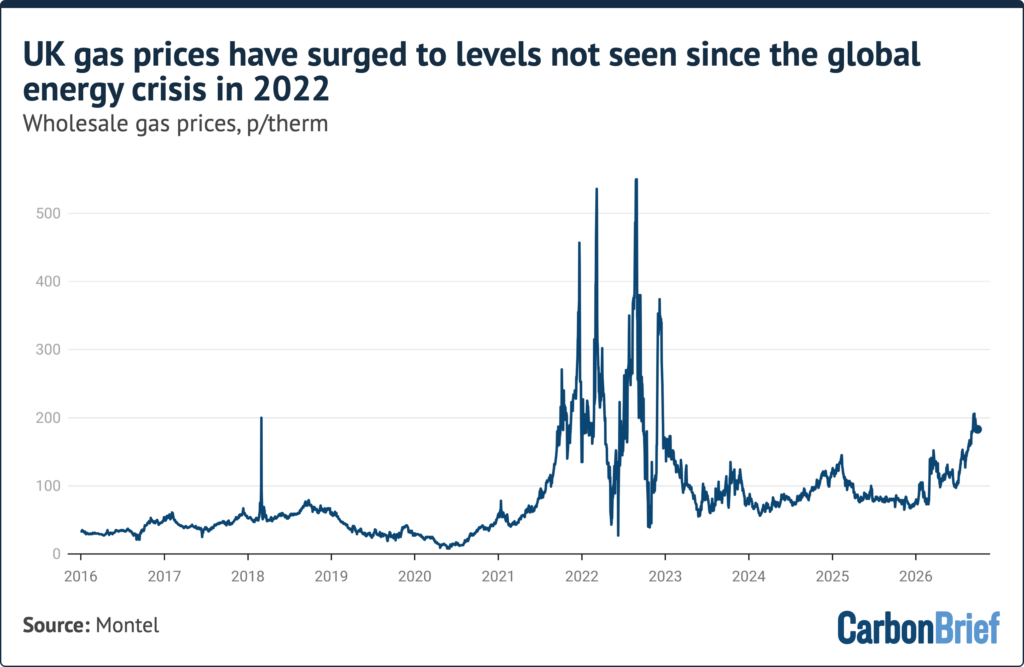
- 2022: Russia’s decision to choke off gas supplies to Europe triggered a global energy crisis. Gas prices soared, averaging 90p per therm—roughly triple their 2019 levels.
- February 2026: The outbreak of the Hormuz crisis introduced a new layer of risk, pushing gas prices even higher as the security of vital shipping lanes was compromised.
- March – May 2026: As the war in the Middle East intensified, gas prices climbed to an average of 134p per therm, nearly four times the 2019 baseline.
- September 2026: Prices hit an average of 189p per therm, the highest level since the 2022 crisis, as winter approaches and the global competition for dwindling LNG reserves intensifies.
As Europe enters the colder months with low gas stocks, it faces a fierce competitive struggle with Asian markets to secure the fuel necessary to heat homes. This "tug-of-war" is keeping wholesale prices at record highs, making the UK’s transition to indigenous renewable power more urgent than ever.
Breaking the Link: The Impact on Household Bills
For the average British household, the difference between a gas-reliant grid and a renewable-powered one is becoming painfully—and visibly—clear.
Under the energy price cap regulated by Ofgem, households are seeing a sharp disparity in their bills. According to analysis from the thinktank Nesta, typical household gas bills are set to rise by 33% (approximately £200 per year) starting October 1, 2026. In stark contrast, electricity bills are projected to increase by a mere 4%.
Andrew Sissons, Director for Sustainable Future at Nesta, suggests that this indicates a fundamental shift. "The link between electricity and gas prices has already begun to break," Sissons noted. This decoupling is the direct result of the increasing share of renewables in the generation mix. Because wind and solar have zero fuel costs, they are insulating consumers from the price shocks currently rattling the global gas trade.
Official Perspectives: A Call for Energy Sovereignty
The political ramifications of this transition were a focal point of the recent Labour Party conference. Energy Secretary Miatta Fahnbulleh emphasized that the UK’s vulnerability stems from its exposure to global fossil fuel markets, which remain inherently unpredictable.
Prime Minister Andy Burnham, addressing the party, articulated a clear vision for the path forward: "We are already taking more control of our electricity prices with a massive expansion of home-grown renewables and nuclear. I have asked Miatta to speed up the breaking of the link between what we pay for power at home and the international gas market, to get bills down."
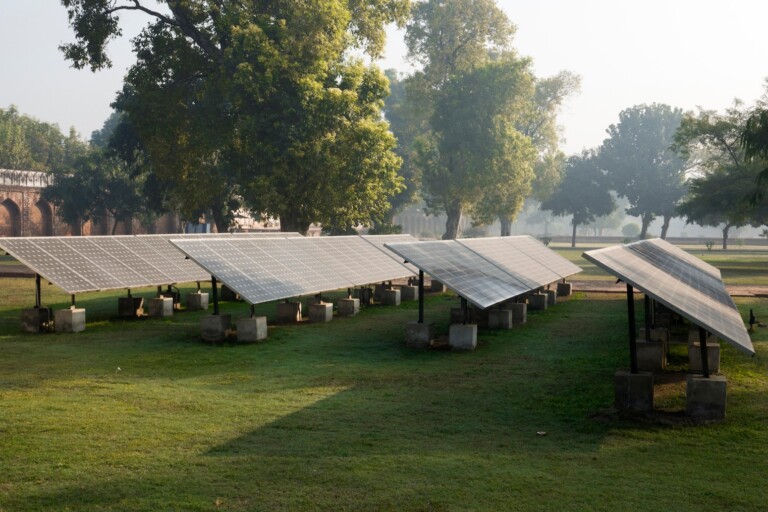
This policy direction represents a pivot toward energy sovereignty. By prioritizing home-grown generation, the government aims to insulate the UK economy from external conflicts, whether they occur in the plains of Ukraine or the straits of the Middle East.
Broader Implications: The Global Reality
The UK’s experience is mirrored, albeit with varying degrees of success, across Europe. The EU has reportedly incurred an additional €100bn in fossil fuel import costs since the onset of the current crises. For low and middle-income nations, these costs have proven even more devastating, as they lack the financial flexibility to outbid wealthier states for limited LNG cargoes.
The crisis has also accelerated the shift toward electrification in the transport sector. With diesel prices hitting record levels—around £2 per litre in the UK—the economic case for electric vehicles (EVs) has never been stronger. Recent analysis from Carbon Brief indicates that EVs are now up to nine times cheaper to drive than their petrol or diesel counterparts, further incentivizing a move away from oil-dependent transport.
Looking Ahead: The Challenges of the Future
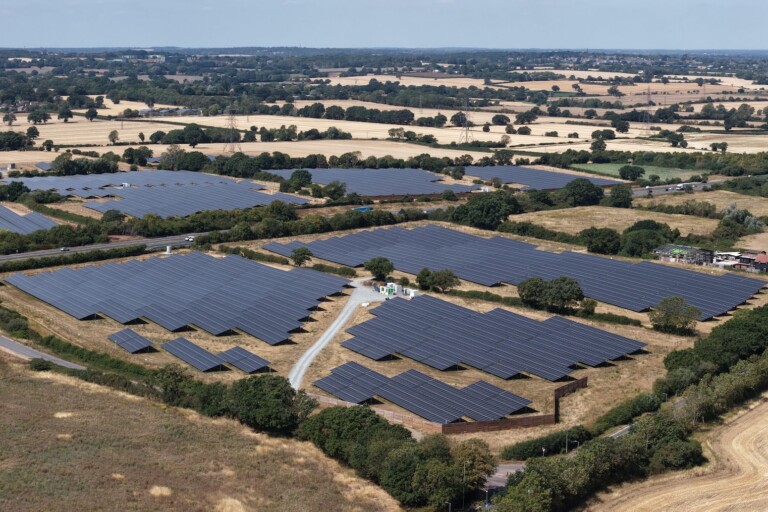
While the progress in wind and solar generation is a triumph of policy and engineering, the road ahead remains complex. The UK still relies on gas for heating and, during periods of low wind and sun, for balancing the grid.
Future challenges include:
- Long-duration Energy Storage: As the share of variable renewables grows, the UK must invest in storage solutions—such as pumped hydro, hydrogen, or advanced battery technologies—to ensure supply during extended periods of low renewable output.
- Infrastructure Upgrades: The national grid requires significant modernization to handle the decentralized nature of modern renewable energy production.
- Policy Continuity: To maintain the momentum, consistent regulatory signals are required to encourage long-term investment in both offshore wind and nuclear capacity.
The success of 2026 provides a compelling proof of concept. The UK has successfully demonstrated that an aggressive transition to clean energy is not merely an environmental imperative, but a pragmatic economic necessity.

As the world continues to grapple with the instability of the fossil fuel era, the UK’s £5.9bn saving serves as a powerful reminder of the resilience that comes with energy independence. The transition is no longer just about meeting carbon targets; it is about shielding the British public from the volatile whims of global markets and ensuring that the lights stay on at a price that remains fair, stable, and sustainable.
In the words of the current administration, the era of relying on the international gas market to set the price of domestic power is coming to a close. The path forward is paved with wind turbines, solar arrays, and a commitment to keeping the UK’s energy future firmly under its own control.