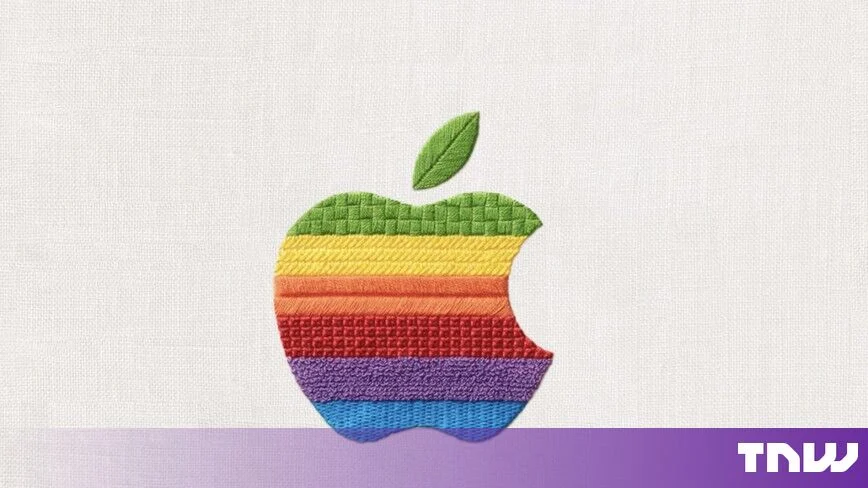
The technology industry has turned its gaze toward Tribeca, New York, as Apple prepares to host an exclusive "Apple Experience" event on Tuesday, October 13. Following a cryptic teaser from Greg Joswiak, Apple’s senior vice president of worldwide marketing, speculation has reached a fever pitch regarding the company’s next major push into the smart home market. By utilizing the nostalgic, embroidered rainbow logo—a nod to the company’s heritage—Apple is signaling that while its technology is looking toward a future of advanced artificial intelligence, its core mission remains centered on the user’s domestic environment.
Main Facts: The "Welcome Home" Initiative
The event, scheduled for 9:00 AM ET (2:00 PM GMT, 3:00 PM CET), marks a significant strategic pivot for the Cupertino giant. While Apple has long maintained a presence in the home through the HomePod and Apple TV, it has historically struggled to achieve the market dominance enjoyed by competitors like Amazon and Google.
The "Welcome Home" event is expected to rectify this. The primary focus is the introduction of a new "Siri AI" ecosystem that integrates deeply across a variety of hardware devices. According to industry reports and leaks, the event will feature a dedicated smart home hub equipped with a visual display, a refreshed HomePod mini featuring an upgraded processing chip for edge-computing AI, and a modernized Apple TV unit.
Perhaps most notably, Apple is moving beyond its traditional "walled garden" approach by collaborating with LG to roll out a suite of smart home peripherals, including doorbells, smart locks, thermostats, and a comprehensive range of security cameras.
A Chronology of the Smart Home Strategy
Apple’s journey toward this October 13 reveal has been a long, iterative process. To understand the significance of this event, one must look at the timeline of the company’s recent strategic shifts:
- Late 2024: Original internal projections aimed for a late-2024 launch for these devices. However, hardware supply chain constraints and the need for deeper refinement of the Siri AI models pushed the release into 2026.
- September 2026: Apple officially launches iOS 27, which introduced the foundational "Siri AI" framework. This update was the critical missing piece, providing the natural language processing power required to make a truly "smart" home hub viable.
- Early October 2026: Bloomberg’s Mark Gurman breaks the story regarding an Apple-LG partnership, detailing a collaborative effort to produce third-party smart hardware that integrates seamlessly with the Apple Home ecosystem.
- October 8, 2026: Apple officially confirms the "Apple Experience" event in Tribeca.
- October 13, 2026: The scheduled launch date for the new hardware lineup.
The Role of Siri AI: The Engine Behind the Hardware
The most important takeaway from the lead-up to this event is the centrality of Siri AI. For years, Apple’s smart home devices were criticized for being "passive"—excellent speakers or streaming boxes, but poor assistants.
According to Mark Gurman, speaking on his Power On podcast, the delay in these products was intentional. Apple refused to release the new hub until the backend AI was sufficiently robust. "They’re only coming out now for a very clear reason," Gurman noted. "They’ll rely on Siri AI."
With the processing power introduced in the latest silicon, the new HomePod mini and the dedicated display hub will be capable of processing complex queries locally. This is a massive shift from previous generations, which relied heavily on cloud-based processing. By handling AI tasks on-device, Apple is positioning these products as privacy-focused alternatives to competitors who often send voice data to remote servers.
The LG Partnership: Expanding the Ecosystem
Perhaps the most surprising element of this event is the reported collaboration with LG. For decades, Apple has preferred to manufacture its own hardware to ensure strict quality control and aesthetic consistency. By partnering with LG for smart home essentials—doorbells, thermostats, and indoor/outdoor cameras—Apple is acknowledging that its ecosystem needs a broader range of utility devices to compete with the sheer volume of products found in the Amazon Alexa or Google Home ecosystems.
These devices are expected to leverage Apple’s "Matter" integration, ensuring they work not just with the new Apple hub, but across the broader IoT landscape. The inclusion of floodlight cameras and smart locks suggests that Apple is aiming to provide a "one-stop shop" for home security, directly challenging systems like Ring or Nest.
Implications for the Tech Landscape
The "Welcome Home" event carries significant weight for the future of the consumer electronics market.
1. Consumer Privacy vs. Utility
Apple’s primary differentiator has always been privacy. By shifting the heavy lifting of Siri AI to the local silicon inside the new hub and the updated HomePod mini, Apple is betting that consumers are becoming increasingly wary of cloud-based surveillance. If Apple can prove that a smart home can be both "intelligent" and "private," it could disrupt the current market dominance held by data-heavy competitors.
2. The Death of the "Dumb" Home
For years, a "smart home" meant a collection of disparate devices that rarely communicated effectively. The anticipated hub, coupled with the new LG peripherals, suggests that Apple intends to harmonize this experience. The goal is to move beyond voice commands toward "predictive automation"—where the home anticipates the user’s needs based on their habits, time of day, and environmental data.
3. Market Saturation and Competition
Apple is entering a crowded space. Amazon and Google have spent nearly a decade refining their home ecosystems. However, Apple’s strength lies in its massive existing user base. If the new hub can serve as a seamless bridge for the millions of iPhones and iPads already in circulation, the adoption curve for these new products could be significantly steeper than that of its rivals.
The Financial and Retail Outlook
From a business perspective, this launch is a test of Apple’s ability to monetize the home. Historically, Apple’s hardware revenue has been dominated by the iPhone and Mac. By diversifying into home security and environmental control, Apple is looking to increase the "stickiness" of its ecosystem. If a user has an Apple-powered thermostat, an Apple-integrated doorbell, and an Apple hub, they are statistically much less likely to switch to an Android device.
Preparing for the Event
As the world prepares for the October 13 keynote, the industry is left with several unanswered questions:
- Pricing: Will Apple position these devices as premium, luxury items, or will they be competitively priced to capture mass-market share?
- Availability: Given the reliance on LG for specific components, will there be immediate global availability, or will the rollout be staggered?
- Stream Status: Unlike the MacBook Neo launch earlier this year, Apple has remained silent on whether this event will be streamed. This ambiguity has led some analysts to believe the event may be more of a "hands-on" experience for the press rather than a global product spectacle.
Conclusion: A Homecoming for Apple
The use of the rainbow logo is more than just a retro aesthetic choice; it is a statement of intent. The rainbow logo represented a time when Apple was defining the personal computing revolution. By invoking that era, Apple is telling the world that it views the smart home as the next great frontier of computing.
Whether this event will mark a true turning point for the company remains to be seen. However, given the focus on localized AI, the strategic partnership with LG, and the clear pivot toward home automation, it is evident that Apple is not just trying to sell new devices. They are trying to redefine what it means to "come home." As we wait for Tuesday, the tech world stands at the precipice of a new, potentially more integrated, and definitely more private, era of home automation.