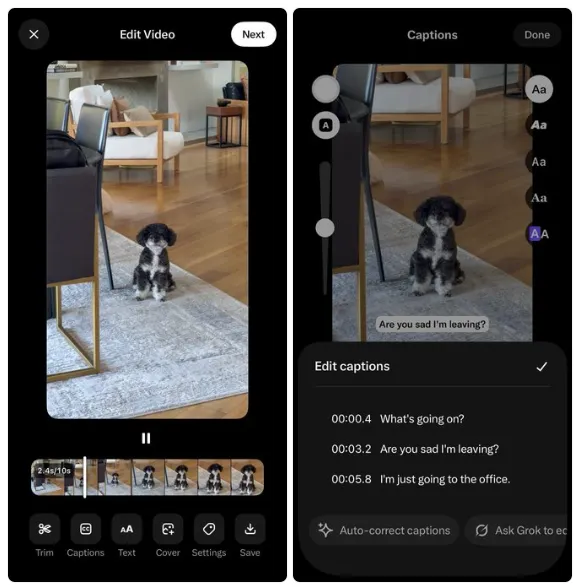
In a bid to solidify its position as a destination for original media, X (formerly Twitter) has rolled out a significant update to its video upload and editing infrastructure. The latest overhaul introduces a refined, minimalist layout and, most notably, a suite of AI-powered tools designed to streamline the captioning process. By integrating its proprietary Grok AI, X is attempting to lower the barrier to entry for creators, allowing them to refine, correct, and translate video captions directly within the app.
This update represents the latest chapter in a broader, multi-year transformation of the platform’s media capabilities. As social media competition intensifies—with platforms like TikTok and Instagram Reels dominating the short-form video landscape—X is moving aggressively to ensure that creators have the native tools required to produce high-quality content without needing to rely on third-party editing software.
The Core Update: What’s New in the Video Editor?
The latest iteration of the X video composer is defined by two primary goals: aesthetic simplicity and functional intelligence. According to X developer Allegra Jacchia, the new interface is “cleaner” and “more intuitive,” addressing long-standing complaints from power users regarding the platform’s clunky, fragmented media tools.
AI-Driven Captioning
The centerpiece of this update is the integration of Grok, X’s generative AI model. Captioning has long been a manual, time-consuming hurdle for video creators. The new toolset changes this dynamic by offering:
- Automated Correction: Users can prompt Grok to scan and fix errors in auto-generated captions, ensuring higher accuracy.
- Manual Refinement: The composer provides an accessible interface for users to manually edit text, allowing for creative control over tone and pacing.
- Language Localization: One of the most significant additions is the ability to use Grok to translate captions into various languages. This is a crucial feature for creators looking to reach global audiences, effectively lowering the language barrier for international content distribution.
By keeping these functions native to the app, X is actively reducing the "friction" associated with posting. When a creator can edit, caption, and translate a video in one continuous workflow, the likelihood of them uploading original content—rather than repurposing a clip from another platform—increases significantly.
Chronology: The Evolution of X’s Video Strategy
To understand the significance of this update, one must look at the rapid-fire changes X has implemented over the last twelve months. The platform has been iterating at an unprecedented pace, shifting from a text-centric microblogging site to a multimedia-heavy ecosystem.
A Timeline of Recent Media Enhancements
- July 2024: X introduced a massive update to the video editor, which included the rollout of professional-grade green screen recording tools and expanded multi-language support. This was widely viewed as an attempt to appeal to the "influencer economy."
- August 2024: The platform debuted new video overlays, providing creators with more visual storytelling options, such as lower-thirds, text bubbles, and branding elements that enhance production value.
- September–October 2024: Recognizing the rise of live journalism and creator-led commentary, X expanded its third-party livestream support. This allowed users to broadcast directly to the platform using high-end external streaming software (such as OBS), mirroring the capabilities of Twitch or YouTube Live.
- Late 2024 (The Current Update): The integration of Grok into the video composer marks the transition from simple hardware/interface updates to AI-assisted content production.
This rapid sequence of updates underscores a clear mandate from X leadership: make the platform the "everything app" for media, not just for reading.
Supporting Data: Why Video Matters to X
While X has seemingly moved away from the "video-first" branding it experimented with in early 2024, the data suggests that video consumption remains a critical driver of user retention.
Engagement Metrics
Since the transition from Twitter to X, the platform has reported a steady, year-over-year rise in video views. While exact internal metrics are often guarded, third-party sentiment analysis and creator surveys indicate that video posts garner significantly higher engagement rates—measured in replies, reposts, and "dwell time"—than text-only posts.
The Originality Incentive
The platform’s strategic focus on native tools is directly linked to its ongoing effort to incentivize original content. Earlier this year, X revamped its revenue-sharing models, rewarding creators for "impressions" on their posts. However, the platform has faced criticism for the prevalence of "recycled" content—clips stripped from TikTok or YouTube and re-uploaded. By providing native editing tools, X is attempting to change user behavior. When the platform provides the tools to edit better, more native-looking content, the barrier for creators to produce exclusive work for the X audience drops, theoretically increasing the value of the platform’s advertising inventory.

Official Responses and Strategic Shifts
The messaging from X regarding its video strategy has been calculated and occasionally shifting. In early 2024, X executives, including CEO Linda Yaccarino, pushed the "video-first" tagline heavily, positioning the platform as a direct challenger to YouTube and Netflix.
However, in recent months, the narrative has evolved. The platform appears to be tempering its "video-first" rhetoric to avoid alienating its core demographic of news junkies, journalists, and power-users who rely on the platform primarily for real-time information. The current strategy is best described as "video-enhanced." By focusing on tools that assist with captioning and translation, X is not just trying to host entertainment; it is trying to host accessible, global information.
The developer-led focus on "cleaner" and "more intuitive" design also suggests that the company is responding to feedback from its "Blue" (X Premium) subscriber base. Premium users, who pay for the privilege of longer video uploads and editing tools, have been vocal about the need for professional-grade features. This update is a direct response to that market demand.
Implications: What This Means for Creators and Competitors
The integration of Grok into the video composer has profound implications for the creator economy and the competitive landscape of social media.
For Creators: The Lowering of the Technical Bar
Historically, creating "high-quality" video content required a suite of subscriptions: a video editor (like Adobe Premiere), a captioning service (like Descript), and a translation tool. By rolling these into the X app, the platform is democratizing production. A creator can now film, edit, caption, and translate a video during their commute. This shift empowers the "solopreneur" creator who does not have a dedicated production team.
For Competitors: A New Front in the AI War
The move places X in direct competition with the AI-native features of TikTok and Instagram. TikTok, in particular, has long led the pack in terms of intuitive, in-app editing tools. By leveraging Grok, X is effectively saying that its competitive advantage is not just the video host, but the intelligence behind the content. If X can successfully deploy AI to solve the "boring" parts of content creation—like transcription and translation—they may succeed in pulling creators away from rival platforms.
The Broader Ecosystem
Finally, this update signals that X is committed to long-form and short-form video as a revenue pillar. As the platform works to restore its relationship with advertisers, having a library of high-quality, native video content is essential. Advertisers are far more comfortable placing high-CPM (cost per mille) ads against professionally produced, original content than against the chaotic, text-heavy arguments that often characterize the platform’s feed.
Conclusion: A Platform in Transition
The latest update to X’s video composer is a microcosm of the platform’s broader identity crisis and its eventual path forward. It is no longer just a digital town square for shouting; it is an increasingly sophisticated media workbench.
While the "video-first" label may have been retired from the marketing department’s vocabulary, the commitment to video development remains stronger than ever. By integrating Grok to handle the heavy lifting of accessibility (captions) and global reach (translation), X is betting that if it makes the process of creating content easier, the users will provide the content themselves.
As X continues to iterate, the ultimate test will be whether these tools can foster a sustainable ecosystem where creators can build, grow, and monetize without needing to look anywhere else. For now, the integration of AI-powered editing is a major step toward making that vision a reality, turning the app into a powerful, self-contained engine for original content creation. Whether this will be enough to turn the tide against its competitors remains the defining question for the platform’s future.