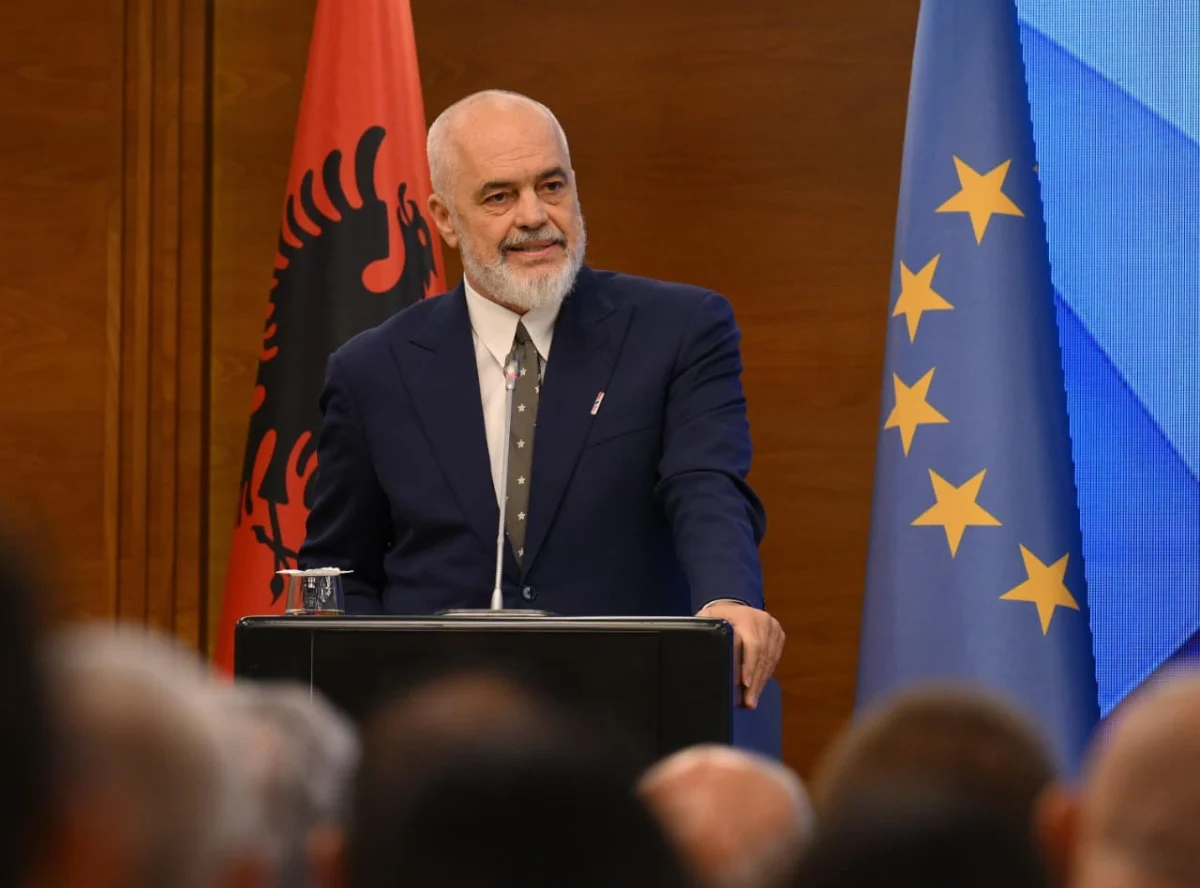
Tirana, Albania – In a move that has sent ripples of concern through journalistic and human rights circles, the Albanian government is proposing significant amendments to the Criminal Procedure Code. While ostensibly aimed at strengthening the justice system, critics argue that these changes, championed by Prime Minister Edi Rama, are designed to stifle media scrutiny and curtail investigative reporting, effectively creating a "gag order" on information deemed sensitive by those in power. The proposed legislation follows a pattern of increasing tension between the Prime Minister and the press, particularly after a series of high-profile corruption investigations involving government officials.
The Genesis of the Proposed Reforms: A Pattern of Accusations
The proposed legislative overhaul appears to be a direct response to, and an escalation of, Prime Minister Rama’s increasingly vocal criticism of the media’s role in reporting on corruption allegations. Following numerous high-profile investigations by the Special Prosecutor’s Office (SPAK) that implicated senior government officials, Rama has consistently sought to discredit and undermine the reporting of these sensitive cases.
A History of Media Confrontation
- February 2024: In the wake of investigations into Mirlinda Karaxhanaj, the former Director of the National Agency of Information, Rama publicly defended her. He characterized the media’s reporting on her criminal investigation as "massacres with homemade bombs, pot after pot," a stark dismissal of journalistic inquiry.
- Early March 2024: The pattern of confrontation intensified. Announcing the majority’s decision to lift the immunity of former Deputy Prime Minister and Minister of Infrastructure and Energy, Belinda Balluku, Rama again targeted the media. Faced with published evidence from investigative files detailing how tenders worth hundreds of millions of euros were allegedly dictated, Rama accused journalists of being used as "paramilitary forces of accusation and destruction of their subjects."
- September 2024: The Prime Minister continued his verbal attacks, criticizing the media for the leak of fragments from the investigative file concerning Vlora Hyseni, the head of the secret service. Hyseni is accused of state secrets violations and aiding a criminal in favor of Ergys Agasi. Rama lamented, "It took the leaks from the investigative file to flood social channels and media stalls before the court ordered, like a late harvest, the restriction of their publication." He made these remarks from the "Mother Teresa" airport, highlighting the ongoing nature of his critique.
These instances reveal a clear trajectory: as investigations into alleged corruption reach higher echelons of power, Prime Minister Rama’s rhetoric against the media has become more aggressive, culminating in the current legislative initiative.
The Proposed Legal Barrage: New Restrictions on Information Flow
The proposed amendments to the Criminal Procedure Code, particularly Article 103, introduce a series of stringent restrictions on the dissemination of information related to ongoing and past investigations. These provisions, if enacted, would fundamentally alter the landscape of media freedom in Albania.
Key Provisions and Their Impact
- Prohibition on Publishing Court Decisions on Security Measures: The draft law explicitly forbids the publication of court decisions concerning security measures. This includes preventing the transmission of images of individuals deprived of liberty, especially when subject to physical restraint measures, without their express consent.
- Strict Ban on Publishing Wiretaps: The publication of telephone recordings, even partially, is now prohibited, with the sole exception of segments quoted in the reasoning of a court decision or used during a trial. This severely limits the media’s ability to report on the substance of evidence gathered through surveillance.
- Extended Reporting Ban on Preliminary Investigations: The prohibition on reporting on preliminary investigation acts is significantly extended. It will remain in effect for up to one year after a decision to close a case or until the first session of a fundamental trial hearing.
- Prohibition on Announcing Investigations: A particularly concerning aspect of the draft is the clause that states, "the public announcement that a person is under investigation is also prohibited." This means that even the mere fact that an individual is subject to an investigation cannot be made public.
- Pre-Publication Judicial Review: A critical new element is the requirement for prior approval from a judge before media outlets can publish materials mentioned in the relevant articles. The draft stipulates, "In any case, publication cannot be carried out without judicial authorization." This effectively transforms judges into preliminary editors of news content.
Expert Condemnation: A Threat to Democratic Principles
The proposed changes have been met with widespread alarm from freedom of expression experts, legal scholars, and civil society organizations. They argue that the draft law not only contradicts fundamental constitutional rights but also undermines the core functions of a free press.
Constitutional and Human Rights Violations
- Censorship and Barriers to Investigative Journalism: Experts warn that if adopted, the draft law risks creating a system of prior censorship, in direct violation of Article 22 of the Albanian Constitution, which guarantees freedom of expression. It is also seen as erecting significant barriers for investigative journalists, potentially exposing them to lawsuits even when reporting on official court or prosecution documents.
- Judicial Gatekeeping of News: Koloreto Cukali, head of the Albanian Media Council (KSHM), stated, "Ultimately, it is a draft that promotes censorship, and that particularly strikes investigative journalism." He elaborated on the problematic shift, where the judge effectively becomes a "preliminary editor of the news."
- The "Prior Authorization" Dilemma: Blerjana Bino, director of the Center for Science and Innovation for Development (SCiDEV), highlighted the fundamental flaw: "Here we do not have just responsibility after publication; according to the draft, the judge’s permission becomes a condition for publication. Practically, this can delay investigations, lead to the loss of news relevance, and produce self-censorship in editorial offices. The Constitution explicitly guarantees freedom of the press and prohibits prior censorship."
- Erosion of Transparency and Accountability: The proposed restrictions are seen as creating a dangerous "information blackout." Cukali warns, "This is about a long period of silence, a blackout. It deprives citizens of the ability to monitor public interventions, creates space for pressure on the judiciary, and removes the media’s ability to demand public accountability." He questions the very notion of transparency when information vital to the public is withheld until institutions decide to release it.
Legal and Ethical Implications: Undermining the Rule of Law
Beyond the immediate threat to media freedom, legal experts are raising serious concerns about the draft’s compatibility with existing Albanian law and international human rights standards.
The "Licensed Journalist" Debate and SLAPP Suits
- Shifting Liability: Article 104 of the draft redefines responsibility for publishing secrets, making journalists co-liable with officials who administer the process. This opens the door for journalists to be sued for damages, even when they are merely referencing documents from the court and prosecution. The draft introduces "civil liability for compensation of damages caused," "criminal liability of the person when the violation also constitutes a criminal offense," and labels the action as a "disciplinary violation" for public employees or those in professions requiring a license.
- The Problem of Licensing: Blerjana Bino points out the problematic extension of liability to "journalists, lawyers, or other regulated professionals." She notes that journalism in Albania is not a licensed profession, raising questions about who would grant or revoke such a license and what this means for independent and investigative journalists. This mirrors a debate from January 2024 concerning "registered/recognized" journalists, which was criticized for potentially allowing state control over the profession.
- Strategic Lawsuits Against Public Participation (SLAPP): Koloreto Cukali warns that empowering individuals under investigation to sue journalists creates a fertile ground for Strategic Lawsuits Against Public Participation (SLAPP). He explains, "Businesses and officials can use lawsuits to intimidate newsrooms, threatening them with substantial legal costs, even when journalists have the right to refer to or partially publish materials produced by the court and prosecution." This chilling effect can silence critical reporting and protect those in power from public scrutiny.
- Judicial Control and the "Dog" of Media: The extended ban on information, even after the investigative secret is lifted, seriously impairs the media’s "watchdog" function, particularly in corruption cases that are dropped and never reach a public trial. This prolonged silence, experts argue, allows for abuses of power to go unchecked.
Conclusion: A Crossroads for Albanian Democracy
The proposed amendments to the Criminal Procedure Code represent a critical juncture for Albania’s democratic trajectory. While the government asserts its intention to fortify the justice system, critics see a clear and present danger to the fundamental rights of freedom of expression and the press. The legislation, if enacted as proposed, risks ushering in an era of government-controlled information, stifling critical journalism, and eroding the very foundations of transparency and accountability that are essential for a healthy democracy. The international community, along with Albanian civil society, will be watching closely as this debate unfolds, recognizing that the proposed changes extend far beyond legal technicalities and strike at the heart of the public’s right to know.