By Caroline Jansen | Retail Dive | October 2, 2026
In a significant pivot to its recent physical retail expansion strategy, global furniture giant Ikea announced on October 2, 2026, that it is shuttering a series of its smaller-format “Plan and Order” locations across the Mid-Atlantic region. The closures, which impact sites in Washington, D.C., Virginia, and Maryland, come as a notable reversal for the Swedish retailer, which had spent the better part of three years betting heavily on these boutique, service-oriented footprints.
The decision to close these locations—including a high-profile store in Washington, D.C.’s Georgetown neighborhood that opened less than twelve months ago—signals a broader cooling of the company’s enthusiasm for experimental, small-scale retail as it recalibrates its approach to consumer accessibility.
Main Facts: The Scope of the Closures
The closures represent a targeted contraction rather than a complete retreat from the region. According to official company communications, the decision was framed as a necessary step to refine Ikea’s long-term vision of becoming a more “affordable, accessible, and sustainable” retailer.
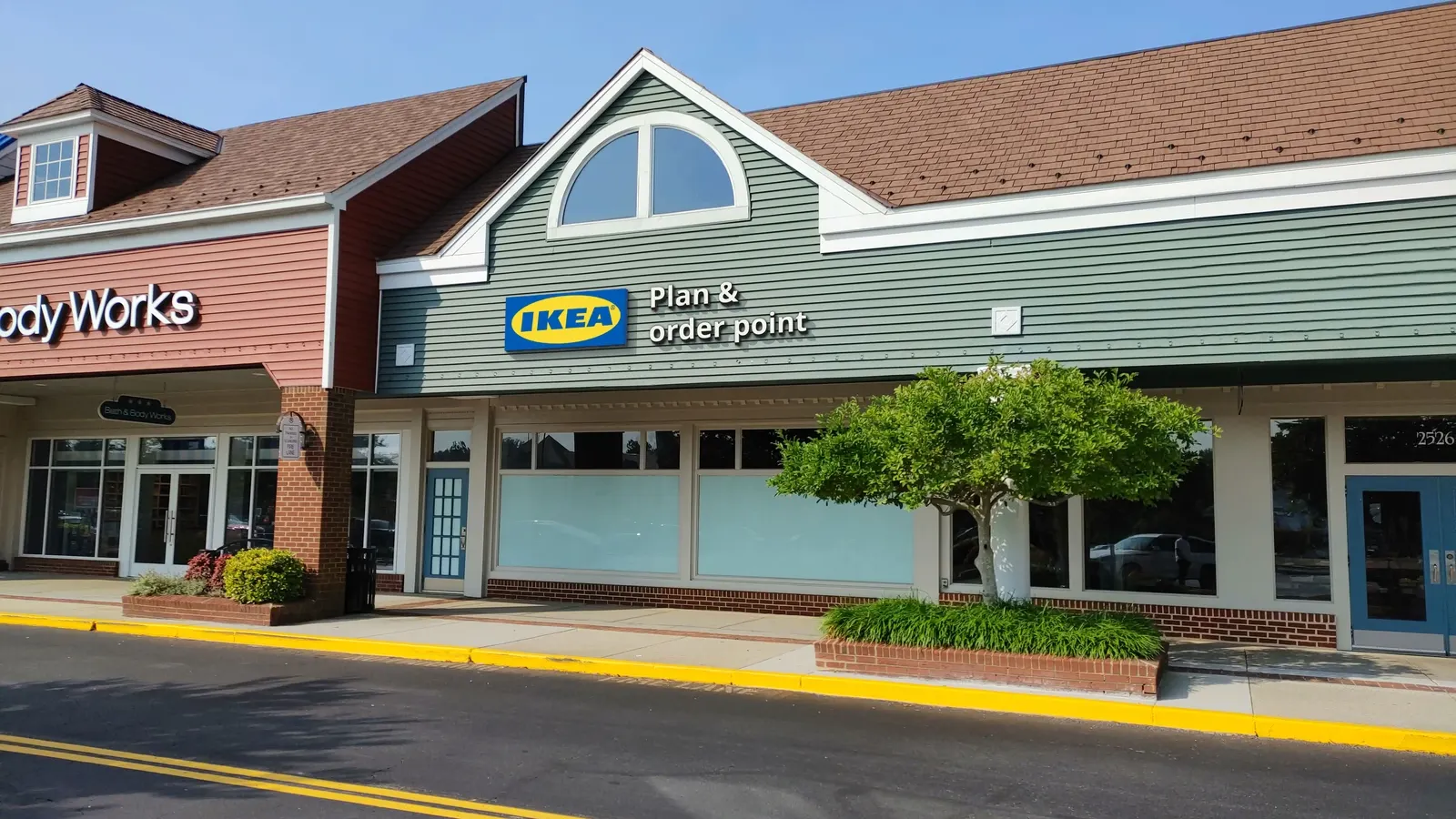
The impacted stores were designed as "Plan and Order points," a format characterized by a significantly smaller physical footprint compared to the iconic, sprawling blue-and-yellow suburban warehouses Ikea is famous for. These locations were intended to serve as design hubs where customers could work with specialists to plan complex home renovations, such as kitchen or bathroom overhauls, while also offering convenient, centralized pick-up points for online orders.
However, despite the initial optimism surrounding their launch, Ikea has concluded that the performance and strategic value of these specific sites do not align with its current operational goals. While the company has confirmed that existing projects in progress at these locations will be transitioned to other in-market stores or handled via remote digital planners, the physical loss of these community-facing hubs leaves a gap in the company’s localized retail strategy.
A Chronology of Strategy: From Expansion to Consolidation
To understand the significance of these closures, one must look back at the aggressive growth trajectory Ikea established in the early 2020s.
- 2023: The $2.2 Billion Commitment: In a bold move to secure its dominance in the U.S. home furnishing market, Ikea announced a massive $2.2 billion investment plan. The goal was to modernize its fulfillment network and significantly expand its physical presence. A centerpiece of this plan was the launch of multiple "Plan and Order" locations, intended to bring the brand closer to urban dwellers who might not have the time or interest to visit a suburban warehouse.
- Late 2025: The Georgetown Launch: The Georgetown store, which opened in November 2025, was positioned as a flagship of this new urban-centric strategy. It replaced a previous location in Arlington, Virginia, highlighting the company’s willingness to "hop" locations in search of the perfect demographic fit.
- February 2026: Continued Optimism: Earlier this year, Ikea leadership reaffirmed its commitment to the U.S. market, announcing plans to open 10 additional stores throughout 2026. This included ambitious projects such as the company’s first foray into the Oklahoma market and a major city-center store in Los Angeles.
- October 2026: The Retrenchment: The sudden announcement of the Mid-Atlantic closures marks the first major sign that the company’s expansionist model is facing headwinds, forcing a "pruning" of the network to prioritize profitability over raw store count.
Supporting Data: Why Small Formats Are Struggling
The "Plan and Order" concept was born out of a desire to solve the "last mile" and "in-person consultation" problems that plague many furniture retailers. By placing these stores in high-traffic urban areas, Ikea hoped to capture the impulse shopper and the design-conscious urbanite.
However, industry analysts point to several factors that likely complicated this model. First, the overhead costs of maintaining high-rent retail spaces in districts like Georgetown are substantial. If the volume of high-ticket design consultations doesn’t reach a critical mass, the revenue per square foot at these small locations can struggle to justify the lease.
Furthermore, the data suggests that while these stores were excellent at converting project-based sales, they functioned less effectively as standalone retail nodes compared to the full-service "blue box" stores. When a consumer visits a traditional Ikea, they are exposed to the full range of accessories, home goods, and the famous cafeteria experience, all of which drive impulse spending. The limited inventory of a "Plan and Order" point—while efficient for project planning—does not replicate the psychological "Ikea experience" that drives high-frequency foot traffic.

Official Responses: The Corporate Narrative
Ikea’s official stance remains one of "optimization" rather than failure. In an email statement provided to Retail Dive, the company emphasized that these closures are part of a broader evolution.
“Plan and order points with pick-up are new format locations with a smaller footprint, designed to help customers plan big projects like kitchens, bedrooms and bathrooms,” the company stated. “Each of these locations is situated near another Ikea store. We are moving to shutter some of these to ensure we are building a more sustainable future.”
The company maintains that it is not abandoning the concept of smaller formats, but rather refining which markets can support them. By doubling down on digital tools—such as its remote planning software—Ikea hopes to maintain the service-level benefits of these stores without the heavy physical infrastructure costs. The company is pivoting its capital expenditure toward enhancing its existing fulfillment networks and digital channels, essentially arguing that if a customer doesn’t need to be in a store to plan a kitchen, Ikea shouldn’t force the physical interaction.
Implications: What This Means for the Future of Retail
The closure of these stores carries significant implications for both Ikea and the broader retail sector.
1. The Death of the "One-Size-Fits-All" Expansion
Ikea’s pivot proves that even retail giants are not immune to the volatility of the current economic environment. What worked in the initial post-pandemic recovery phase is being scrutinized under the lens of higher interest rates and shifting consumer spending habits. The "test and learn" phase of retail expansion is becoming shorter and more unforgiving.

2. Digital as the Primary Storefront
Ikea’s explicit mention of its "digital channels" in the wake of these closures suggests that the company is effectively shifting its retail strategy from "omnichannel" (where every store is a mini-warehouse) to "digitally-led, physically-supported." By encouraging customers to use remote planners, Ikea is lowering its operational cost per sale.
3. The Revaluation of Urban Real Estate
For cities like Washington, D.C., the departure of a major brand like Ikea from a prime retail corridor is a cautionary tale. While urban centers are desirable, they are also expensive. For big-box retailers, the margins required to survive in high-rent districts are thin, and the margin for error is non-existent.
4. Competitive Pressure
As Ikea pulls back, competitors in the home furnishing space—particularly those that are purely e-commerce or those that utilize a "showrooming" model without the logistical complexity of on-site pick-ups—may find room to capture market share.
Conclusion
The decision to close these locations is a sobering reminder that even the most well-capitalized retailers are in a constant state of flux. While the "Plan and Order" experiment has faced a setback in the Mid-Atlantic, it is unlikely that Ikea is abandoning the small-format concept entirely. Instead, the company is demonstrating a new level of operational discipline.
For the modern consumer, the message is clear: Ikea is consolidating its efforts. While you may have fewer physical touchpoints in the short term, the company is betting that a streamlined, digitally-enabled experience will ultimately provide a more reliable and sustainable way to shop. Whether this strategy will successfully balance the need for growth with the reality of market constraints remains the defining question for the retail sector as we head into 2027.