

In the vast, rugged landscapes of rural Argentina, distance is more than a geographical challenge—it is a barrier to survival. For decades, the primary hurdle to consistent medical care in these isolated regions has been the reliance on antiquated, paper-based record-keeping systems. When medical histories are confined to physical folders that must be transported across hundreds of kilometers, the continuity of care is inevitably fragmented.
However, a transformative initiative led by Boehringer Ingelheim, in close partnership with the non-profit organization La Higuera, is fundamentally altering this narrative. By replacing fragile, scattered paper records with a robust digital infrastructure, this project is not merely an exercise in modernization; it is a critical intervention designed to save lives, improve health outcomes, and ensure that patients in the most remote corners of the country receive the high-quality, continuous care they deserve.
Main Facts: The Digital Shift in Rural Healthcare
The core of this initiative lies in the transition from analog to digital. In remote Argentine communities, medical professionals have long struggled with the "fragmentation effect." A patient might visit a mobile clinic in one village, only to have their follow-up appointment in another town where their previous medical data is unavailable. This lack of centralized information often leads to misdiagnoses, redundant testing, and the inability to track chronic conditions effectively.
The collaboration between Boehringer Ingelheim and La Higuera focuses on:
- Infrastructure Deployment: Donating essential hardware, including computers, to rural clinics that previously lacked the tools for digital record-keeping.
- Software Implementation: Developing and installing specialized, user-friendly software that allows for the real-time input and secure retrieval of patient health data.
- Volunteer Expertise: Mobilizing a team of 20 Boehringer Ingelheim employees who contributed technical skills, software development, and project management expertise to ensure the system’s longevity.
- Sustainability: Reducing the massive annual paper waste, which not only lowers the environmental footprint but significantly decreases the risk of losing patient records to environmental factors like humidity, fire, or physical damage during transit.
A Chronology of Transformation
The journey to digitize rural healthcare in Argentina did not happen overnight. It was the result of a deliberate, phased approach to identifying and solving specific systemic failures.
Phase 1: Identifying the Pain Point (2023)
The initial observation came from medical professionals working on the ground with La Higuera. They noted that patients were suffering because doctors lacked the full picture of their health history. Eduardo Sorlino, General Manager at Boehringer Ingelheim, observed that the physical nature of records—which had to travel long distances—was a primary failure point. If a paper file was lost or left behind, the patient effectively became a "stranger" to the physician.
Phase 2: Collaborative Planning and Resource Allocation (Early 2024)
Boehringer Ingelheim recognized that their corporate sustainability goals aligned perfectly with La Higuera’s mission. A task force of 20 volunteers was assembled. This was not a standard corporate donation; it was a deep dive into the specific technological needs of rural clinics, which often operate with limited electricity and unstable internet connectivity.
Phase 3: The Pilot Deployment (Mid-2024)
The team initiated a pilot program in select rural hubs. The focus was on ease of use. If the software were too complex, it would be abandoned in favor of the familiar pen-and-paper method. The volunteers spent months refining the user interface to ensure it could function effectively in environments where IT support is virtually non-existent.
Phase 4: Scaling and Optimization (Late 2024 – Present)
With the initial system proving successful, the project has entered a phase of expansion. The focus is now on training local healthcare workers to take full ownership of the digital records, ensuring that the technology is sustainable even when the volunteers are not physically present.
Supporting Data: Why Digitalization Matters
The impact of this shift can be measured both in human and logistical terms.
The Paper Problem:
Prior to the project, thousands of sheets of paper were processed annually. In rural settings, paper is not just inefficient; it is vulnerable. A single flood, fire, or even the wear and tear of being transported via horseback or rough-terrain vehicle can erase years of medical history.
Efficiency Metrics:
Digitalization has reduced the time required to retrieve a patient’s file from "searching through cabinets" (often taking 15–20 minutes) to a matter of seconds. This efficiency increase allows doctors to spend more time on clinical consultations and less on administrative tasks.
Data Security and Privacy:
While paper records are often stored in unsecured locations, the new digital system utilizes encrypted databases. This ensures that sensitive health information is protected from unauthorized access, aligning with modern standards of patient privacy that were previously impossible to uphold in rural outposts.
Official Responses: The Human Element
Eduardo Sorlino, General Manager at Boehringer Ingelheim, has been a vocal proponent of this project, emphasizing that the goal is not technology for technology’s sake, but technology as a bridge to humanity.
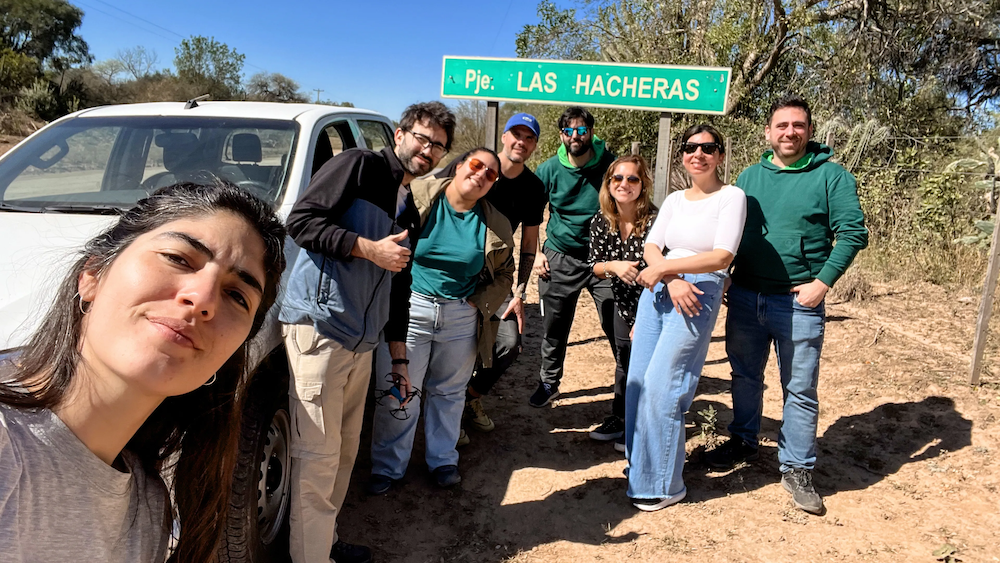
"We noticed that all patient records were being kept on paper, and these papers had to travel many kilometers," Sorlino remarked. "This posed a great risk to maintaining accurate patient medical histories."
The collaboration highlights a shift in corporate social responsibility (CSR) strategy. Instead of providing "one-off" financial donations, companies are increasingly moving toward providing "human capital"—the expertise of their employees. The 20 volunteers who participated in this initiative provided more than just labor; they provided a transfer of knowledge that empowers the local healthcare community to manage their own digital future.
Healthcare providers at La Higuera have reported a significant psychological shift as well. Doctors who once felt helpless when seeing a patient for the first time without a medical history now feel empowered. The ability to access a complete, chronological record of a patient’s health journey has been described by field staff as a "game-changer" for diagnostic confidence.
Implications: A Model for Global Rural Healthcare
The success of the Argentina project serves as a compelling proof-of-concept for similar initiatives globally. The implications for the future of rural healthcare are profound.
1. The Death of the "Isolated Patient"
The most significant implication is the end of the "isolated patient." By creating a digital trail, rural residents are no longer tethered to a single clinic. If they need to travel to a regional hospital for specialized treatment, their digital records can follow them, ensuring that the specialist knows exactly what the primary care physician observed months prior.
2. Standardizing Care Quality
Digital records allow for the implementation of standardized treatment protocols. When a doctor enters a symptom into the system, the software can provide prompts or guidelines based on the latest medical data. This helps bridge the "knowledge gap" that often exists between urban teaching hospitals and rural clinics.
3. Improving Resource Allocation
With centralized data, regional health authorities can finally see the "big picture." They can track disease outbreaks, identify which rural areas are underserved, and allocate vaccines or medical supplies with surgical precision based on actual, real-time data rather than estimates.
4. A Blueprint for Corporate Partnerships
The Boehringer Ingelheim/La Higuera partnership provides a blueprint for how the private sector can engage with rural healthcare. By pairing the agility and technical expertise of a global pharmaceutical company with the deep local knowledge of a specialized non-profit, the project bypassed the bureaucratic gridlock that often stalls government-led healthcare initiatives.
The Road Ahead: Challenges and Opportunities
While the progress is undeniable, the project is not without its challenges. The primary hurdle remains the digital divide. In many parts of rural Argentina, electricity is intermittent and internet connectivity is non-existent.
The project team is currently exploring solutions such as:
- Offline-First Software: Applications that function locally and synchronize once a connection is established.
- Solar-Powered Hardware: Investing in durable, energy-efficient equipment that can operate in off-grid environments.
- Community Training: Expanding the training modules to include local community leaders, ensuring that the systems are maintained by those who live in the region.
As the project continues to evolve, the focus will remain on scalability. The goal is to prove that this model is not just effective in one region of Argentina, but can be adapted for other remote communities—whether in the Greek islands, the mountains of the Andes, or the rural heartlands of Africa and Asia.
Conclusion: Beyond Pixels and Paper
The transition from paper to digital in Argentina’s rural clinics is more than an upgrade in office technology. It represents a fundamental shift in the right to health. When a patient in a remote community walks into a clinic, their history is no longer lost in a dusty folder or trapped on a piece of paper miles away. It is present, secure, and accessible.
This initiative, led by Boehringer Ingelheim and La Higuera, underscores a vital truth: in the 21st century, access to quality healthcare should not be determined by the distance between a patient and the nearest record cabinet. Through innovation, volunteerism, and a commitment to digital equity, we are entering an era where the most isolated individuals can finally receive the care they deserve.
As we look toward the future, the integration of digital health tools will undoubtedly become the standard for humanitarian aid. The "Paper to Pixels" revolution in Argentina is just the beginning of a broader movement to ensure that no patient is left behind by the limits of geography. For more insights into how these digital frontiers are being pushed, readers are encouraged to explore the full scope of Boehringer Ingelheim’s sustainability journey at their Imagine hub, where the intersection of technology and compassion continues to define the next chapter of global health.