
The environmental argument for shifting freight from the asphalt of American highways to the steel rails of the nation’s train network is compelling, backed by physics and cold, hard data. While a single gallon of diesel fuel can propel one ton of cargo approximately 150 miles by truck, that same gallon can push that same ton more than 400 miles by rail. This fundamental efficiency gap offers a roadmap to avoiding millions of tons of carbon dioxide (CO2) annually. However, as the logistics industry pivots toward sustainability, the rail sector faces a critical internal challenge: it must clean up its own house while serving as the primary alternative for heavy-duty road transport.
Norfolk Southern, one of the six major “Class I” railroads in the United States, currently finds itself at a pivotal juncture. As the company approaches the halfway point of its journey toward a 2034 emissions reduction target validated by the Science Based Targets initiative (SBTi), the industry is watching closely. Can a legacy industrial giant balance the demands of transcontinental commerce with the urgent necessity of the energy transition?
The Core Data: Tracking the Emissions Footprint
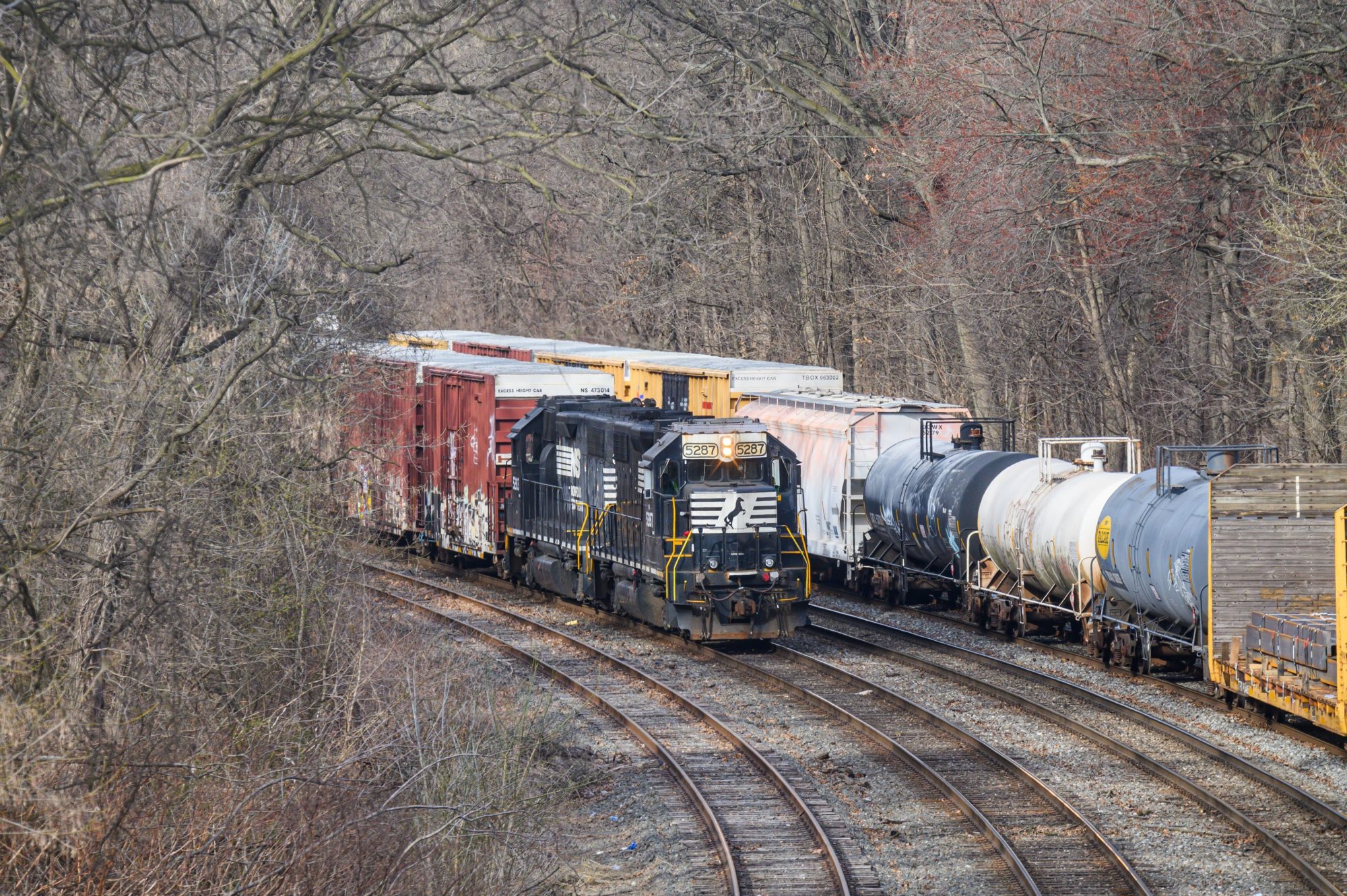
To understand the scale of the challenge, one must look at the operational anatomy of Norfolk Southern. Operating across more than 19,000 miles of track in the eastern United States, the company manages a fleet of approximately 3,000 locomotives. In 2025, these operations generated $12 billion in revenue but also resulted in the release of 5.8 million tons of carbon dioxide equivalent emissions (tCO2e).
The vast majority of this footprint—more than two-thirds—is classified as Scope 1 emissions, generated directly by the combustion of diesel fuel in locomotives. Consequently, Norfolk Southern’s decarbonization strategy is laser-focused on its primary motive power. Under its SBTi-validated plan, the company has committed to a 42 percent reduction in Scope 1 and 2 emission intensity between 2019 and 2034.
According to the latest sustainability report, progress is underway. The company has logged a 12 percent decline in tCO2e per million ton-miles traveled. While this leaves more than two-thirds of the targeted reduction to be achieved in the remaining years, Joshua Raglin, Norfolk Southern’s chief sustainability officer, remains optimistic. Raglin emphasizes that the bulk of these gains were realized post-2021, suggesting that the company is effectively hitting its stride as it approaches the midpoint of its 15-year goal.
Chronology of a Decarbonization Journey
The path toward a net-zero future is rarely linear, especially for an industry built on infrastructure that lasts for decades. Norfolk Southern’s journey can be viewed through several distinct phases of technological and operational adoption:
- 2019 (Baseline Year): Norfolk Southern establishes its initial emissions baseline, identifying locomotive fuel consumption as the primary target for reduction.
- 2021 (SBTi Validation): The company secures official validation for its emissions intensity targets, setting the stage for a 42 percent reduction by 2034.
- 2022–2024 (Efficiency Upgrades): The company begins a comprehensive rollout of energy management systems—essentially high-tech cruise control for locomotives—across its active fleet.
- 2025 (Operational Pivot): Norfolk Southern reports a 5 percent improvement in fuel efficiency and shifts its focus from biodiesel to renewable diesel, aiming to decouple its fleet from fossil fuel reliance.
- 2025–2034 (The Scaling Phase): The current period, characterized by the deployment of the “book and claim” scheme for emissions credits and the push for regulatory approval on major network expansions.
Technological Levers: Beyond Traditional Diesel
When asked if the 2034 goal remains achievable, Joshua Raglin is unequivocal. "Absolutely," he says, pointing to a multi-pronged approach that combines immediate efficiency gains with a transition to low-carbon fuels.
The Role of Renewable Diesel
Norfolk Southern’s strategy has evolved from the use of traditional biodiesel—a plant-based blend that can displace up to 20 percent of fossil diesel—to a more ambitious embrace of renewable diesel. Unlike traditional biodiesel, renewable diesel is a "drop-in" fuel, meaning it can replace fossil diesel entirely without the need for expensive, time-consuming modifications to existing locomotive engines. As suppliers increase production and infrastructure matures, Norfolk Southern is actively positioning itself to capitalize on this cleaner alternative, with Raglin noting a significant uptick in interest from suppliers.
Energy Management Systems (EMS)
Technological intervention is currently the "heavy lifter" in the railroad’s emission reduction strategy. All of Norfolk Southern’s active fleet is now equipped with energy management equipment. Once a train reaches a threshold of roughly 10 miles per hour, this automated system takes over, optimizing throttle and braking patterns far more precisely than manual operation. According to internal data, this shift alone has resulted in fuel efficiency gains of 6 to 8 percent, proving that software is as vital as hardware in the quest for sustainability.
The Economic Reality of Sustainability
The challenge of decarbonization is as much about economics as it is about engineering. While energy efficiency upgrades, such as the EMS, pay for themselves through reduced fuel consumption, the transition to renewable fuels comes with a price tag. Outside of states like California, where subsidies provide a buffer, renewable diesel typically commands a price premium roughly 20 percent higher than traditional fossil diesel.
To bridge this gap, Norfolk Southern has pioneered a “book and claim” scheme. This financial mechanism allows customers to purchase Environmental Attribute Certificates (EACs), representing the emissions saved by rail transport, independently of their specific freight loads.
The viability of this program received a significant boost in June, when the SBTi updated its standards to explicitly allow EACs to be used to meet Scope 3 emissions targets. This clarity was the "green light" many corporate shippers were waiting for. With the regulatory ambiguity removed, demand for the 40,000 available certificates—each representing a ton of CO2 avoided—has surged, providing Norfolk Southern with the revenue necessary to continue investing in higher-cost, lower-carbon fuels.
The Merger Debate: Efficiency vs. Monopoly
Perhaps the most controversial variable in Norfolk Southern’s future is the proposed merger with Union Pacific. Proponents of the deal argue that it would create a seamless trans-America network, drastically reducing the friction inherent in moving goods between different rail carriers. By creating a more competitive alternative to trucking, the combined entity projects it could convert 2.1 million truckloads to rail annually, effectively avoiding 3.8 million tons of CO2 emissions.
However, the proposal is currently under intense scrutiny from federal regulators, and the industry is deeply divided. Skeptics, including influential labor unions and major shippers in the chemical industry, warn that the consolidation could result in diminished service quality and higher freight rates. Their concern is grounded in a logical fear: if the railroad becomes less reliable or more expensive, companies will inevitably revert to long-haul trucking. In that scenario, the environmental gains promised by the merger would be wiped out by a return to road-based logistics.
Implications: A Model for the Industry
The story of Norfolk Southern is a microcosm of the broader industrial transition. It highlights a recurring theme: the most effective path to decarbonization often involves a combination of incremental efficiency gains, the adoption of drop-in renewable fuels, and the creation of innovative financial tools to bridge the gap between "green" costs and market realities.
As the company moves through the second half of its 2034 timeline, the success or failure of its strategy will provide a vital case study for the logistics sector. The railroad industry has the potential to be the backbone of a low-carbon economy, but only if it can maintain operational excellence, satisfy the demands of skeptical regulators, and prove that sustainable freight is not just an environmental ideal, but a scalable economic model.
For now, the signals are positive. By leaning into energy management, embracing renewable diesel, and successfully navigating the complex world of carbon accounting, Norfolk Southern is proving that even the most carbon-intensive industries can, with enough commitment, begin to shift the gears toward a cleaner future. The road ahead remains long—and the track, as always, is unforgiving—but the momentum appears to be building.