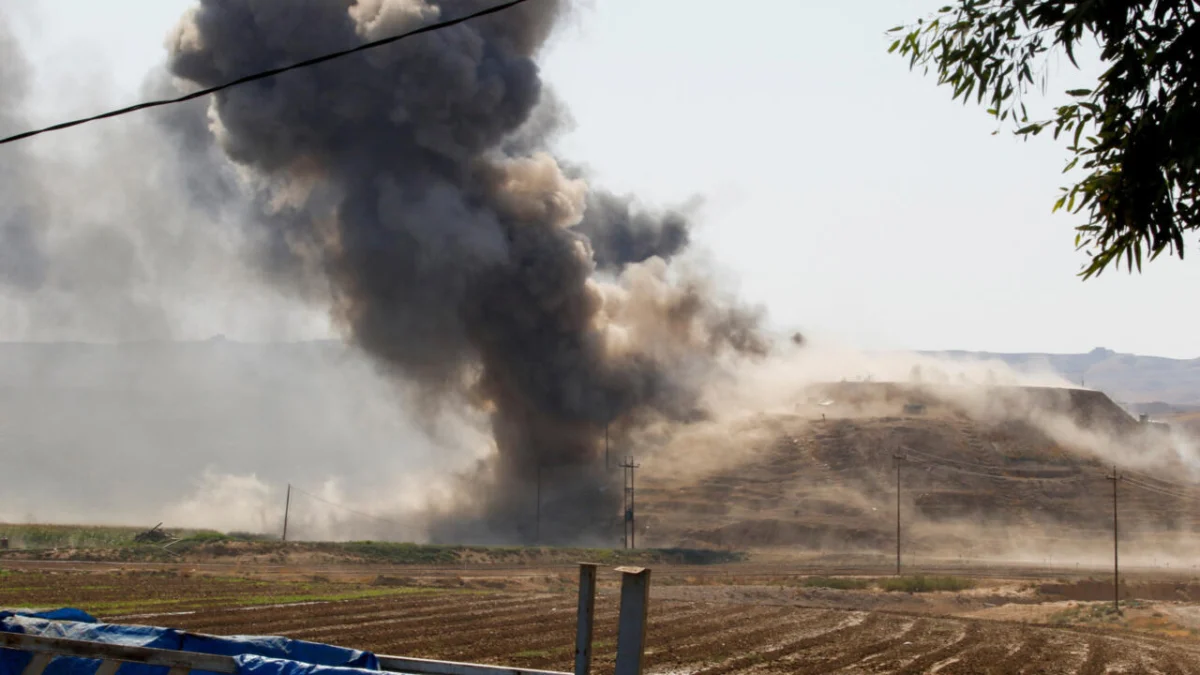
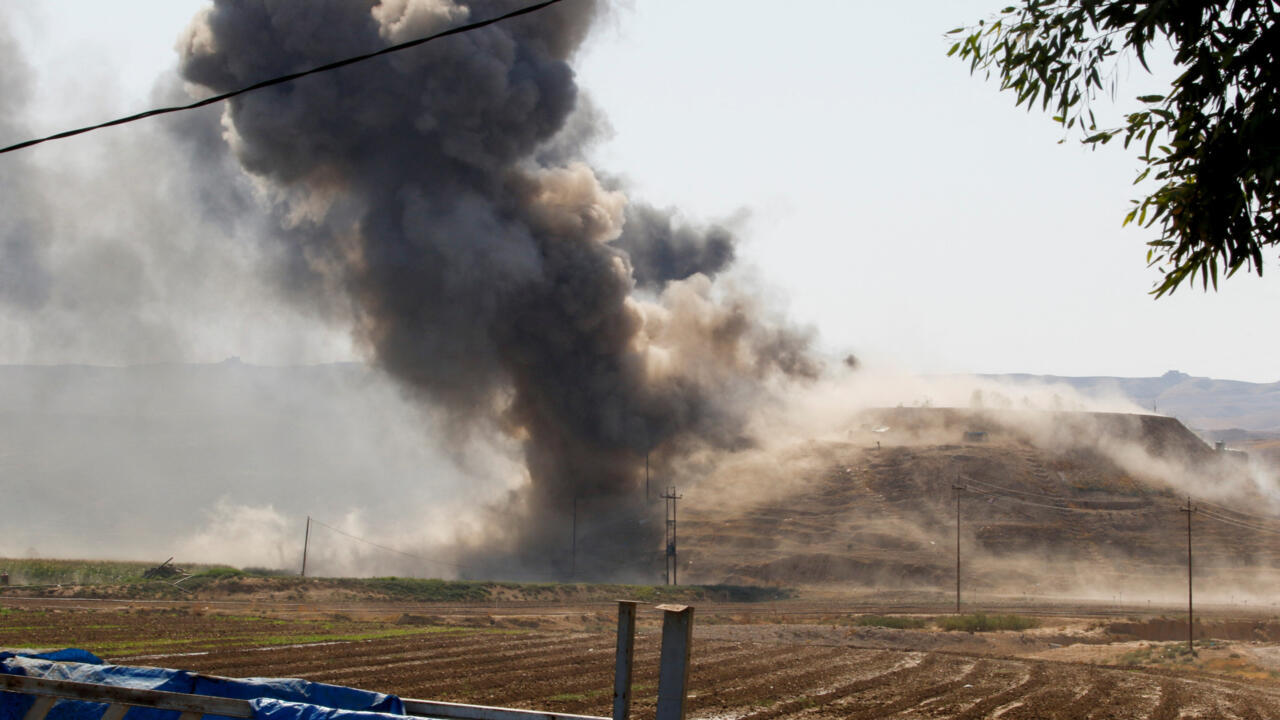
Erbil, Iraqi Kurdistan – July 24, 2026 – In a significant escalation of regional tensions, Iranian drones conducted multiple strikes across Iraq’s semi-autonomous Kurdistan Region, primarily targeting areas within Erbil province. Local authorities reported several explosions and impact sites, with initial assessments indicating minimal material damage and no immediate casualties. The Iranian government, while not issuing an explicit claim of responsibility, framed the attacks as an expansion of its perimeter of operations against perceived adversaries, specifically linking them to actions taken by the United States.
The incident, occurring at approximately 20:06 local time, sent ripples of alarm throughout the volatile Middle East, further raising fears of a broader conflict. The Kurdistan Regional Government (KRG) has launched an immediate investigation into the attacks, which mark the latest chapter in a long-standing pattern of Iranian military incursions into Iraqi territory, often justified by Tehran as necessary measures against anti-Iranian Kurdish opposition groups or alleged Israeli intelligence activities. However, the explicit reference to a "response to Americans" by Iranian media suggests a wider strategic calculus at play, potentially indicating a shift in Iran’s targeting doctrine.
The attacks underscore the precarious security situation in Iraq, a nation frequently caught in the crossfire of proxy conflicts between regional and international powers. Erbil, the capital of Iraqi Kurdistan and a hub for foreign investment and diplomatic missions, has repeatedly found itself vulnerable to such assaults, particularly during periods of heightened tension between Washington and Tehran. The international community now watches closely for official responses from Baghdad, Washington, and Tehran, as the specter of a broader confrontation looms larger over the already fragile region.
Main Facts
On the evening of July 24, 2026, a series of drone strikes, attributed by local authorities to Iran, impacted multiple locations within the Erbil province of Iraqi Kurdistan. The attacks, which began shortly after 8:00 PM local time, involved what initial reports described as "several Iranian drones." While specific targets remain under investigation, impact points were recorded in various areas, prompting immediate responses from local security forces and emergency services.
Initial assessments provided by the Kurdistan Regional Government (KRG) indicated that the strikes resulted in several explosions, but crucially, no significant material damage or human casualties were immediately reported. This outcome, while fortunate, did little to alleviate the deep concern regarding the blatant violation of Iraqi sovereignty and the potential for future, more devastating assaults. The KRG’s Counter-Terrorism Department (CTD) and other security agencies swiftly moved to secure the affected areas, gather forensic evidence, and assess the full extent of the incident.
Unofficial Iranian media outlets, often reflecting the views of the Islamic Revolutionary Guard Corps (IRGC), quickly began circulating narratives that linked the drone operations to Iran’s broader strategic objectives. These narratives suggested that Iran had "expanded its attack perimeter against neighbors in response to the Americans." This phrasing is particularly significant, as it explicitly connects the strikes not just to alleged threats from within Iraqi Kurdistan, but directly to a perceived confrontation with the United States. Such a declaration, if officially adopted by Tehran, would represent a dangerous escalation, shifting the rationale for cross-border operations from defensive counter-terrorism to direct retaliation against a major global power.
The attacks unfolded amidst a backdrop of extremely high tensions across the Middle East, a region perpetually teetering on the brink of wider conflict. The intricate web of rivalries involving Iran, the United States, Israel, and various regional actors means that any military action, no matter how limited in immediate impact, carries the inherent risk of triggering a disproportionate response and spiraling into a full-scale regional war. The incident in Erbil thus serves as a stark reminder of the volatile geopolitical landscape and the urgent need for de-escalation.
Chronology of Events
The events of July 24, 2026, unfolded rapidly, beginning with the detection of unidentified aerial objects entering Iraqi airspace from the east, an area bordering Iran.
Approximately 19:45 EEST (Eastern European Summer Time): Radar systems operated by both Iraqi and Coalition forces reportedly detected multiple drone signatures approaching the Kurdistan Region. These detections triggered initial alerts within KRG security circles, though the precise nature and intent of the drones remained unclear in the immediate moments.
20:06 EEST: The first reports of explosions began to emerge from various districts within Erbil province. Witnesses in residential areas and rural locales described loud blasts, followed by the sound of sirens as emergency services were dispatched. Initial impact sites were reportedly scattered, suggesting either multiple targets or a broader area of engagement. Some reports indicated impacts near the outskirts of Erbil city, while others pointed to more remote, mountainous regions often associated with the presence of Iranian Kurdish opposition groups.
20:15 – 20:45 EEST: KRG security forces, including Peshmerga units and internal security forces (Asayish), began to cordon off suspected impact zones. Investigations commenced almost immediately to determine the type of drones used, their launch origin, and the exact nature of their targets. Initial assessments focused on identifying any casualties or significant structural damage, with preliminary reports indicating a fortunate absence of both.
21:00 EEST onwards: KRG officials, including a spokesperson for the Ministry of Interior and the Governor of Erbil, began issuing preliminary statements to the press, confirming the attacks and assuring the public that investigations were underway. These statements emphasized the violation of Iraq’s sovereignty and the KRG’s commitment to protecting its citizens. Simultaneously, international diplomatic channels were activated, with KRG representatives reaching out to Baghdad and foreign missions to apprise them of the situation and seek support.
Late Evening, July 24, 2026: Unofficial Iranian news channels and social media accounts linked to hardline factions began to publish articles and posts referencing the attacks. These narratives, while not an official claim of responsibility from the Iranian government, broadly justified the actions as a necessary response to "American provocations" or "terrorist activities" originating from Iraqi territory. This immediate narrative control from Tehran’s allies provided the first strong indication of Iran’s involvement and its perceived motivations.
The rapid sequence of events, from drone detection to impact and subsequent narrative framing, highlights the sophisticated nature of modern proxy warfare and the speed at which geopolitical tensions can manifest into kinetic actions in the Middle East.
Supporting Data and Historical Context
The drone strikes in Iraqi Kurdistan are not isolated incidents but rather fit into a complex pattern of regional conflict and strategic maneuvering. Understanding the historical context and supporting data is crucial to grasp the implications of these latest attacks.
Iran’s Advanced Drone Program: Iran has, over the past decade, developed a sophisticated and extensive drone program. Its arsenal includes various types of unmanned aerial vehicles (UAVs), ranging from surveillance drones to advanced armed and kamikaze drones. Models such as the Shahed-136, Mohajer-6, and Ababil series have been widely deployed by Iran and its proxies across the Middle East, including in Yemen, Syria, and Lebanon. These drones offer a cost-effective means of projecting power, conducting reconnaissance, and carrying out precision strikes, often enabling plausible deniability. The use of drones allows Iran to bypass traditional air defense systems and conduct asymmetric warfare, complicating responses from conventional military forces. This program has been a cornerstone of Iran’s "Axis of Resistance" strategy, providing a potent tool against its adversaries, particularly the United States and Israel.
U.S. Presence and Operations in Iraq: The United States maintains a military presence in Iraq, primarily as part of the international coalition against ISIS. While the official mission is advisory and assistance-based, U.S. forces also conduct counter-terrorism operations and maintain critical intelligence-gathering capabilities. This presence, particularly bases housing American personnel, has frequently been a target for Iranian-backed militias in Iraq. Tehran views the U.S. military presence as an infringement on regional sovereignty and a direct threat to its security interests. Any significant U.S. military exercise, intelligence operation, or even diplomatic statement regarding Iran is often perceived by Tehran as a "provocation" warranting a response. The "response to Americans" narrative, therefore, taps into a long-standing Iranian grievance against the U.S. military footprint in the region.

Iraqi Kurdistan as a Recurring Target: The Kurdistan Region of Iraq, particularly Erbil province, has been a frequent target of Iranian military action. Tehran cites several justifications:
- Kurdish Opposition Groups: Iran accuses the KRG of harboring Iranian-Kurdish opposition groups such as the Democratic Party of Iranian Kurdistan (PDKI), Komala, and the Kurdistan Free Life Party (PJAK), which Tehran designates as terrorist organizations. These groups have historically launched cross-border raids into Iran, and Tehran views their presence in Iraqi Kurdistan as a direct security threat, justifying "pre-emptive" or retaliatory strikes.
- Alleged Israeli Presence: Iran has repeatedly claimed that Israeli intelligence (Mossad) operates facilities within Iraqi Kurdistan, using the region as a staging ground for operations against Iran. While both the KRG and Israel deny these allegations, Tehran frequently uses them as a pretext for missile and drone attacks. In March 2022, the IRGC launched ballistic missiles at Erbil, claiming to have hit an Israeli "strategic center."
- Energy Infrastructure: Erbil is a significant hub for oil and gas production and export within Iraq. Attacks on energy infrastructure can serve multiple purposes: disrupting the KRG’s economy, signaling Iran’s reach, and potentially impacting global energy markets as a form of leverage.
Regional Proxy Conflicts and the "Axis of Resistance": Iran’s foreign policy is largely shaped by its "Axis of Resistance," a network of state and non-state actors (such as Hezbollah in Lebanon, Houthi rebels in Yemen, and various Shiite militias in Iraq and Syria) that align with Tehran against the U.S., Israel, and Saudi Arabia. Conflicts in Yemen, Syria, and Lebanon are often seen as proxy battlegrounds where Iran challenges its rivals. The latest drone attacks in Iraqi Kurdistan fit this broader pattern, serving as a message to Washington and its regional allies that Iran is capable and willing to strike at perceived threats across its borders. The timing of the attacks in 2026 could also be linked to specific geopolitical developments in the ongoing shadow war between Iran and Israel, or recent U.S. policy decisions affecting the region.
Previous Escalations: The period leading up to 2026 has been marked by numerous flashpoints. For instance, the assassinations of Iranian General Qassem Soleimani and nuclear scientist Mohsen Fakhrizadeh, widely attributed to the U.S. and Israel respectively, prompted strong retaliatory threats and actions from Iran. Similarly, U.S. sanctions, naval deployments, and cyber operations have consistently drawn sharp responses from Tehran. The current attacks, therefore, are not an anomaly but rather a continuation of a perilous cycle of action and reaction that defines U.S.-Iran relations and regional dynamics.
Official Responses
The drone attacks prompted a flurry of reactions from key regional and international actors, each grappling with the implications for their own security and the broader stability of the Middle East.
Kurdistan Regional Government (KRG): The KRG swiftly condemned the attacks as a blatant violation of Iraq’s sovereignty and a direct threat to the security and stability of its citizens. KRG President Nechirvan Barzani issued a strong statement denouncing the "unprovoked aggression" and called on the international community to hold Iran accountable. "The repeated targeting of the Kurdistan Region, under various pretexts, is unacceptable," Barzani stated in a press conference in Erbil. "We call on our partners in Baghdad and the international community to stand with us in defending Iraq’s sovereignty and preventing such escalations from destabilizing an already fragile region." Prime Minister Masrour Barzani emphasized the KRG’s commitment to protecting its borders and citizens, while reiterating that the Kurdistan Region would not be a launchpad for attacks against any neighboring country. KRG officials also confirmed they would share all investigative findings with the Iraqi Federal Government and relevant international bodies.
Iraqi Federal Government (Baghdad): The Federal Government in Baghdad found itself in a delicate and familiar predicament, balancing its relationships with both Iran and the United States. A statement from the Iraqi Ministry of Foreign Affairs strongly condemned the violation of Iraqi airspace and territory, describing it as an "unacceptable act of aggression that undermines regional stability." The statement called for immediate de-escalation and urged all parties to respect Iraq’s sovereignty and avoid using its territory as an arena for proxy conflicts. The Iraqi government announced it would summon the Iranian ambassador to Baghdad to deliver a formal protest and demand explanations. Prime Minister Mohammed Shia’ al-Sudani held emergency meetings with security officials, reaffirming Iraq’s commitment to protecting its borders and warning that such attacks could jeopardize ongoing efforts to foster regional dialogue and cooperation. However, Baghdad’s response often reflects its complex political landscape, where powerful Iranian-backed factions exert significant influence, making a robust condemnation challenging.
Iranian Government: While no direct official claim of responsibility was immediately issued, Iranian state media and high-ranking military officials began to articulate a justification for the attacks. A spokesperson for the Iranian Foreign Ministry, without explicitly confirming the drone strikes, stated that Iran reserves the right to respond decisively to any threats emanating from its borders, particularly those backed by "foreign hostile powers." The statement alluded to "recent provocative actions by the American presence in the region" and the continued activities of "terrorist and separatist groups" in Iraqi Kurdistan. Major General Hossein Salami, Commander-in-Chief of the IRGC, was quoted by Fars News Agency as saying, "Our response to the enemies of Islam and the Iranian nation will be swift and firm, wherever they may hide or operate under foreign protection." This narrative, consistent with past Iranian rhetoric, frames the attacks as legitimate defensive measures against perceived threats, while simultaneously signaling a direct challenge to the United States.
United States: The U.S. Department of State issued a stern condemnation of the Iranian drone attacks, labeling them as "destabilizing and dangerous actions that threaten the lives of innocent civilians and undermine regional peace." A State Department spokesperson reaffirmed unwavering U.S. support for Iraq’s sovereignty and the security of the Kurdistan Region. The Pentagon confirmed that no U.S. personnel or facilities were impacted by the strikes but stated that U.S. forces in Iraq and Syria remain at a heightened state of alert. "We call on Iran to cease these reckless actions immediately and to respect the sovereignty and territorial integrity of its neighbors," read a statement. "The United States stands ready to defend its personnel and interests in the region and will continue to work with our Iraqi partners to counter threats to their security." The U.S. response balanced condemnation with a clear warning, signaling that while it sought de-escalation, it would not tolerate direct threats to its forces.
United Nations: The UN Secretary-General’s Special Representative for Iraq expressed deep concern over the escalation, calling for immediate restraint from all parties. A statement from the UN mission in Iraq (UNAMI) urged respect for Iraq’s sovereignty and territorial integrity and emphasized the importance of dialogue to prevent further destabilization. The UN reiterated its commitment to supporting Iraq’s efforts to achieve lasting peace and security and offered its good offices for mediation.

Implications and Future Outlook
The Iranian drone attacks in Iraqi Kurdistan carry profound implications for regional stability, U.S.-Iran relations, and the future of Iraq. The incident serves as a stark reminder of the volatile dynamics at play and the ever-present risk of broader conflict.
Regional Stability on the Brink: The most immediate implication is a further erosion of regional stability. The Middle East is already grappling with numerous crises, including the ongoing conflict in Syria, political instability in Lebanon, and the persistent threat of terrorism. These drone strikes add another layer of complexity and danger, creating a precedent for more frequent and potentially more destructive cross-border attacks. Countries like Saudi Arabia, UAE, and Israel, who view Iran as their primary adversary, will likely interpret these attacks as a direct challenge, potentially leading to increased security cooperation among them and an intensified shadow war against Iranian assets and proxies. The risk of miscalculation, where a limited strike triggers an unintended full-scale confrontation, has significantly increased.
U.S.-Iran Relations: A Dangerous Trajectory: The explicit reference by Iranian media to the attacks being a "response to Americans" marks a dangerous shift in rhetoric, elevating the proxy conflict to a more direct challenge to the United States. This could further complicate any prospects for diplomatic engagement between Washington and Tehran, which have been virtually non-existent or highly contentious in recent years. The U.S. may respond with increased sanctions, military posture adjustments in the Gulf, or even covert operations. Conversely, Iran might perceive any U.S. restraint as weakness, encouraging further aggressive actions. The incident underscores the urgent need for a robust diplomatic channel to prevent unintended escalations, yet the current climate makes such dialogue incredibly difficult.
Challenges to Iraqi Sovereignty and Unity: For Iraq, these attacks represent a severe blow to its sovereignty and its ongoing efforts to rebuild and stabilize. The Federal Government in Baghdad faces immense pressure from both Tehran and Washington, caught between its powerful neighbor and its key international security partner. Its inability to effectively prevent such attacks or to issue a unified, strong condemnation risks undermining its legitimacy both domestically and internationally. The repeated violations of Iraqi airspace and territory by external powers also exacerbate internal divisions, particularly between Baghdad and the KRG, and between various political factions aligned with different regional powers. This constant external interference hinders Iraq’s ability to assert its independence and chart its own course.
Economic Impact: While the immediate material damage was minimal, the psychological impact on foreign investment and economic stability in the Kurdistan Region and wider Iraq cannot be understated. Erbil, a growing economic hub, relies heavily on international confidence and a stable security environment. Repeated attacks deter investors, disrupt trade, and undermine development efforts. The uncertainty created by such incidents can also affect global oil prices, given Iraq’s status as a major oil producer, adding another layer of geopolitical risk to the global economy.
Humanitarian Concerns: Beyond the immediate political and economic ramifications, the attacks heighten humanitarian concerns. Civilian populations in border regions and around potential targets live in constant fear of conflict. While no casualties were reported this time, the risk of civilian deaths and displacement in future, more intense attacks is very real. The potential for a wider conflict would lead to a catastrophic humanitarian crisis, further destabilizing an already fragile region.
The Need for Diplomacy and De-escalation: The current trajectory is unsustainable. There is an urgent need for concerted international efforts to de-escalate tensions and promote dialogue between Iran and its adversaries. This requires a multi-pronged approach:
- Robust condemnation and enforcement of international law: Ensuring accountability for violations of sovereignty.
- Direct or indirect diplomatic engagement: Facilitating channels for communication to prevent miscalculation.
- Regional security architecture: Encouraging dialogue among regional powers to address mutual security concerns.
- Support for Iraq’s stability: Empowering the Iraqi government to assert its sovereignty and protect its borders.
What Next? In the immediate aftermath, increased vigilance and intelligence gathering will be paramount for both Iraqi and Coalition forces. Iran will likely observe the reactions from Baghdad and Washington before deciding on its next move. Further retaliatory strikes, either direct or through proxies, cannot be ruled out, especially if Iran perceives an inadequate response or further "provocations." The Middle East remains a powder keg, and the drone strikes in Iraqi Kurdistan are a stark reminder of how quickly a spark can ignite a devastating fire. The coming weeks will be crucial in determining whether this incident remains an isolated warning or a precursor to a more dangerous phase of regional confrontation.