By Staff Reporter
In a formal transition that marks a profound shift in the trajectory of British politics, Andy Burnham was officially confirmed as the new leader of the Labour Party on Friday, July 17, 2026. The announcement, made at a special party conference held at the Trades Union Congress (TUC) headquarters in London, signals the final stage of a political pivot that will see Burnham enter Downing Street as the Prime Minister of the United Kingdom this coming Monday.
The coronation of Burnham—who secured the overwhelming support of 379 Labour MPs and 23 affiliate organizations—was described by party chair Shabana Mahmood as a moment of unity. With no other eligible candidates meeting the threshold, the leadership contest was effectively a formality, yet it served as a powerful stage for Burnham to outline his vision for a “new politics” that he claims will move beyond the toxic point-scoring of the past.
The Path to Power: A Shift in Tone and Substance
Burnham’s rise to the leadership follows a period of intense turbulence within the party and the country at large. As he addressed the conference, his tone was distinctively different from that of his predecessor, Keir Starmer. While Starmer was credited with steering Labour from its worst defeat to one of its greatest victories, Burnham’s rhetoric focused on a fundamental reassessment of the British economic and social model.
“Change starts with honesty,” Burnham told the assembly. He argued that the United Kingdom took a series of “wrong turns” in the 1980s, a period defined by the centralization of political power and the privatization of essential economic assets. According to Burnham, this trajectory left the country vulnerable to fluctuating costs and deepened regional inequalities.

The Five Pillars of the New Leadership
Burnham utilized the platform to articulate a series of core commitments that will define his premiership:
- Unity: A relentless focus on building a cohesive “one Labour team,” moving away from the “insidious briefing culture” that has plagued internal party relations.
- Problem-Solving Politics: Moving away from the Westminster tradition of point-scoring and toward a collaborative approach that addresses the tangible needs of the public.
- Political Direction: A return to what he describes as being “boldly, confidently, and authentically Labour,” rejecting the tendency to adopt conservative-coded policies.
- Devolution for All: A pledge to be a Prime Minister for every corner of the UK, including Scotland, Wales, Northern Ireland, and the English regions, with a specific focus on reindustrialization.
- Economic Pragmatism: A pro-business stance that simultaneously demands higher standards for workers and renters, mirroring the economic growth strategies he pioneered as the Mayor of Greater Manchester.
Chronology of the Transition
The day was marked by two significant public appearances by the new leader.
Friday Morning (London): The TUC headquarters became the site of the official confirmation. In a speech that balanced reverence for his predecessors—specifically thanking David Blunkett, Margaret Beckett, and Neil Kinnock for their mentorship—with a sharp critique of the last 40 years of British governance, Burnham accepted the leadership. He took the opportunity to pay tribute to Keir Starmer, acknowledging the success of the outgoing administration in areas such as rail renationalization and the implementation of the "Hillsborough Law."
Friday Afternoon (Gravesend, Kent): In an effort to signal that his leadership would not be restricted to the north, Burnham traveled to Gravesend. There, he engaged with local activists, emphasizing his intent to remain “on the ground.” This visit was strategically designed to counter the narrative that his "No 10 North" initiative would ignore the southern regions of the UK. He insisted that his focus on empowering local communities would be as relevant to Kent as it is to his former constituency of Makerfield.
Economic Implications: The "No 10 North" and the Bank of England
Perhaps the most significant structural change hinted at by the new administration is the establishment of "No 10 North." Burnham clarified that this office will be more than a symbolic gesture; it will serve as a hub for driving the devolution of power.

Simultaneously, economic observers are keenly watching the signals regarding the Bank of England. Reports have emerged that allies of Burnham, including the returning Business Secretary Jonathan Reynolds, have previously discussed a "rethink" of the Bank’s mandate. The current mandate, focused solely on price stability (the 2% inflation target), may face pressure from an administration looking to coordinate monetary policy more closely with its aggressive growth agenda.
The potential reappointment of Jonathan Reynolds as Business Secretary is seen as a signal of continuity for the business community, yet his reported desire to expand the department’s influence over energy policy suggests that Burnham intends to take a more active role in the state’s industrial strategy, particularly regarding North Sea assets.
Official Responses and Political Reaction
The political establishment has reacted to the transition with a mix of cautious optimism and sharp skepticism.
The Conservative Party: Tory Chairman Kevin Hollinrake was quick to attack the incoming Prime Minister for a perceived lack of transparency. “Andy Burnham says he has a plan, so what is it?” Hollinrake demanded. The Conservative position remains that the new leader is attempting to avoid parliamentary scrutiny, particularly regarding the economic costs of his proposed reforms.
The Green Party: Zack Polanski, the Green Party leader, voiced concerns that the transition might be purely cosmetic. “People are looking at Andy Burnham and going, this looks a lot like Keir Starmer with a different face,” Polanski said. He challenged the new leader to go beyond rhetoric on issues such as arms sales and wealth taxes, suggesting that if Burnham truly wants a progressive agenda, he must move beyond the “semi-skimmed” version of change currently on offer.
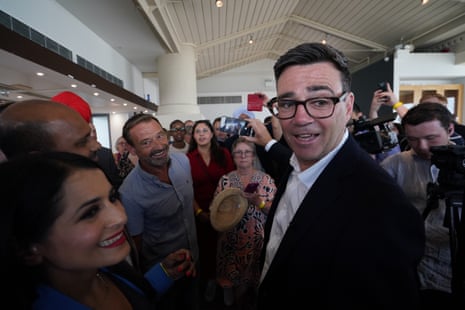
The Labour Ranks: Within the party, the mood is largely one of relief and renewed focus. Allies like Liverpool Mayor Steve Rotheram have been vocal in dismissing the idea that Burnham will merely follow in Starmer’s footsteps. “Andy wants to go in there and he wants to shake things up,” Rotheram stated on the Today programme, noting that those expecting a simple continuation of the status quo are “absolutely deluded.”
Challenges Ahead: The "Nettle" of Social Care
Burnham’s most immediate challenge will be the reform of the social care system, a topic he has described as “the worst of all worlds.” He has expressed a clear intention to "grasp the nettle" of this issue, arguing that the NHS cannot recover unless the social care sector is stabilized.
His personal connection to the issue—citing his father’s experience with Alzheimer’s—adds a layer of moral weight to his promise to reform the system. However, he remains vague on the funding mechanisms, and political analysts are already warning that any attempt to raise taxes or divert significant public funds toward a national care service will face immediate and intense opposition from both the benches of the Conservative Party and the media.
Conclusion: A Leadership of "Vibes" and Vision
As Friday concluded, the assessment of Burnham’s first day as leader was mixed. Some commentators labeled his performance a “vibes masterclass,” noting his ability to connect emotionally with audiences in a way that his predecessor could not. Others, however, pointed to the glaring absence of granular policy detail.
Burnham’s promise to announce his cabinet on Monday is the next critical hurdle. By waiting until he is in the physical possession of Downing Street, he claims to be avoiding “chaos.” Yet, the anticipation surrounding his appointments—specifically his Chancellor—is creating a vacuum of speculation that he will have to fill rapidly.
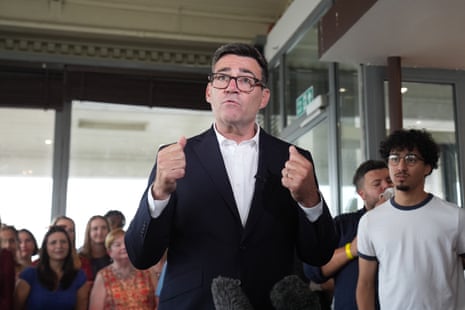
For now, the Labour Party has a new, charismatic leader who has successfully tapped into a desire for change. Whether he can convert that "hope" into a concrete, sustainable governing strategy remains the defining question of the next several months. As he heads to Buckingham Palace to formalize his premiership, the nation watches to see if the "Burnhamite" vision of a decentralized, reindustrialized, and “authentically Labour” Britain can survive the harsh realities of Downing Street.