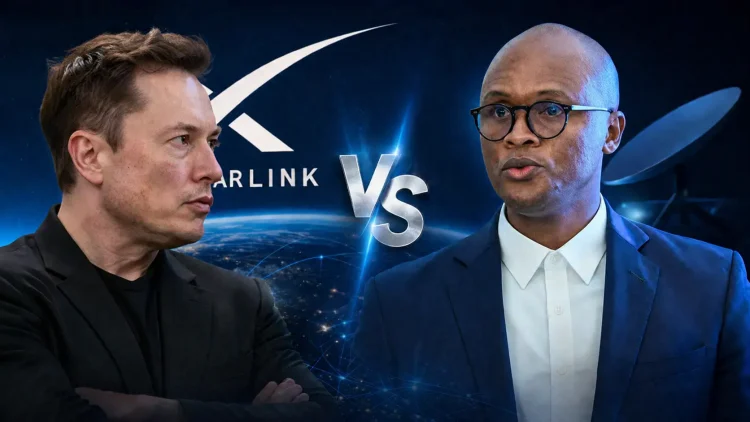
On July 16, Starlink officially flickered into life across Côte d’Ivoire, marking the 27th African market to greenlight Elon Musk’s low-Earth orbit (LEO) satellite constellation. For the Ivorian government, the move is a pragmatic acceleration of its digital transformation agenda—a way to bypass the slow, capital-intensive hurdles of laying fiber-optic cables through dense rainforests and remote savannahs.
However, as the champagne corks pop in Abidjan, a quiet but profound strategic contrast is playing out in Pretoria. While Starlink continues to navigate a turbulent three-year regulatory deadlock in South Africa, its rival, Amazon’s Project Kuiper (now branded as "Amazon Leo"), has demonstrated a masterclass in market adaptation. By sidestepping the direct-licensing trap, Amazon may have just secured a pathway into Africa’s most sophisticated economy, leaving SpaceX to ponder whether its "all-or-nothing" approach to regulatory compliance is a principled stance or a costly strategic blunder.
The Ivorian Milestone: Satellite as the Third Pillar
Côte d’Ivoire’s adoption of Starlink follows a pattern now familiar across the continent. In June, the national telecoms regulator, ARTCI, granted SpaceX a 12-month provisional license. The objective is clear: bridge the "digital divide" for rural schools, health clinics, and agricultural hubs that remain beyond the reach of terrestrial mobile towers.
What makes the Ivorian entry distinct, however, is the competitive environment. Unlike its entry into markets like Nigeria or Kenya, where Starlink was often the first to offer high-speed satellite broadband, Côte d’Ivoire is already a crowded field. Orange launched an Eutelsat-backed service in January, and MTN followed suit with its own satellite partnership in April.
The Ivorian government’s message is unequivocal: satellite broadband is no longer an experimental niche—it is a critical, non-negotiable layer of national infrastructure, sitting alongside fiber and 5G. By allowing multiple providers to compete, Abidjan is ensuring that the digital rollout is not dependent on a single provider’s terms or technical whims.
Chronology of a Continental Expansion
To understand the speed of Starlink’s expansion, one must look at the rapid acceleration since its debut.
- January 2023: Starlink officially launches in Nigeria, the first African country to grant a license. This set a precedent for other regulators to follow.
- 2023–2024: A domino effect ensues. Starlink expands rapidly into East and Southern Africa, including Mozambique, Rwanda, Malawi, and Zambia.
- January 2025: Orange Côte d’Ivoire unveils its satellite internet service, signaling the entry of traditional telco giants into the LEO space.
- June 2025: ARTCI grants Starlink a provisional 12-month license in Côte d’Ivoire.
- July 15, 2025: Amazon Leo (Project Kuiper) announces its intention to enter the South African market by 2027 via a partnership with Herotel.
- July 16, 2025: Starlink officially goes live in Côte d’Ivoire, reaching its 27th African market.
The South African Standoff: A Study in Regulatory Friction
While Côte d’Ivoire opens its doors, South Africa remains the continent’s most visible, and perhaps most complex, regulatory holdout. The impasse centers on the country’s Broad-Based Black Economic Empowerment (B-BBEE) legislation.
Under current South African law, telecoms licensees must meet a 30% Black ownership threshold. SpaceX, maintaining a global corporate policy of full control and refusal to divest equity in local subsidiaries, has hit a wall.
The Failed Compromise
In late 2025, Communications Minister Solly Malatsi proposed a middle ground: allow companies to satisfy B-BBEE obligations through "Equity Equivalent Investment Programmes" (EEIP). This would permit Starlink to fulfill its social mandate by investing R500 million in rural connectivity and school infrastructure rather than selling off equity.
The proposal initially seemed promising, but in May 2026, the Independent Communications Authority of South Africa (ICASA) issued a sobering verdict: it lacked the legal authority to implement such a change without a formal amendment to the Electronic Communications and Transactions Act. Consequently, the ball was kicked into the court of a slow-moving Parliament, effectively freezing Starlink’s expansion plans for the foreseeable future.
The Political Flashpoint
The dispute has transcended technical licensing. Elon Musk’s public critiques of South Africa’s ownership rules—which he has labeled "racially discriminatory"—have triggered sharp rebuttals from the South African government and civil society. What was once a negotiation about spectrum and service provision has morphed into a broader, ideological battle over sovereignty and economic transformation policies.
Amazon’s "Trojan Horse" Strategy
The contrast between Starlink’s approach and that of Amazon (Project Kuiper) is stark. On July 15, Amazon announced that it would enter the South African market in 2027, not as a direct licensee, but through a strategic partnership with Herotel.
Herotel is a dominant player in South Africa’s fixed wireless and fiber market. It already holds the necessary licenses and satisfies all B-BBEE requirements. Under the "Evry" brand, Amazon will provide the satellite technology, but Herotel will handle the customer-facing aspects: sales, local installation, maintenance, and compliance.
This is a masterclass in market entry. Amazon recognized that the regulatory environment in South Africa is not a hurdle to be jumped, but a reality to be navigated. By offloading the burden of local ownership and compliance to an established, compliant entity, Amazon has effectively bypassed the "three-year standoff" that has kept Starlink out of the country. As Amazon executive Trevor Vieweg noted, "Herotel will acquire all the necessary licensing," effectively shielding Amazon from the political and legal quagmire that has ensnared SpaceX.
Implications: The Tech vs. The Terrain
The implications of this standoff extend far beyond South African borders. It signals a fundamental shift in the African telecommunications landscape.
1. Technology is Secondary to Strategy
For years, the assumption was that the sheer technical superiority of Starlink’s constellation would force governments to bend to its will. However, South Africa has proven that even the most advanced technology can be sidelined by rigid regulatory frameworks. Companies that adapt their business models to local laws will always have a faster path to market than those that attempt to force the market to adapt to their business model.
2. Satellite as a Commodity
The entry of Amazon and the aggressive expansion of Eutelsat/Orange partnerships show that LEO satellite broadband is becoming a commodity. Governments now have choices. If one provider is too difficult to work with, regulators can turn to another that is willing to play by the rules of local equity and infrastructure investment.
3. The End of the "Wild West"
The "Wild West" era of satellite entry in Africa is closing. Governments are becoming more sophisticated. They are no longer simply "approving" satellite broadband; they are embedding it into broader digital strategies. In Côte d’Ivoire, Starlink is a piece of a 5G-enabled, government-monitored digital plan. The days of global tech giants rolling into a country and demanding an open playing field are fading.
Conclusion: Lessons for the Future
The irony of the current situation is palpable. SpaceX, the company with more satellites in orbit than all other competitors combined, finds itself locked out of the most lucrative and mature market in Africa. Meanwhile, Amazon, a late entrant to the satellite race, has found a way to "leapfrog" the barrier by working within the existing framework of South African industry.
For other tech companies eyeing the African market, the lesson is clear: African markets are not monolithic. They are governed by deeply held social and economic policies that are as much a part of the landscape as the geography itself. Whether Starlink eventually finds a way to compromise—or whether South Africa eventually relaxes its rules—remains to be seen. But for now, the race for connectivity in Africa is being won not just by those with the best satellites, but by those with the best partnerships.
In the high-stakes game of African telecommunications, adaptability is the ultimate bandwidth.